Osaka
Osaka is Kansai's food-and-neon hub — a 2-3 day base for Dotonbori, Osaka Castle, USJ, and day trips to Kyoto, Nara, and Kobe, all under 90 minutes away.
Osaka: Osaka five highlights walking tour ramen lunch
Quick facts
- Best time to visit
- Late March-early April (sakura) or October-November (mild, koyo)
- Days needed
- 2-3 days as a Kansai base, longer if day-tripping from here
- Getting there
- Kansai International Airport (KIX) to Namba or Osaka Station in 50-75 minutes
- Nearest station
- Osaka Station / Umeda (north), Namba Station (south)
- Getting around
- Osaka Metro + JR Loop Line, ICOCA IC card works on everything
Osaka is where most Kansai trips start and end, and for good reason: it has the region’s densest food scene, its biggest theme park, a genuine castle, and a train network that puts Kyoto, Nara, Kobe, and Himeji within 30-60 minutes. Two to three nights here, used as a base, covers the city itself and leaves room for at least two day trips.
| Where | Namba/Dotonbori (south) or Umeda/Kita (north) |
| Days needed | 2-3 as a Kansai base |
| Getting there | KIX to Namba or Osaka Station in 50-75 min |
| Getting around | Osaka Metro + JR Loop Line, ICOCA IC card |
| Best time | Late March-early April (sakura) or Oct-Nov (koyo) |
A city built around eating, not sightseeing
Osakans have a saying, kuidaore — “eat until you drop” — and the city organizes itself around that idea more than around monuments. There’s one real castle, one temple worth a special trip (Shitenno-ji, one of Japan’s oldest), and one theme park. Everything else is neighborhoods: Dotonbori’s canal-front food stalls, Umeda’s underground malls and observation decks, Shinsekai’s retro kushikatsu joints, and the quieter, more residential stretches in between. That makes Osaka forgiving for a first Japan trip — you can wander without a checklist and still eat and see well.
Getting to Osaka from Kansai International Airport
Kansai International Airport (KIX) sits on a reclaimed island in Osaka Bay, about 50 km from the city center. Two direct rail options run from the airport into town: the JR Haruka limited express (about 50 minutes to Shin-Osaka, slightly longer to Osaka Station) and the Nankai Rapi:t limited express, which runs to Namba in around 38-45 minutes and is more convenient if you’re staying in Minami (the southern half of the city, around Dotonbori and Namba).
Both cost roughly ¥1,500-2,400 (about $13-21) one-way depending on train class; a limousine bus is slower but drops closer to specific hotels. Budget 60-75 minutes door to door from the plane to a central hotel, plus immigration and baggage time. See our full Kansai airport to Osaka guide for line-by-line pricing.
Getting around: trains, subway, and the IC card
Osaka’s public transport is a layer cake: JR West runs the Osaka Loop Line (a useful orientation tool that circles the core), Osaka Metro runs the subway (the Midosuji Line is the north-south spine connecting Umeda, Namba, and Tennoji), and private railways (Hankyu, Hanshin, Keihan, Kintetsu, Nankai) fan out to the suburbs and neighboring cities. An ICOCA card (Osaka’s version of Suica/Pasmo) works across nearly all of it — tap in, tap out, no ticket math.
If you’re combining Osaka with day trips to Kyoto, Nara, or Kobe on the same days, a JR Kansai Area Pass can pay for itself; if you’re staying mostly within the city and hitting several paid attractions, the Osaka Amazing Pass bundles subway/bus travel with free entry to Osaka Castle, the Umeda Sky Building, and around 25 other sights. Full comparison in our Osaka Amazing Pass guide and JR Kansai Area Pass guide.
Dotonbori and Namba: the neon heart of Minami
Dotonbori is the canal-front strip everyone recognizes from photos — the giant Glico running-man sign, the crab and pufferfish signs above restaurant entrances, crowds moving shoulder to shoulder after dark. It’s touristy, it knows it, and it’s still worth an evening because the food is genuinely good if you avoid the restaurants with picture menus and English touts out front (a reliable sign of tourist-trap pricing). Walk one block back from the canal into Shinsaibashi-suji for shopping, or into the quieter lantern-lit alley of Hozenji Yokocho for an old-Osaka feel with far fewer people.
Kuromon Ichiba Market, a 10-minute walk from Dotonbori, is where locals shop for seafood and produce, and where you can eat your way through skewers of wagyu, fresh oysters, and uni for ¥500-1,500 per item. A guided Kuromon Market food tour is worth it on a first visit — it gets you past the stalls that just sell to tourists and toward the ones locals actually queue at.
For an overview of the whole neighborhood’s food scene, our Dotonbori food guide and Osaka street food guide go stall by stall. Full neighborhood breakdown at Dotonbori & Namba.
Umeda and Kita: the business side, sky-high views
North of the river, Umeda (the Kita, or “north,” district) is Osaka’s corporate and shopping core, built around Osaka Station and a knot of connected department stores and underground malls. The Umeda Sky Building’s Floating Garden Observatory — two towers joined by a rooftop walkway 173 meters up — gives one of the best skyline views in the city, especially at sunset. Grand Front Osaka and the Hankyu department store cover shopping; the HEP FIVE red ferris wheel is a minor but photogenic landmark visible for blocks. Umeda is less atmospheric than Minami after dark but far more efficient for a half-day of shopping, dining, or catching a shinkansen from nearby Shin-Osaka. Details at Umeda & Kita.
Osaka Castle and its park
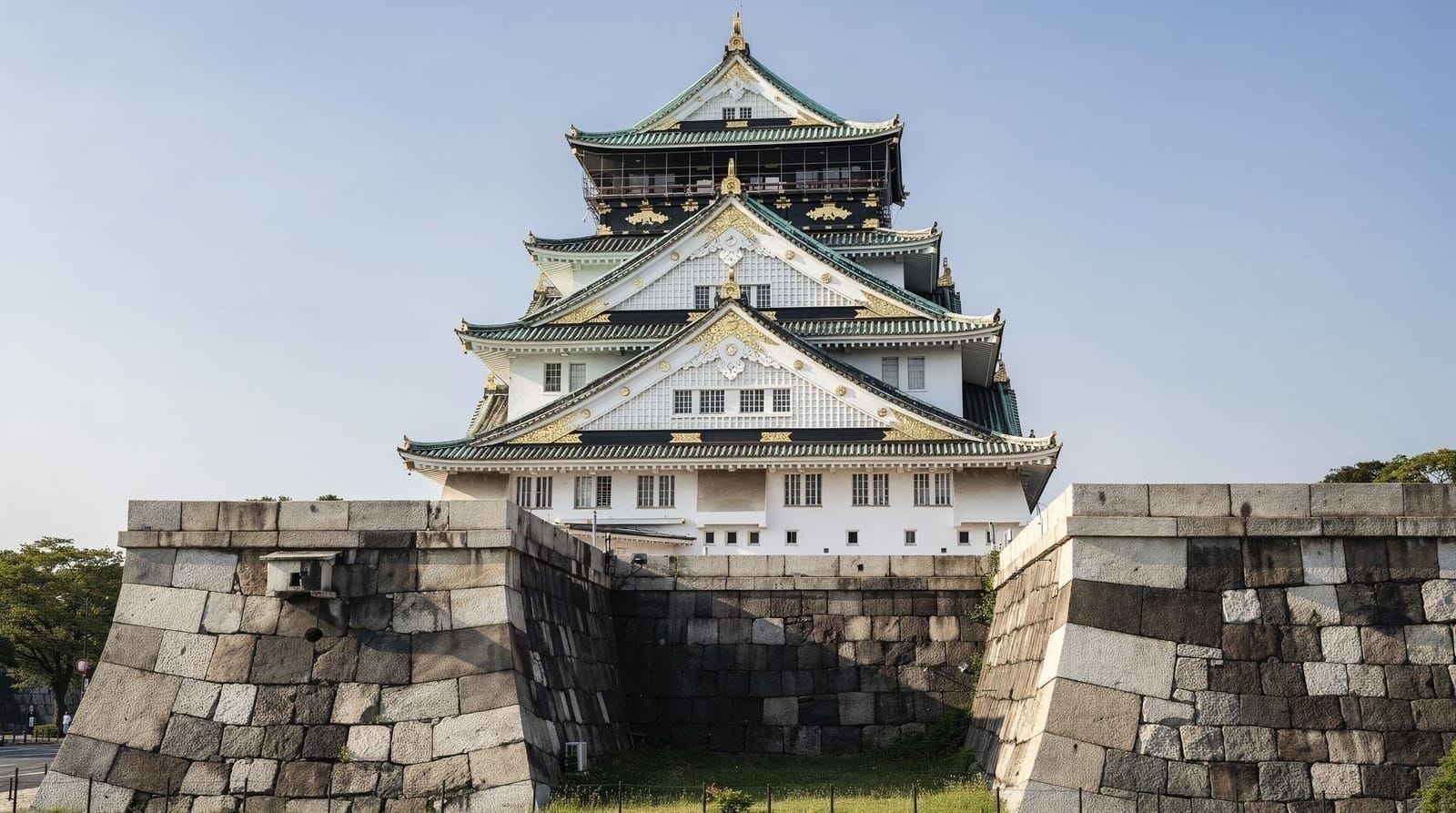
Osaka Castle’s current keep is a 1931 concrete reconstruction (the original, built by Toyotomi Hideyoshi in 1583, burned down centuries ago), and it functions mostly as a museum on Osaka’s feudal history — worth an hour if you’re interested in the story, skippable if you’re not. The surrounding park is the real draw: wide moats, stone walls up to 12 meters thick, and — during the last week of March into early April — one of the city’s better cherry blossom spots in Nishinomaru Garden.
A Osaka Castle museum ticket gets you past the queue at the base and into the observation floor at the top. Full guide at Osaka Castle area and Osaka Castle guide.
Shinsekai and Tennoji: retro Osaka
Shinsekai (“New World”) was built in 1912 around a Paris-meets-Coney-Island theme and never quite modernized — which is exactly its appeal now. Tsutenkaku Tower anchors the neighborhood, and the streets around it are lined with kushikatsu (deep-fried skewer) restaurants, the most famous being the Daruma chain, whose “no double-dipping” rule for the shared sauce pot is a genuine local custom, not a gimmick for tourists.
It’s an inexpensive, slightly rough-edged part of town — safe, but keep valuables close in the crowded arcades. Just south, Tennoji has Shitenno-ji Temple (founded 593 CE, one of Japan’s oldest Buddhist temples), Tennoji Zoo, and Abeno Harukas, Japan’s tallest building, with an observation deck on its top floors. Full write-up at Shinsekai & Tennoji.
Osaka Bay: Universal Studios Japan and Kaiyukan
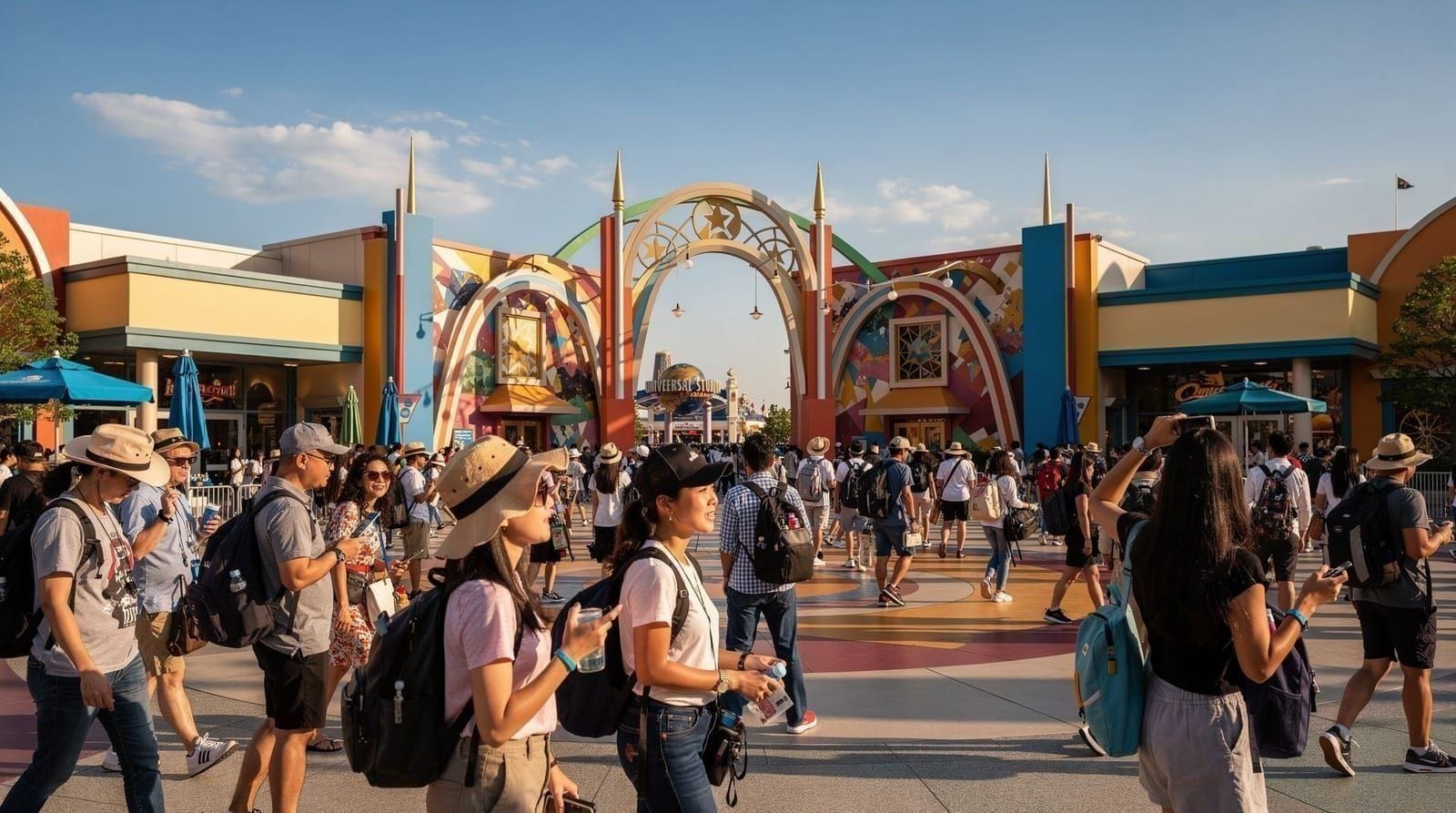
Osaka Bay is a different pace entirely — Universal Studios Japan (USJ), with its Super Nintendo World expansion, is the main draw and easily fills a full day; the USJ 1-day studio pass is the standard entry ticket, and an express pass is worth considering on weekends or during Japanese school holidays when queues for the top rides can run past an hour.
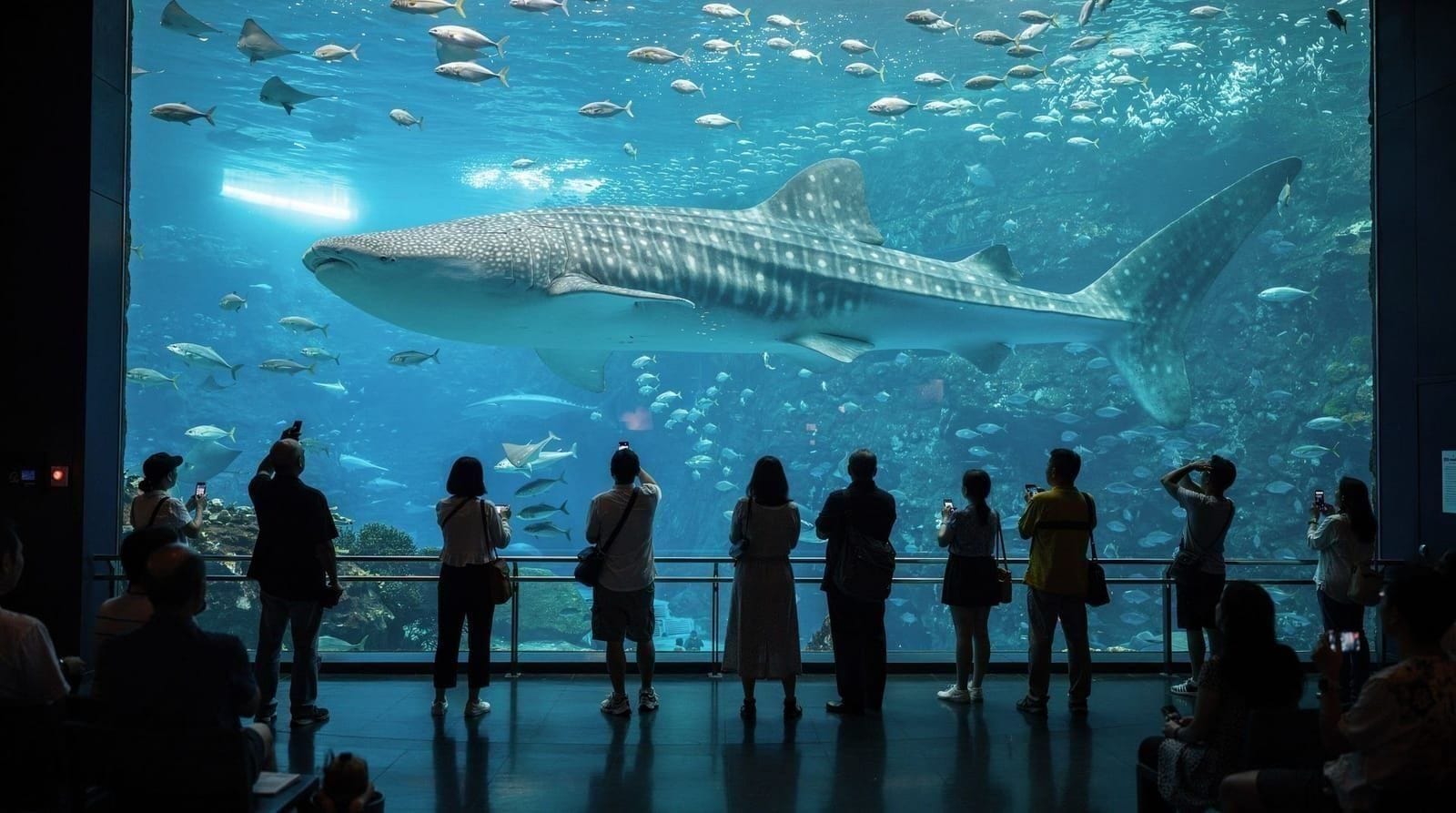
A short walk or one subway stop away, the Kaiyukan Aquarium is built around a central tank housing whale sharks and manta rays, viewed via a spiraling ramp that descends through simulated Pacific Rim ecosystems — reserve half a day if you’re pairing it with USJ. Full details at Osaka Bay & USJ.
Where to eat: Osaka’s food culture beyond the guidebook
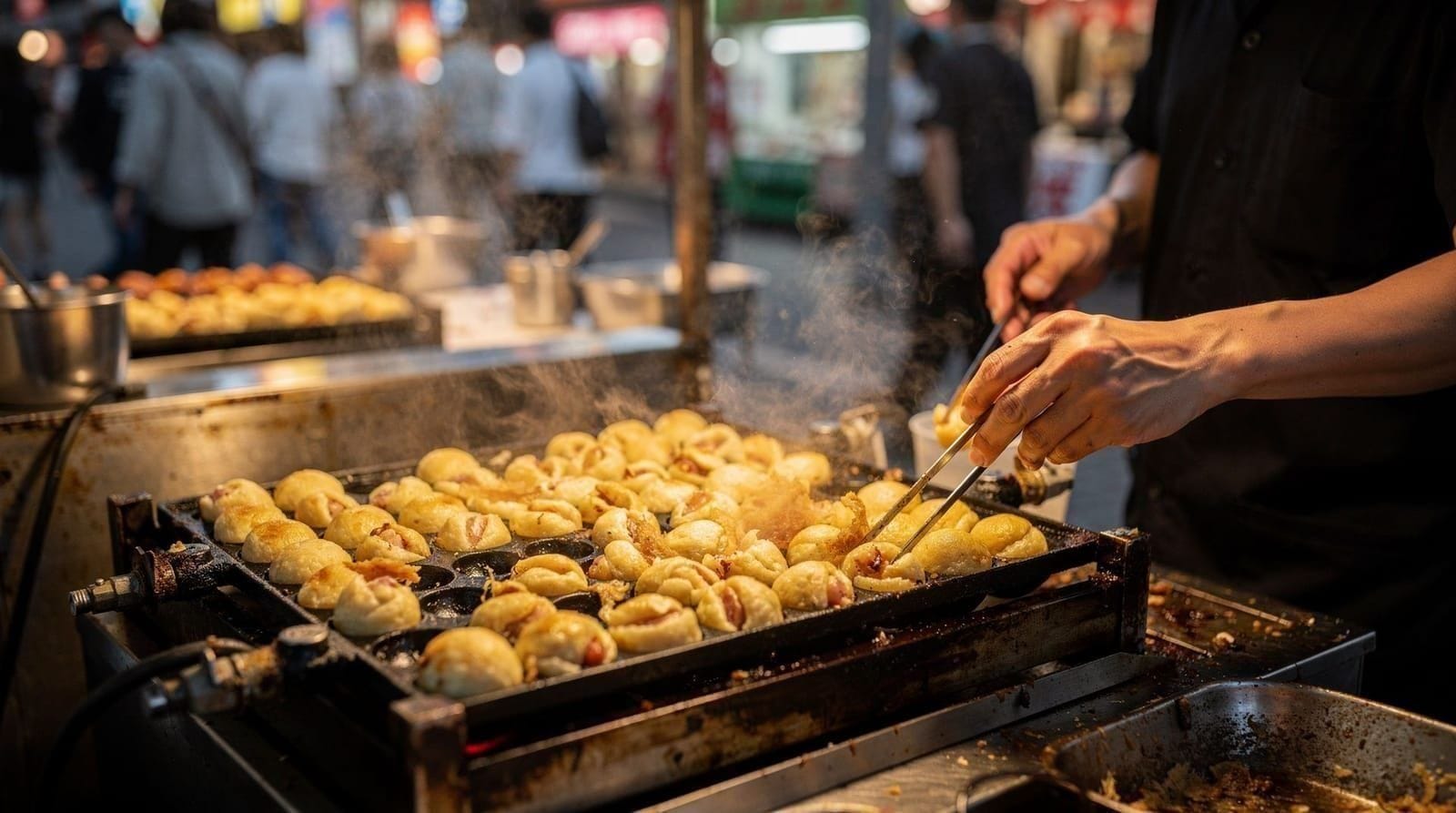
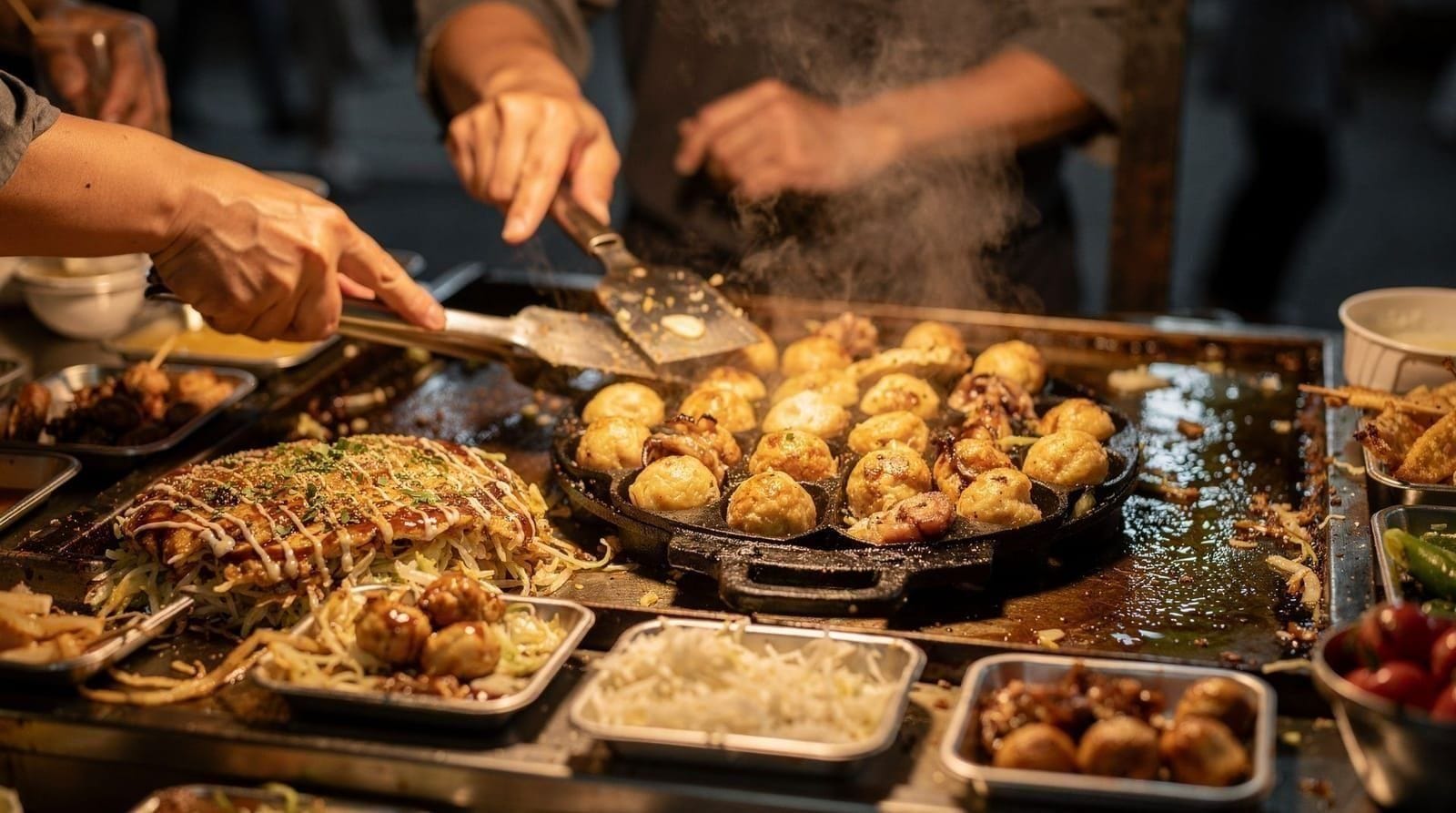
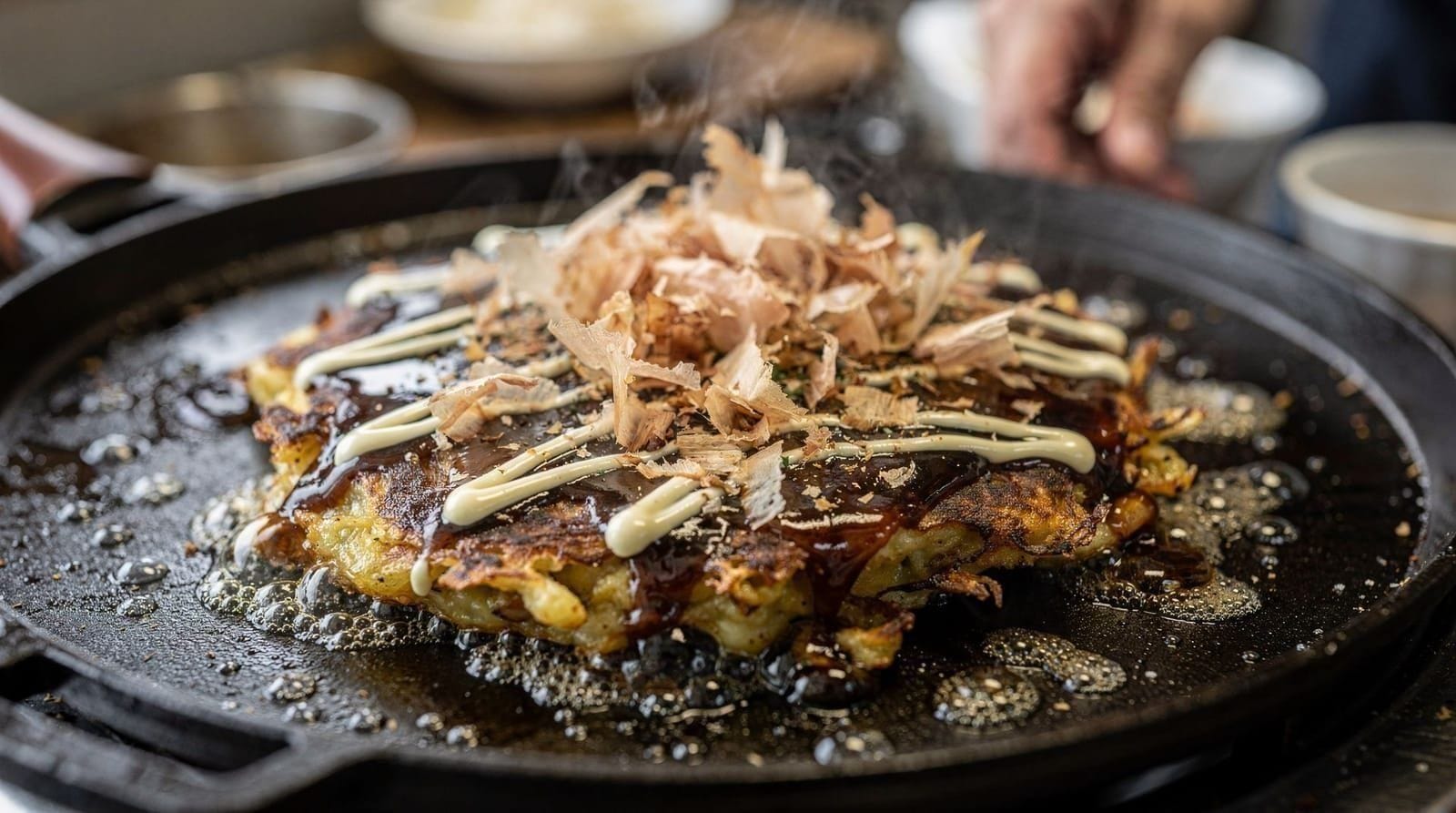
Osaka’s signature dishes — takoyaki (octopus balls), okonomiyaki (savory cabbage pancake), and kushikatsu — are sold everywhere from convenience-store-adjacent stalls to sit-down restaurants, and quality varies enormously by price point in a way that’s easy to misjudge as a visitor. A ¥500 takoyaki stand near a train station is usually fine; a ¥1,200 “premium” version near Dotonbori with a queue of tourists outside is a coin flip.
Our takoyaki guide and okonomiyaki guide name specific places worth the wait versus places to skip. If you want a curated introduction rather than trial and error, the Dotonbori and Shinsekai foodie tour covers both neighborhoods’ specialties in one evening.
Paying your way: cash, IC cards, and contactless
Osaka is more card-friendly than it was even a few years ago, but it isn’t fully cashless the way Tokyo’s convenience-store culture sometimes suggests. An ICOCA card covers trains, buses, and an increasing number of convenience-store and vending-machine purchases with a tap, and most chain restaurants and department stores now take contactless credit cards without issue.
Smaller family-run izakaya, market stalls at Kuromon Ichiba, and some of the cheaper kushikatsu counters in Shinsekai remain cash-only, so carrying a few thousand yen is still worth it even on a card-forward trip. 7-Eleven ATMs are the most reliable option for withdrawing cash on a foreign card if you run short. Our ICOCA card guide and the cash or card in Japan blog post cover the practical detail neighborhood by neighborhood.
Manga, anime, and pop culture in Osaka
Osaka doesn’t have Tokyo’s Akihabara-scale concentration of otaku culture, but Nipponbashi (Den Den Town), a strip running south from Namba, is Kansai’s equivalent — multi-floor shops selling manga, retro and current-generation games, figures, and cosplay costumes, with a noticeably calmer, less overwhelming crowd than Akihabara at the same time of day. Shin-Osaka and Umeda also have themed cafes tied to specific franchises that rotate seasonally. Our manga and anime in Osaka guide maps out the specific shops and cafes worth a detour versus the ones aimed purely at passing tourists.
Sumo and traditional spectacle
Osaka hosts one of sumo’s six annual grand tournaments (honbasho), the Osaka Basho, held every March at the Edion Arena — a genuinely different way to spend an afternoon than temple-hopping, with wrestlers moving through the ranks over 15 days of bouts that each last only seconds but carry a full ceremonial buildup. Outside tournament dates, a handful of operators run stable visits and simplified sumo experiences with actual rikishi, giving a taste of the training and ritual without needing to time a trip around the March schedule. Our sumo in Osaka guide covers ticket booking for the honbasho and how the experience-style visits differ from watching an actual tournament.
Budgeting for a trip through Osaka
Costs in Osaka run noticeably lower than Tokyo for comparable quality, particularly for food — a satisfying meal from a street stall or casual restaurant rarely exceeds ¥1,500, and even a sit-down dinner with drinks in Dotonbori or Umeda is usually under ¥5,000 per person unless you’re seeking out a high-end kaiseki or wagyu restaurant.
Transport is the other major variable: a day of heavy sightseeing on Osaka Metro plus one paid attraction runs a few thousand yen, while an attraction pass like the Osaka Amazing Pass can flatten that cost if you’re hitting several sights in one day. Our Osaka trip cost and budget guide breaks down daily spending across budget, mid-range, and comfortable trip styles, including realistic accommodation ranges by neighborhood.
Where to stay
Namba and Dotonbori put you in the middle of the nightlife and food scene but mean more noise and higher prices; Umeda is quieter, better connected for day trips (Shin-Osaka’s shinkansen station is a short ride away), and has a more corporate feel after 9pm. Shin-Osaka itself is convenient for early departures but has little neighborhood character of its own. Budget travelers often base in Tennoji, which is well connected, cheaper, and 15 minutes from both Namba and Umeda by train. Full breakdown of neighborhoods and price bands in our where to stay in Osaka guide.
Best time to visit Osaka
Cherry blossoms typically reach full bloom in Osaka around April 1, with the bloom window running from late March through the first week of April — expect premium hotel rates and crowded parks during this stretch. Autumn (November into early December) brings milder temperatures and good foliage at Osaka Castle Park and further out at Minoo Park.
Summer (June through August) is hot and humid, 28-35°C with high humidity, plus a rainy season (tsuyu) through mid-June and typhoon risk from August into September. January, February, and June are the cheapest months for flights and hotels, if you don’t mind cooler or wetter weather. Full seasonal breakdown at best time to visit Osaka and cherry blossom guide.
Festivals worth planning a trip around
Tenjin Matsuri, held every July 24-25, is one of Japan’s three largest festivals and centers on a river procession of boats along the Okawa River near Osaka Tenmangu Shrine, capped with a substantial fireworks display over the water — it’s crowded, hot, and genuinely worth braving both if the dates line up with a summer trip.
Outside Osaka proper, Kyoto’s Gion Matsuri runs through the entirety of July, with its most photographed parade floats appearing mid-month, and is an easy add-on given the 30-minute train ride. Smaller neighborhood festivals (natsu matsuri) pop up at local shrines throughout summer with yukata-clad crowds, food stalls, and modest firework displays — less spectacle than Tenjin Matsuri, but a more accessible, less crowded way to see the same tradition.
Local etiquette and a few practical basics
Osaka has a reputation within Japan for being more informal and talkative than Tokyo or Kyoto — comedy (manzai) is practically a civic institution here, and Osakans are generally considered friendlier to small talk with strangers, including visitors. That said, standard Japanese etiquette still applies: remove shoes where indicated (most traditional restaurants, some accommodation), don’t eat while walking through crowded areas like Dotonbori (it’s considered poor manners, though less strictly enforced than a decade ago), and queue in the marked lines on train platforms rather than clustering at the doors.
Cash is still widely used, though contactless card payment and IC card taps have become common at convenience stores, chain restaurants, and train stations; smaller family-run restaurants and market stalls are more likely to be cash-only, so carrying some yen is still worth it even on a card-forward trip. 7-Eleven ATMs reliably accept foreign cards for withdrawals.
Day trips from Osaka
This is Osaka’s biggest practical advantage over basing in Kyoto or Nara: everything in the Kansai region is close. Kyoto is 30 minutes by JR or Hankyu train; Nara is 45 minutes; Kobe is 30 minutes; Himeji, with its UNESCO-listed castle, is about an hour by shinkansen or limited express; Koyasan, the mountain temple complex in Wakayama Prefecture, takes roughly 2 hours by train and funicular but makes for a worthwhile overnight temple stay.
Our destination guides for Kyoto, Nara, Kobe, Himeji, and Koyasan cover each in depth, and our Osaka 3-day itinerary and Kansai 5-day itinerary show how to sequence them.
Tourist traps and honest warnings
Dotonbori after dark has touts working for restaurants and bars, some of them running inflated “seating charge” or “table charge” scams aimed specifically at tourists — walk past anyone stopping you on the street with an English pitch. USJ and Osaka Castle both see long queues on weekends, Japanese public holidays, and during Golden Week (late April-early May); buy timed tickets in advance where possible. Earthquakes are a moderate but real risk across Kansai (Japan’s building codes are strict, and minor tremors are common and rarely felt as dangerous); typhoon season (August-September) can disrupt train schedules, especially toward Wakayama’s coast. Overall, Osaka has very low street crime, and scams beyond overpriced nightlife are rare.
Seasonality at a glance
| Season | Months | Conditions | Highlight |
|---|---|---|---|
| Cherry blossom | Late Mar-early Apr | Mild, crowded, premium hotel rates | Osaka Castle Park, Nishinomaru Garden |
| Summer | Jun-Aug | Hot, humid, 28-35°C, typhoon risk from Aug | Tenjin Matsuri (Jul 24-25) |
| Autumn foliage | Nov-early Dec | Mild, moderate crowds | Osaka Castle Park, Minoo Park |
| Winter | Dec-Feb | Cool, dry, cheapest flights and hotels | Illuminations, low crowds |
Frequently asked questions about Osaka
How many days do you need in Osaka?
Two full days covers the main neighborhoods (Dotonbori, Umeda, Osaka Castle) at a reasonable pace; three days lets you add Shinsekai, Osaka Bay, or a full day at USJ without rushing. Many visitors use Osaka as a 3-5 night base and day-trip to Kyoto or Nara on top of that.
Is Osaka or Kyoto better as a base for Kansai?
Osaka has better transport links to Kobe, Himeji, and Koyasan, generally cheaper hotels, and a stronger food scene; Kyoto has the temples and traditional atmosphere concentrated within the city itself, so less day-tripping is needed there. Many visitors split their stay between the two rather than choosing one.
How much does a day in Osaka cost?
Budget travelers can manage on roughly ¥8,000-12,000 per day (about $70-105) excluding accommodation, covering food, local transport, and one paid attraction. Mid-range spending runs ¥15,000-25,000 ($130-220) per day; add more for USJ tickets or private tours.
Is Osaka safe for tourists?
Yes — Osaka has very low violent crime, and the main risks for visitors are pickpocketing in crowded areas like Dotonbori and the overpriced-nightlife scams mentioned above, not physical danger.
What is the best way to get from Kansai Airport to Osaka?
The Nankai Rapi:t limited express to Namba (about 38-45 minutes) or the JR Haruka to Shin-Osaka/Osaka Station (about 50 minutes) are the fastest options; both cost roughly ¥1,500-2,400 one-way.
Do I need a JR Pass for a Kansai-only trip?
The national JR Pass is usually not worth it if you’re staying within Kansai — the regional JR Kansai Area Pass or an Osaka Amazing Pass covers the same ground for less money, since the nationwide pass is priced around shinkansen travel between distant regions.
Can you do Kyoto as a day trip from Osaka?
Yes — Kyoto is about 30 minutes from Osaka by JR or Hankyu train, making it an easy, common day trip. Many visitors do the reverse as well, basing in Kyoto and day-tripping into Osaka for its food scene.
What’s the best neighborhood to stay in Osaka?
Namba/Dotonbori for nightlife and food, Umeda for quieter stays with strong transport links, and Tennoji for budget-conscious travelers who still want central access — see our where to stay guide for a full comparison.
Is Osaka mostly cashless now?
No — cards and IC card taps cover most chain restaurants, convenience stores, and train fares, but smaller family-run restaurants and market stalls, especially at Kuromon Ichiba and in Shinsekai, are often cash-only. Carry some yen alongside an ICOCA card to avoid getting caught out.
Where can I find manga and anime shops in Osaka?
Nipponbashi (Den Den Town), a strip running south from Namba, is Osaka’s equivalent of Tokyo’s Akihabara — multi-floor shops for manga, games, and figures, with noticeably smaller crowds than Tokyo’s version.
Top experiences
Bookable activities with verified prices and instant confirmation on GetYourGuide.