Where to stay in Osaka, by neighborhood
Osaka: Osaka welcome tour local host
What is the best area to stay in Osaka?
Namba or Shinsaibashi for first-time visitors who want walkable access to Dotonbori, food, and nightlife; Umeda/Kita for a quieter base with the best rail connections to day trips; Tennoji for the lowest prices with still-solid transit access.
Osaka’s neighborhoods are close enough together that no choice of base is truly wrong, but the difference between staying in Namba and staying in Umeda shapes the daily rhythm of a trip more than most first-time visitors expect — one puts you inside the food-and-neon core of the city, the other gives you quiet nights and slightly faster access to day trips. This guide breaks down the four neighborhoods that cover most visitor needs, plus a few smaller pockets worth knowing about, along with realistic price ranges and who each area actually suits.
| Where | Namba, Umeda/Kita, Shinsaibashi, or Tennoji |
| Cost | Around ¥6,000-20,000/night for a standard double, area-dependent |
| Time needed | Decide neighborhood before comparing specific hotels |
| Getting there | Namba (Nankai Airport Express) or Umeda (Haruka express) from Kansai Airport |
| Best time to book | 2-3 months ahead; 4-6 months for cherry blossom or Golden Week |
Namba and Dotonbori: the classic first-timer base
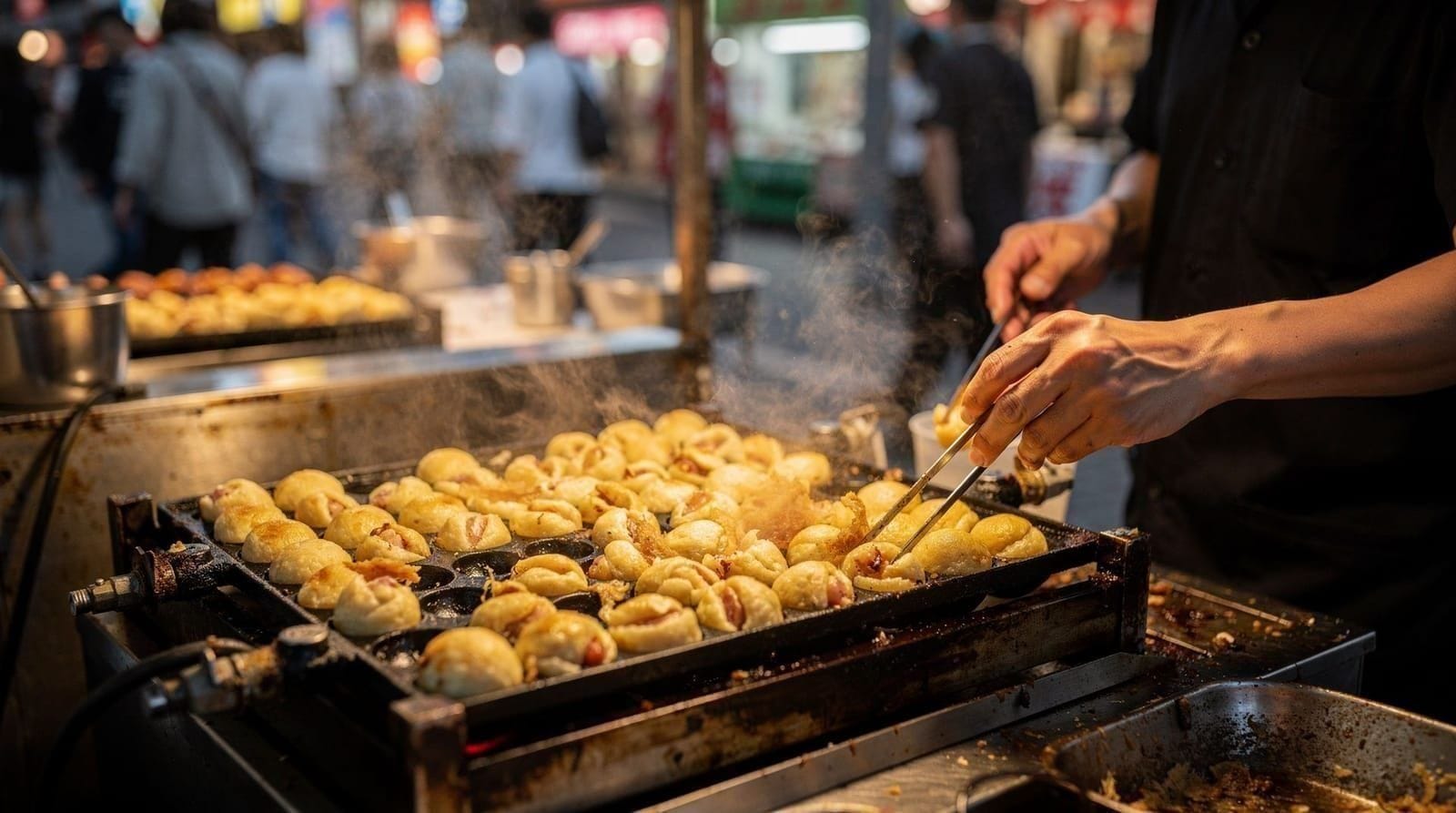
Namba and the adjacent Dotonbori canal district form Osaka’s most recognizable image — the Glico Running Man sign, the crab and pufferlantern shop-front mascots, and a density of food stalls, izakaya, and nightlife that runs late into the night. Staying here means most of the Dotonbori food guide is a walk from your hotel door, along with easy subway access via Namba Station (multiple lines converge here) to everywhere else in the city.
The trade-off is noise — rooms directly overlooking the canal or main strip stay loud until well past midnight, particularly on weekends, and this is the area most likely to have street touts trying to steer tourists into overpriced bars, covered honestly in the Dotonbori nightlife guide.
Hotel prices here run mid-to-upper for Osaka — expect ¥10,000-20,000 for a standard business hotel double, with capsule and hostel options from ¥3,500 for travelers prioritizing location over space. Namba also has the best late-night transit and taxi availability of any Osaka neighborhood, useful if evenings run long.
Osaka ultimate walking tour: castle and Dotonbori is a practical way to get oriented on day one if you’re basing here, covering the two anchor sights most visitors want first.
Shinsaibashi: the shopping-adjacent middle ground
Shinsaibashi sits directly between Namba and Umeda, centered on the roofed Shinsaibashi-suji shopping arcade — over 600 meters of shops running from mid-range fashion to high-end boutiques. It’s a five-to-ten-minute walk to Dotonbori without sitting directly on top of the loudest strip, making it a reasonable compromise for visitors who want walkable access to the Namba food scene but slightly calmer nights. Accommodation here spans a similar range to Namba, ¥9,000-18,000 for standard doubles, with a slightly higher concentration of mid-range international chain hotels than Namba’s more local-hotel-heavy stock.
Umeda and Kita: the quieter, better-connected base
Umeda, in Osaka’s Kita (north) ward, functions as the city’s other major hub — more business district and department store in character than Namba’s food-and-nightlife identity, built around Osaka Station and the elevated Umeda Sky Building. It’s a genuinely calmer place to sleep, with fewer street-level crowds after 9pm, and it has a marginal edge on rail connectivity: JR lines from Osaka Station run directly toward Kyoto and Kobe, shaving a few minutes off day-trip transit compared to starting from Namba.
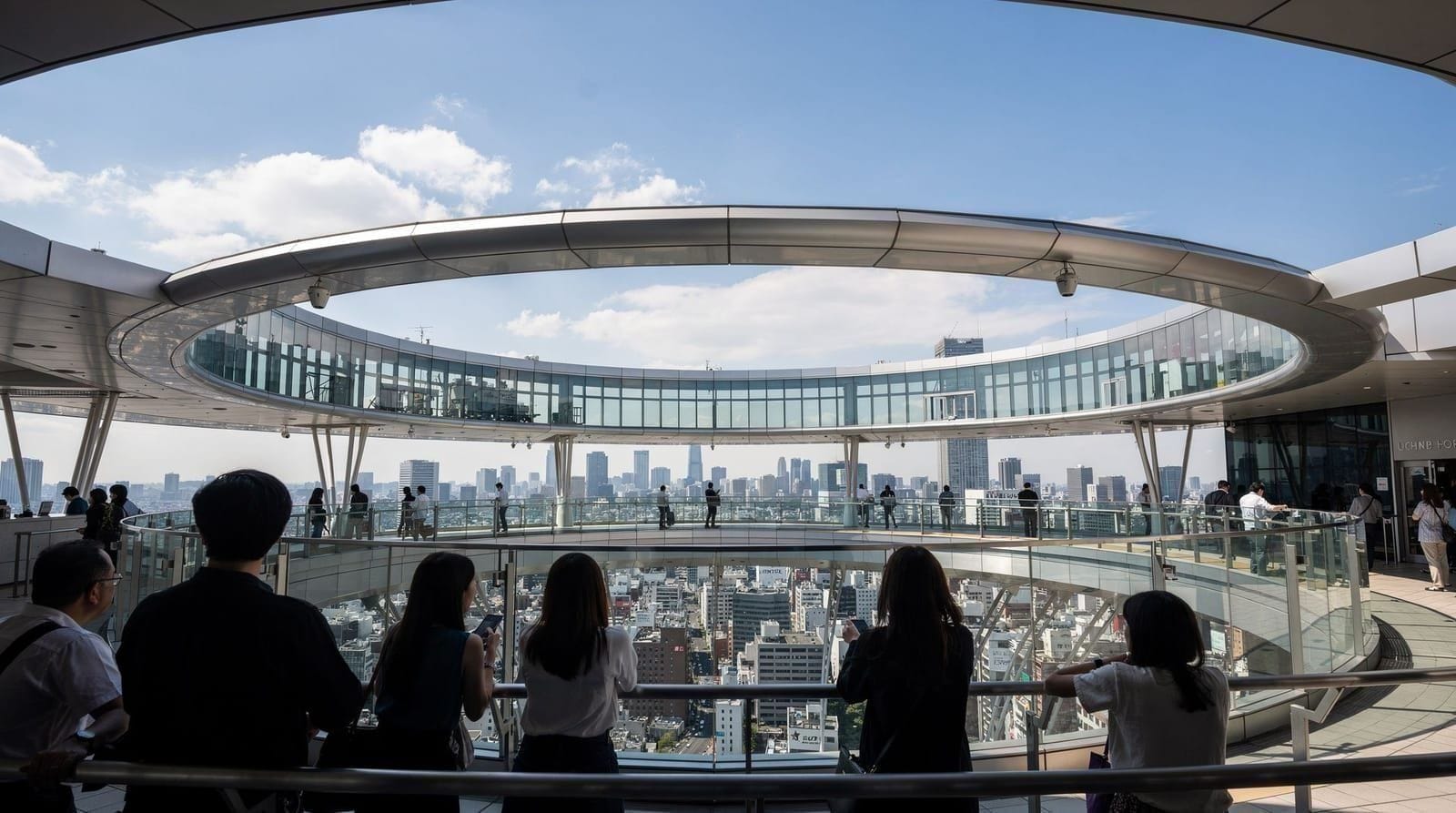
The area’s own attractions — the Umeda Sky Building’s Floating Garden Observatory, HEP Five’s rooftop Ferris wheel, and a genuinely good underground dining scene beneath the station complex — are enough to fill an evening without needing to travel to Namba at all.
Umeda night walk: food and pubs covers this side of the city for visitors basing here, pairing the observatory views with a more local, less tourist-dense food scene than Dotonbori’s main strip.
Hotel prices in Umeda run comparable to Namba, ¥9,000-19,000 for standard doubles, with a somewhat higher share of business-traveler-oriented hotels that trend efficient rather than characterful.
Tennoji and Shinsekai: the budget option
Tennoji, anchoring Osaka’s southern end, combines a major transit hub (JR, subway, and Kintetsu lines converge here) with some of the city’s lowest hotel rates — expect ¥6,000-13,000 for standard doubles, meaningfully cheaper than equivalent rooms in Namba or Umeda.
The adjacent Shinsekai district carries an unpolished, retro-Osaka character built around the Tsutenkaku Tower, cheap kushikatsu counters, and a nightlife scene that leans grittier and more tourist-trap-prone after dark than the city’s other core areas — the kushikatsu guide covers where to eat well here versus where to avoid overpriced tourist counters. Tennoji Zoo and Tennoji Park sit right at the station, and Shitennoji Temple, one of Japan’s oldest Buddhist temples, is a short walk away.
Osaka’s dark side: Shinsekai night walking tour is a reasonable way to see this neighborhood’s more atmospheric, less sanitized side with context, rather than wandering it alone after dark without knowing which streets to avoid.
Osaka Bay and USJ-adjacent areas
Staying near Nishikujo or Bentencho stations shortens the commute to Universal Studios Japan to under 15 minutes, worth considering only if USJ is the dominant priority of the trip — these areas offer comparatively little else, with fewer restaurants, less nightlife, and a more residential, less atmospheric feel than Osaka’s core neighborhoods. Most visitors, even those planning a full USJ day, find it simpler to base in Namba or Umeda and accept a 20-30 minute transit rather than relocating for a single day.
Smaller pockets worth knowing
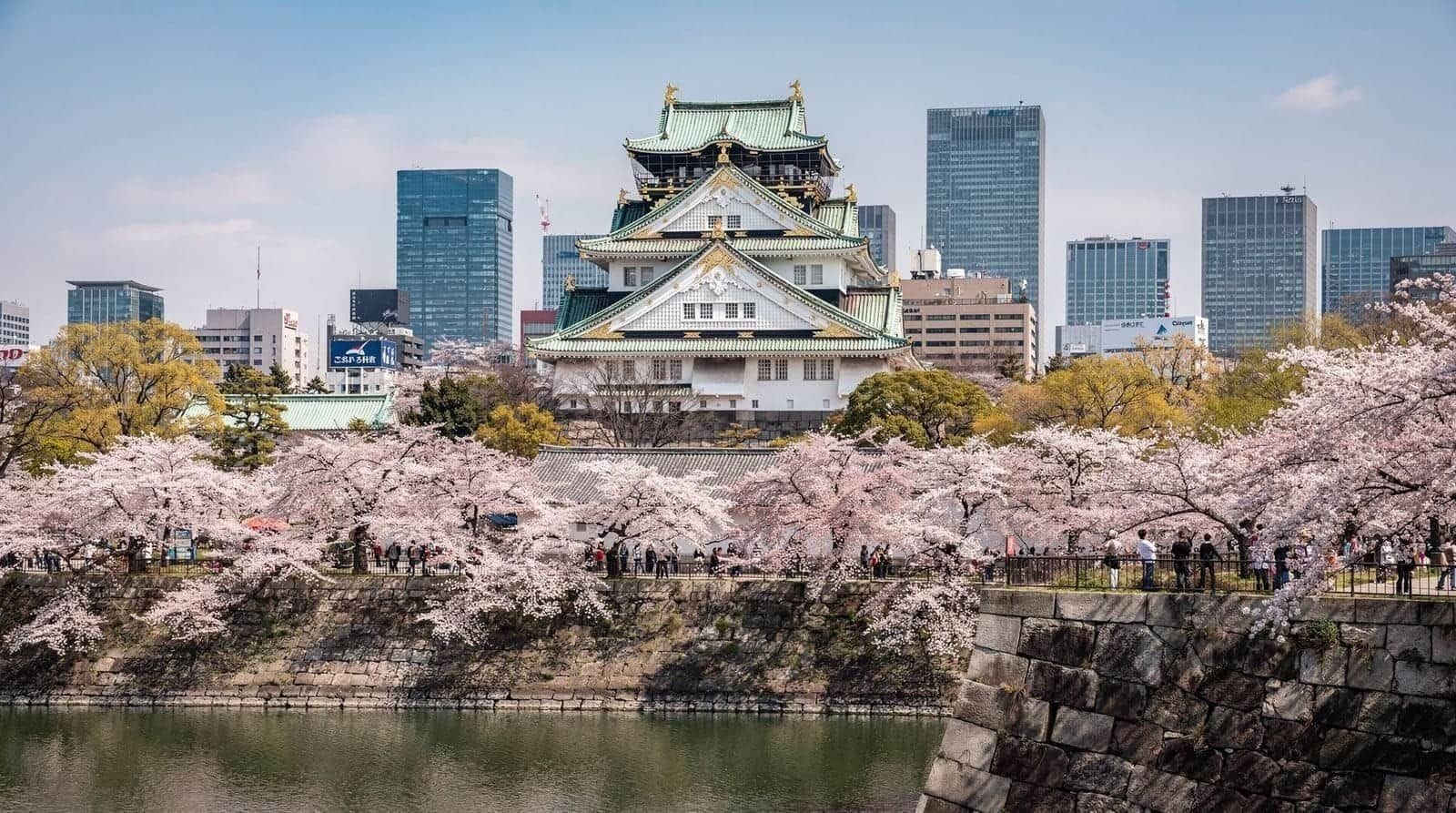
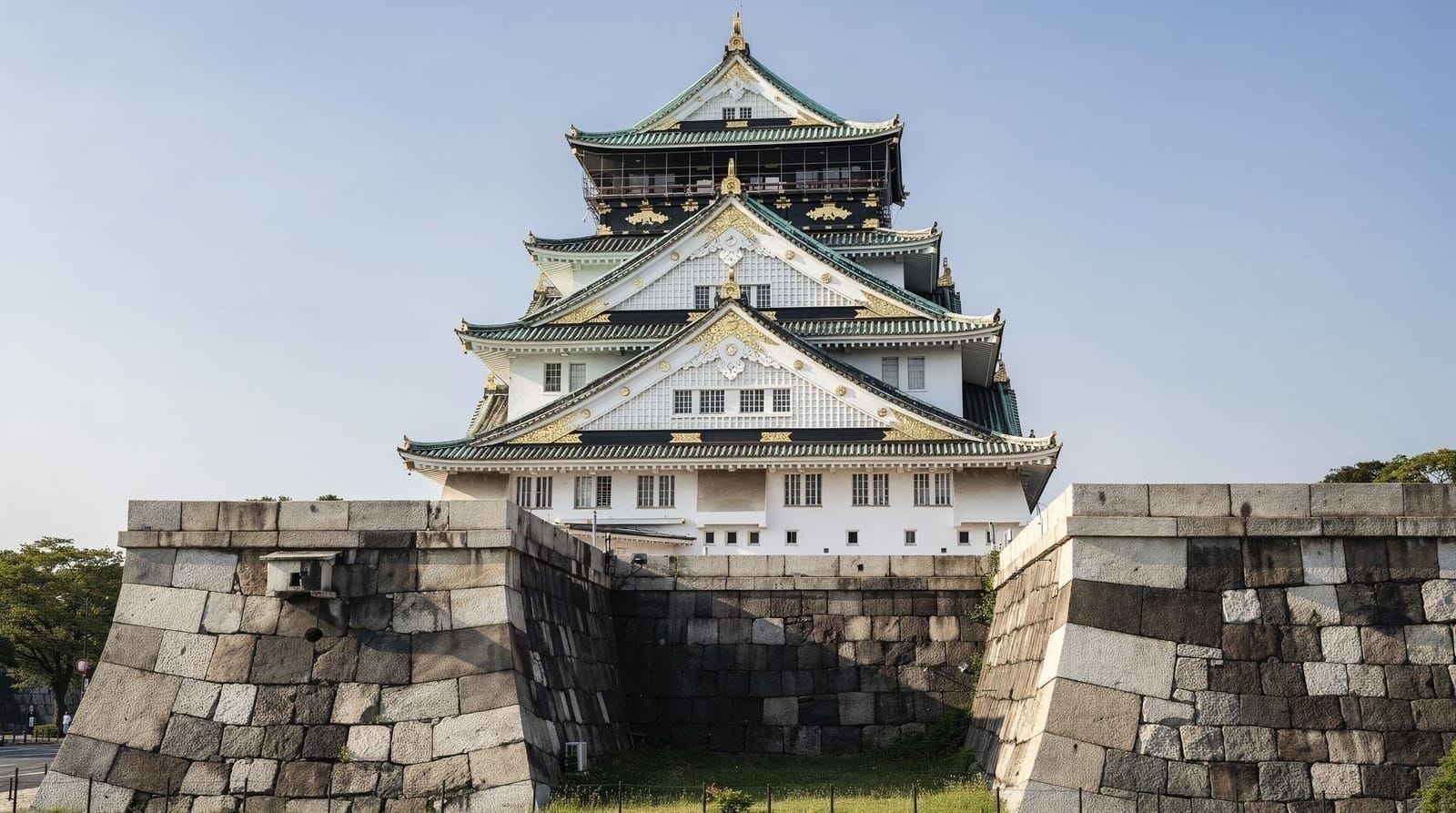
Shin-Osaka, the Shinkansen (bullet train) station area, is worth considering only for a single night bookending a trip that starts or ends with a bullet train connection — it’s efficient but has little independent character or nightlife. Osaka Castle area (around Morinomiya and Osakajokoen stations) offers a genuinely pleasant, park-adjacent base with fewer crowds, closer to the Osaka Castle guide sights, though it’s less centrally located for evening food-hopping than Namba or Umeda.
Matching neighborhood to trip length
For a 2-3 day trip, Namba or Shinsaibashi makes the most sense — the compact footprint means less time lost to transit when every day counts. For a 4+ day trip that includes multiple day trips to Kyoto, Nara, or Kobe, Umeda’s slightly better rail access starts to add up in saved minutes across several excursions, covered in the 3-day Osaka planning guide for exact day-by-day logistics. Families traveling with young kids often prefer Umeda or the Osaka Castle area for the calmer evening environment, detailed further in the Kansai family attractions guide and the Osaka with kids guide.
Booking timing and price swings
Standard-season rates for a mid-range double run ¥9,000-18,000 across most central neighborhoods, with 2-3 months of advance booking generally sufficient. Cherry blossom season (late March-early April 2026) and Golden Week (late April-early May) push rates up 20-40% and can sell out popular mid-range hotels 4-6 months ahead — see the cherry blossom Osaka guide for the specific 2026 peak dates driving this demand. New Year (late December-early January) sees a similar but shorter squeeze. January, February, and June remain the most reliable months for both availability and lower rates, detailed in the best time to visit Osaka guide.
Accommodation types beyond hotels
Capsule hotels, common across Namba, Umeda, and Shinsaibashi, run ¥3,000-5,000 per night and suit solo travelers prioritizing budget and location over space — modern versions are clean, well-ventilated, and include lockers and shared bath facilities, a genuinely comfortable option rather than a last resort. Business hotel chains (Toyoko Inn, APA, Dormy Inn, Super Hotel) dominate the ¥8,000-15,000 range and offer small but efficient private rooms, often with a shared or in-room bath. For a different kind of overnight experience entirely, a shukubo (temple lodging) stay at Koyasan makes a good one-night addition to an Osaka-based itinerary, though it requires factoring in the roughly 2-hour transit each way.
Getting from Kansai Airport to your neighborhood
The Haruka express (¥2,300-3,600, about 75 minutes) runs to Shin-Osaka and Osaka stations, making it the more direct option for an Umeda-based stay. The Nankai Airport Express (roughly ¥930, about 45 minutes) runs to Namba Station, the faster and cheaper option for a Namba or Shinsaibashi base. Both run frequently enough that neighborhood choice, more than airport access specifically, should drive the decision — see the Osaka trip cost and budget guide for a full transport cost breakdown.
Solo travelers versus groups and families
Solo travelers generally get the most value from a Namba or Shinsaibashi base — capsule hotel options are widely available, the density of solo-friendly counter-seat restaurants (ramen shops, standing bars) is highest here, and evening activity is a short walk away without needing to plan a longer trip back after dark.
Families and groups often do better in Umeda or the Osaka Castle area, where hotel rooms tend to run larger on average, the evening environment is calmer for children’s bedtimes, and proximity to family-oriented sights like the Osaka Aquarium Kaiyukan or castle park grounds cuts down on daily transit with kids in tow — the Kansai family attractions guide covers more family-specific logistics. Couples without children have flexibility to choose based on preferred atmosphere rather than practical constraints, making Shinsaibashi’s middle-ground position a reasonable default.
Accessibility considerations
Osaka’s newer hotel stock, concentrated in Umeda and parts of Namba, generally offers better step-free access and elevator availability than older business hotels in Tennoji or smaller Shinsaibashi properties — worth checking specific accessibility details directly with a hotel rather than assuming based on neighborhood alone, since individual property age varies considerably even within the same area.
Major stations (Osaka, Namba, Umeda) have working elevators and step-free routes between platforms and street level, though some older subway stations and smaller local stations along day-trip routes have more limited step-free access, worth factoring into destination choice for travelers with mobility considerations. The Koyasan Okunoin guide and other guides on this site note accessibility specifics for individual sights where relevant.
Ryokan and traditional accommodation options
While Osaka itself leans heavily toward Western-style hotel rooms rather than traditional ryokan (Japanese inns with tatami rooms and futon bedding), a handful of ryokan-style properties exist in and around Namba and Tennoji, running ¥12,000-25,000 per night and offering a more distinctly Japanese overnight experience — worth considering for at least one night of a longer trip even for travelers otherwise staying in standard hotels. For a fuller traditional-lodging experience, a shukubo (temple lodging) stay at Koyasan, roughly 2 hours from Osaka, offers tatami rooms, shared baths, and shojin ryori vegetarian meals in a genuinely different overnight setting than anything available within Osaka proper.
Noise levels by neighborhood, realistically
Namba’s core streets directly on or near Dotonbori canal run loud until roughly 1-2am on weekends, quieter but still active on weekdays — a real consideration for light sleepers, and one where choosing a hotel a block or two off the main canal-front, rather than directly on it, meaningfully improves sleep quality without sacrificing much walkability.
Umeda’s noise profile is generally lower given its more business-district character, with most late-night activity concentrated in specific entertainment blocks rather than spread across the whole area. Shinsaibashi sits at a genuine middle point — audibly quieter than Dotonbori’s main strip by a short walk, louder than Umeda overall. Tennoji varies more by specific block, with areas immediately adjacent to Shinsekai’s nightlife strip running louder after dark than the calmer, more residential stretches near Tennoji Park.
How far in advance to decide on a neighborhood
Neighborhood choice is worth finalizing before booking specific hotels, since it shapes which properties are even worth comparing — deciding on Namba versus Umeda first, then filtering hotel options within that neighborhood by price and specific amenities, is a more efficient process than browsing hotels city-wide without a neighborhood anchor. For trips during cherry blossom season, Golden Week, or Tenjin Matsuri (detailed in the Tenjin Matsuri guide), neighborhood decisions are worth locking in even earlier than the booking timelines above, since the best-located properties in any given area sell out well before generic availability disappears citywide.
Reading Osaka hotel listings correctly
Room sizes in Osaka, as across Japan generally, run smaller than equivalent price-tier hotels in North America or Europe — a “standard double” in a ¥10,000-15,000 business hotel typically measures 13-18 square meters, adequate for sleeping and storing luggage but not spacious for lounging, and worth checking listed square meterage rather than assuming based on price alone.
“Twin” rooms (two separate single beds) are more common than “double” rooms (one shared bed) in Japanese hotel inventory, worth specifying clearly when booking if bed configuration matters. Many business hotels include a small en-suite bathroom with a combined shower-and-tub unit rather than separate facilities — standard rather than a downgrade, but worth expecting rather than being surprised by on arrival.
Combining a neighborhood choice with day-trip plans
Travelers planning several day trips to Kyoto, Nara, or Kobe within a single stay sometimes consider splitting a longer trip across two bases — a few nights in central Osaka followed by a night or two in Kyoto itself, for instance — though for most itineraries under a week, staying in a single well-connected Osaka base and day-tripping out and back each day is simpler and avoids the overhead of repacking and checking in and out of multiple hotels.
The 3-day Osaka planning guide and Kansai day trip planner tool both assume a single Osaka base for exactly this reason, and the transit-time math generally supports it: even Himeji, the most distant common day trip, stays under 90 minutes each way from central Osaka.
Booking platforms and what to check before confirming
Most Osaka hotels are bookable through mainstream international platforms as well as Japan-specific sites, and prices generally track closely between them, though a direct hotel booking sometimes includes small perks (late checkout, a room upgrade if available) that third-party bookings don’t.
Before confirming, check the cancellation policy specifically — many of Osaka’s better mid-range rates during peak season are non-refundable, while slightly pricier “flexible rate” options allow a free cancellation window, worth the extra cost if travel dates still carry any uncertainty. Also worth checking: whether the listed price includes the small municipal accommodation tax that Osaka applies per night above a certain room rate, since some platforms display it separately at checkout rather than folding it into the headline price.
Longer stays: weekly and monthly rates
Visitors staying a week or more in Osaka, or splitting an extended Japan trip around a central Osaka base, can sometimes find weekly-rate discounts at business hotel chains and serviced apartments, particularly in Umeda and Shin-Osaka where a higher share of the inventory serves domestic business travelers on extended assignments. These rates aren’t always advertised prominently online and are sometimes worth asking about directly, especially for stays of 7+ nights outside peak season, when a modest discount off the nightly rate can add up meaningfully across a longer booking.
Neighborhoods compared, side by side
| Neighborhood | Price level | Atmosphere | Best for |
|---|---|---|---|
| Namba/Dotonbori | Mid-upper | Loud, food-and-neon core | First-timers wanting walkable nightlife |
| Shinsaibashi | Mid | Calmer, shopping-adjacent | A middle-ground base without the loudest strip |
| Umeda/Kita | Mid | Quieter, business-district | Day trips and calmer evenings |
| Tennoji/Shinsekai | Budget | Retro, grittier after dark | Lower rates with strong transit access |
First trip versus repeat visit: does the choice change?
First-time visitors to Osaka generally do best in Namba or Shinsaibashi, since a first trip tends to prioritize the classic food-and-neon experience and walkable access to Dotonbori over transit efficiency for day trips.
Repeat visitors, or those on a longer stay with several planned day trips to Kyoto, Kobe, or Nara, often shift toward Umeda on a second or third visit, having already covered Dotonbori’s core sights and now valuing the marginally faster rail connections more than proximity to nightlife. Neither choice is wrong for either kind of trip, but knowing which priority matters more to your specific stay makes the neighborhood decision considerably faster.
Frequently asked questions about Where to stay in Osaka, by neighborhood
Should I stay near Namba or Umeda?
Namba puts you inside the Dotonbori food and nightlife district, walkable to most classic Osaka sights; Umeda is quieter, more business-district in feel, and has marginally better direct rail links for day trips to Kyoto and Kobe. Neither is more than 15 minutes from the other by subway.Is Shinsaibashi a good base?
Yes — it sits between Namba and Umeda, offers the city's main shopping arcade at your doorstep, and is a 5-10 minute walk to Dotonbori without the late-night noise directly on top of you.Where should I stay for Universal Studios Japan?
Staying near Nishikujo or Bentencho stations shortens the USJ commute to under 15 minutes, but these areas offer little else — most visitors prioritize Namba or Umeda and accept a 20-30 minute transit to USJ instead.Is Tennoji a good budget option?
Yes — Tennoji/Shinsekai has some of Osaka's lowest hotel rates with strong JR and subway connections, though the immediate Shinsekai area has a rougher, more nightlife-and-tourist-trap edge after dark than Namba or Umeda.How far in advance should I book accommodation in Osaka?
2-3 months ahead for standard dates, and 4-6 months ahead for cherry blossom season (late March-early April), Golden Week (late April-early May), or New Year, when both prices and availability tighten significantly.Is it worth staying near Kansai Airport instead of central Osaka?
Only if arriving on a very late or departing on a very early flight — airport-area hotels save a transit leg but add 45-75 minutes to every day-trip and city excursion for the rest of the stay.Can I walk between Osaka's main neighborhoods?
Namba, Shinsaibashi, and Dotonbori are walkable to each other (15-25 minutes); Umeda and Tennoji are each roughly 20-30 minutes by subway from Namba, not a comfortable walk with luggage or after a full day of sightseeing.
Top experiences
Bookable activities with verified prices and instant confirmation on GetYourGuide.