Kobe
Kobe travel guide from Osaka — Kobe beef, Nada sake breweries, Harborland, and Kitano's foreign residences, with real prices and train times.
Kobe: Kobe Osaka private tour optional Kobe beef lunch
Duration: 8 hours
Quick facts
- Distance from Osaka
- 20-30 min by train
- Days needed
- 1 (2 with Arima Onsen)
- Kobe beef dinner
- ¥8,000-25,000 ($74-$232)
- Best months
- October-November, March-May
Kobe is a 20-30 minute train ride from Osaka and reads almost as a different country: a compact harbor city squeezed between Mt Rokko’s forested slopes and Osaka Bay, with a 19th-century foreign settlement, Japan’s most famous beef, and one of its largest sake-producing districts all within walking distance of each other. It’s less about must-see monuments than about eating and walking well — a day here is built around Kobe beef, sake tastings in Nada, the Kitano district’s Western-style former consulate buildings, and the Harborland waterfront, with Arima Onsen’s hot springs a short bus ride into the hills if you have a second day.
| Where | Sannomiya Station area, 20-30 min from Osaka |
| Cost | Kobe beef dinner ¥8,000-25,000; sake tastings ¥500-1,500 |
| Time needed | 1 day; 2 with Arima Onsen |
| Getting there | JR, Hanshin, or Hankyu lines from Osaka |
| Best time | October-November, or March-May |
Getting from Osaka to Kobe
Three rail lines connect Osaka and Kobe, and which one to take depends on your starting point. The JR Kobe Line runs a special rapid service from Osaka Station to Sannomiya Station (Kobe’s main downtown hub) in about 20 minutes for roughly ¥420 ($3.90), and it’s covered by the JR Kansai Area Pass. The Hanshin Main Line connects Osaka-Umeda to Kobe-Sannomiya in about 30 minutes for around ¥330 ($3.05), a cheaper if slightly slower option. The Hankyu Kobe Line runs a similar route from Umeda to Kobe-Sannomiya, also around 27-30 minutes. Sannomiya Station is the practical arrival point for almost everything covered here — Kitano, Harborland, and central Kobe are all within a 15-20 minute walk or short bus ride of it.
Kobe beef
Kobe beef is a legally protected designation, not a marketing term: it refers specifically to Tajima-strain Wagyu cattle raised within Hyogo Prefecture and meeting strict marbling and weight criteria, and genuine Kobe beef restaurants display a certification tag with a registration number that diners can ask to see.
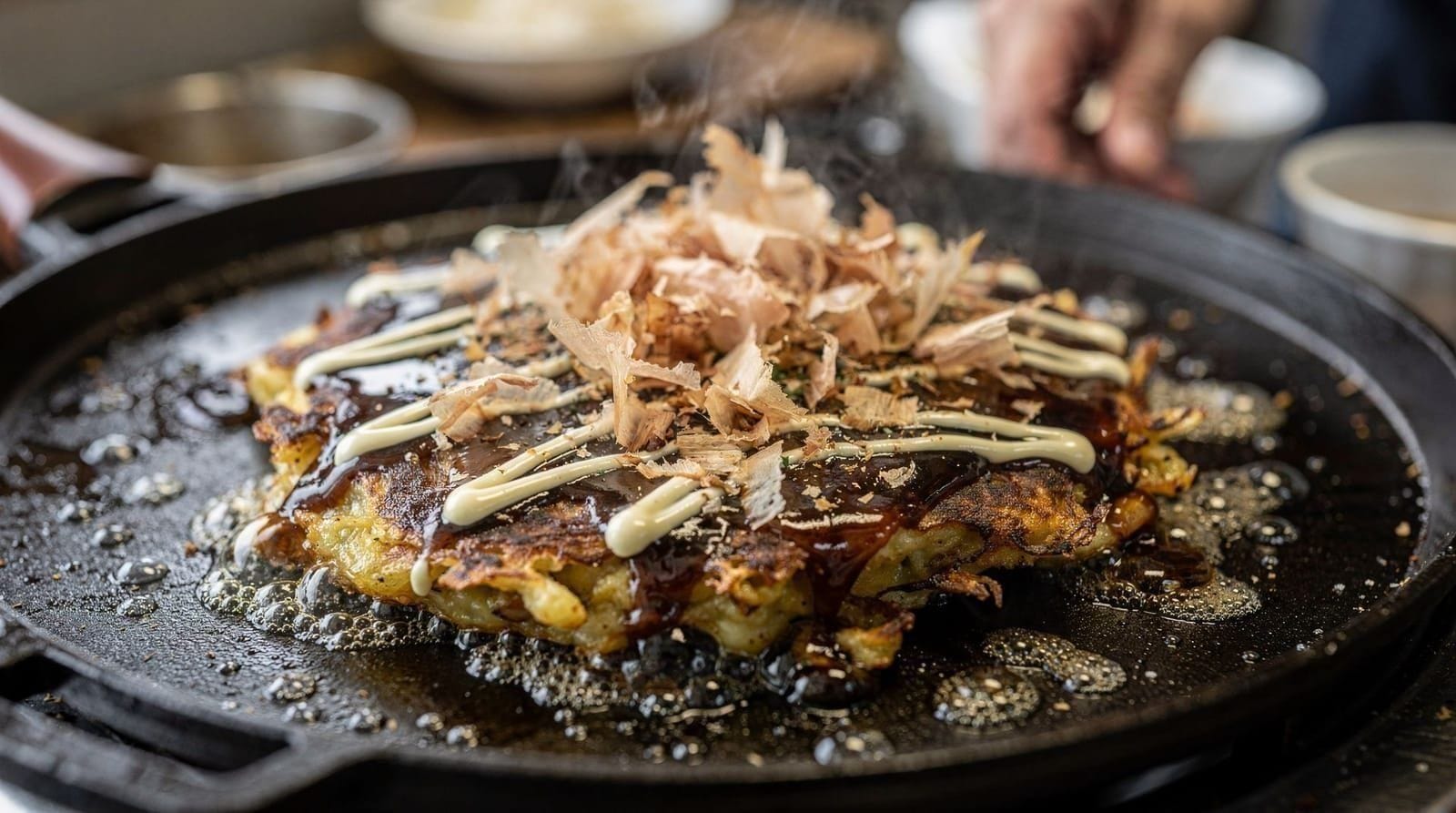
A teppanyaki dinner where a chef grills the steak tableside typically runs ¥8,000-25,000 (~$74-$232) per person depending on the cut and the restaurant’s reputation, with lunch courses often 30-40% cheaper than the equivalent dinner menu at the same restaurant — a practical way to try it without the full dinner price if budget matters. Sannomiya and the nearby Kitano-zaka slope have the highest concentration of certified Kobe beef restaurants, and reservations are worth making a day or two ahead for the well-known ones, especially on weekends.
The honest caveat worth knowing before booking: “Kobe beef” is used loosely by menus and marketing well beyond Hyogo Prefecture, including overseas, in ways that have nothing to do with the certified product — a genuine Kobe beef restaurant will show the certification tag without hesitation if asked, and a restaurant that can’t or won’t produce one is a reasonable signal to look elsewhere. Sannomiya’s better-known teppanyaki counters (where the same chef grills for the whole table, a format that also makes it easier to see the marbling and the certification tag up close) are generally a safer bet than a generic “Kobe beef” sign in a tourist-heavy side street.
Kobe day tour with optional Kobe beef lunch bundles a guided walk through the city with a reserved seating at a certified restaurant, useful if you don’t want to sort through which places are genuine versus riding on the name. For more detail on cuts, grading, and where locals actually eat it, see the Kobe beef guide and where to eat Kobe beef.
Nada, the sake district
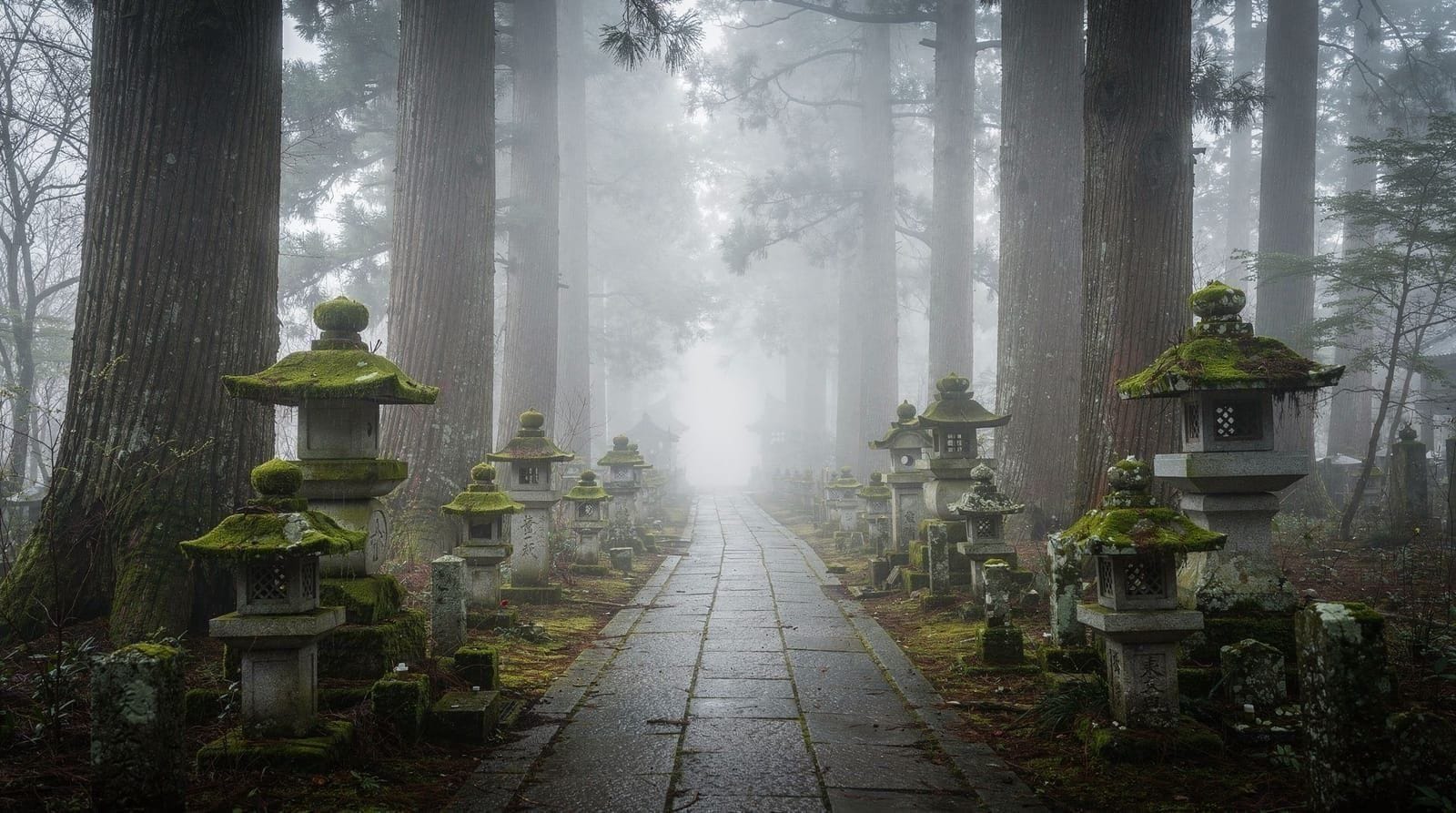
East of central Kobe, the Nada Gogo district is one of Japan’s five historic sake-brewing regions and, by volume, its largest — roughly a quarter of all sake produced in Japan comes from breweries here, a concentration owed to the district’s particularly hard, mineral-rich groundwater (called miyamizu) and its position between the mountains and the sea, which historically made it easy to ship sake to Osaka and Edo (old Tokyo) by boat.
Several breweries, including long-running names like Hakutsuru and Kikumasamune, operate small museums and tasting rooms open to visitors, typically ¥500-1,500 (~$4.65-$13.90) for a flight of 3-5 sakes, with some tastings free with museum admission. The district itself spans a walkable stretch between Uozaki and Sumiyoshi stations on the Hanshin Main Line, about 15-20 minutes east of Sannomiya.
Nada sake brewery district walking tour covers three or four breweries with a guide who can explain the differences in style between them, which is easy to miss tasting alone without context on grades and brewing methods. For more detail on the district’s history and layout, see the Nada sake district page and the Nada sake tasting guide.
Kitano and the foreign settlement
When Kobe’s port opened to foreign trade in 1868, merchants and diplomats built Western-style houses on the hillside above the harbor, and around twenty of these ijinkan (foreign residences) survive in the Kitano district today, several converted into small museums furnished in period style.
The Weathercock House, topped with its namesake weathervane, and the Moegi House are the two most visited, each charging a modest entry fee (typically ¥300-500, ~$2.80-$4.65) or bundled into a combined ticket covering several houses at once. The neighborhood’s narrow, sloping streets, a genuine mix of European and Japanese architecture, are a pleasant, unhurried walk that contrasts with the flatter, more commercial streets around Sannomiya Station below.
Harborland and the waterfront
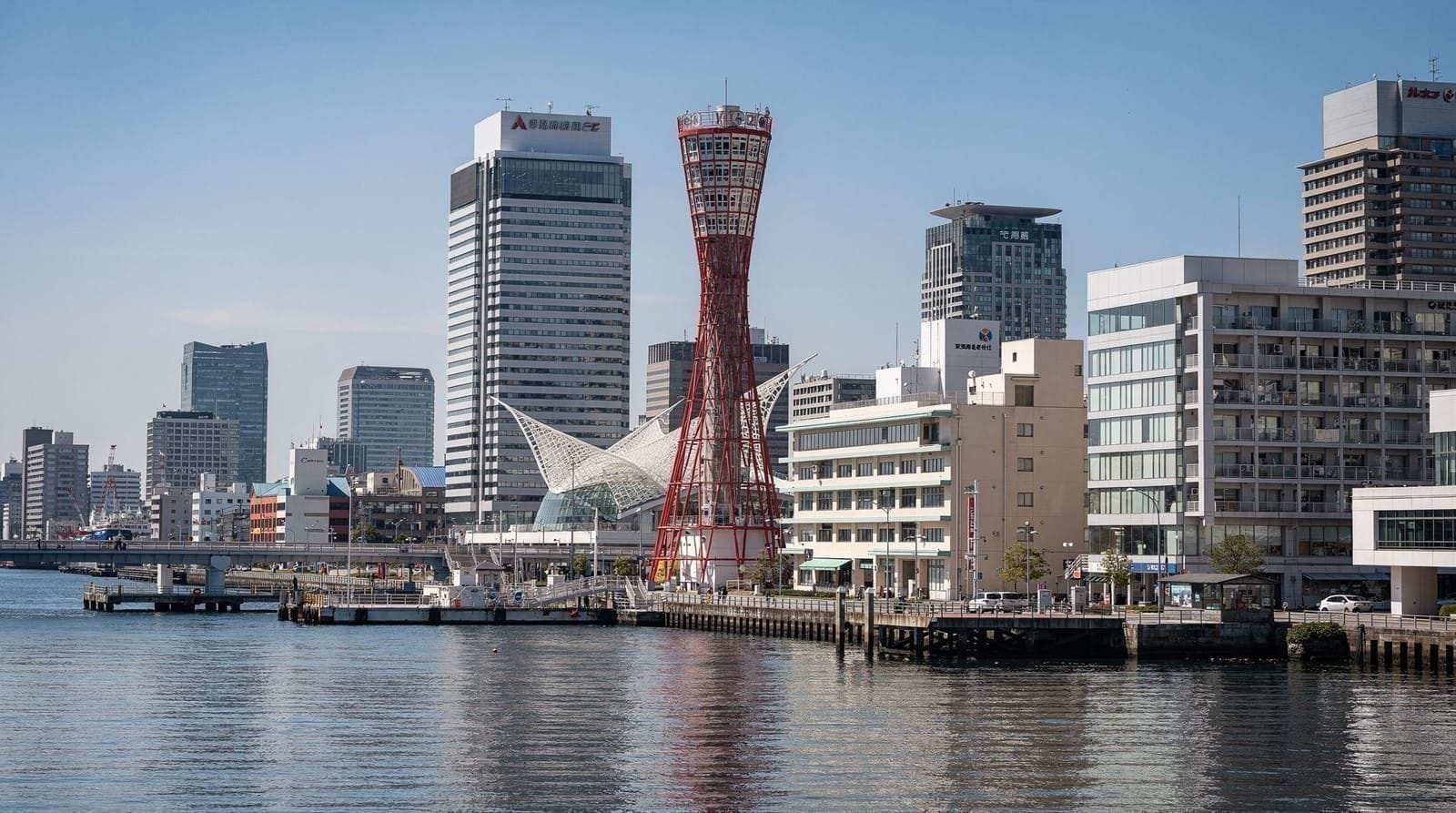
Kobe’s Harborland district, a 10-15 minute walk from Sannomiya, is the modern face of the city’s port — a shopping and dining complex built around Meriken Park, where the Kobe Port Tower’s distinctive red lattice structure and the Kobe Maritime Museum sit alongside a preserved section of the harbor wall left visibly damaged as a memorial to the 1995 Great Hanshin earthquake, which killed over 6,000 people and devastated much of the city.
The area rebuilt into what’s now one of Kobe’s most-visited waterfront districts, and the memorial section is a sober, worthwhile stop that’s easy to walk past without noticing if you don’t know to look for it. In the evening, the harbor lights up, and the view from Meriken Park across the bay toward the Akashi Kaikyo Bridge (visible on clear days) is one of Kobe’s better free sights.
The scale of the 1995 earthquake is easy to underestimate walking Harborland’s rebuilt, modern streets today — it’s worth knowing that much of what looks like a naturally cosmopolitan, contemporary port city is in fact the product of a genuinely massive reconstruction effort completed over roughly a decade. The Disaster Reduction and Human Renovation Institution, a short subway ride from Sannomiya on Rokko Island, covers the earthquake and Kobe’s recovery in more depth for visitors specifically interested in that history, with English-language exhibits and firsthand accounts from survivors.
Ikuta Shrine, a short walk from Sannomiya Station toward Kitano, is Kobe’s most central Shinto shrine and one of Japan’s oldest according to local tradition, with a history predating the city’s own founding as a modern port — a quiet, free stop that most visitors pass on their way between Sannomiya and Kitano without stopping, worth a brief detour if the timing works.
Ikuta Shrine, Kitano, and Harborland guided tour links these three areas into a single half-day walk, useful for pacing since they’re spread out enough that a first-time visitor can otherwise spend more time navigating than sightseeing.
Arima Onsen and Mt Rokko
If you have a second day, Arima Onsen, one of Japan’s oldest hot spring towns (with a written history going back over a thousand years), sits in the hills above Kobe, reachable by bus or the Rokko-Arima Ropeway cable car in under an hour from Sannomiya. The town’s baths are split into two mineral types: kinsen (“gold spring,” iron-rich and reddish-brown) and ginsen (“silver spring,” clear and carbonated), with several public bathhouses charging ¥550-1,200 (~$5.10-$11.10) for a single soak and many ryokan offering day-use bathing packages for non-overnight guests.
Mt Rokko itself, reachable by cable car from Rokko Cable Shita Station, has a night view over Kobe and Osaka Bay regularly ranked among Japan’s best, alongside a summer garden and a small ski area in winter — a worthwhile pairing with Arima if you’re making the trip into the hills anyway.
For the full day combining both stops, Arima Onsen and Mt Rokko night view day tour handles the transport between the two, which otherwise involves a bus-and-cable-car combination that isn’t obvious on a first visit, and covers Arima’s bathhouse history along the way. More detail in the Mt Rokko and Arima Onsen destination page and the onsen etiquette guide.
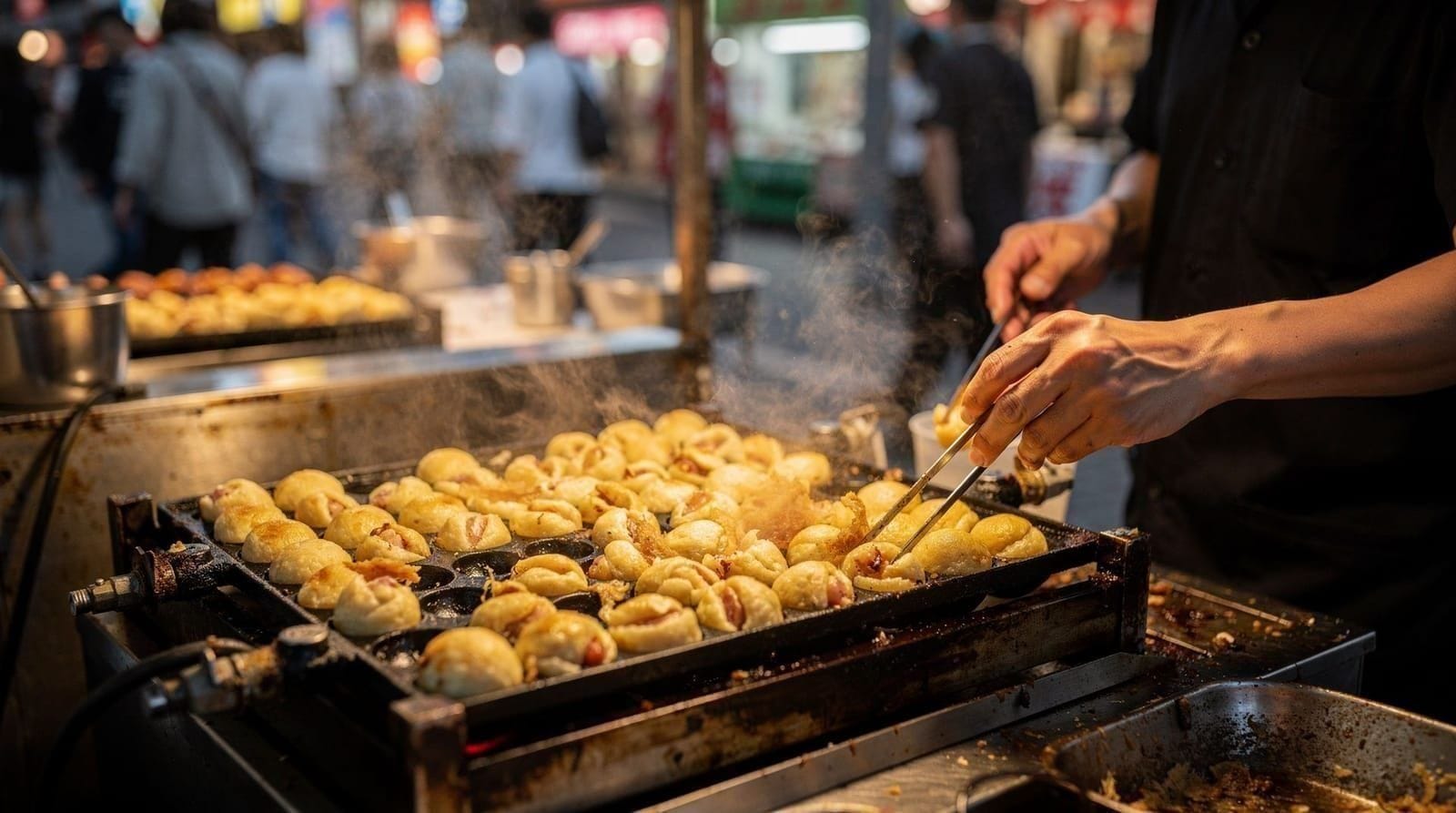
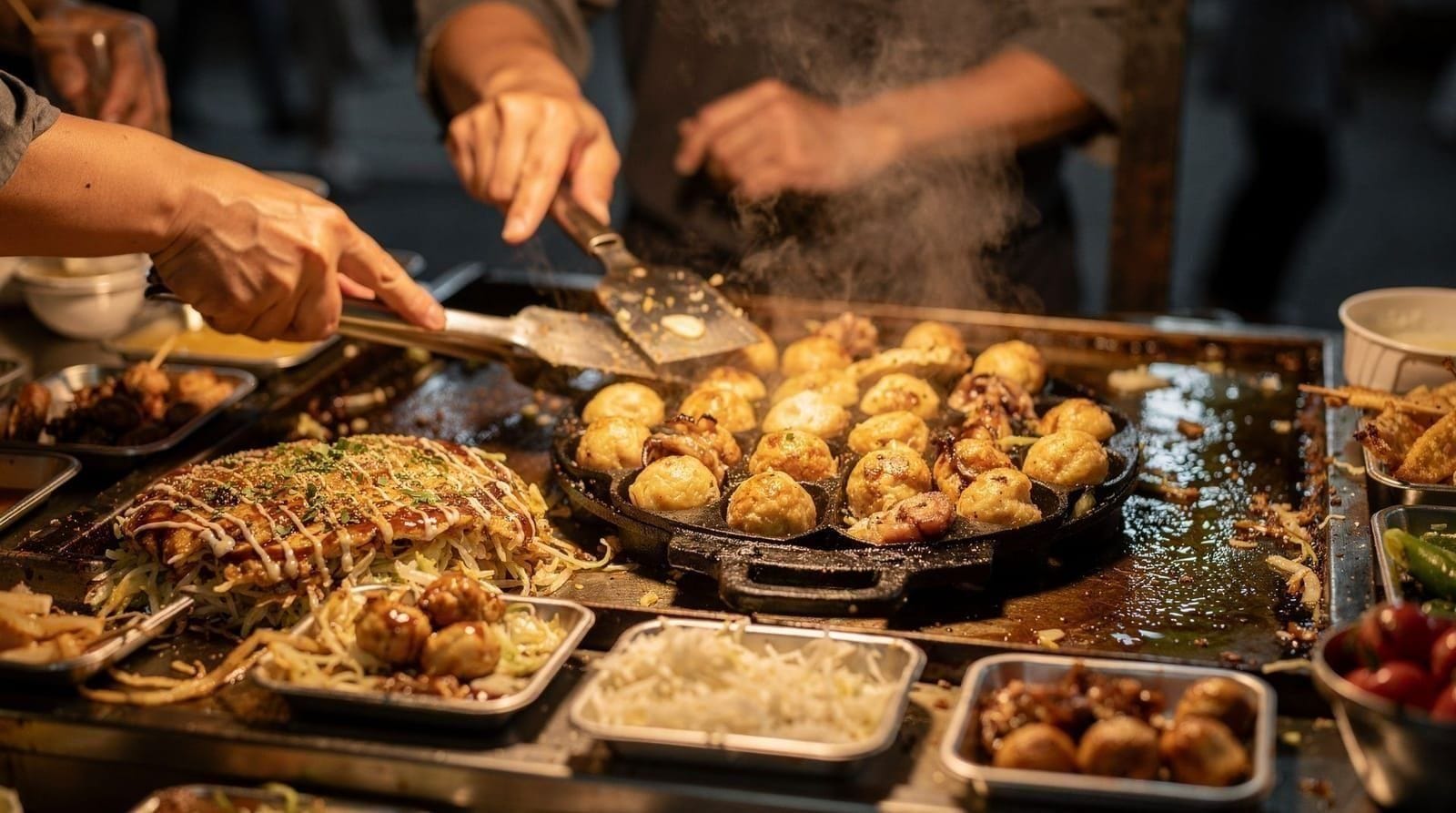
Kobe eat-like-a-local food tour is a reasonable way to cover Nankinmachi, a kissaten coffee house, and a proper Kobe beef stop in one guided afternoon if you’d rather not plan the sequencing yourself.
Food beyond Kobe beef
Kobe’s food identity isn’t only steak — the city has a genuine bakery and coffee culture dating to the same 19th-century foreign settlement that built Kitano’s houses, with old-school kissaten (coffee houses) around Motomachi still serving siphon-brewed coffee and thick French toast, a slower-paced tradition that predates Japan’s modern convenience-store coffee culture by a century.
Nankinmachi, Kobe’s small but dense Chinatown near Motomachi Station, is a good lower-cost food stop, with street stalls selling buta-man (steamed pork buns) and other Chinese-Japanese fusion snacks for ¥300-600 (~$2.80-$5.55) each — a legacy of the Chinese merchant community that settled here alongside the Western traders when the port opened. Kobe is also credited, alongside a handful of other Japanese port cities, with introducing bread and Western-style baking to Japan in the late 19th century, and several long-running bakeries around Motomachi and Sannomiya still trace their recipes to that period.
A local specialty worth seeking out beyond the obvious Kobe beef: sanma (Pacific saury) and other fresh Seto Inland Sea catch show up on set menus around the harbor at a fraction of the price of a steak dinner, a reasonable way to eat well in Kobe without spending on the headline dish every meal.
Where to stay in Kobe
Sannomiya is the practical choice for most visitors — central, well connected by rail to both Osaka and the rest of the Kansai region, and within walking distance of Kitano, Motomachi, and Harborland. Kitano itself has a small number of boutique hotels on the hillside, trading a short uphill walk for quieter streets and, in some cases, harbor views. Harborland’s hotels lean toward larger, resort-style properties aimed at the waterfront view rather than walkable access to the rest of the city. For a second night built around Arima Onsen, staying at one of the town’s traditional ryokan (rather than day-tripping in for a single bath) is worth considering if a proper overnight hot spring experience, rather than a quick soak, is the goal.
Getting around Kobe
Central Kobe (Sannomiya, Kitano, Motomachi, Harborland) is walkable, and the Kobe City Loop Bus, a retro green-and-cream bus running a one-way loop past all the main sights for a flat ¥260 ($2.40) per ride or ¥700 ($6.50) for an all-day pass, is the simplest way to cover Kitano’s uphill streets without the climb. For Arima Onsen or Mt Rokko, the Kobe Municipal Subway’s Seishin-Yamate Line connects Sannomiya to Shin-Kobe Station, from where buses run into the hills — or the Rokko-Arima Ropeway links the mountain directly to the onsen town for visitors doing both in one day.
Kobe’s jazz heritage
A lesser-known thread in Kobe’s foreign-settlement history: the city is widely credited as the birthplace of jazz in Japan, with the genre arriving via sailors and foreign residents passing through the port in the early 20th century and taking root in dance halls around Sannomiya and Motomachi well before it spread to Tokyo. A handful of small jazz clubs and bars in the same districts today keep that history alive with live sets most evenings, a good low-key option for an evening after dinner that doesn’t require planning ahead the way a Kobe beef reservation does.
Combining Kobe with other Kansai stops
Kobe sits on the same JR line as Himeji, about 40 minutes further west, making a combined Kobe-Himeji day loop a practical way to see both without backtracking through Osaka. For visitors basing themselves in Osaka, Kobe’s short 20-30 minute connection makes it one of the easiest half-day or full-day additions to a Kansai itinerary, comparable in convenience to a Kyoto day trip but with a distinctly different, harbor-city character. See the Kobe-Himeji day loop itinerary for how to sequence both in a single day, and the Osaka to Kobe day trip guide for a Kobe-only visit.
Seasonal timing
Kobe’s weather runs close to Osaka’s — hot and humid summers (June-August, 28-34°C), mild spring and autumn, and cold but generally dry winters. Autumn (October-November) is a particularly good window for the city, combining clear Mt Rokko night views with comfortable walking temperatures in Kitano and Harborland. The Kobe Luminarie, a large-scale light installation held each December in memory of the 1995 earthquake, draws heavy crowds to the area around Motomachi and is worth checking dates for if visiting in that month, since it changes the evening crowd pattern significantly.
Kobe versus Kyoto and Nara as a day trip from Osaka
Kobe competes with Kyoto and Nara for a spot on a Kansai itinerary, and the honest comparison depends on what you’re after.
| Kobe | Kyoto | Nara | |
|---|---|---|---|
| Train time from Osaka | 20-30 min | 28-55 min depending on district | 35-45 min |
| Main draw | Food, harbor, onsen | Temples, historic districts | Deer park, Todai-ji |
| Crowd level | Low to moderate | High in peak season | Moderate |
| Best for | Couples, food-focused travelers | First-time visitors, photography | Families, wildlife |
Kobe’s shorter, cheaper train ride and lower crowd levels make it the easiest of the three to add as a genuine half-day without overplanning, though it has less historical density than either Kyoto or Nara if temples and shrines are the priority.
An overnight-in-Kobe option
Most Osaka-based visitors treat Kobe as a day trip, but staying overnight — particularly if pairing the city with Arima Onsen — changes the experience meaningfully. An evening arrival lets you catch the Mt Rokko night view and a late Kobe beef dinner without the pressure of a return train, and a morning departure the next day leaves time for Nada’s sake breweries before they get busy. This is worth considering specifically if Arima Onsen’s ryokan culture (rather than a quick day-use bath) appeals, since a proper onsen stay is a different, more restful experience than day-tripping in for a single soak.
A realistic one-day itinerary
For visitors with a single day, a workable sequence runs Sannomiya arrival by mid-morning, a walk up into Kitano for the ijinkan houses (allow 60-90 minutes), back down through Motomachi for a kissaten coffee stop and a look at Nankinmachi, then Harborland and Meriken Park in the early afternoon for the earthquake memorial and harbor views, finishing with a Kobe beef dinner back near Sannomiya or Kitano-zaka in the evening.
This covers the city’s core without needing Nada or Arima Onsen, both of which are better suited to a second day or a return trip. If sake tasting matters more than the foreign-settlement history, swap the Kitano morning for a Nada brewery walk instead — the two don’t comfortably fit in the same half-day given the distance between them.
Frequently asked questions about Kobe
How do I get from Osaka to Kobe?
The JR Kobe Line’s special rapid service runs from Osaka Station to Sannomiya Station in about 20 minutes for roughly ¥420. The Hanshin Main Line (Umeda to Kobe-Sannomiya) and Hankyu Kobe Line are cheaper alternatives taking 27-30 minutes.
Is Kobe beef really different from regular Wagyu?
Yes — Kobe beef is a legally protected designation specific to Tajima-strain cattle raised in Hyogo Prefecture meeting strict marbling criteria, and certified restaurants display a registration tag. Not all Wagyu is Kobe beef, though the terms are often used loosely outside Japan.
How much does a Kobe beef meal cost?
A teppanyaki dinner typically runs ¥8,000-25,000 (~$74-$232) per person depending on the cut and restaurant. Lunch courses are often 30-40% cheaper than the equivalent dinner menu at the same restaurant.
Can I visit Kobe as a day trip from Osaka?
Yes, easily — the train ride is 20-30 minutes each way, and central Kobe’s main sights (Kitano, Harborland, Nada) are compact enough to see in a single day. Adding Arima Onsen or Mt Rokko is more comfortable as a second day or a longer single day.
Is Arima Onsen worth visiting if I’m short on time?
If you have a spare half-day, yes — it’s under an hour from Sannomiya and offers genuine hot spring bathing in one of Japan’s oldest onsen towns. On a tight one-day Kobe visit, it’s reasonable to save for a return trip and focus on the city center instead.
What’s the sake district in Kobe called?
Nada, spanning the area roughly between Uozaki and Sumiyoshi stations east of central Kobe, is one of Japan’s five historic sake-brewing regions and produces around a quarter of the country’s sake, owed to particularly good local groundwater.
What’s the best time of year to visit Kobe?
October and November for mild weather and clear Mt Rokko night views, or spring (March-May) before summer humidity sets in. Avoid the peak of summer (July-August) if walking Kitano’s hilly streets at midday sounds unappealing.
Is Kobe walkable, or do I need public transport?
Central Kobe (Sannomiya, Kitano, Motomachi, Harborland) is walkable within 15-20 minutes of each other. The Kobe City Loop Bus is worth using for Kitano’s uphill streets, and a subway or bus is needed to reach Arima Onsen or Mt Rokko in the hills.
Should I visit Kobe or Kyoto if I only have one extra day from Osaka?
It depends on the priority — Kobe is shorter, cheaper, and less crowded, and better suited to food-focused travelers, while Kyoto has far more historical and temple density for first-time visitors. Neither is a wrong choice; they’re different kinds of days.
Top experiences
Bookable activities with verified prices and instant confirmation on GetYourGuide.