Nara
Nara travel guide from Osaka — Todai-ji's Great Buddha, the free-roaming deer park, and Kasuga Taisha, with real prices, train times, and deer safety
Nara: Nara Todai-ji great buddha 2 hours
Quick facts
- Distance from Osaka
- 35-45 min by train
- Days needed
- 1 (easy day trip)
- Todai-ji entry
- ¥800 (~$7.40)
- Nara Park
- Free, open 24 hours
- Best months
- March-April, October-November
Nara was Japan’s capital for less than a century, from 710 to 784, and that short window left it with one of the country’s densest concentrations of Buddhist heritage: a 15-meter bronze Buddha housed in what was for centuries the largest wooden building on earth, a shrine approached through 3,000 stone and bronze lanterns, and a park where roughly 1,200 wild sika deer wander freely among the temple grounds. It’s a 35-45 minute train ride from Osaka, which makes it one of the easiest and most rewarding single-day additions to a Kansai trip — most of what matters is walkable within Nara Park itself, in contrast to Kyoto’s scattered districts.
| From Osaka | 35-45 min by train (JR Yamatoji or Kintetsu Nara Line) |
| Days needed | 1 (easy day trip) |
| Todai-ji entry | ¥800 (~$7.40) |
| Nara Park | Free, open 24 hours |
| Getting around | Entirely walkable in central Nara |
| Best time | Mar-Apr (sakura), Oct-Nov (foliage) |
Getting from Osaka to Nara
Two train companies run the route, and which one makes sense depends on where you’re starting. The JR Yamatoji Line’s rapid service connects JR Namba or Osaka Station to JR Nara Station in about 45 minutes for roughly ¥570 ($5.30), and it’s covered by the JR Kansai Area Pass if you’re carrying one. The Kintetsu Nara Line is usually the faster option from central Osaka: the limited express from Osaka-Namba to Kintetsu-Nara Station takes about 35 minutes for around ¥1,150 ($10.65) including the reserved-seat surcharge, or roughly ¥680 (~$6.30) on a local/rapid express train without the surcharge, taking closer to 40-45 minutes.
Kintetsu-Nara Station is the better arrival point for most visitors, since it’s a five-minute walk from the park entrance and Kofuku-ji’s pagoda, while JR Nara Station sits about 20 minutes on foot (or a short bus ride) from the same spot. For a wider Kansai rail pass comparison, see the JR Kansai Area Pass guide.
Nara Park and the deer
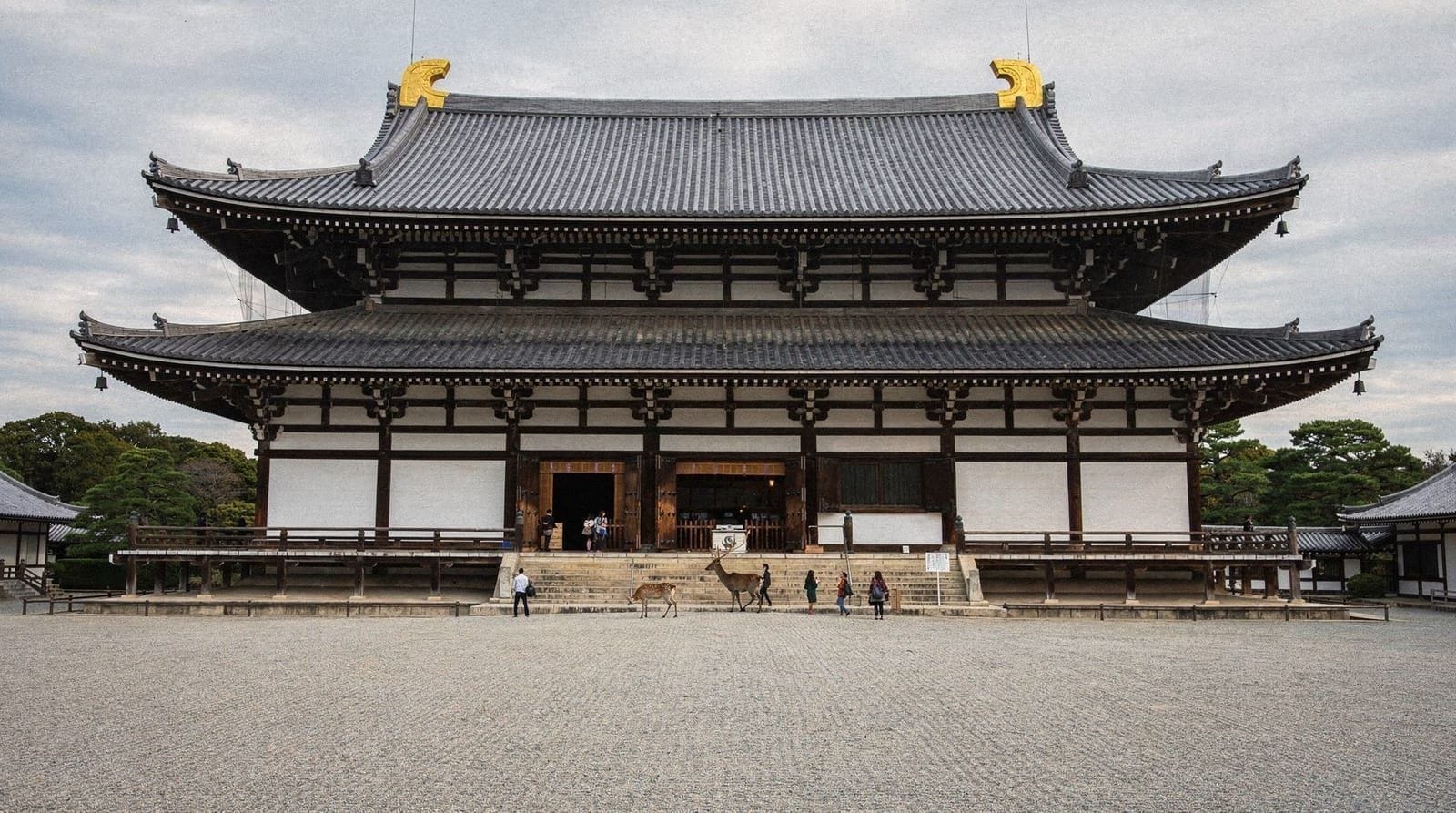
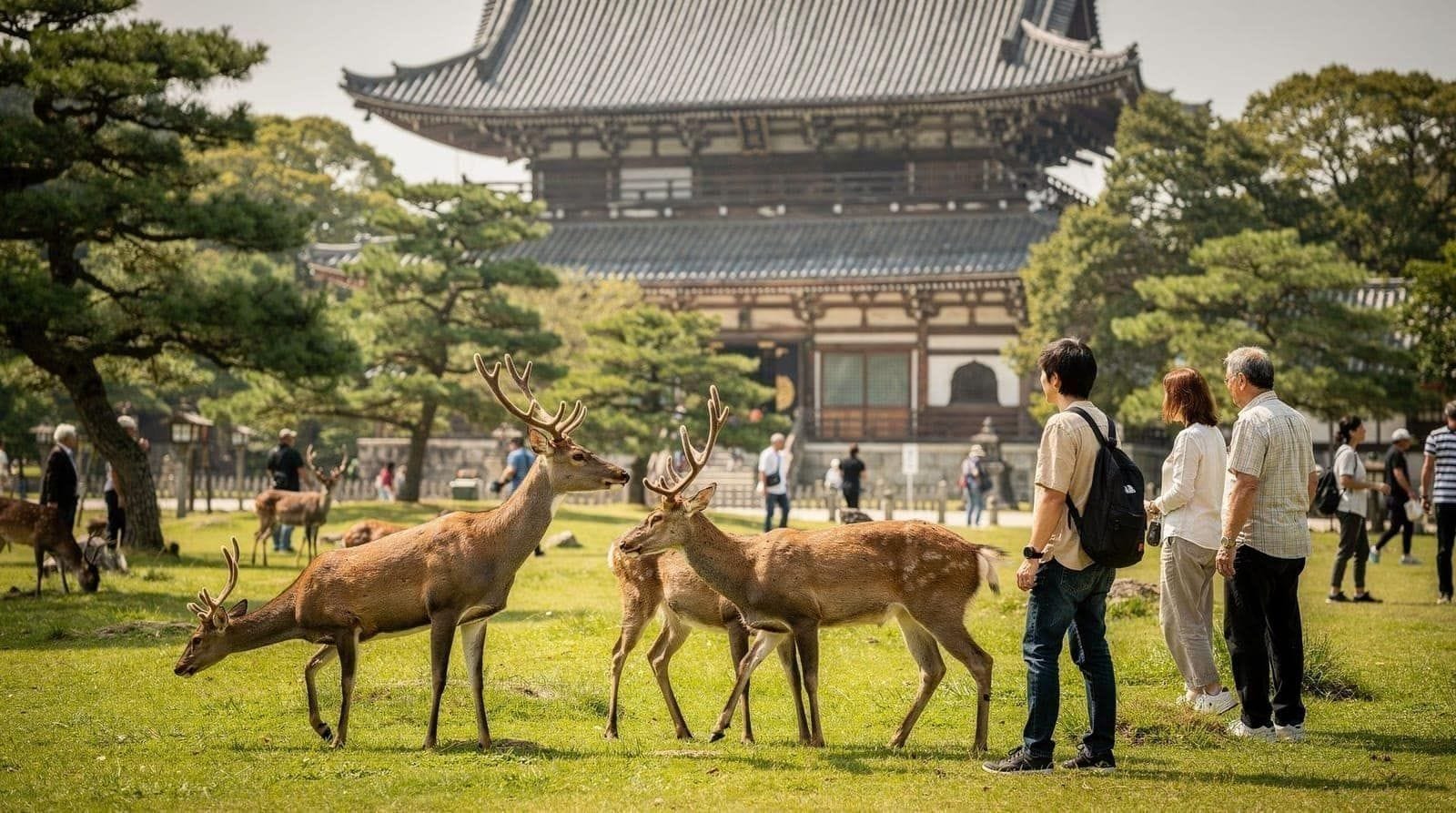
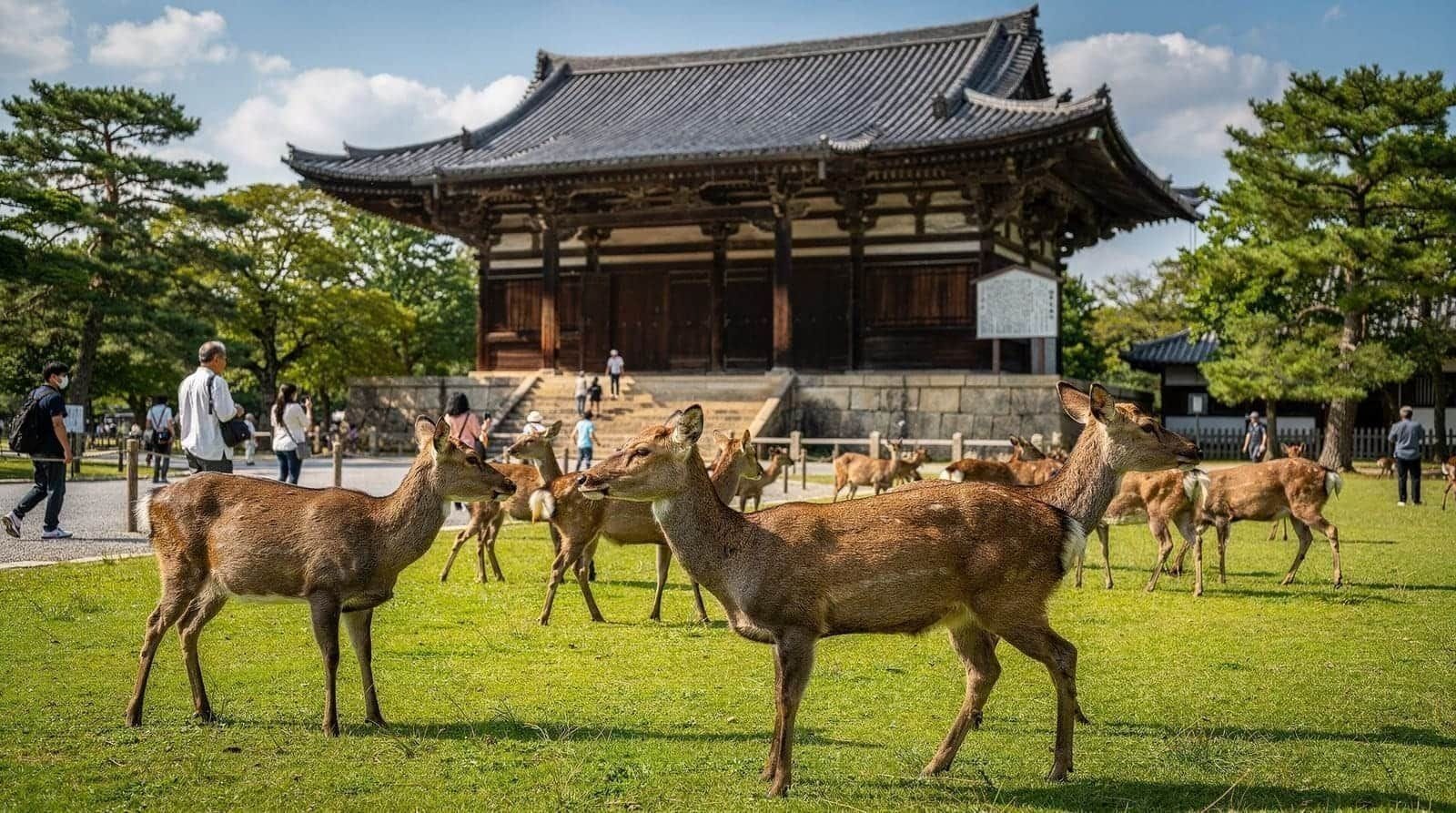
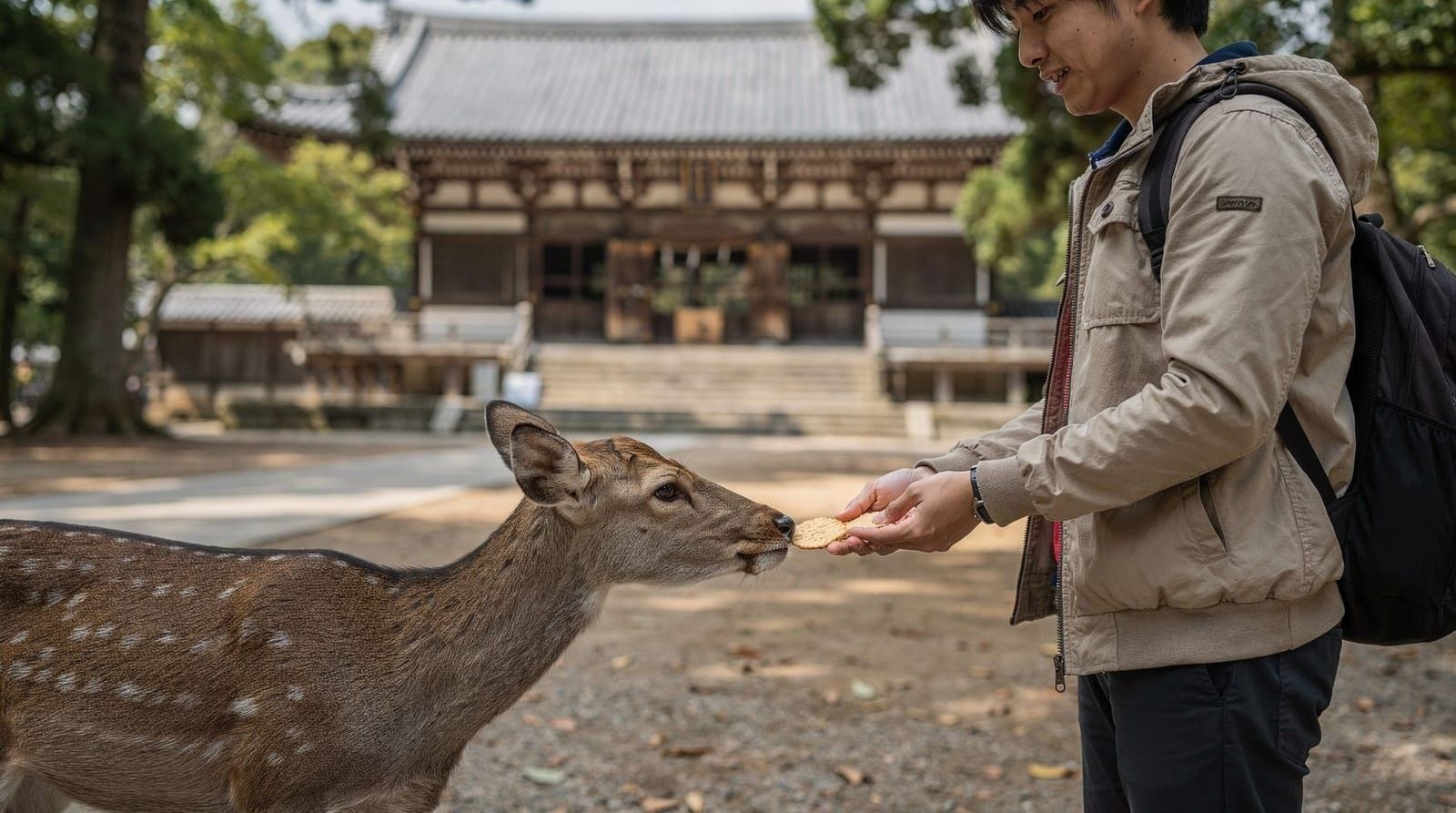
Nara Park is an open, unfenced 660-hectare space that blends into the grounds of Todai-ji, Kasuga Taisha, and Kofuku-ji without clear boundaries between them, and it’s home to the deer that have made the city famous. The deer are genuinely wild, not a managed zoo population, though centuries of contact with pilgrims and tourists have made them comfortable approaching people for food — vendors around the park sell shika senbei (deer crackers) for about ¥200 (~$1.85) a stack, and some deer have learned to bow for a cracker, which is equal parts charming and a good way to draw a small crowd of hungry animals fast.
The honest safety note: these are still wild animals with antlers or the stubs where antlers were recently removed (most males are dehorned in a ceremony each autumn to reduce injuries), and butting, nipping, or shoving happens, especially if a deer decides you’re holding out on a cracker or if you make sudden movements near a fawn in late spring.
The simplest way to avoid trouble is to hold the cracker out and let go quickly rather than teasing the deer with it, avoid crouching down at eye level with a stack of crackers still in a bag, and give a wide berth to any deer with a fawn nearby between May and July. Posted signs around the park (in Japanese and English) flag the more aggressive individual animals during rutting season in autumn. None of this makes the park unsafe — millions of visitors pet and feed these deer every year without incident — but “wild animal, not a pet” is worth keeping in mind, particularly with small children.
Guided deer, temples, and hidden lanes walking tour is a reasonable way to get oriented on a first visit, with a guide who can explain deer etiquette in person rather than relying on a printed sign.
Todai-ji and the Great Buddha
Todai-ji’s Daibutsuden (Great Buddha Hall) is the headline sight — a 15-meter bronze statue of Vairocana Buddha cast in the 8th century, seated inside a wooden hall that, despite being a reconstruction roughly two-thirds the size of the original, remains one of the largest wooden buildings in the world.
Entry to the hall is ¥800 (~$7.40), and the building is open from 7:30am to 5:30pm in summer months, with slightly shorter hours (8am-5pm) in winter. Inside, look for the wooden pillar with a hole cut through its base said to be the same size as one of the Buddha’s nostrils — local tradition holds that squeezing through it brings enlightenment in the next life, and it’s a genuinely popular (if snug) photo stop for kids and flexible adults alike.
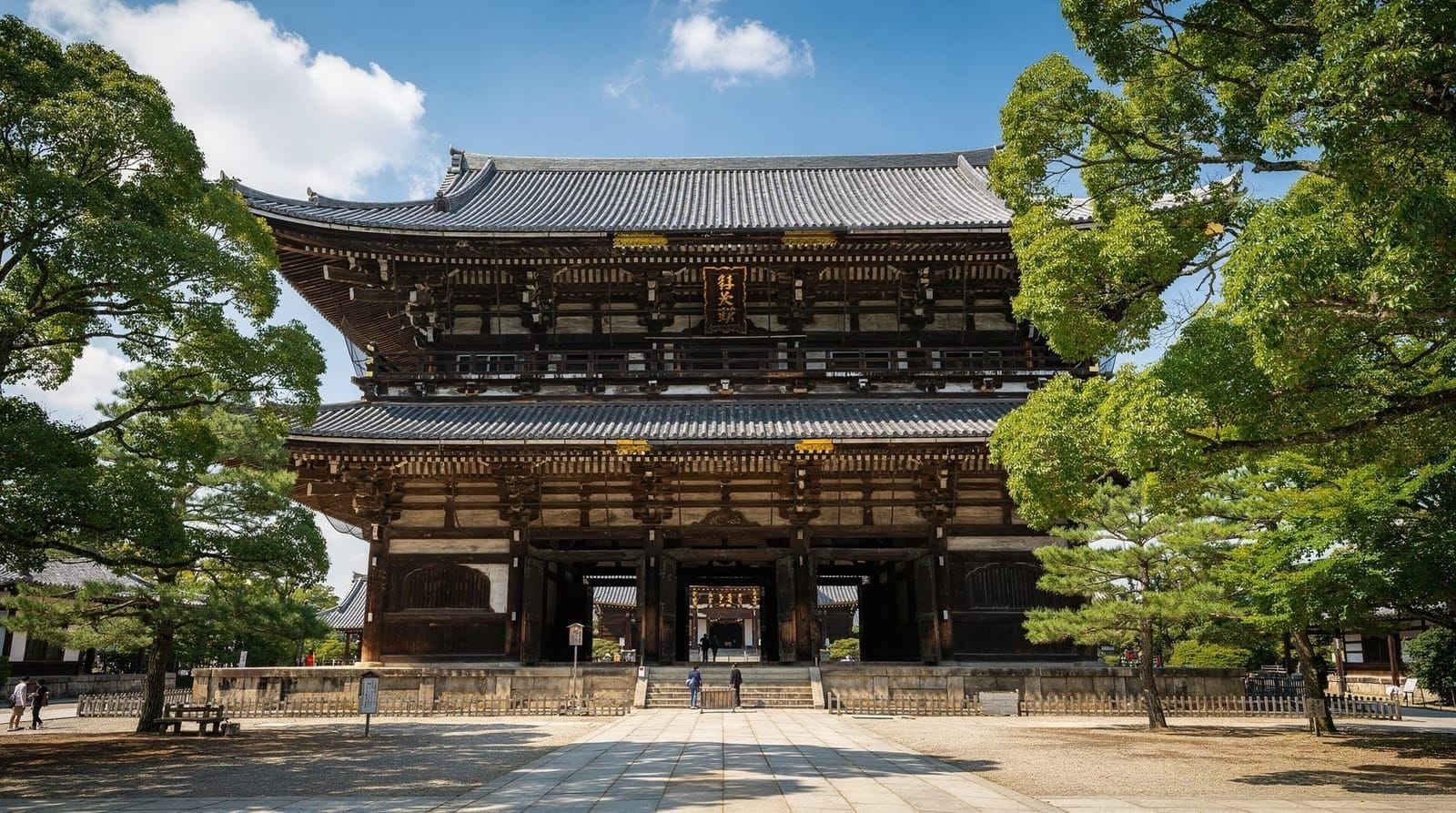
The approach to the hall runs through the Nandaimon, a two-story gate guarded by a pair of ferocious 8-meter wooden Nio (guardian king) statues carved in the 13th century, widely regarded as some of the finest surviving examples of Kamakura-period sculpture in Japan. Arriving before 9am or after 4pm meaningfully thins the crowd inside the hall itself, which otherwise gets a steady flow of tour groups through the middle of the day.
Todai-ji Great Buddha guided tour covers the hall’s history and the statue’s several reconstructions (it’s been damaged by fire and earthquakes more than once since the 8th century) in about two hours, useful context that the on-site signage only partially covers.
Kasuga Taisha
A 15-20 minute walk east from Todai-ji through Nara Park’s wooded paths (itself one of the nicer stretches of the visit, with a good chance of deer sightings away from the crowded plazas), Kasuga Taisha is Nara’s most important Shinto shrine, founded in 768 and rebuilt on the same design every 20 years for over a millennium under Shinto’s tradition of periodic renewal. The approach path is lined with roughly 3,000 stone lanterns donated by worshippers over the centuries, moss-covered and irregular in a way that photographs better than almost anywhere else in Nara.
The shrine’s inner sanctuary, with its vermilion-lacquered halls and hanging bronze lanterns, costs ¥500 (~$4.65) to enter; the outer grounds and the lantern-lined approach are free. Twice a year — in early February and mid-August — all 3,000 lanterns are lit simultaneously for the Mantoro festival, a striking but genuinely crowded event worth planning around rather than stumbling into.
Kasuga Taisha sacred deer and shrine guided tour runs about 90 minutes and covers the shrine’s 20-year rebuilding tradition (called shikinen sengu), which isn’t obvious just walking the grounds.
Kofuku-ji and the pagoda
Kofuku-ji, right by the Kintetsu-Nara Station exit, is the first thing most visitors see on arrival: a five-story pagoda dating in its current form from 1426, one of the tallest wooden pagodas in Japan and a genuine city landmark visible from much of central Nara. The temple grounds are free to walk, though the National Treasure Museum (¥700, ~$6.50) holds a collection of Buddhist statuary worth the detour if ancient sculpture interests you, including a striking Ashura statue with three faces and six arms that’s one of Japanese Buddhist art’s more recognizable works.
Horyu-ji, the older detour
Horyu-ji sits apart from the main park cluster, about 20 minutes by bus or a short train-and-walk combination from Nara Station, and it holds a genuinely singular claim: it contains the oldest surviving wooden buildings on earth, dating to the early 7th century. Entry runs around ¥1,500 (~$13.90) and covers the temple’s main compound, its pagoda, and an adjoining treasure hall. It’s a worthwhile half-day add-on for visitors with a specific interest in early Japanese Buddhist architecture, but it requires a separate trip from the park cluster and isn’t a natural fit for a first, single-day Nara visit focused on Todai-ji and the deer.
Horyu-ji guided tour of the world’s oldest wooden building runs about two hours and is a sensible way to see it without navigating the bus schedule solo.
Naramachi and food
South of Kintetsu-Nara Station, Naramachi is a preserved merchant quarter of narrow lanes and lattice-fronted wooden townhouses, considerably quieter than the temple approaches and a good lunch stop. The local specialty is kakinoha-zushi, pressed sushi wrapped in persimmon leaves (a preservation method from the days before refrigeration, still used for the flavor it imparts), typically ¥1,000-1,800 (~$9.25-$16.65) for a set.
Naramachi also has a handful of small cafes in converted merchant houses and craft shops selling Nara-brand sake and traditional ink brushes, a calmer counterpoint to the temple crowds a 10-15 minute walk north. Nara is also known for its own sake brewing tradition, distinct from Kobe’s Nada district — several small breweries in and around Naramachi trace their history to the temples’ own historic rice-and-sake production, and a couple offer small tasting counters open to walk-in visitors.
Coin lockers are available at both Kintetsu-Nara and JR Nara stations for day-trippers carrying luggage, and English-language signage is generally good around the main temples, though less consistent in Naramachi’s smaller shops. Public toilets and rest benches are frequent throughout the park itself, though shade thins out on the open lawns near Todai-ji’s approach — worth knowing in summer.
Isuien Garden
Isuien, a strolling garden a short walk from Todai-ji’s south gate, uses the same “borrowed scenery” technique as Kyoto’s best gardens, framing the temple’s Nandaimon gate and the hills behind it as part of the garden’s own composition. Entry is ¥900 (~$8.35), and it’s noticeably calmer than the main temple approaches even in peak season, since it doesn’t appear on as many first-timer itineraries.
Yoshinoyama, Nara’s other cherry blossom destination
South of Nara city, and requiring its own separate day trip rather than an add-on, Yoshinoyama is one of Japan’s most historically significant cherry blossom sites, with an estimated 30,000 trees planted in staggered elevation bands across the mountainside so that the bloom appears to climb the slope over roughly two weeks rather than peaking all at once.
It’s reachable from Kintetsu-Nara Station via a transfer to the Kintetsu Yoshino Line (about 75-90 minutes total), and it draws heavy domestic crowds during the peak week, typically early-to-mid April, a week or so after Nara Park’s own blossoms. It’s worth flagging clearly as a separate destination from central Nara rather than something to squeeze into the same day as Todai-ji, given the transit time involved.
Getting around Nara
Central Nara — Kintetsu-Nara Station, the park, Todai-ji, Kasuga Taisha, and Kofuku-ji — is entirely walkable, and most visitors never need a bus or taxi for a standard day visit; the walk from the station to Kasuga Taisha’s inner sanctuary and back covers most of the park’s paths already. For Horyu-ji or other sights further out, the JR Yamatoji Line or a local bus from JR Nara Station is the practical option, and a bicycle rental (available near both stations for roughly ¥1,000/day, ~$9.25) is a reasonable way to cover more ground if you’re combining the park with Naramachi and a longer loop in a single day.
Where to stay
Most visitors don’t stay overnight in Nara at all, treating it as a day trip from Osaka or Kyoto given the short, frequent train connections back. For those who do want to stay — arriving early to see the deer and temples before the day-trip crowds arrive is a genuine advantage — the area around Kintetsu-Nara Station and Naramachi has a modest but serviceable spread of business hotels and a handful of traditional ryokan, generally at lower prices than equivalent options in Kyoto. Naramachi itself, with its converted merchant houses, has some of the more atmospheric (if pricier) options, while station-adjacent hotels prioritize convenience for an early morning start toward the park.
How much time Nara actually needs
Nara Park, Todai-ji, and Kasuga Taisha can be covered comfortably in a single day, including lunch in Naramachi — this is the most common way visitors experience Nara, arriving mid-morning and departing by early evening. Adding Horyu-ji or a slower pace through Isuien Garden pushes it toward a full day with less room for lingering. Very few visitors stay overnight in Nara itself; it works better as a day trip from Osaka or Kyoto than as a base, given the smaller hotel selection and the ease of the train connection back.
Seasonal timing
Cherry blossoms typically peak in the last days of March into early April, concentrated around Nara Park’s open lawns and Yoshinoyama further south (a separate, much larger cherry blossom destination requiring its own day trip). Autumn foliage peaks in November, with Nara Park’s maples turning color against the temple buildings — a genuinely striking combination and one of the best foliage viewing spots in the Kansai region that draws noticeably smaller crowds than Kyoto’s equivalent spots. Summer (June-August) is hot and humid, and the deer themselves seek shade under the park’s trees during the hottest hours, making them harder to spot at midday.
| Season | Months | Conditions | Crowd level |
|---|---|---|---|
| Cherry blossom | Late Mar-early Apr | Mild | Busy, especially weekends |
| Summer | Jun-Aug | Hot, humid | Moderate; deer seek shade midday |
| Autumn foliage | November | Mild | Busy but lighter than Kyoto |
| Winter | Dec-Feb | Cold, dry | Lightest crowds of the year |
Winter, while cold, is genuinely the quietest season to see Todai-ji and the deer without competing with tour groups, and it pairs well with a shorter visit given the shorter daylight hours — most visitors still find a half-day covering the core sights comfortable even with an earlier sunset to plan around.
Kasuga Taisha in more depth
The 20-year rebuilding cycle mentioned above (shikinen sengu) is one of several details covered more fully in the Kasuga Taisha guide, including how the lantern-lit Mantoro festivals work and which parts of the shrine complex are typically overlooked by visitors who stop at the main lantern-lined approach and turn back. The shrine’s dedicated deer, mentioned above at Nara Park, tie back to this same shrine’s founding myth — a detail worth understanding before treating the deer and the shrine as two unconnected stops on the same walk.
Todai-ji in more depth
The Todai-ji guide goes further into the Great Buddha’s construction history, including the multiple times the statue and its hall have been damaged and rebuilt since the 8th century, and covers a few smaller structures within the temple complex — the Nigatsu-do hall, with its own smaller but genuinely worthwhile city view, and the Hokke-do, one of the complex’s oldest surviving original buildings — that most first-time visitors walk past entirely in favor of the main Daibutsuden.
Using an ICOCA card for the day
An ICOCA (or Suica-compatible) IC card works across JR, Kintetsu, and local buses throughout Nara and the wider Kansai region, and it’s the simplest way to avoid buying individual paper tickets for a single day trip that involves multiple train companies. The ICOCA card guide covers where to buy or load one and how the refund process works for visitors leaving the country with an unused balance, relevant if Nara is a stop late in a longer Kansai trip.
A dedicated Nara day-trip itinerary
For visitors who want a structured plan rather than piecing the day together from this guide alone, the Nara day trip itinerary lays out a realistic hour-by-hour order — arrival, Todai-ji, Nara Park deer, Kasuga Taisha, lunch in Naramachi, and a return train — timed against actual opening hours and crowd patterns rather than an idealized schedule. The Osaka to Nara day trip guide covers the same ground with more detail on ticket options and timing than the transit section above.
Nara or Kyoto: where to actually stay
Visitors splitting a Kansai trip across multiple cities sometimes wonder whether Nara, rather than Osaka or Kyoto, makes a better base for the region generally — the honest answer, covered in more depth in the Osaka versus Kyoto where to stay guide, is that Nara’s smaller hotel selection and its position as an easy day trip from either city make it a weaker choice as a multi-night base than either Osaka or Kyoto, even though Nara itself is very much worth the visit.
Frequently asked questions about Nara
How do I get from Osaka to Nara?
The Kintetsu Nara Line runs a limited express from Osaka-Namba to Kintetsu-Nara Station in about 35 minutes for around ¥1,150 with the reserved-seat surcharge, or a slower rapid/local service for about ¥680 without it. The JR Yamatoji Line rapid service takes about 45 minutes from Osaka Station or JR Namba to JR Nara Station and is covered by the JR Kansai Area Pass.
Is it safe to feed the deer in Nara Park?
Generally yes, and it’s one of the park’s main draws, but the deer are wild animals, not pets — some will nip, butt, or crowd visitors holding food, especially around fawns in late spring or during the autumn rutting season. Hand crackers over quickly rather than teasing the deer with them, and avoid crouching at eye level while holding a visible stack of food.
How much does it cost to enter Todai-ji?
Entry to the Daibutsuden (Great Buddha Hall) is ¥800 (~$7.40). Nara Park itself and the approach to most temples are free; Kasuga Taisha’s inner sanctuary is ¥500, and Kofuku-ji’s National Treasure Museum is ¥700.
Can I visit Nara as a day trip from Osaka or Kyoto?
Yes, and this is how most visitors do it — Nara’s main sights (Todai-ji, Nara Park, Kasuga Taisha, Kofuku-ji) are close enough together to cover comfortably in a single day, with the train ride from either Osaka or Kyoto under an hour.
What’s the best time of year to visit Nara?
Late March into early April for cherry blossoms, or November for autumn foliage in Nara Park, both with mild weather and (compared to Kyoto) manageable crowds. Summer is hot and humid, and the deer are less active and harder to spot at midday during the hottest weeks.
Is Horyu-ji worth the extra trip?
If early Japanese Buddhist architecture interests you specifically, yes — it holds the oldest surviving wooden buildings on earth. For a first, time-limited visit focused on Todai-ji and the deer park, it’s a reasonable one to skip or save for a return trip.
How many deer live in Nara Park?
Roughly 1,200 wild sika deer live in and around the park, considered messengers of the gods in local Shinto tradition and protected as a natural monument since 1957.
Do I need to book tickets in advance for Todai-ji?
No advance booking is needed — tickets are sold at the entrance to the Daibutsuden. Arriving before 9am or after 4pm avoids the busiest window in the middle of the day, particularly in cherry blossom and autumn foliage season.
Top experiences
Bookable activities with verified prices and instant confirmation on GetYourGuide.