Osaka to Nara day trip guide
Nara: Nara deer park UNESCO day trip hotel pickup
How long does it take to get from Osaka to Nara?
About 35 minutes via the Kintetsu Nara Line's limited express from Namba to Kintetsu-Nara Station, or about 45 minutes via the JR Yamatoji Line's rapid service from Osaka Station to JR Nara Station. Kintetsu is generally the more convenient option, landing a five-minute walk from Nara Park versus a 15-20 minute walk or bus ride from the JR station.
Of all the day trips covered on this site, Nara is the most naturally suited to a single day rather than an overnight stay — its major sights cluster within walking distance of each other around Nara Park, the deer that anchor most visits require no advance booking or timed entry, and the whole circuit comfortably fits a well-paced day without the backtracking that makes a Kyoto day trip harder to plan around.
| Where | Nara Park and central Nara, 35-45 min from Osaka |
| Cost | Park free; Todai-ji ¥800; Kasuga Taisha inner sanctuary ¥500 |
| Time needed | A comfortable full day, or a relaxed half-day |
| Getting there | Kintetsu Nara Line (Namba) or JR Yamatoji Line (Osaka Station) |
| Best time | Before 9am for calmer deer and quieter paths |
Getting there: Kintetsu versus JR
The Kintetsu Nara Line’s limited express from Namba to Kintetsu-Nara Station takes about 35 minutes and lands a five-minute walk from Nara Park’s edge — the more convenient route for most day-trippers given the shorter onward walk. The JR Yamatoji Line’s rapid service from Osaka Station to JR Nara Station takes about 45 minutes, with a further 15-20 minute walk or short bus ride needed to reach the park itself. If departing from Namba or southern Osaka, Kintetsu is the clear choice; if already near Osaka Station, JR avoids an extra cross-city transfer to reach Namba first.
The core loop: deer park, Todai-ji, Kasuga Taisha
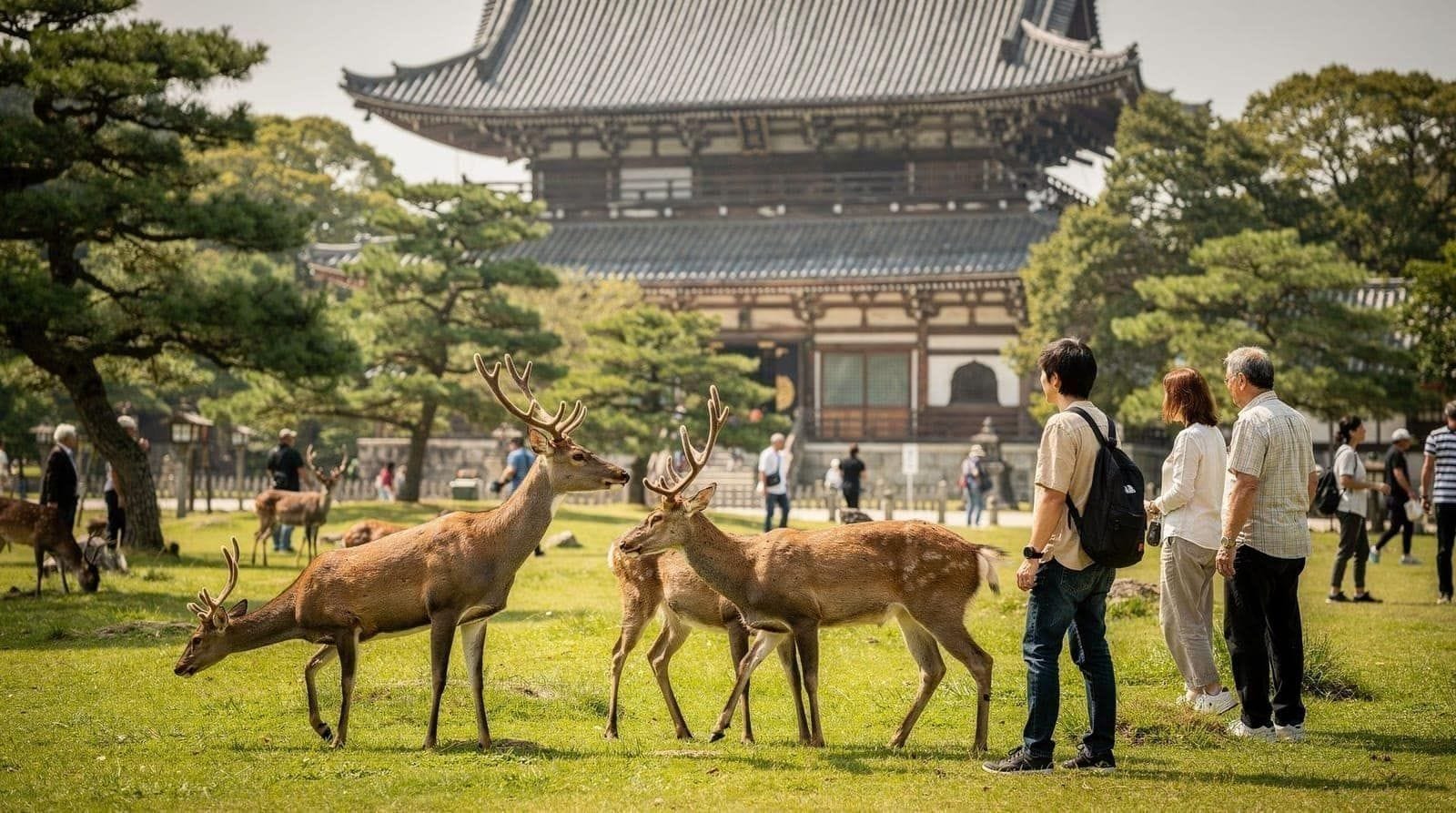
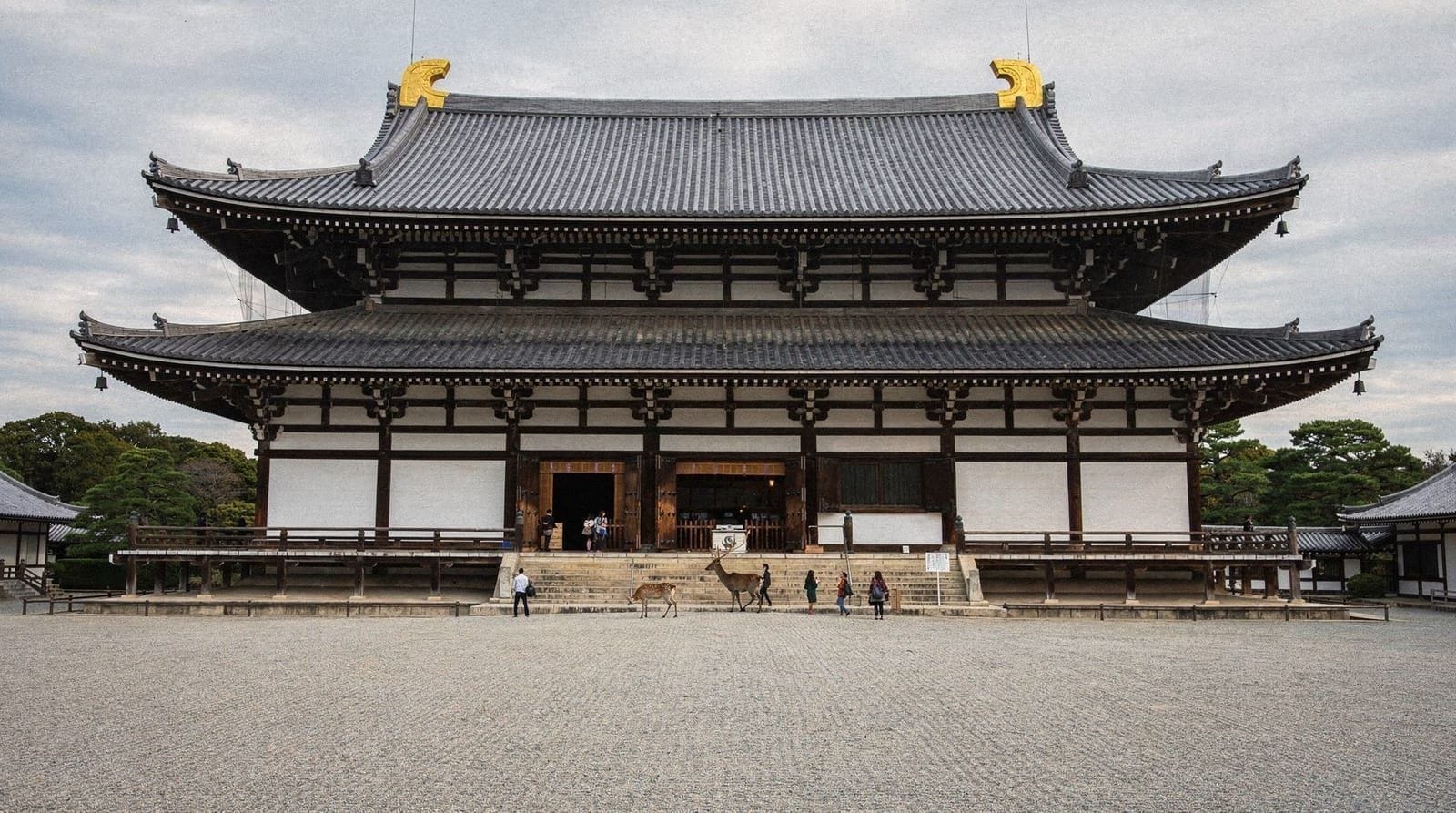
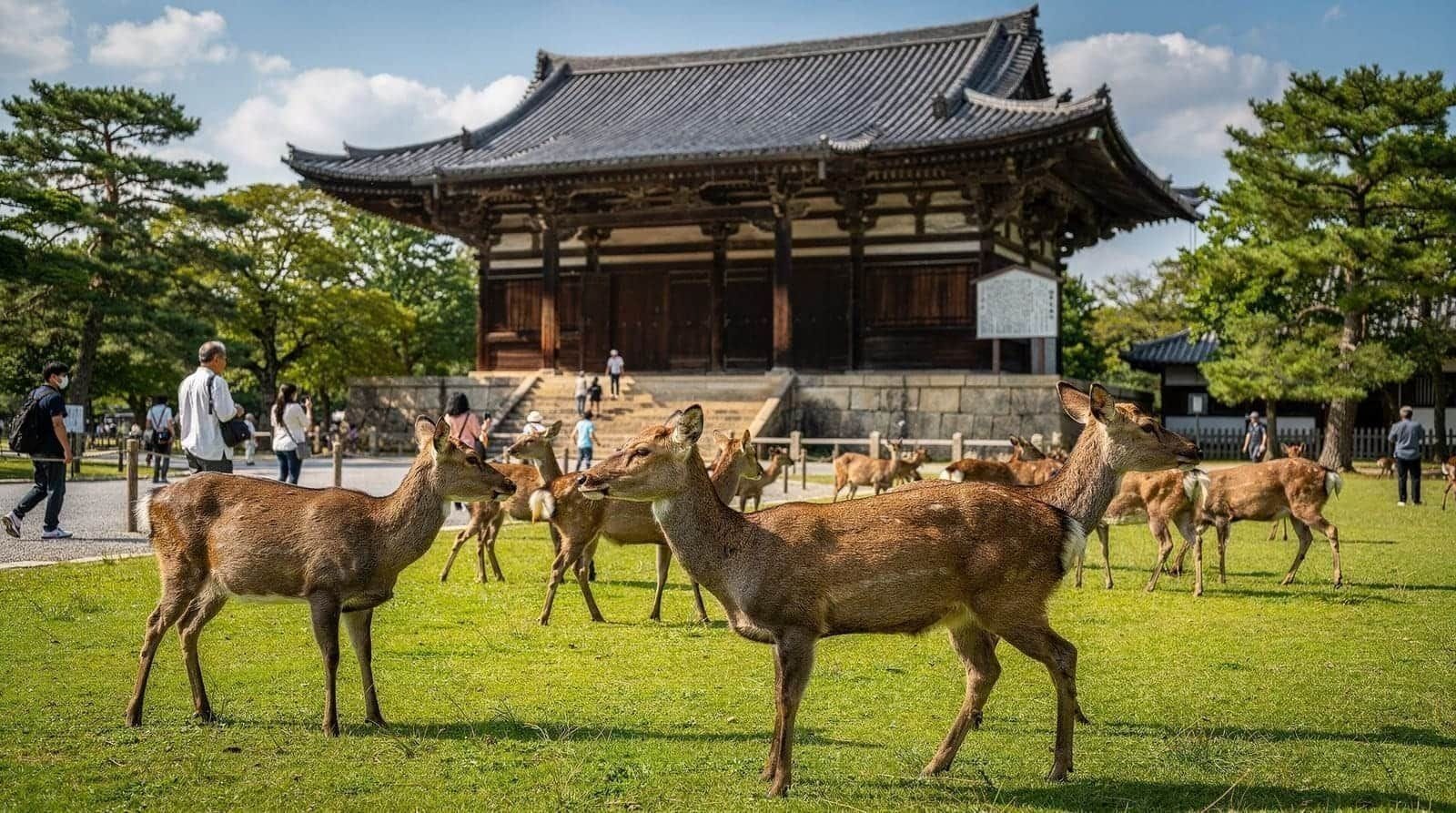
Nara Park, Todai-ji’s Great Buddha Hall, and Kasuga Taisha’s lantern-lined approach all sit within the same connected grounds, walkable as a single loop without needing a bus between stops — a genuine advantage over Kyoto’s more spread-out district structure. The park itself is free and gateless; Todai-ji’s Great Buddha Hall runs ¥800 ($7.40) and houses a roughly 15-meter bronze Buddha statue inside one of the world’s largest wooden buildings; Kasuga Taisha’s inner sanctuary charges a further ¥500 ($4.65). Roughly 1,200 wild sika deer roam the connecting grounds, generally approaching visitors holding shika senbei (deer crackers, about ¥200/~$1.85 a stack) sold throughout the park.
Todai-ji’s Great Buddha in 2 hours covers this central temple in depth, with context on the statue’s construction and the hall’s history as one of the largest wooden structures ever built, details that add considerably to what’s otherwise a quick photo stop for many day-trippers.
Timing the deer for a calmer visit
Arriving before 9am gets meaningfully calmer deer encounters and quieter paths for photography — the deer are more active and visible in the cooler morning hours, and crowds build steadily from mid-morning through mid-afternoon, especially on weekends and during cherry blossom season (late March-early April). Given the roughly 35-45 minute train ride from Osaka, an early departure (by 7:30-8am) comfortably lands a day-tripper at the park before the busiest window starts.
Beyond the core loop: Horyu-ji and Naramachi
For a day trip with more time to spare, Horyu-ji, home to the world’s oldest surviving wooden buildings, sits further from central Nara and requires a separate bus or train connection — a worthwhile addition for visitors specifically interested in early Japanese Buddhist architecture, but a genuine extension of the day rather than something to combine casually with the deer park circuit. Naramachi, the old merchant quarter south of the park, offers a quieter, less deer-dense alternative with preserved townhouses, small museums, and craft shops, a reasonable lower-key stop if the deer park and temples feel sufficiently covered by early afternoon.
A realistic one-day schedule
Departing Osaka by 7:30-8am via Kintetsu puts you at Nara Park before 9am, ahead of the heaviest crowds. Budget an hour for the deer park itself, then 45 minutes to an hour each for Todai-ji and Kasuga Taisha, leaving early-to-mid afternoon for lunch in Naramachi or a bike-based extension to Horyu-ji if energy and time allow. This is a genuinely comfortable single-day pace, without the tight transit-heavy scheduling a Kyoto or Koyasan day trip requires.
Nara half-day private tour of 4 must-see spots covers this exact core loop — deer park, Todai-ji, and additional nearby sights — with a private guide managing the day’s pacing, useful for visitors who’d rather not sequence the walk between temples independently.
A more active alternative: e-bike touring
For visitors who want to cover more ground than the walkable core loop allows, e-bike tours extend the day trip to include Nara’s food scene alongside the temple circuit, covering more distance in less time than walking between stops.
Nara e-bike, Osaka history, and food combo tour pairs an e-bike route through Nara with food stops, a genuinely different pace from the standard deer-and-temple walking circuit for visitors who’ve already done a more conventional Nara visit on a previous trip.
Should you use a guided day trip instead of going independently?
Nara’s core sights are straightforward enough to navigate independently — clear signage, a compact walkable area, and no timed-entry system to manage — making it one of the easier Kansai day trips to do without a guide. That said, a guided option removes the Osaka-to-Nara train logistics entirely and adds historical context that’s easy to miss reading a sign at each stop.
Nara deer park and UNESCO sites day trip with hotel pickup is a convenient option for visitors who’d rather not manage the Kintetsu or JR connection independently, particularly useful for an early-morning start without needing to navigate Namba or Osaka Station at rush hour.
Combining Nara with another destination the same day
Nara’s proximity to Osaka and reasonably central position in the Kansai region make it a candidate for combining with a second destination on longer, more ambitious day trips — some tours pair Nara with Kyoto’s Fushimi Inari or Kiyomizu-dera, or with Osaka’s own sights, in a single extended day. Doing this independently via public transit is possible but adds real transit time and risks rushing both destinations; a single-destination Nara day, done properly, generally produces a better visit than a rushed two-city combination.
Practical notes and honest warnings
Coin lockers are available at both Kintetsu-Nara and JR Nara stations, useful for stashing bags before a walking day. The deer, while generally safe, are wild animals rather than tame park pets — handing crackers over immediately rather than teasing a deer avoids nearly all the minor incidents that happen here, and extra caution is worth taking around does with fawns in late spring or during the autumn rutting season (September-November). Nara Park itself isn’t set up to overcharge visitors, though the deer cracker vendors near the busiest entrances sometimes have slightly longer lines than official stands further into the park.
Kintetsu versus JR at a glance
| Line | From | Time | Walk to park |
|---|---|---|---|
| Kintetsu Nara Line (limited express) | Namba | ~35 min | ~5 minutes |
| JR Yamatoji Line (rapid) | Osaka Station | ~45 min | ~15-20 minutes |
Frequently asked questions about Osaka
Is Nara worth a full day, or is a half-day enough?
A half-day comfortably covers the deer park, Todai-ji, and Kasuga Taisha. A full day allows for Naramachi’s old merchant quarter or a bike-based extension to Horyu-ji, both genuinely worthwhile if the core loop feels finished by early afternoon.
Is it safe to feed the deer?
Generally yes — they’re accustomed to visitors and shika senbei crackers sold throughout the park. Hand crackers over immediately rather than teasing a deer, since most minor incidents happen when visitors withhold food after showing it, and take extra caution around does with fawns in late spring.
Related planning
For deeper coverage of the deer park’s safety and family-specific angle, see the Nara deer park family guide and the main Nara Park destination page. For the wider city, including Kasuga Taisha and Horyu-ji in fuller detail, see the Nara destination page, the Kasuga Taisha guide, and the Todai-ji Nara guide. For comparing this day trip against the region’s other options, see the Osaka to Kyoto day trip guide and the Kansai family attractions guide if traveling with children.
Top experiences
Bookable activities with verified prices and instant confirmation on GetYourGuide.