Kansai attraction passes compared
Osaka: Osaka Kansai pass 1-week free pass
Which Kansai pass should I actually buy?
Most trips need a combination, not one all-covering pass — an ICOCA IC card for daily tap-in transport, a JR Kansai Area Pass only on the specific days you're doing multi-city day trips by JR, and the Osaka Amazing Pass only on days you're visiting several of its included attractions within Osaka city itself. There's no single pass that covers everything, and buying one hoping it will is the most common overspend visitors make.
Kansai has more overlapping transport and attraction passes than any other region in Japan, and the overlap is exactly what causes overspending — visitors commonly buy two passes that cover the same trains, or one pass hoping it covers attractions it doesn’t. This guide lays out every major option side by side and, more usefully, which combination actually fits different trip shapes.
| ICOCA | ¥2,000 (deposit + preload); pay-as-you-go, everyday transport |
| Osaka Amazing Pass | |
| JR Kansai Area Pass | |
| Have Fun in Kansai Pass | 1-week discount coupon bundle for smaller attractions |
| Rule of thumb | Combine passes by day, don’t expect one to cover everything |
The four passes worth knowing about
ICOCA IC card — not really a “pass” in the discount sense, but the baseline every visitor should have. It costs ¥2,000 to buy (a ¥500 refundable deposit plus ¥1,500 in preloaded fare) and works by tapping in and out on nearly every subway, JR, and private rail line across Kansai and, since 2013, on compatible IC cards nationwide. It doesn’t discount anything — it just removes the need to calculate fares and buy paper tickets. Full detail in our ICOCA card guide.
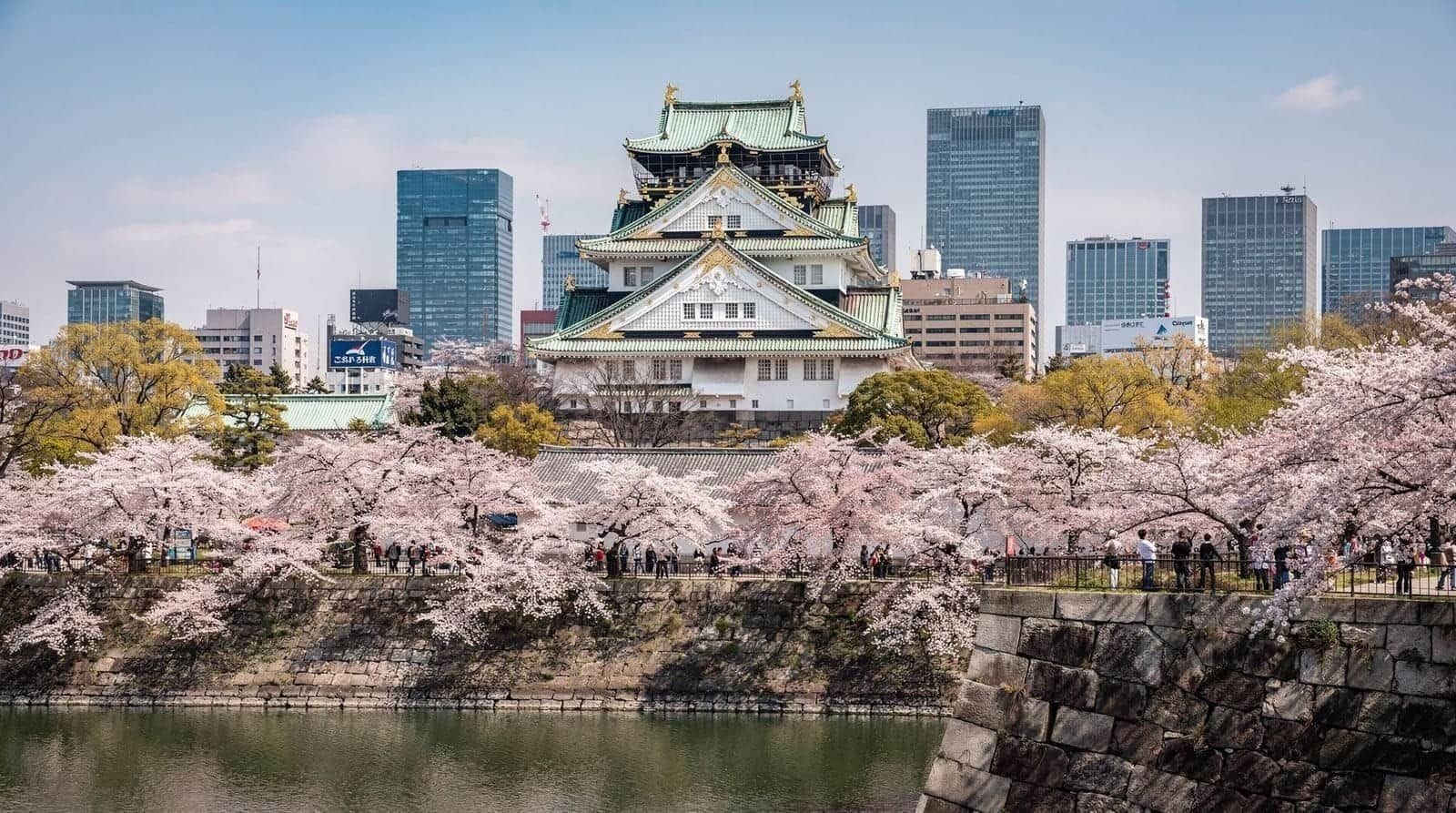
Osaka Amazing Pass — an Osaka-city-specific pass covering unlimited Osaka Metro subway and bus travel plus free entry to roughly 40-50 attractions (Osaka Castle, the Umeda Sky Building, HEP Five, and others), priced around ¥3,500 ($32) for 1 day or ¥3,600 ($33) for 2 days. It only covers Osaka city transport and Osaka attractions — no JR trains, no other cities. Full breakdown in our Osaka Amazing Pass guide.
JR Kansai Area Pass — a JR West rail pass covering unlimited rides on JR lines within a defined Kansai zone (Osaka, Kyoto, Nara, Kobe, Himeji), sold in 1 to 4-day versions roughly ¥2,800-6,500 ($26-60). It doesn’t cover Osaka Metro subway, private railways (Hankyu, Hanshin, Keihan, Kintetsu), or any attraction admission — purely JR intercity trains. A separate, easily confused product, the JR Kansai Wide Area Pass, extends coverage further out (Kinosaki, Shirahama, parts of Okayama) at a higher price, roughly ¥12,000-15,000 ($110-140) for its typical 5-day version. Full comparison in our JR Kansai Area Pass guide.
Have Fun in Kansai Pass — a lesser-known 1-week discount coupon pass, the Have Fun in Kansai Pass, which bundles free or discounted entry to a rotating list of smaller attractions and experiences across the region over a full week, aimed more at visitors on a longer, slower-paced Kansai stay than at first-timers optimizing a tight schedule. It’s a genuinely different product from the Amazing Pass and JR Area Pass — worth checking the current inclusion list carefully before assuming overlap with either.
What none of these passes cover
USJ tickets are entirely separate from every pass on this list — no Kansai transport or attraction pass includes theme park admission. See our dedicated USJ tickets and express pass guide for that budgeted on its own. Himeji Castle admission is also not bundled into any of the above; our Himeji Castle tickets guide covers that separately, and it’s inexpensive enough (¥1,000, ~$9.25) that a dedicated pass for it wouldn’t make sense anyway.
Private railways — Hankyu, Hanshin, Keihan, Kintetsu, Nankai — are outside JR Kansai Area Pass coverage entirely, which matters if your itinerary leans on the Keihan line to Fushimi Inari or the Kintetsu line to Nara, both faster than the JR alternative on those specific routes.
Matching passes to trip shapes
A visitor spending 3 days entirely within Osaka city, focused on Dotonbori, Osaka Castle, and Umeda, gets the most value from ICOCA for daily transport plus the Amazing Pass on whichever single day includes the most paid attractions — buying the Amazing Pass for all 3 days when only one day is attraction-heavy wastes money.
A visitor splitting a week between Osaka and day trips to Kyoto, Nara, and Kobe should use ICOCA on city days and layer in a JR Kansai Area Pass specifically on the days involving JR travel between cities — a 3 or 4-day version timed to cover the actual day-trip days, not the whole week, since city days within Osaka don’t need JR coverage at all.
A visitor adding Himeji or a longer excursion toward Kinosaki or Shirahama onto the same trip should compare the JR Kansai Area Pass against the wider-reaching JR Kansai Wide Area Pass before assuming the cheaper option covers the whole route — Himeji is included in the standard Area Pass zone, but Kinosaki and Shirahama typically require the pricier Wide version.
City-specific passes worth knowing about beyond Osaka
Kyoto sells its own one-day bus pass (covered in our Kyoto destination guide), a separate product from anything on this list, useful specifically on a day relying heavily on Kyoto’s city buses to reach northern districts like Kinkaku-ji that the subway doesn’t serve. It doesn’t interact with the JR Kansai Area Pass or ICOCA in any special way — just another pay-as-you-go alternative worth comparing for bus-heavy Kyoto days specifically. Kobe and Nara don’t have comparable dedicated city passes, since both are compact enough that most visitors cover them on foot or with a handful of individual transit fares.
The single biggest mistake to avoid
Buying a multi-day JR Kansai Area Pass and then discovering the itinerary actually relies on private railways (Hankyu to Kyoto’s Kawaramachi side, Kintetsu to Nara, or Nankai to Kansai Airport) for a meaningful share of the trip. None of those are covered by the JR pass, and paying full fare on top of an unused JR pass day is a genuinely common, avoidable overspend. Map out which specific trains each day of your itinerary actually uses before buying any multi-day pass — the JR-only zone is more limited than “Kansai rail pass” branding tends to suggest.
A worked example: 6 days, Osaka base
Days 1-2 in Osaka city (Dotonbori, Osaka Castle, Umeda): ICOCA for transport, Amazing Pass on day 2 when hitting Osaka Castle and the Sky Building. Day 3, Kyoto day trip via JR Special Rapid: covered by a 1-day JR Kansai Area Pass, or pay individual fares if the pass math doesn’t clear for a single day trip — see our Osaka to Kyoto transport guide for exact line-by-line costs.
Day 4, Nara: same JR pass if it’s a multi-day version, or the Kintetsu line paid separately since it’s often faster than the JR alternative for this specific route. Day 5, Himeji: covered by the same JR Area Pass zone. Day 6, USJ: entirely separate ticket, no pass overlap. This kind of day-by-day mapping, rather than buying the most comprehensive-sounding single pass upfront, is the actual way to minimize spend across a realistic Kansai itinerary.
A second worked example: solo budget traveler, 4 days
Consider a solo traveler spending 4 nights in Osaka on a tight budget, planning one Kyoto day trip and otherwise sticking to free or low-cost city sights. Days 1 and 4 (arrival and departure, mostly city wandering): ICOCA only, no pass, since a single traveler doing mostly walking and the occasional subway ride rarely clears the Amazing Pass’s break-even point alone. Day 2, dedicated to Osaka Castle and Umeda Sky Building: the Amazing Pass’s 1-day version pays for itself here even for a solo traveler, since those two attractions alone approach the pass price before factoring in the day’s subway fares.
Day 3, Kyoto day trip: individual JR Special Rapid fares (¥580 each way, ¥1,160 round trip) beat a 1-day JR Kansai Area Pass (¥2,800) for a solo traveler doing only this one city that day — the pass only wins once a second city day trip is added to the same validity window. This kind of day-by-day accounting, repeated across whatever your specific itinerary looks like, consistently beats defaulting to the most comprehensive-sounding single pass.
A note for visitors used to Tokyo’s pass ecosystem
Visitors arriving in Kansai after time in Tokyo sometimes expect a single dominant pass equivalent to Tokyo’s various all-in-one subway tickets, and Kansai’s more fragmented pass landscape — split across JR, Osaka Metro, and city-specific attraction bundles rather than one unified regional product — can initially feel like a step backward. In practice, it reflects Kansai’s more fragmented rail ownership (more competing private railways than Tokyo’s comparatively JR/Metro-dominated network), and the fragmentation is manageable once you accept that no single pass will cover everything, and plan city-transport and intercity-rail spending as two separate line items rather than searching for one all-covering ticket.
Foreign tourist eligibility and passport requirements
The JR Kansai Area Pass and Wide Area Pass are officially available to visitors on a temporary visitor visa status, generally requiring passport verification at purchase or exchange — a Japanese resident or long-term visa holder typically isn’t eligible for the discounted foreign-visitor rate on these rail passes. The Osaka Amazing Pass, ICOCA, and the Have Fun in Kansai Pass have no such restriction and are available to residents and visitors alike, since they’re not priced as tourist-specific discount products in the same way the JR regional passes are.
When to skip passes entirely
Not every trip benefits from any pass at all. A short, three-night Osaka-only stay focused on food and walkable neighborhoods like Dotonbori and Shinsekai, with no more than one or two paid attractions and minimal subway use, is often cheaper on ICOCA alone than with any bundled pass layered on top — the fixed cost of a pass only pays off once usage crosses a specific threshold, and a light, walking-heavy itinerary frequently doesn’t reach it. Sketching out your actual planned attractions and transit legs day by day, rather than defaulting to whichever pass sounds most comprehensive, remains the only reliable way to know in advance.
A quick-reference way to think about the whole system
It helps to mentally sort every option here into one of three buckets rather than treating them as a single confusing pile: pay-as-you-go (ICOCA, the simplest and most flexible, with no discount but no waste either), city-attraction bundles (the Osaka Amazing Pass, valuable only if your specific day includes enough included stops), and intercity rail passes (the JR Kansai Area and Wide Area Passes, valuable only once multiple day trips stack up within the same validity window). Almost every visitor ends up using all three buckets at different points in the same trip rather than picking just one, and that’s the intended, most cost-effective way the system actually works — not a sign that the planning has gone wrong.
Revisiting the pass system on a second Kansai trip
Visitors returning to Kansai for a second or third trip, having already covered Osaka Castle, the main Kyoto temples, and Nara Park on a previous visit, often need fewer passes overall — a repeat visitor skipping the marquee included attractions the Amazing Pass covers gets less value from it than a first-timer would, and might reasonably rely on ICOCA alone plus targeted individual tickets for whatever new, less-visited sight is on this trip’s list. Reassessing pass value against your specific, current itinerary rather than assuming last trip’s pass choices still apply is worth doing each time.
Where to buy each pass
ICOCA cards are sold at ticket machines in JR and Osaka Metro stations; a Mobile ICOCA option via smartphone wallet apps avoids the physical card deposit entirely for visitors with a compatible phone. The Osaka Amazing Pass is sold at Osaka Metro stations and visitor information centers, as a physical card rather than a digital pass in most cases.
JR Kansai Area and Wide Area Passes are sold at JR ticket offices (marked “Midori no Madoguchi”) inside major stations and, for some versions, pre-purchasable online before arrival in Japan — worth doing if your itinerary is fixed enough to commit to specific dates in advance. Getting around within Osaka city day to day, independent of any of these passes, is covered fully in our getting around Osaka guide.
Side-by-side value comparison
| Pass | Typical cost | Covers | Doesn’t cover |
|---|---|---|---|
| ICOCA | ¥2,000 initial | Tap-in transport almost everywhere in Kansai | No discount, no attraction admission |
| Osaka Amazing Pass | ~¥3,500-3,600 (1-2 days) | Osaka subway/bus + ~40-50 Osaka attractions | Other cities, JR trains, USJ |
| JR Kansai Area Pass | ~¥2,800-6,500 (1-4 days) | JR trains: Osaka, Kyoto, Nara, Kobe, Himeji | Osaka Metro, private railways, attractions |
| JR Kansai Wide Area Pass | ~¥12,000-15,000 (5 days) | Adds Kinosaki, Shirahama, parts of Okayama | Same city-transport gaps as the standard pass |
| Have Fun in Kansai Pass | Coupon-style, 1-week window | Rotating list of smaller attractions | Core transport of any kind |
A worked example: mixing passes across a single busy day
Consider a Kyoto day trip that also includes Fushimi Inari (reached faster by Keihan than JR) and an evening back in Osaka’s Dotonbori. A JR Kansai Area Pass covers the Osaka-Kyoto leg by JR, but the Keihan hop to Fushimi Inari needs a separate fare or an ICOCA tap, since Keihan isn’t JR. This single day illustrates the core lesson of this guide: even a day built around one “pass-covered” city often still needs ICOCA for the parts of the route that fall outside that pass’s specific network.
Frequently asked questions about Kansai passes
Is there one pass that covers everything in Kansai?
No — this is the single most common misconception. ICOCA, the Osaka Amazing Pass, and the JR Kansai Area Pass each cover a different, non-overlapping slice (daily transport, Osaka attractions, and JR intercity trains respectively), and most trips genuinely need a combination rather than one all-covering product.
Do I need to decide on passes before arriving in Japan?
Only partially — ICOCA and the Osaka Amazing Pass are easy to buy on the ground with no advance commitment needed. The JR Kansai Area Pass is worth pre-purchasing online only once your day-trip schedule is fixed enough to commit to specific validity dates, since it’s tied to consecutive calendar days from first use.
Top experiences
Bookable activities with verified prices and instant confirmation on GetYourGuide.