Osaka Castle area
Osaka Castle's park, moats, and museum tower make for a half-day visit, with cherry blossoms in Nishinomaru Garden and quieter grounds than Dotonbori.
Osaka: Osaka castle museum tower ticket
Quick facts
- Best time to visit
- Late March-early April for sakura, or clear autumn days for mild walking weather
- Days needed
- Half a day (2-3 hours including the museum tower)
- Getting there
- JR Osakajokoen Station or subway Tanimachi 4-chome, both 10-15 minutes from Umeda or Namba
- Nearest station
- Osakajokoen (JR Loop Line)
- Good for
- History, photography, cherry blossoms, families
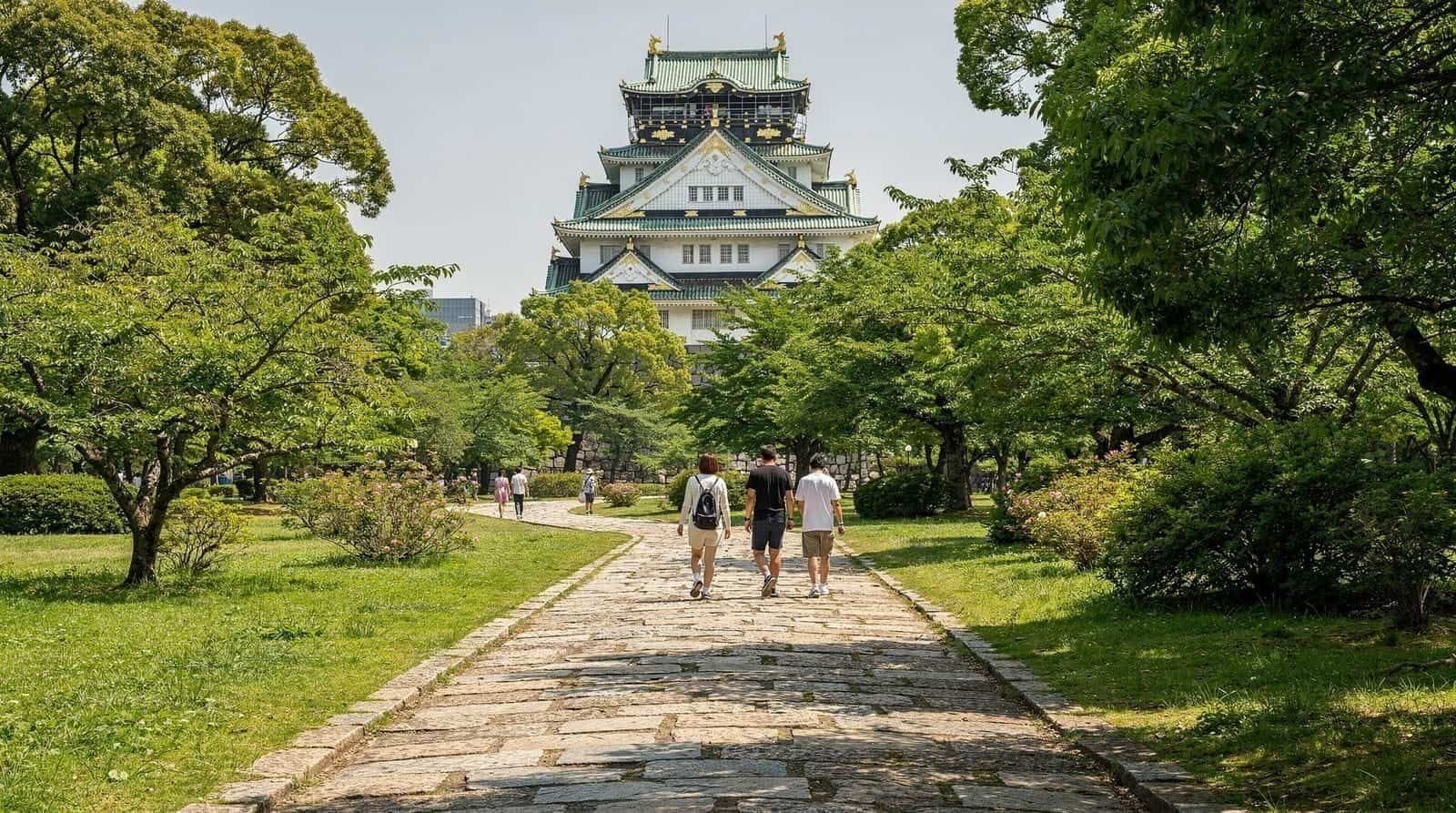
Osaka Castle Park covers roughly 100 hectares of moats, stone walls, and gardens around the reconstructed castle keep, and it’s the closest thing Osaka has to a single must-see historical site. Most visitors spend two to three hours here — enough for the grounds, the moat walk, and the museum inside the tower — before moving on.
| Time needed | Half a day (2-3 hours including the museum tower) |
| Getting there | JR Osakajokoen or subway Tanimachi 4-chome, 10-15 min from Umeda/Namba |
| Cost | Park free; museum tower and Nishinomaru Garden charge separate fees |
| Best for | History, photography, cherry blossoms, families |
| Best time | Late Mar-early Apr for sakura; Oct-Nov for mild walking weather |
The castle itself: reconstruction, not original
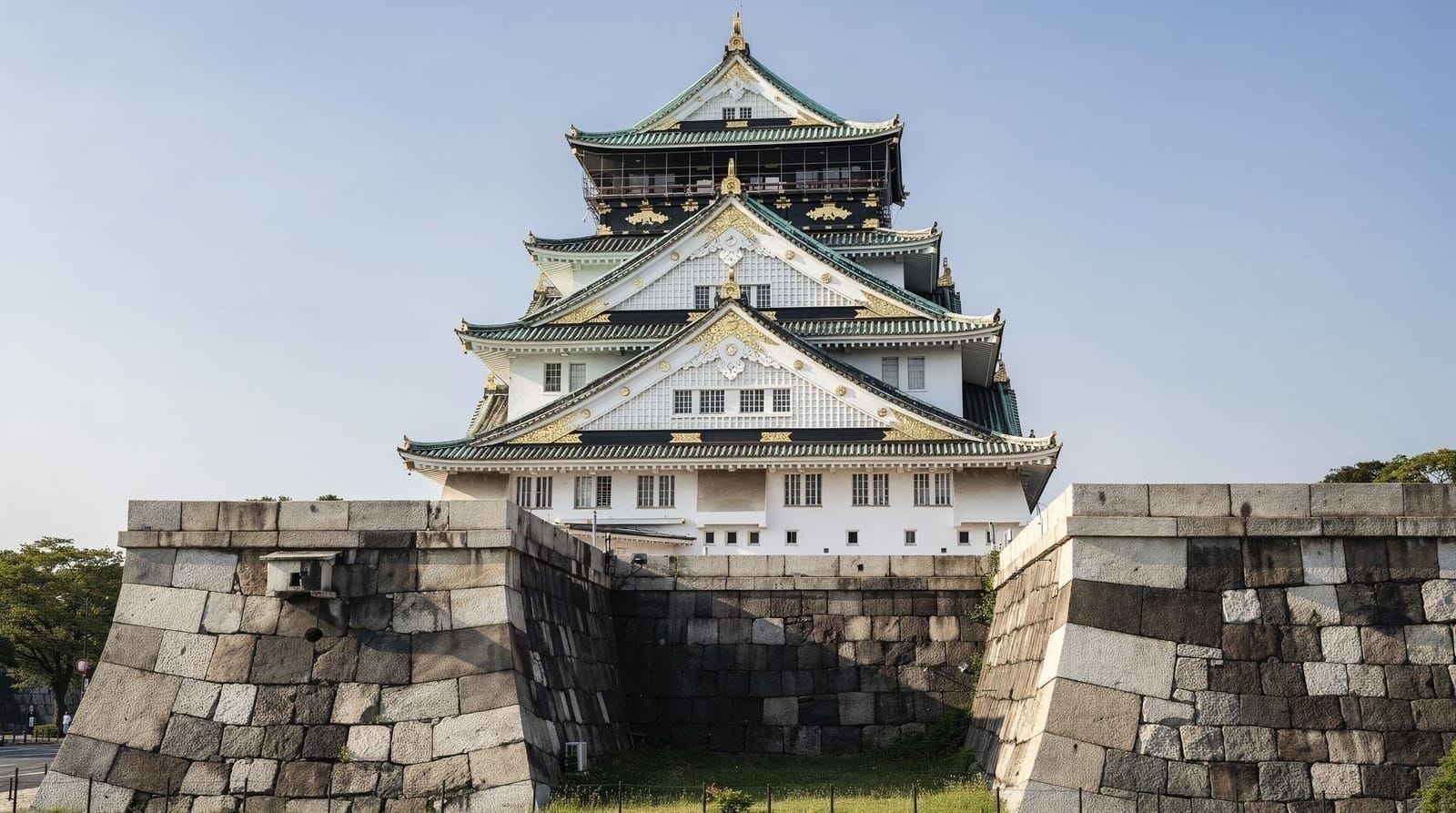
The keep standing today is a 1931 concrete reconstruction, rebuilt again after WWII damage and most recently renovated in 1997 with modern museum fittings inside. The original castle, built by Toyotomi Hideyoshi starting in 1583 as a display of his unified power over Japan, was destroyed in 1615 during the siege that ended the Toyotomi clan; a Tokugawa-era rebuild burned down in 1665 after a lightning strike.
None of the current structure predates 1931, and it’s worth knowing that going in — this is a museum in castle form, not an intact centuries-old building, and treating it as one leads to disappointment. What is original, or close to it, are the stone walls and moats, some of the largest castle fortifications in Japan, built with individual stones weighing many tons and moved without modern machinery.
What’s inside the museum tower
The museum floors inside the keep cover Osaka’s feudal history, Hideyoshi’s rise, and the castle’s construction and destruction, with English signage throughout and an observation floor at the top offering a wide view over the park and the surrounding city. It’s a straightforward, well-organized museum — an hour is enough for most visitors, longer if you read every panel. A Osaka Castle museum tower ticket booked ahead saves time at the entrance during peak cherry blossom season, when queues can stretch 20-30 minutes.
The park: moats, walls, and Nishinomaru Garden
The park’s inner and outer moats, still filled with water, are crossed by a handful of bridges leading to the main keep, and walking the full perimeter takes about 45 minutes at an easy pace. Nishinomaru Garden, a fenced lawn area on the western side of the keep, has a small admission fee but is the best cherry blossom viewing spot in the immediate area — around 300 trees, with the castle tower visible behind them, making it one of the more photogenic sakura spots in the city during the last week of March into early April. Outside blossom season, it’s a quiet lawn with fewer visitors than the main approach to the keep.
The stone walls: an engineering feat worth pausing for
The castle’s moats and stone walls are frequently the more genuinely impressive part of a visit, even for visitors uninterested in the museum’s history exhibits. Some individual stones in the outer wall weigh well over 100 tons, quarried from islands in the Seto Inland Sea and transported to Osaka using period techniques (barges, log rollers, and enormous manual labor forces) that remain a subject of engineering fascination today. The largest single stone, known as Higo-ishi, is estimated at around 130 tons and sits near the Sakuramon Gate, worth a specific stop and closer look on the walk up to the keep — it’s easy to walk past without registering the scale involved.
Toyokuni Shrine and other spots inside the park
Toyokuni Shrine, within the castle grounds, is dedicated to Toyotomi Hideyoshi himself, the castle’s original builder, and is a smaller, quieter stop than the main keep — worth a five-minute detour if the history of the Toyotomi clan’s rise and fall interests you. Osakajo Hall, a large arena within the park, hosts concerts and sporting events year-round and occasionally affects crowd levels and train congestion around Osakajokoen Station on event nights, worth checking before a visit if you’re aiming for a quiet experience.
Beyond the castle: nearby stops
The Osaka Museum of History, just west of the park near Tanimachi 4-chome Station, covers the same feudal period in more depth and includes an excavated section of the ancient Naniwa Palace beneath the building — a reasonable add-on if the castle museum leaves you wanting more context. Osaka Business Park, immediately east of the park, is a modern office district with little to draw a visitor beyond a lunch stop between sights.
Guided options if you want context, not just photos
For visitors who want the history explained rather than read off wall panels, a castle, temple, and shrine walking tour combines the park with nearby religious sites in a single guided outing.
A more unusual pairing, the Cup Noodles Museum and castle walking tour, links the castle with the nearby instant-ramen museum (founded by Nissin, whose story is oddly compelling even for visitors with no particular interest in noodles). After dark, a themed Osaka Castle haunted night walk leans into ghost-story folklore around the site’s violent history — a different angle for a return visit rather than a first one.
The siege that ended the Toyotomi clan
The castle’s most consequential moment came in the winter and summer sieges of 1614-1615, when Tokugawa Ieyasu’s forces besieged Hideyoshi’s son, Hideyori, ultimately breaching the castle’s defenses and ending the Toyotomi clan’s claim to power — a turning point that cemented over two centuries of Tokugawa shogunate rule until the Meiji Restoration in 1868. The museum’s exhibits cover this period in useful detail, including large-scale folding screen paintings (byobu) depicting the siege, though the originals are held elsewhere and the displays here are generally reproductions or rotating loans.
Seasonal illumination and evening events
Outside cherry blossom season, the castle grounds occasionally host evening illumination events, projecting light displays onto the keep’s exterior walls after dark — these run on a limited seasonal schedule (historically tied to autumn and winter) rather than year-round, so checking current dates before planning an evening visit is worth doing if this is a priority. Even without a formal event, the illuminated keep is visible from several points in the park after sunset and makes for a different, quieter atmosphere than the daytime crowds.
Getting here and connecting onward
JR Osakajokoen Station, on the Loop Line, sits right at the park’s northeast edge and is the most direct approach; Tanimachi 4-chome Station (subway) is a slightly longer walk but closer to the Museum of History. Both are 10-15 minutes from Umeda or Namba. From here, it’s a short ride to Shinsekai and Tennoji, or back into central Osaka for Dotonbori. Full city context at our Osaka destination guide, and the Osaka Castle guide covers ticket options, opening hours, and seasonal crowd patterns in more depth.
Visiting with kids
The park’s wide, flat paths and open lawns make it one of the more manageable historical sites in Osaka for young children, and the sheer scale of the moats and walls tends to land well even without much interest in the history — most kids find the size of the stones and the width of the moat more immediately impressive than the museum exhibits. The museum tower itself has an elevator to the upper floors, though the final approach to the observation level typically involves stairs. Nishinomaru Garden’s open lawn is a reasonable spot to let children run during cherry blossom season, when the crowds elsewhere in the park can make close-up viewing difficult with a stroller.
Tourist traps and honest warnings
The castle itself is fairly priced and not a trap in the usual sense, though the surrounding approach has scattered souvenir stalls at typical markup. The bigger practical issue is crowding: cherry blossom season and Japanese public holidays (particularly Golden Week in late April-early May) bring long queues for the museum tower, and the park’s main paths can feel closer to Dotonbori-level crowds than the “quiet historical site” reputation suggests. Visiting on a weekday morning, outside peak season, gets you a genuinely calm couple of hours.
A dedicated walking route for the park
Beyond the standard grounds-moat-museum loop, the Osaka Castle walking route guide lays out a specific order for covering the park’s less-obvious corners — Toyokuni Shrine, the Higo-ishi stone, and Nishinomaru Garden — alongside the main keep, useful if two to three hours feels like it should cover more ground than the obvious straight-line path to the tower and back. The Osaka Castle guide covers ticket options and opening-hour changes in more depth than fits on this page.
Osaka’s other temples and shrines, for comparison
Osaka Castle’s Toyokuni Shrine is a modest stop within a much larger park, and visitors specifically interested in Osaka’s religious sites beyond the castle grounds have several stronger options elsewhere in the city. The Osaka temples and shrines guide rounds up Shitenno-ji, one of Japan’s oldest officially administered temples, and Sumiyoshi Taisha, covered in more depth in the Sumiyoshi Taisha guide, both a stronger draw for visitors whose interest is specifically in religious architecture rather than castle history.
Fitting Osaka Castle into a 3-day Osaka itinerary
Osaka Castle Park’s half-day format makes it easy to slot into a broader multi-day Osaka visit without dedicating a full day to it. The Osaka 3-day planning guide and the Osaka 3-day itinerary both cover where the castle fits best relative to Dotonbori, Shinsekai, and a Kyoto or Nara day trip, generally as a morning stop given its proximity to central Osaka and the relatively short visit time it requires.
Combining with Shinsekai and Tennoji
For visitors continuing on from the castle rather than heading straight back to central Osaka, Shinsekai and Tennoji make a reasonable afternoon or evening continuation — a genuinely different, grittier retro-Osaka atmosphere than the castle’s formal park setting, reachable by a short train connection from Osakajokoen or Tanimachi 4-chome.
Frequently asked questions about the Osaka Castle area
Is Osaka Castle worth visiting if it’s not the original building?
Yes, with the right expectations — it’s a well-run museum on Osaka’s feudal history with a strong observation view, set inside genuinely old and impressive stone fortifications. Visitors expecting an intact centuries-old structure are sometimes disappointed; visitors expecting a museum in a dramatic setting generally aren’t.
How long does it take to see Osaka Castle?
Two to three hours covers the park, the moat walk, and the museum tower at a comfortable pace. Add 30-45 minutes for Nishinomaru Garden during cherry blossom season.
When is the best time to see cherry blossoms at Osaka Castle?
Late March through the first week of April, with peak bloom typically falling around April 1. Nishinomaru Garden, on the castle’s western side, is the strongest single spot for blossom photos with the tower in the background.
Is there an entrance fee for Osaka Castle Park?
The park grounds and moat walk are free; the museum tower and Nishinomaru Garden both charge separate small admission fees.
How do I get to Osaka Castle from Namba or Umeda?
Both are about 10-15 minutes by train — take the JR Loop Line to Osakajokoen Station for the most direct approach, or the subway to Tanimachi 4-chome for a slightly longer walk that also passes the Osaka Museum of History.
Is Osaka Castle crowded?
It can be, especially on weekends, Japanese public holidays, and throughout cherry blossom season, when the museum tower queue can run 20-30 minutes. Weekday mornings outside peak season are noticeably quieter.
What happened to the original Osaka Castle?
Toyotomi Hideyoshi’s original 1583 castle was destroyed in the 1615 siege that ended the Toyotomi clan’s rule; a Tokugawa-era rebuild burned down in 1665 after a lightning strike, and the structure standing today is a 1931 concrete reconstruction, renovated again in 1997 with modern museum fittings.
Is Osaka Castle illuminated at night?
The keep is visible after dark from several points in the park, and the site occasionally hosts seasonal light-projection events onto the castle’s exterior walls, typically scheduled around autumn or winter — check current dates before planning an evening visit, since these aren’t a year-round fixture.
Top experiences
Bookable activities with verified prices and instant confirmation on GetYourGuide.