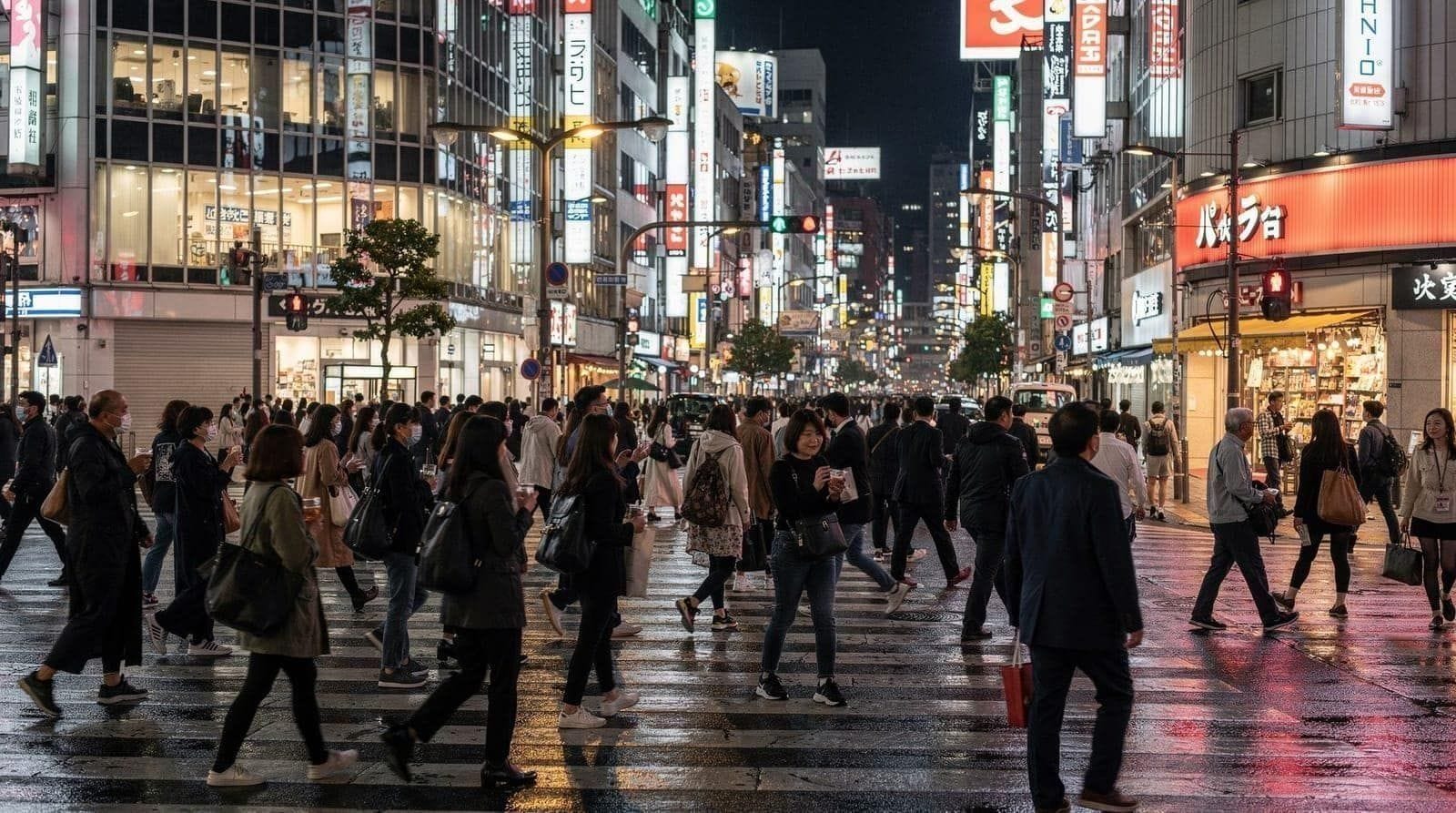
Dotonbori and Namba
Dotonbori's neon canal and Namba's shopping streets are Osaka's densest food-and-nightlife district — here's how to see it without overpaying.
Osaka: Osaka street food tour Dotonbori Namba
Duration: 2 hours
Quick facts
- Best time to visit
- Evening, year-round, for the neon and canal-front atmosphere
- Days needed
- Half a day to a full evening
- Getting there
- 10-15 minutes by subway from Osaka Station or Shin-Osaka
- Nearest station
- Namba Station (Midosuji, Nankai, JR) or Nippombashi
- Good for
- Street food, nightlife, shopping, canal-front photos
Dotonbori is the strip of canal-front restaurants and illuminated signage that shows up in nearly every photo of Osaka, and Namba is the wider shopping and transport district that surrounds it. Together they form the busiest few square blocks in the city — worth an evening, best treated as a place to eat and wander rather than a checklist of sights.
| Where | Namba Station area, central Osaka |
| Cost | Street food ¥500-1,500/dish; sit-down meal ¥900-2,500 |
| Time needed | Half a day to a full evening |
| Getting there | 10-15 min by subway from Osaka Station |
| Best time | After 5pm for the neon and full food-stall swing |
What’s actually here, beyond the Glico sign
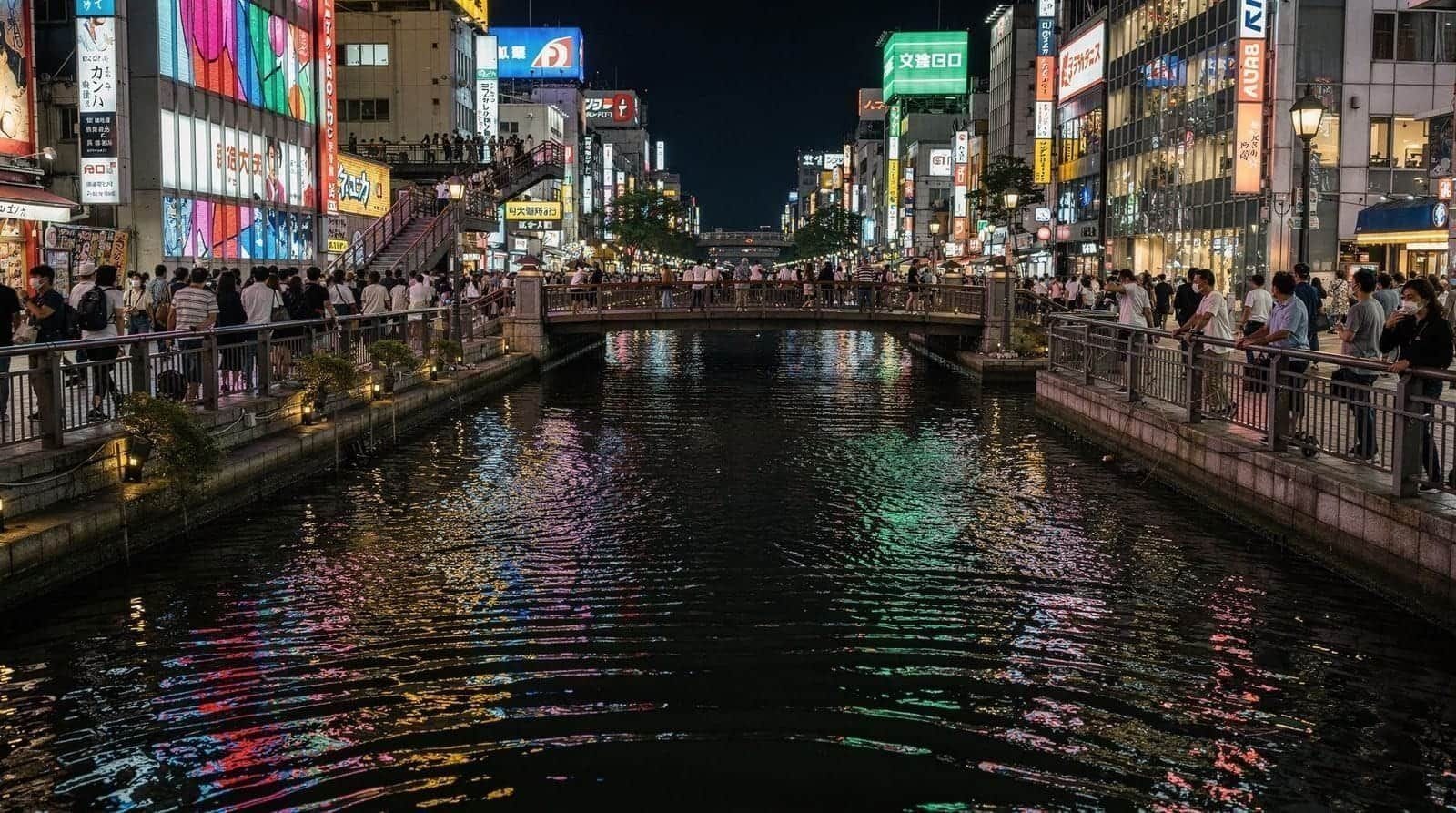
The Glico Running Man sign above the Ebisubashi bridge is the photo everyone takes, and it’s a fine five-minute stop, but the district’s real value is the density of food packed into a small area. The canal itself runs about 600 meters, lined on both sides with restaurants advertising their specialty with oversized 3D signs — a mechanical crab, a puffer fish, an octopus. These aren’t kitsch for its own sake; several of the restaurants behind them (Kani Doraku for crab, Zuboraya for fugu) have been operating for decades and are reasonably priced for what they serve, though menus skew toward set courses rather than à la carte.
Dotonbori’s food, priced honestly
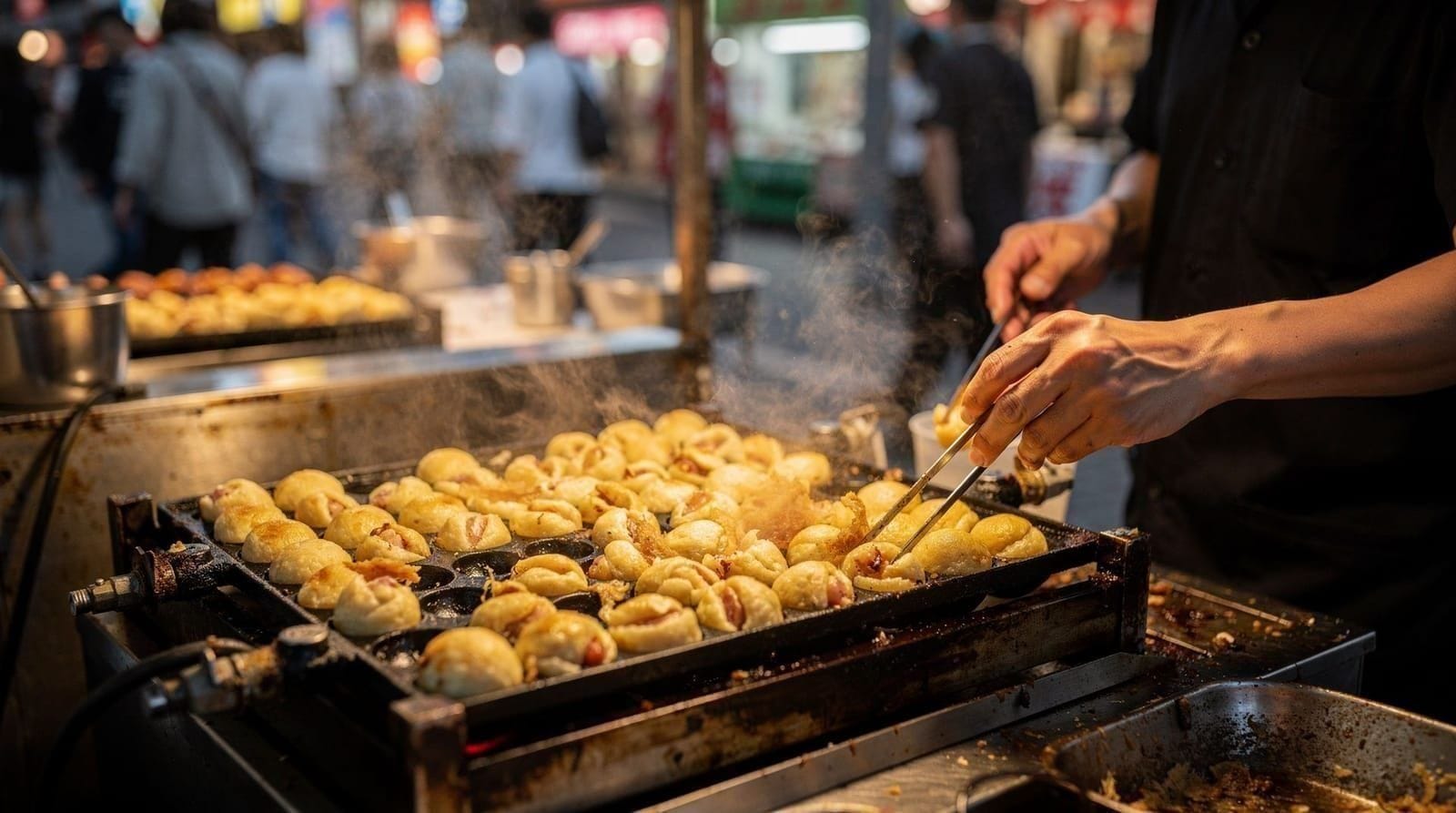
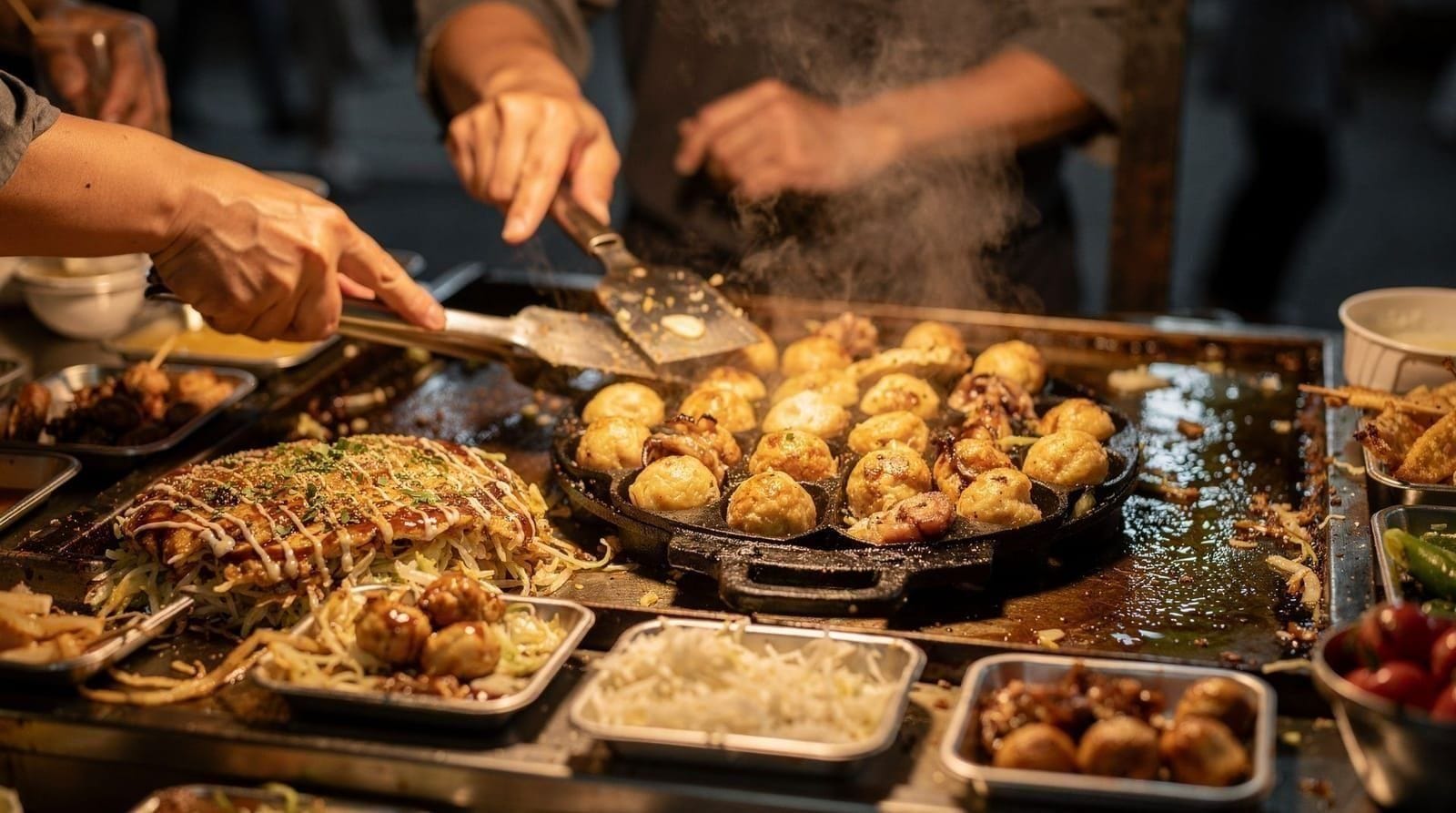
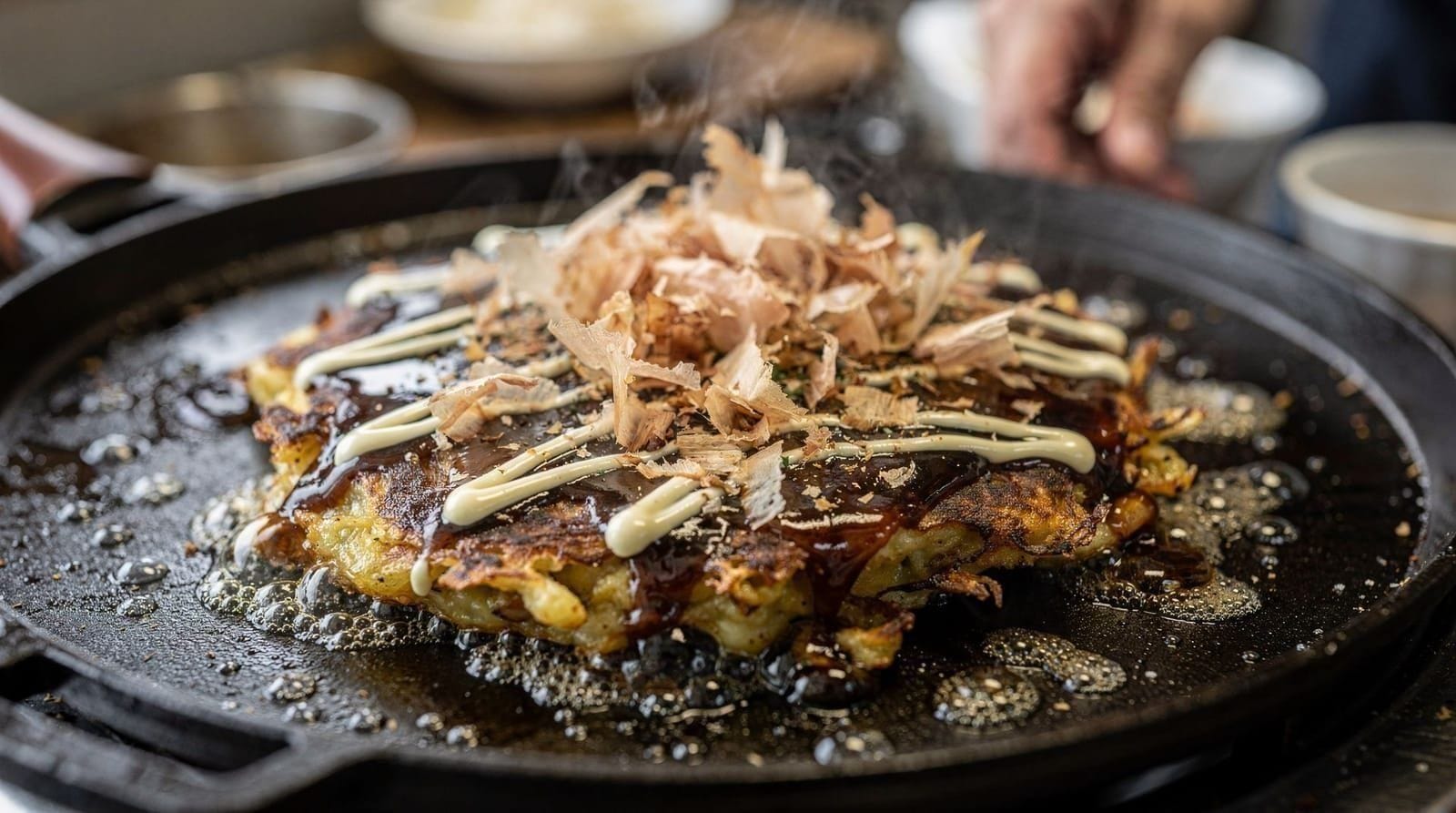
Takoyaki (octopus balls) and okonomiyaki (a savory cabbage-and-batter pancake) are the two dishes most associated with this part of Osaka, and quality-to-price ratio varies a lot depending on which stall you pick. A standard takoyaki order (6-8 balls) runs ¥500-700 (about $4-6) at most stands; if a place is charging ¥1,000+ and has a long line of tourists rather than locals, it’s usually trading on location, not quality. Okonomiyaki at a sit-down restaurant, cooked at your table on a hot plate, typically runs ¥900-1,500 ($8-13) per person.
Our takoyaki guide and okonomiyaki guide name specific stalls and restaurants worth the visit. For a guided introduction that skips the trial and error, the daytime Dotonbori food tour or, after dark, the 3-hour night food tour both work through several stalls with a guide who knows which ones locals actually queue at.
Kuromon Ichiba Market: a 10-minute walk away
Kuromon Ichiba Market sits just northeast of Dotonbori, an indoor arcade of seafood, produce, and prepared-food stalls that functions as Osaka’s kitchen market. It’s touristy at the entrance and genuinely local a few stalls deeper in — fresh oysters, uni, and wagyu skewers run ¥500-1,500 per item, and it’s an easy add-on before or after Dotonbori proper. Full write-up in our Osaka street food guide.
Namba: shopping, transport, and the quieter side streets
Namba Station is the transport hub for the whole area — Midosuji subway line, Nankai Line (with direct trains to Kansai Airport), JR, and several other lines converge here, which is part of why the surrounding blocks are so busy at all hours. Shinsaibashi-suji, a roofed shopping arcade running north from Dotonbori, covers everything from flagship fashion stores to duty-free electronics shops over about 600 meters. One block off the main drag, Hozenji Yokocho is a narrow, lantern-lit stone alley with a handful of small traditional restaurants and a moss-covered Buddhist statue (Fudo Myo-o) that visitors splash with water for luck — a much quieter contrast to Dotonbori’s crowds, worth the two-minute detour.
Den Den Town: Osaka’s electronics and anime district
South of Namba, around Nippombashi Station, Den Den Town is Osaka’s answer to Tokyo’s Akihabara — a stretch of streets specializing in electronics, retro video games, and anime and manga merchandise, quieter and less overwhelming than its Tokyo counterpart but well stocked for the same interests. It’s a 10-15 minute walk from Dotonbori and a reasonable add-on for visitors with a specific interest in gaming or anime culture, though it doesn’t have the density of themed cafes and arcades that Akihabara does.
Seeing the canal from the water
A short 20-minute Dotonbori canal cruise runs along the waterway with a live commentary guide (often delivered with deliberate comic timing) — it’s a low-cost way to see the signage from a different angle and works well with kids or on a first evening when you’re still getting oriented.
Nightlife beyond the main strip
After the food stalls close down, Namba and neighboring Sonezaki have a dense concentration of small bars and izakayas, many tucked into buildings that aren’t obvious from the street. A guided bar-hopping tour of hidden Namba bars is a reasonable way in if you don’t read Japanese menus or don’t know which unmarked doors lead somewhere worthwhile. Our Dotonbori nightlife guide and Osaka bars and izakaya guide cover specific venues by type — standing bars, whisky bars, casual izakaya.
A short history: from kabuki theaters to neon
Dotonbori takes its name from Yasui Doton, the Edo-period merchant who financed the canal’s excavation in 1612 to improve cargo transport into the city center. By the 18th century, the strip had become Osaka’s main theater district, lined with kabuki and bunraku (puppet theater) houses that drew crowds much as the restaurants do today — the tradition of oversized, attention-grabbing signage above each venue’s entrance dates back to this era, when theaters competed for passersby the same way the crab and pufferfish restaurants do now. Most of the original theaters didn’t survive the 20th century, but the canal’s role as a place built for spectacle rather than quiet dining has stayed remarkably consistent for roughly 300 years.
Doguyasuji: the kitchenware street most visitors miss
One block south of Namba’s main shopping arcades, Doguyasuji is a covered street lined almost entirely with shops selling professional kitchen equipment — knives, cookware, tableware, and the hyper-realistic plastic food models (sampuru) displayed in restaurant windows across Japan. It’s a working trade street for chefs and restaurant owners rather than a tourist attraction, which makes it one of the more interesting five-minute detours in the area: a good source for a well-made Japanese kitchen knife at a fraction of what specialty export shops charge elsewhere, and a look at how those uncannily realistic plastic sushi and ramen displays are actually made.
Tourist traps and honest warnings
This is the part of Osaka where scams concentrate, mostly aimed at foreign visitors after dark: touts (often speaking fluent English) inviting people into bars or “girls’ bars” that carry undisclosed seating or table charges, sometimes running into tens of thousands of yen for a round of drinks. Politely declining and walking on is the standard local advice — legitimate bars don’t need street recruiters.
Restaurants directly on the canal with picture menus and staff calling out in English toward passersby are usually priced for tourists rather than value; walking one block back typically gets better food for less. Pickpocketing risk, while still low by international standards, is highest here of anywhere in Osaka simply because of crowd density — keep bags zipped and in front of you on weekend nights.
Namba Yasaka Shrine: the lion-head stage
A 10-minute walk south of Namba Station, Namba Yasaka Shrine is easy to miss on a map but unmistakable in person: its main stage is built in the shape of a giant lion’s head, mouth open wide enough to walk into, originally constructed to symbolically “devour” bad luck and misfortune. It’s a small, quiet shrine compared to the crowds a few blocks north, and a genuinely unusual photo stop that most visitors to Dotonbori never hear about, let alone visit — worth the short detour if you want something outside the standard canal-and-neon circuit.
Getting here and connecting onward
Namba Station connects directly to Kansai Airport via the Nankai Rapi:t limited express (about 38-45 minutes), making this a sensible first or last stop on a Kansai trip. From Namba, it’s one Midosuji Line stop to Umeda (about 10 minutes) or a short ride to Tennoji for Shinsekai and Abeno Harukas. Full city context at our Osaka destination guide, and neighborhood-by-neighborhood detail at Umeda & Kita and Shinsekai & Tennoji.
Dotonbori and Namba street food walking tour is a reasonable single booking if you want the highlights of this section — Dotonbori, Kuromon Ichiba, and the back streets of Namba — covered in one guided walk rather than pieced together yourself.
Dotonbori versus Osaka’s other food districts
Dotonbori isn’t the only place to eat well in Osaka, and it’s worth knowing how it compares before deciding where to spend an evening.
| District | Food style | Price level | Atmosphere |
|---|---|---|---|
| Dotonbori | Takoyaki, okonomiyaki, canal-front dining | Mid to high near the canal, better value a block back | Loud, neon, tourist-heavy |
| Kuromon Ichiba (10 min walk) | Fresh seafood, market stalls | Mid | Daytime market, touristy at the entrance |
| Shinsekai & Tennoji | Kushikatsu, retro Showa-era feel | Low to mid | Gritty, local, fewer tourists |
| Umeda & Kita | Department store food halls, izakaya | Mid to high | Business-district, less neon |
If Dotonbori’s crowds and tourist-priced canal-front restaurants feel like a lot, Shinsekai a short ride away offers a genuinely different, cheaper night out with a similar street-food format.
What a realistic evening budget looks like
Beyond the per-dish prices mentioned above, a full evening built around Dotonbori and Namba — street food, one sit-down meal, and a couple of drinks — realistically runs ¥4,000-7,000 ($35-61) per person for a mid-range night, or ¥2,000-3,000 ($17-26) if you stick to street food and skip the sit-down restaurant and bars entirely. The single biggest cost lever is whether you eat directly on the canal-front (tourist pricing) or one block back in Shinsaibashi-suji or Doguyasuji (better value for near-identical food).
Related planning
For a fuller Osaka itinerary that sequences Dotonbori against the city’s other districts, see the 3-day Osaka planning guide and the Osaka trip cost and budget guide. If nightlife is the priority rather than food, the Namba nightlife guide has more detail on bars and izakaya by type.
Frequently asked questions about Dotonbori and Namba
Is Dotonbori worth visiting or is it a tourist trap?
Both, depending on how you use it. The canal-front photo stop and a couple of the long-established restaurants (Kani Doraku, Zuboraya) are genuinely worth it; the picture-menu restaurants aimed squarely at foreign tourists are overpriced for what they serve. Walking a block into Shinsaibashi-suji or Hozenji Yokocho gets you the same neighborhood with better value.
What is the best time of day to visit Dotonbori?
After 5pm, once the signs are lit and the food stalls are in full swing. Weekday evenings are noticeably calmer than Friday and Saturday nights, when the canal-front can get shoulder-to-shoulder.
How do I avoid the bar scams in Namba?
Decline any street tout inviting you into a bar, especially if they approach in English and seem to be waiting specifically for foreign visitors. Legitimate bars in Osaka don’t recruit customers off the sidewalk; this is one of the more reliable local red flags.
Is Kuromon Ichiba Market worth adding to a Dotonbori visit?
Yes — it’s a 10-minute walk from Dotonbori and offers a different kind of food experience (fresh seafood and market stalls rather than restaurant dining), and it’s easy to combine both in a single afternoon or evening loop.
How much does a night out in Dotonbori cost?
A casual street-food dinner runs ¥1,500-2,500 per person ($13-22); a sit-down okonomiyaki or kushikatsu meal with drinks runs ¥3,000-5,000 ($26-44). Bar-hopping adds more depending on venue, typically ¥800-1,500 per drink at a standard bar.
Can you see Dotonbori in an afternoon?
Yes, though it comes alive more after dark. A daytime visit works well combined with Kuromon Ichiba Market and Shinsaibashi shopping, saving the canal-front photo and food crawl for the evening.
Is Namba the same place as Dotonbori?
They overlap but aren’t identical — Dotonbori refers specifically to the canal-front strip with the illuminated signage, while Namba is the broader district around Namba Station that includes Dotonbori, Shinsaibashi-suji, and Doguyasuji. Most visitors treat them as one continuous area since they’re within a few minutes’ walk of each other.
What should I buy at Doguyasuji if I’m not a chef?
A well-made Japanese kitchen knife is the most practical souvenir for a non-professional, since prices here undercut most specialty export retailers; small plastic food-model keychains, a novelty spin on the sampuru displays sold in restaurant windows nationwide, are a lighter, cheaper option.
Top experiences
Bookable activities with verified prices and instant confirmation on GetYourGuide.