Osaka bars and izakaya guide
Osaka: Osaka bar hopping hidden bars Namba
Duration: 2 hours
What's the difference between an izakaya and a standing bar in Osaka?
An izakaya is a seated, casual restaurant-bar serving small shareable dishes alongside drinks, typically ¥3,000-5,000 ($28-46) per person for a full evening. A tachinomi (standing bar) has no seating, a shared counter, and a smaller menu, built for a quicker, cheaper drink — often ¥1,500-3,000 for the same style of evening. Both are genuinely mainstream, not tourist-facing novelties.
Osaka’s drinking culture runs on a handful of distinct formats — standing bars, seated izakaya, whisky and highball bars, and small hidden counters — each with its own rhythm, price point, and unwritten etiquette. Visitors who stick to a single restaurant’s drinks menu miss most of this; a night that moves between two or three formats gives a much better sense of how Osaka actually drinks, and this guide covers the formats, the costs, and the ordering rules that trip people up.
| Where | Namba, Umeda, Shinsekai |
| Cost | ¥1,500-3,000 (tachinomi) to ¥3,000-5,000 (izakaya) |
| Time needed | 1-2 hours per stop, or a multi-venue evening |
| Booking | Standing bars: walk-in only; smaller izakaya: book ahead |
| Best time | Evenings; last train ~midnight-1am |
Where Osaka’s drinking culture came from
Osaka’s reputation for casual, unpretentious drinking has real historical roots in its identity as Japan’s merchant capital during the Edo period — a city built around trade and commerce rather than the Tokugawa shogunate’s political formality (based in Edo, old Tokyo) or Kyoto’s imperial court culture.
Tachinomi specifically trace back to this merchant-city practicality: standing bars near markets and docks served workers a quick, cheap drink between tasks, without the time or expense of a full sit-down meal, and that same practical, no-frills format has persisted largely unchanged into the present day even as the surrounding city modernized around it. This history is worth knowing because it reframes tachinomi from a quirky format into a genuinely continuous thread of Osaka’s civic identity, tied to the same merchant-city pragmatism that also shaped the city’s food culture more broadly.
Tachinomi: standing bars, Osaka’s default format
Tachinomi (literally “standing drinking”) are no-frills bars with no seating, built around a shared counter and a short menu of small, shareable dishes alongside beer, highball, sake, and shochu. They’re designed for a quick, relatively cheap drink rather than a long sit-down session — a beer runs ¥400-600 and most dishes ¥300-800, meaning a genuinely satisfying stop costs ¥1,500-3,000 per person. The format is common across the city but especially dense around Namba, Umeda’s underground malls, and Shinsekai, and it’s worth treating as a starting point for an evening rather than the whole night’s plan, since most tachinomi expect a reasonably quick turnover to keep space free for other customers.
Izakaya: the seated, fuller-evening format
Izakaya are casual, seated restaurant-bars serving a wider range of small dishes — grilled skewers (yakitori), sashimi, fried items, simmered dishes, and rice at the end — designed to be shared across a table rather than ordered as individual courses. A full izakaya evening with several dishes and multiple rounds of drinks runs ¥3,000-5,000 ($28-46) per person, and the format is genuinely mainstream across all age groups and social contexts in Japan, from after-work colleagues to groups of friends to couples on a casual date.
Most izakaya post a set otoshi (a small starter dish, typically ¥300-500, automatically served and charged whether or not you ordered it) — this isn’t a scam, it’s standard practice functioning similarly to a cover charge, and it’s worth knowing about in advance so it doesn’t read as an unexpected line item on the bill.
Whisky and highball bars: a growing category
Highball (whisky and soda) has grown fast as a category across Osaka’s nightlife over the past decade, and dedicated highball stands — some standing-only, some seated — have become genuinely popular, particularly in Shinsekai and Namba, running ¥400-500 a glass. Japanese whisky itself has built an international reputation over the same period, and a small but growing number of dedicated whisky bars around Umeda and Kitashinchi stock deep selections at prices that vary enormously depending on the specific bottle poured — a standard pour runs ¥800-1,500, while rare or discontinued Japanese whiskies can run considerably more given international collector demand pushing up their value in recent years.
Hidden bars: the format that needs a guide
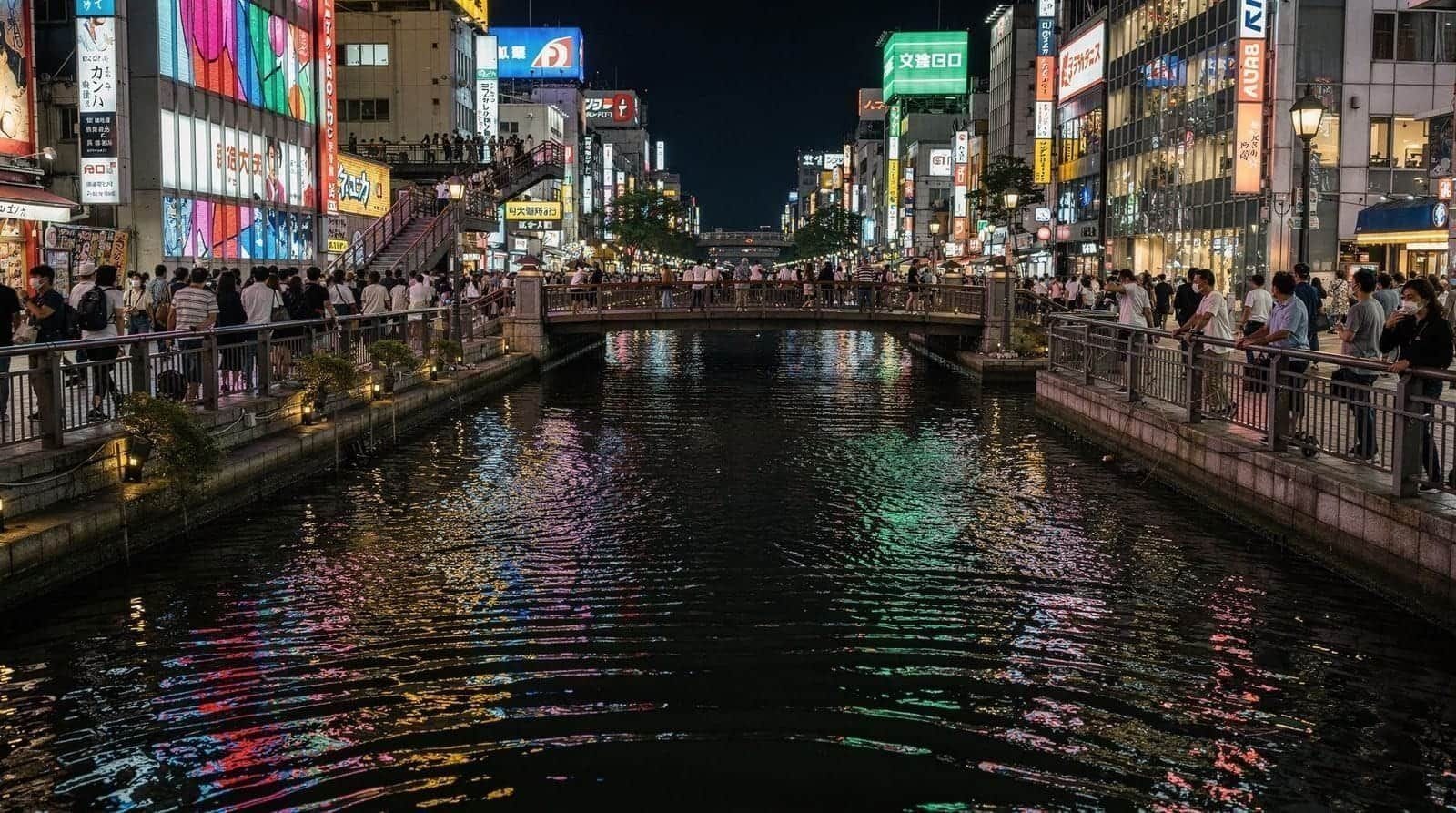
Beyond the visible tachinomi and izakaya, Namba and the blocks around Dotonbori hide a genuine concentration of small, unmarked bars tucked into upper floors of nondescript buildings — no street-level signage, sometimes identifiable only by a buzzer or a name on a building directory. These cater to regulars and in-the-know visitors, and finding them independently generally requires either local knowledge or trial and error.
Bar-hopping tour of hidden Namba bars covers several of these with a guide who already has relationships at each stop, a genuinely useful shortcut given how deliberately unadvertised this category of bar is. The shorter bar-hopping food tour covering three bars pairs each stop with a small dish, useful if food and drink together matter more than a pure bar crawl.
Umeda’s food-and-pub scene
Umeda, Osaka’s northern business and shopping hub, has a different character from Namba’s more visitor-heavy nightlife — a dense concentration of small restaurants, bars, and pubs catering primarily to office workers, tucked into the underground malls (Hankyu Sanbangai, Whity Umeda) and the alleys around Umeda Station.
Umeda night walk covering food and pubs is a reasonable way into this scene specifically because Umeda’s bars have less English signage and a more local, less tourist-adjusted atmosphere than Namba’s — a guide who already knows the area removes a fair amount of the guesswork a solo visitor would otherwise face.
Ordering etiquette worth knowing
A handful of specifics make a real difference to how smoothly a night at an izakaya or standing bar goes. Ordering drinks and a couple of dishes together at the start, rather than one item at a time, is the more common local pattern and speeds up service considerably. Splitting the bill evenly (warikan) rather than itemizing individual orders is the default among groups of friends, though this isn’t universal and asking the group’s preference upfront avoids confusion.
Tipping isn’t expected or practiced anywhere in this category of venue — leaving coins on the counter can cause genuine confusion rather than being read as a gratuity. Smoking policies vary: some smaller, older izakaya and standing bars still permit indoor smoking, a detail worth checking in advance if it matters to you, since Japan’s indoor smoking regulations have tightened unevenly across different venue sizes and prefectures.
Snacks and small plates: what pairs with what
Certain small dishes are conventionally paired with specific drinks in Osaka’s izakaya culture — edamame (boiled, salted soybeans) with beer is close to a universal starting order, karaage (fried chicken) pairs equally well with beer or highball, and lighter, more delicate small plates (a simple tofu dish, a small sashimi portion) are more commonly paired with sake, since a strongly flavored fried dish can overwhelm sake’s more subtle aromatics. None of these pairings are strict rules, and ordering however you like draws no real objection, but knowing the conventional pairings helps make sense of a menu that can otherwise feel like an undifferentiated list of small dishes to a first-time visitor.
LGBTQ nightlife: Doyama-cho
Doyama-cho, a compact district within Umeda, is Osaka’s main LGBTQ nightlife area, with a dense concentration of small bars — many extremely small, seating a handful of people — catering to a range of specific communities within the broader LGBTQ scene. Namba and the streets around Dotonbori also have a scattering of welcoming small bars, generally clustered in the same backstreets as the area’s other hidden venues covered above. Language can be a barrier at some of the smaller, more local-facing bars in Doyama-cho, though English-friendly options exist and are generally easy to identify through current online listings before a visit.
Group dynamics and Japanese drinking culture (nomikai)
Nomikai — organized drinking gatherings, typically among coworkers after work — are a significant part of Japanese social and business culture, and visitors traveling with Japanese colleagues or acquaintances may find themselves invited into this structure specifically: a set izakaya course (often a fixed-price nomihodai, all-you-can-drink package, typically ¥2,000-3,500 for 90-120 minutes) ordered for the whole table, followed by a possible move to a second venue (nijikai, “second party”) for karaoke or further drinks.
Understanding this structure — that a Japanese-hosted evening out may involve multiple venues and a fixed drinking-and-eating package rather than an open-ended personal tab — helps set expectations if invited into this kind of gathering during a trip, rather than assuming Western open-tab dining norms apply throughout the evening.
Prices at a glance
A tachinomi stop runs ¥1,500-3,000 per person for drinks and a couple of small dishes. A full seated izakaya evening runs ¥3,000-5,000. A whisky or highball bar visit adds ¥800-2,000 per drink depending on the pour. Guided bar-hopping tours typically bundle two to three venues and several drinks into a fixed price, generally comparable to or somewhat above what the same drinks would cost booked independently — the value is in the access to venues and the routing, not necessarily a discount on the drinks themselves.
Non-alcoholic and low-alcohol options
Japan’s drinking culture has embraced non-alcoholic and low-alcohol alternatives more visibly in recent years, and most izakaya and standing bars in Osaka now stock at least one zero-alcohol beer and a non-alcoholic cocktail option alongside soft drinks, canned tea, and oolong tea — useful to know since ordering a non-alcoholic drink at an izakaya carries none of the social friction it might in some other drinking cultures, where declining alcohol at a group gathering can sometimes draw comment. Sober or moderate drinkers can comfortably join a full izakaya evening, ordering food alongside a non-alcoholic drink without needing to explain the choice.
Smoking, ventilation, and what to expect indoors
Japan’s indoor smoking regulations tightened nationally in 2020 ahead of the postponed Tokyo Olympics, requiring most restaurants to either go smoke-free or install dedicated smoking rooms, though enforcement and adoption has varied by venue size and age. Many of Osaka’s smaller, older standing bars and izakaya were granted exemptions as existing small businesses under a certain size, meaning some genuinely old-school tachinomi still permit indoor smoking throughout, while larger or newer establishments are more likely to be smoke-free or to have a separated smoking area. If avoiding smoke entirely matters, checking recent reviews or asking directly before being seated is more reliable than assuming based on the venue’s outward appearance.
Getting home safely and on time
Osaka’s subway and JR lines generally stop between midnight and 1am, and missing the last train on a longer night out is a real and common possibility — taxis are readily available in Namba and Umeda at any hour but cost considerably more than the train, especially for longer distances. Checking your specific line’s last train time before committing to a long night, or simply budgeting for a taxi, avoids an unwelcome surprise.
Booking ahead versus walking in
Standing bars almost universally operate walk-in only, with no reservation system at all, which is part of their appeal for a spontaneous first stop of the evening. Seated izakaya vary — smaller, well-known independent spots, particularly those specializing in a specific dish, are worth calling or booking online a day ahead for a weekend evening, while chain izakaya generally have enough capacity to accommodate walk-ins even on busy nights, occasionally with a short wait. If a specific highly regarded independent izakaya is a priority rather than simply finding somewhere good, treating it with the same advance-booking mindset as a restaurant reservation, rather than assuming an izakaya is always walk-in-friendly, avoids disappointment.
How this compares across Osaka’s neighborhoods
Namba and Dotonbori have the highest concentration and the most visitor-oriented version of this scene, covered in more depth in our Dotonbori nightlife guide and Namba nightlife guide. Umeda leans more local and office-worker-driven; Shinsekai offers a cheaper, rougher-edged version of the same tachinomi and highball culture, covered in the Shinsekai and Tennoji destination guide.
What to order: a practical primer
For visitors unfamiliar with izakaya menus, a reasonable default order covers a few categories: something grilled (yakitori skewers, grilled fish), something fried (karaage, Japanese-style fried chicken, is a near-universal safe bet), something raw or lightly prepared (sashimi or a simple salad), and a shared hot dish if the group is larger (a nabe hot pot or a simmered dish).
Ordering two or three items at a time rather than one at a time, and letting the table’s pace guide when to order more, matches the standard rhythm most izakaya are set up for. Draft beer (nama biru) is the default first drink at nearly any izakaya, with highball, sake, shochu (a distilled spirit, often mixed with soda or hot water), and umeshu (plum wine) as common follow-ups.
Regional Osaka dishes to look for at izakaya
Beyond the standard izakaya menu found nationwide, several dishes are specifically associated with Osaka and worth seeking out at a local izakaya rather than assuming the format is identical everywhere in Japan. Doteyaki, beef tendon slow-simmered in a sweet miso-based sauce until tender, is a genuinely Osaka-specific comfort dish rarely found outside the Kansai region in the same form.
Kushikatsu, the fried skewers covered in more detail in our kushikatsu guide, shows up on many Osaka izakaya menus even outside its Shinsekai heartland. Negiyaki, a lighter, green-onion-forward cousin of okonomiyaki, is another Osaka-specific dish worth trying at an izakaya that makes its own rather than only serving it at a dedicated okonomiyaki restaurant.
Chain versus independent: how to tell the difference quickly
A few visual cues help distinguish a chain izakaya from an independent one quickly, useful if a specific type of experience is the goal. Chains (Torikizoku, Watami, Tsukada Nojo, and similar nationwide names) typically have brightly lit, standardized signage, laminated picture menus, and a predictable layout repeated across locations — reliable and consistent, but less distinctive.
Independent izakaya tend toward dimmer lighting, handwritten or chalkboard menus (often Japanese-only), and a layout that reflects the specific building rather than a corporate template — generally more atmospheric and often better value, but requiring more confidence navigating a Japanese-only menu, where pointing at other tables’ dishes or asking staff for a recommendation (osusume) works well even without shared language.
Pairing a bar crawl with food earlier in the evening
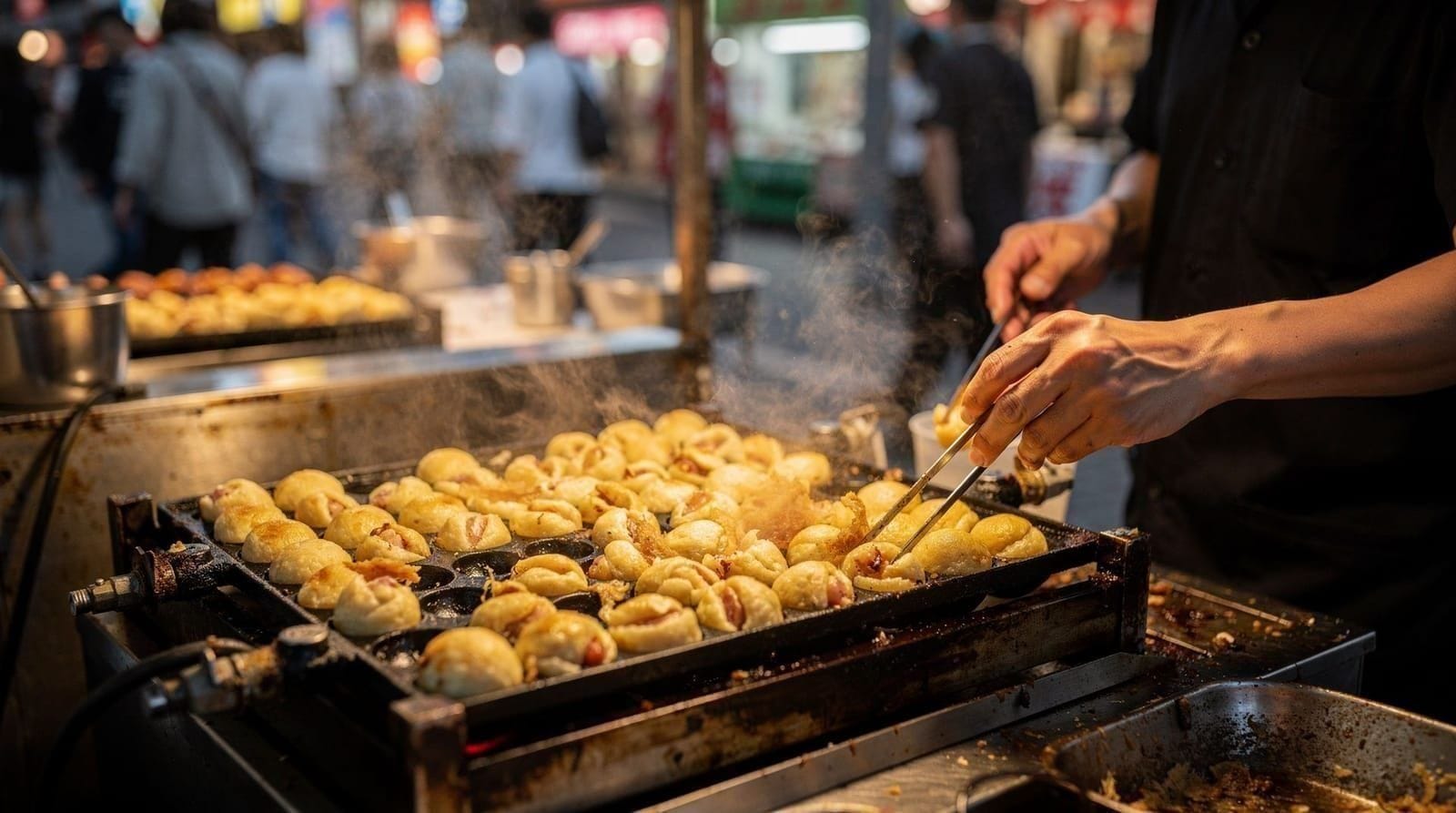
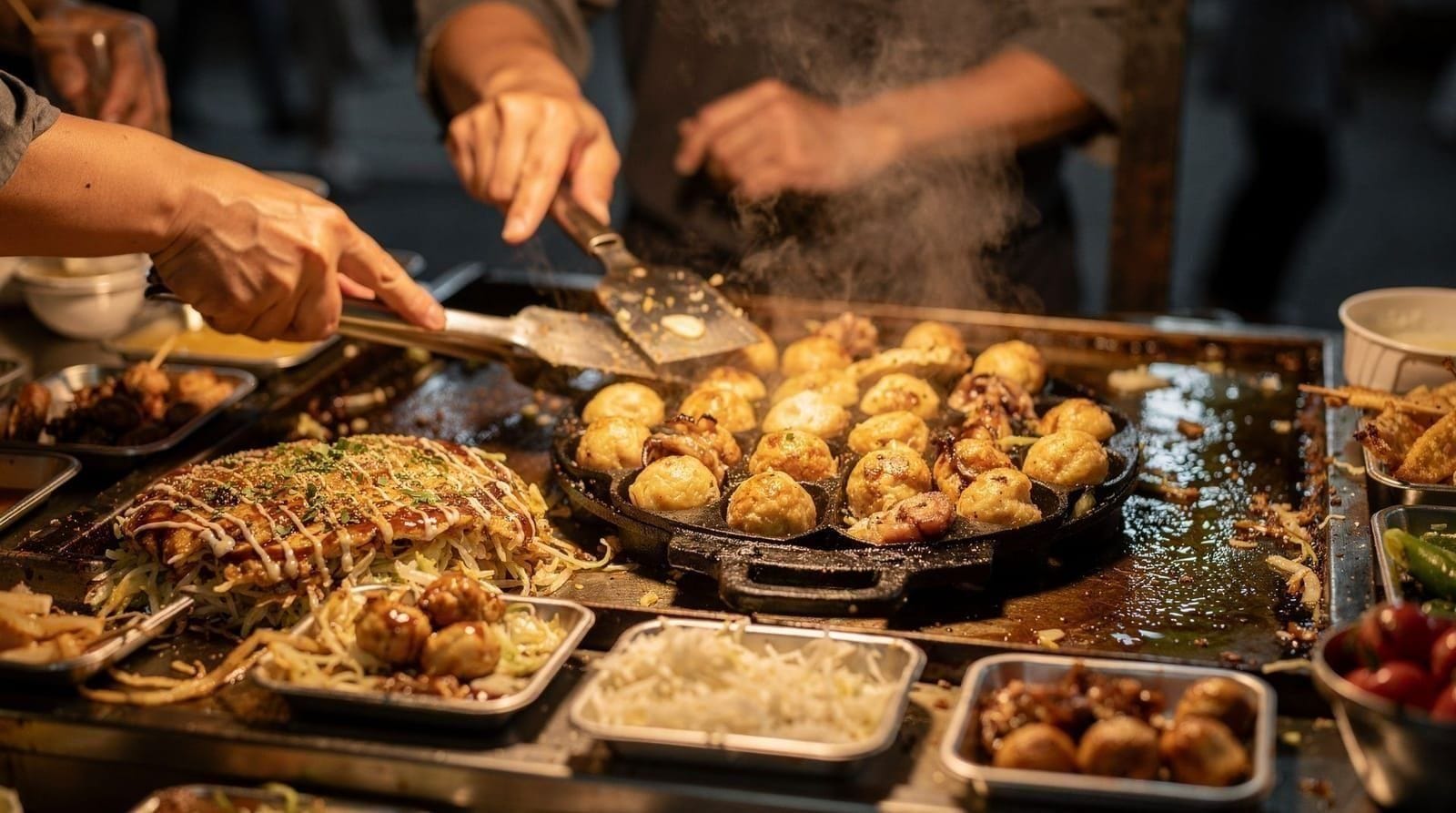
A night that starts with dinner at a dedicated okonomiyaki or takoyaki spot before moving into tachinomi and izakaya territory tends to work better than trying to fill up entirely on izakaya small plates, since a proper meal beforehand takes some of the time pressure off ordering food while also managing a first or second round of drinks. The Dotonbori food guide and Osaka street food guide both lay out early-evening routes that connect naturally into this guide’s bar-hopping suggestions later the same night.
Frequently asked questions about Osaka bars and izakaya
What is otoshi and why was I charged for something I didn’t order?
Otoshi is a small starter dish automatically served at most izakaya, functioning similarly to a cover charge — typically ¥300-500. It’s standard practice, not a scam, though it can catch first-time visitors off guard if they’re not expecting it.
Do I need to tip at an izakaya or bar?
No — tipping isn’t practiced anywhere in Japanese bars or restaurants, including izakaya and standing bars. Leaving coins on the counter can cause genuine confusion.
What’s the cheapest way to drink out in Osaka?
Tachinomi (standing bars) are the most budget-friendly format — a beer and a couple of small dishes for ¥1,500-3,000, with no seating and a quicker turnover than a full izakaya evening.
Is smoking allowed in Osaka bars?
It varies — some smaller, older izakaya and standing bars still permit indoor smoking, while larger or newer venues generally don’t. Checking in advance is worth it if it matters to you.
Where is Osaka’s LGBTQ nightlife district?
Doyama-cho in Umeda, a compact area with a dense concentration of small bars catering to a range of communities within the broader LGBTQ scene.
Can I find these bars without a guide?
Standing bars and mainstream izakaya, yes — they’re visible from the street. Namba’s genuinely hidden, unmarked bars are harder to find independently and are where a guided bar-hopping tour adds the most value.
Top experiences
Bookable activities with verified prices and instant confirmation on GetYourGuide.