Dotonbori nightlife guide
Osaka: Osaka bar hopping hidden bars Namba
Duration: 2 hours
What is Dotonbori like at night?
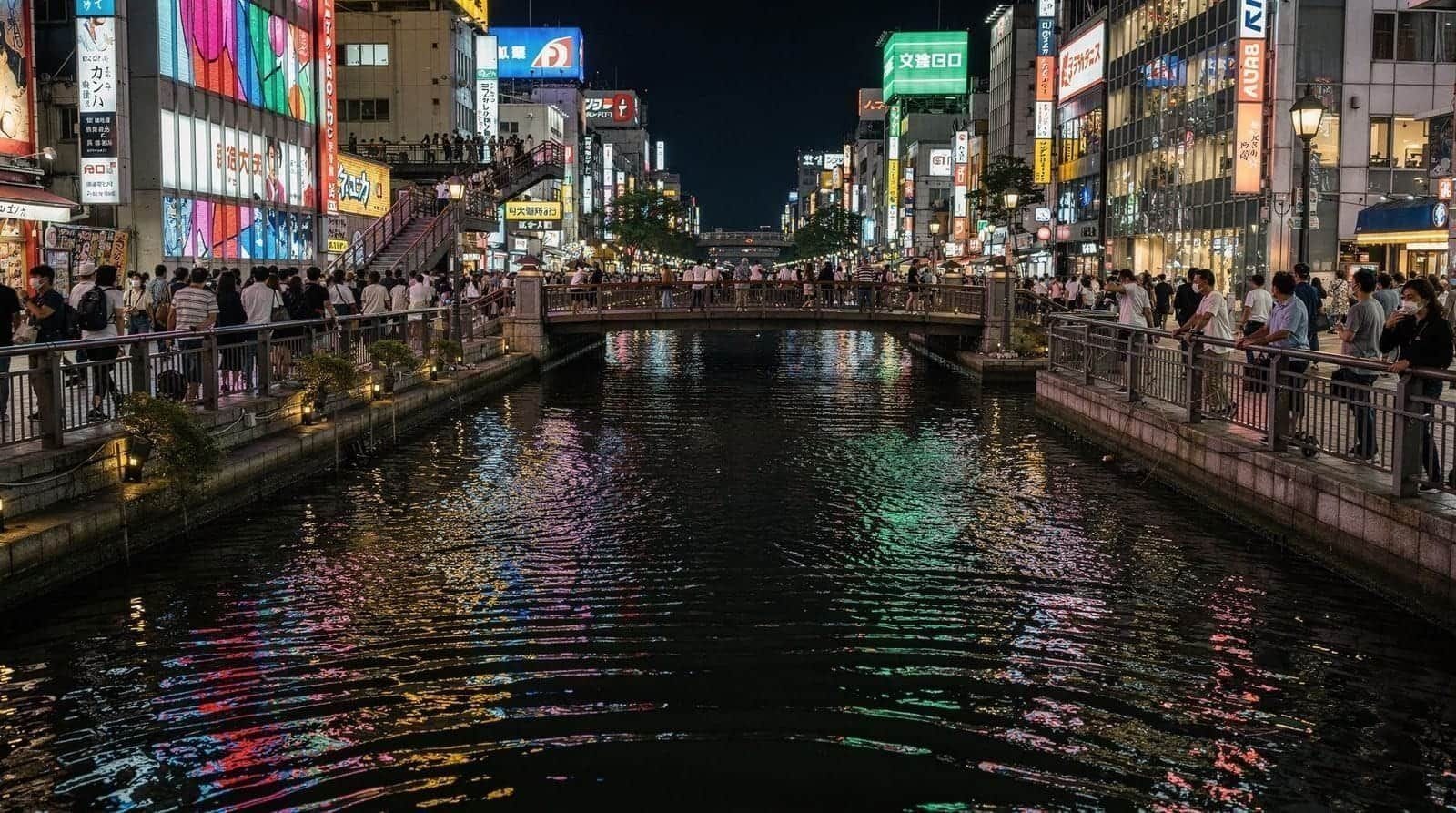
The canal-front strip stays busy well past midnight with neon signage, street food stalls, and crowds photographing the Glico sign, while the surrounding blocks fill with standing bars, small izakaya, and karaoke boxes. A casual night of drinks and bar food runs ¥3,000-6,000 ($28-56) per person; the main risk isn't cost but touts steering foreign visitors toward bars with undisclosed cover charges, worth declining outright.
| Where | Canal-front strip, standing bars off-canal, Ura-Namba |
| Cost | Around ¥3,000-6,000/person for drinks and bar food |
| Busiest | Past midnight on weekends |
| Watch for | English-speaking touts inviting you into bars with hidden charges |
| Last train | Roughly midnight-1am; budget a taxi if staying later |
Dotonbori by day is mostly a food-and-photo destination; Dotonbori after dark is where the district’s actual character shows up — the neon gets brighter, the canal-front crowds thicken, and the surrounding blocks reveal a dense layer of standing bars, small izakaya, and karaoke boxes that most daytime visitors never see. It’s also where a specific, well-documented type of tourist-targeted scam concentrates, which makes knowing what to expect worth more here than in most nightlife districts covered on this site.
The canal-front strip after dark
The Glico Running Man sign above the Ebisubashi bridge, already a photo stop by day, becomes the district’s default evening gathering point, with a steady stream of visitors queuing for the same shot against the illuminated backdrop.
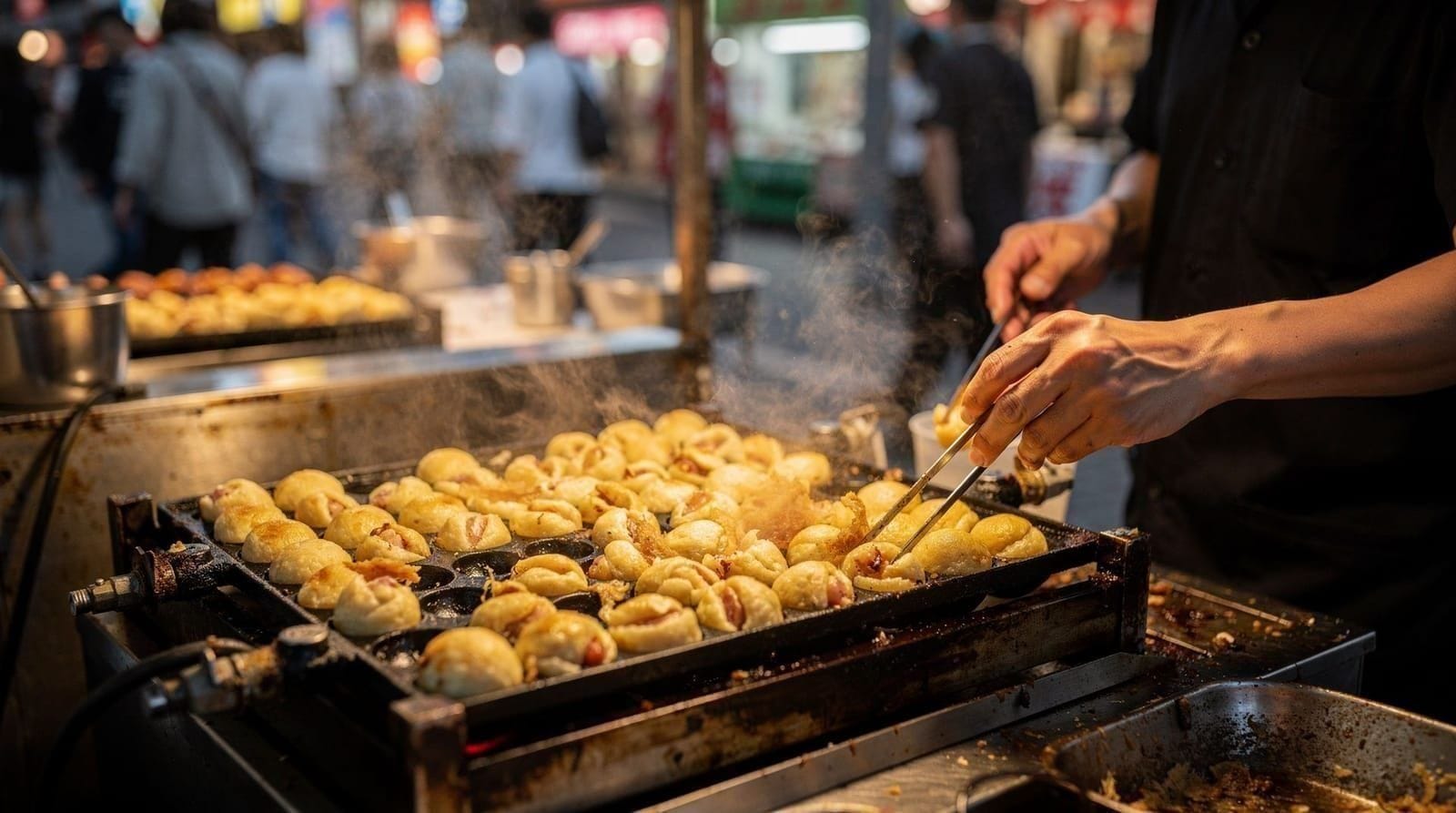
The canal-front restaurants under their oversized mechanical signs — crab, pufferfish, octopus — stay open into the evening and, contrary to their tourist-trap reputation for daytime pricing, are a reasonable dinner stop before moving on to bars, since a few (Kani Doraku, Zuboraya) have genuine multi-decade histories and honest, if not cheap, set menus. Our Osaka street food guide covers the food side of Dotonbori in more depth; this guide picks up from there, once the eating gives way to drinking.
Standing bars: the default first stop
Tachinomi (standing bars) are Osaka’s most characteristic drinking format — no seats, a shared counter, and a menu built around small, shareable dishes alongside beer, highball, and sake, designed for a quick drink and a snack rather than a long sit-down session. Several cluster in the streets just off the main Dotonbori canal, charging ¥400-600 for a beer and ¥300-800 per small dish, and they’re a genuinely local way to drink even in a heavily touristed district, since the format itself discourages long, expensive sessions. They’re also a reasonable way to gauge a neighborhood’s actual drinking culture before committing to a seated bar or izakaya for the rest of the evening.
Hidden bars: what “hidden” actually means here
A specific and genuinely enjoyable feature of Namba and the blocks around Dotonbori is the concentration of small, deliberately unmarked bars tucked into upper floors of nondescript buildings — no street-level signage, sometimes just a buzzer or a name on a building directory, catering to a mix of regulars and in-the-know visitors rather than passing foot traffic. Finding these independently requires either local knowledge or a fair amount of trial and error, since the entire point of the format is that they don’t advertise.
Bar-hopping tour of hidden Namba bars is a practical way in if you don’t read Japanese building directories or don’t know which unmarked doors lead somewhere worthwhile — a guide who already has relationships with a handful of these spots removes most of the guesswork, and it’s a genuinely different experience from wandering the main strip. A shorter version, the bar-hopping food tour covering three bars, pairs each stop with a small dish, useful if you’d rather eat as you go than commit to a separate dinner beforehand.
The scam to actually watch for
The one nightlife risk in this district that’s worth taking seriously is touts — often fluent in English, positioned specifically to intercept foreign visitors near the canal and the surrounding blocks — inviting people into bars or “girls’ bars” that carry undisclosed seating charges, table charges, or minimum spends, sometimes running into tens of thousands of yen for what looked like a casual invitation.
The standard, reliable local advice is to decline any street solicitation outright and keep walking; legitimate Osaka bars, including the hidden ones covered above, don’t recruit customers off the sidewalk. If you do end up somewhere and a bill arrives with unexpected charges, paying and leaving without confrontation is the practical response — disputing it rarely goes well for a foreign visitor unfamiliar with the specific venue’s practices, and the amounts involved, while frustrating, are rarely worth an extended argument.
Karaoke: a genuinely mainstream evening option
Karaoke boxes — private rooms rented by the hour rather than a public stage — are all over the Dotonbori and Namba area, and it’s a mainstream, family-friendly-by-day, drinking-friendly-by-night activity rather than a niche tourist experience. Rooms typically run ¥300-800 per person per hour depending on time of day and chain, often cheaper late at night, with drink packages available for an additional flat fee. Most major chains have English-language song search on their remote systems, though older machines in smaller independent karaoke bars may not.
Shinsekai after dark: a rougher, cheaper alternative
A short subway ride from Dotonbori, Shinsekai has a noticeably different, rougher-edged nightlife character built around cheap kushikatsu counters, standing bars, and a retro, slightly worn atmosphere under Tsutenkaku Tower’s lit-up silhouette — worth knowing about as a contrast to Dotonbori’s slicker, more tourist-oriented strip.
Dark side night walking tour of Shinsekai leans into the neighborhood’s history and reputation as Osaka’s historically rougher district, a different angle for an evening than the polished Dotonbori canal-front, worth doing on a second night or for visitors specifically interested in that history.
Seeing the canal from the water at night
A short 20-minute Dotonbori canal cruise after dark shows the illuminated signage from a different angle than the crowded bridges and walkways, with a live commentary guide — a low-key, low-cost way to start or end an evening, and a reasonable option if you’re traveling with people less interested in bar-hopping.
Ura-Namba: the backstreet locals actually use
Ura-Namba (literally “behind Namba”), the grid of narrow streets sandwiched between the Dotonbori canal and Namba Station, is where a lot of the district’s genuinely local drinking scene concentrates once you step off the main tourist path. Small, specialized izakaya here — some seating fewer than ten people — focus on a single specialty (yakitori, oden, motsunabe offal hot pot) rather than a broad menu, and prices run noticeably lower than the canal-front, typically ¥2,500-4,000 for a full evening of food and drinks.
English signage is sparse here compared to the main strip, which is part of why it stays comparatively local despite sitting just a few minutes’ walk from one of Osaka’s most touristed streets — worth exploring specifically if the polished, visitor-oriented version of Dotonbori nightlife starts to feel repetitive after a night or two.
What to wear and dress expectations
Dotonbori’s nightlife doesn’t carry a strict dress code at almost any level — standing bars and casual izakaya are comfortable in whatever you wore sightseeing that day, and even most hidden bars and cocktail spots lean toward smart-casual rather than requiring jackets or formal wear. The exception is a small number of upscale cocktail bars and members-oriented lounges in the surrounding blocks, where a slightly more polished look (collared shirt, no athletic wear or flip-flops) avoids being turned away at the door, though these are the minority rather than the norm in this specific district.
Summer beer gardens and seasonal nightlife shifts
Dotonbori’s nightlife shifts noticeably with the seasons. Summer (June-August) brings rooftop beer gardens to several buildings around Namba and Shinsaibashi, offering all-you-can-drink packages (typically ¥3,000-4,000 for around two hours) that are genuinely popular with both locals and visitors escaping the evening heat with an open-air setting.
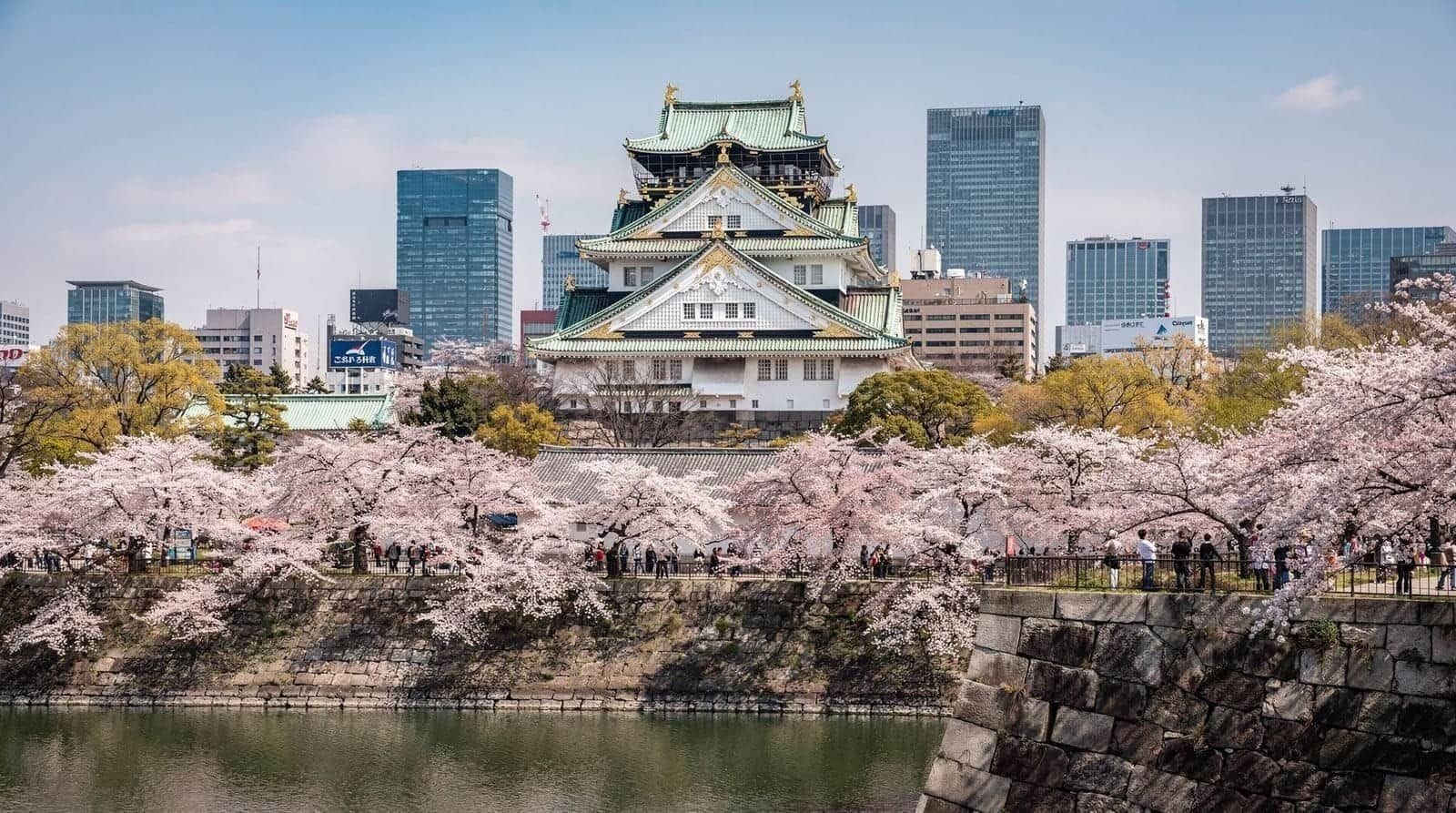
Winter brings the opposite adjustment — smaller, warmer izakaya and standing bars see increased foot traffic as outdoor lingering becomes less appealing, and hot sake and nabe (hot pot) dishes appear on seasonal menus throughout the district. Cherry blossom season (late March-early April) brings a specific evening ritual: hanami (blossom viewing) parties along the canal and nearby parks, often involving groups drinking outdoors under blooming trees well into the evening, a lively but crowded version of the district worth experiencing at least once if the timing lines up.
Solo travelers and groups: what to expect
Dotonbori’s standing bars and casual izakaya are genuinely comfortable for solo travelers — counter seating means you’re naturally positioned alongside other patrons rather than isolated, and staff are accustomed to single visitors, both local and foreign. Larger groups (six or more) should call ahead at seated izakaya, since many smaller establishments in the surrounding blocks have limited capacity and can’t accommodate a large party without notice, particularly on weekend evenings. Mixed-gender groups and solo women travelers face no unusual restrictions at any of the venue types covered in this guide, though the general caution around declining unsolicited bar invitations from street touts applies equally regardless of who’s approached.
A short history of Dotonbori as an entertainment district
Dotonbori’s identity as an entertainment district predates its current neon-and-bars incarnation by roughly three centuries. By the 18th century, the canal-front strip had become Osaka’s main kabuki and bunraku (puppet theater) district, and the tradition of oversized, eye-catching signage above each venue’s entrance — the ancestor of today’s mechanical crab and pufferfish displays — developed specifically because theaters competed hard for the attention of passersby along this single strip.
Most of the original theaters didn’t survive the 20th century’s wartime destruction and postwar redevelopment, but the underlying logic — a strip built for spectacle and competition for foot traffic — has held remarkably consistent through the shift from theater to restaurant-and-bar district, which is worth knowing as context for why this specific stretch of Osaka became the city’s nightlife center rather than some other neighborhood with equal claim to history.
Live music and small venues
Beyond bars and karaoke, a scattering of small live-music venues in the streets around Dotonbori and Amerikamura (a few minutes’ walk northwest, Osaka’s youth fashion and street-culture district) host local bands and DJ sets most nights of the week, typically charging a modest cover (¥1,000-2,500) that often includes a first drink.
These venues skew toward a younger, more local crowd than the main canal-front strip, and it’s a reasonable option for an evening if bar-hopping specifically doesn’t appeal but live music does. Amerikamura itself is worth a daytime detour too — a compact grid of vintage clothing shops, record stores, and street-style boutiques that gives a different, more subculture-driven view of Osaka youth culture than Dotonbori’s food-and-neon identity.
What a typical night out actually costs
A casual evening of standing-bar drinks and light bites runs ¥2,000-4,000 ($18-37) per person; a sit-down izakaya dinner with several rounds of drinks runs ¥3,500-6,000 ($32-56). Karaoke adds ¥1,000-2,500 per person depending on duration and drink package. Bar-hopping tours with a guide typically bundle two to three venues and a few drinks into a fixed price, generally comparable to or slightly above what the same drinks would cost independently, with the added value of access to venues you likely wouldn’t find alone.
Non-drinkers: what’s available without alcohol
Dotonbori’s nightlife doesn’t require drinking to enjoy — the district’s food stalls stay open well into the evening, and a fair number of izakaya and standing bars serve genuinely good non-alcoholic options (soft drinks, canned tea, and increasingly, dedicated zero-alcohol beer and cocktail alternatives at larger chains) without any pressure to order alcohol. Karaoke boxes, covered above, are a fully alcohol-optional activity, and the canal cruise and Shinsekai walking tour work equally well as an evening plan for non-drinkers as for anyone else. If the goal is simply experiencing the atmosphere after dark — the neon, the crowds, the food stalls — none of that requires a drink in hand.
Rain and weather considerations
Osaka’s rainy season (tsuyu, mid-June to mid-July) and occasional summer typhoons (August-September) can affect an evening out, though Dotonbori handles this better than most outdoor destinations given how much of the district’s food and drinking scene is either covered or indoors. The canal-front’s covered arcades one block over (part of the Shinsaibashi shopping district) offer a dry route between venues on a rainy night, and most standing bars and izakaya are fully indoor regardless of weather. A canal cruise booking is the one activity worth checking forecasts for specifically, since heavy rain can affect operations.
Getting home late
Osaka’s subway and JR lines generally stop running between midnight and 1am, and missing the last train is a real possibility on a longer night out — taxis are readily available around Dotonbori and Namba at any hour but cost considerably more than a train, particularly for longer distances back to accommodation outside central Osaka. Checking the last train time for your specific line before a long night out, or budgeting for a taxi in advance, avoids an unpleasant surprise at 1am.
Chain izakaya: a reliable fallback
For a reliable, no-surprises option, Osaka has plenty of nationwide izakaya chains represented around Dotonbori and Namba — Torikizoku (a yakitori-focused chain known for a flat, low price per skewer and drink), Watami, and Tsukada Nojo (known for its chicken hot pot course) all have locations in the area, with English or picture menus at most branches given the volume of foreign visitors passing through. These aren’t going to be the most memorable meal of a trip, but they’re a genuinely useful fallback if a more specific, independent izakaya search feels like too much effort on a given night, or if a large group needs guaranteed seating without an advance reservation.
Photography and phone etiquette at night
Photographing the illuminated signage and canal-front is entirely normal and expected — this is one of the most photographed streets in Japan, and no one will object to a phone camera pointed at the Glico sign or the mechanical crab. The etiquette line is around photographing other people without asking, particularly inside smaller bars where other patrons may not want to appear in a stranger’s social media post; asking before photographing the interior of an occupied bar, rather than assuming it’s fine, is a reasonable default.
Combining Dotonbori’s nightlife with the rest of Namba
Dotonbori’s nightlife doesn’t exist in isolation from the wider Namba district — Namba’s broader nightlife scene, including Sonezaki’s bar concentration and Doyama-cho’s LGBTQ nightlife district in Umeda, extends well beyond the canal-front strip itself. Our Namba nightlife guide and Osaka bars and izakaya guide cover the wider district and specific venue types in more depth.
Planning a Dotonbori night out around the risks and highlights above
Putting it together: start with dinner at one of the canal-front restaurants or a Kuromon Market detour, move into a standing bar for a first drink, decline any street solicitation along the way, and either continue into a guided hidden-bar crawl or a casual izakaya evening depending on how the group’s energy holds up. Closing with a late-night ramen stop or karaoke session before the last train is the standard local rhythm for a full night out in this part of the city, and it’s a template that scales down easily to a shorter, calmer evening if a big night out isn’t the goal.
First-timer sequencing for a single Dotonbori night
For visitors with only one night to spend on Dotonbori’s nightlife specifically, a reasonable sequence starts with dinner around 7-8pm at one of the canal-front spots or a Kuromon Market detour beforehand, moves into a standing bar for a first drink around 9pm while the canal-front crowd is still building, then either books a guided hidden-bar crawl for structure or wanders into Ura-Namba independently for a more local, lower-cost continuation.
Aiming to be at a decision point — home, taxi, or one more stop — by around 11:30pm keeps the last-train question from becoming an emergency, and closing with a late-night ramen bowl near the station rather than deep in the backstreets makes the walk to the platform simpler if the night runs later than planned.
Comparing Dotonbori to Umeda and Namba’s other nightlife pockets
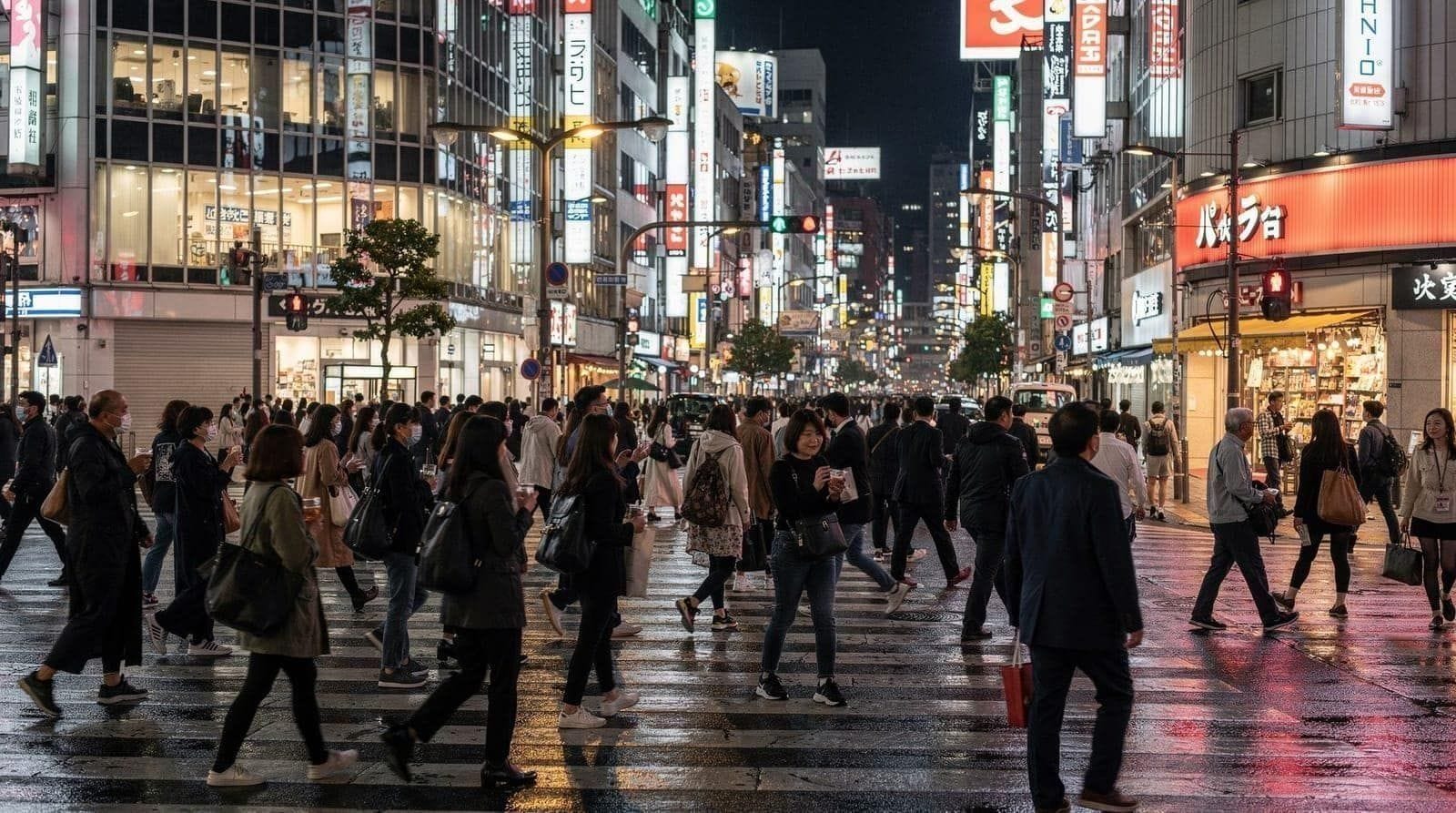
Dotonbori’s nightlife is the most visually dense and most internationally visited in Osaka, but it isn’t the only option, and comparing it against nearby districts helps set expectations. Umeda, north of the city center, skews more toward polished hotel bars and rooftop lounges with a business-district crowd, generally quieter and pricier per drink than Dotonbori’s standing bars.
Amerikamura, just northwest, leans younger and more subculture-driven, with a heavier concentration of live music and DJ venues than Dotonbori itself. Shinsekai, covered above, trades polish for a rougher, cheaper, more distinctly local character. None of these fully substitutes for Dotonbori’s specific canal-front spectacle, but visitors staying more than a couple of nights in Osaka get real variety by rotating between them rather than returning to the same strip each evening.
Language and ordering at night
Most standing bars and izakaya around Dotonbori manage foreign visitors comfortably even without shared language — picture menus, tablet ordering systems, and pointing at what a neighboring table has ordered all work fine in practice. A handful of stock Japanese phrases (sumimasen to get a server’s attention, kanpai for a toast, o-kaikei o onegaishimasu to ask for the bill) go further than expected and are generally well received as a small courtesy rather than expected fluency. Google Translate’s camera function handles most printed Japanese-only menus adequately for identifying broad categories, even if exact dish descriptions occasionally come through awkwardly.
Frequently asked questions about Dotonbori nightlife guide
Is Dotonbori safe at night?
Yes, by international standards — violent crime is very rare in Osaka. The real risks are touts steering visitors toward bars with hidden charges and pickpocketing in dense crowds, not physical danger.What time does Dotonbori quiet down?
The main canal-front strip stays lively past midnight on weekends, though many food stalls close by 10-11pm. Bars and izakaya in the surrounding blocks often run until 1-2am or later, especially Thursday through Saturday.How do I avoid bar scams in Dotonbori?
Decline any street tout inviting you into a bar, especially one approaching specifically in English. Legitimate Osaka bars don't recruit customers off the sidewalk — this is one of the most reliable local red flags.Is Dotonbori nightlife expensive?
Not inherently — a standing bar beer runs ¥400-600, and a casual izakaya dinner with drinks runs ¥3,000-5,000 per person. Costs escalate quickly at bars with undisclosed seating or table charges, which is the actual expense risk, not the district itself.Are there LGBTQ-friendly bars in Dotonbori and Namba?
Yes — Doyama-cho in Umeda is Osaka's main LGBTQ nightlife district, but Namba and the streets around Dotonbori also have a scattering of welcoming small bars, generally clustered in the same backstreets as the area's other hidden bars.
Top experiences
Bookable activities with verified prices and instant confirmation on GetYourGuide.