Dotonbori food guide
Osaka: Osaka daytime Dotonbori food tour
What should you eat in Dotonbori and what should you skip?
Takoyaki, okonomiyaki, and ramen are the reliable picks — Kinryu Ramen and Mizuno okonomiyaki are established, consistent choices. Skip restaurants with English touts waving down tourists outside and giant crab restaurants selling full crab dinners for ¥8,000-15,000; a step off the main canal usually finds the same dish for less.
| Where | Along the Dotonbori canal, Namba |
| Budget | Around ¥3,000-4,000/person for a food evening |
| Best for | Takoyaki, okonomiyaki, ramen; skip canal-front crab for value |
| Busiest | 6pm-10pm, worse on weekends |
| Watch for | Unlisted “seating charge” and tout-staffed restaurants |
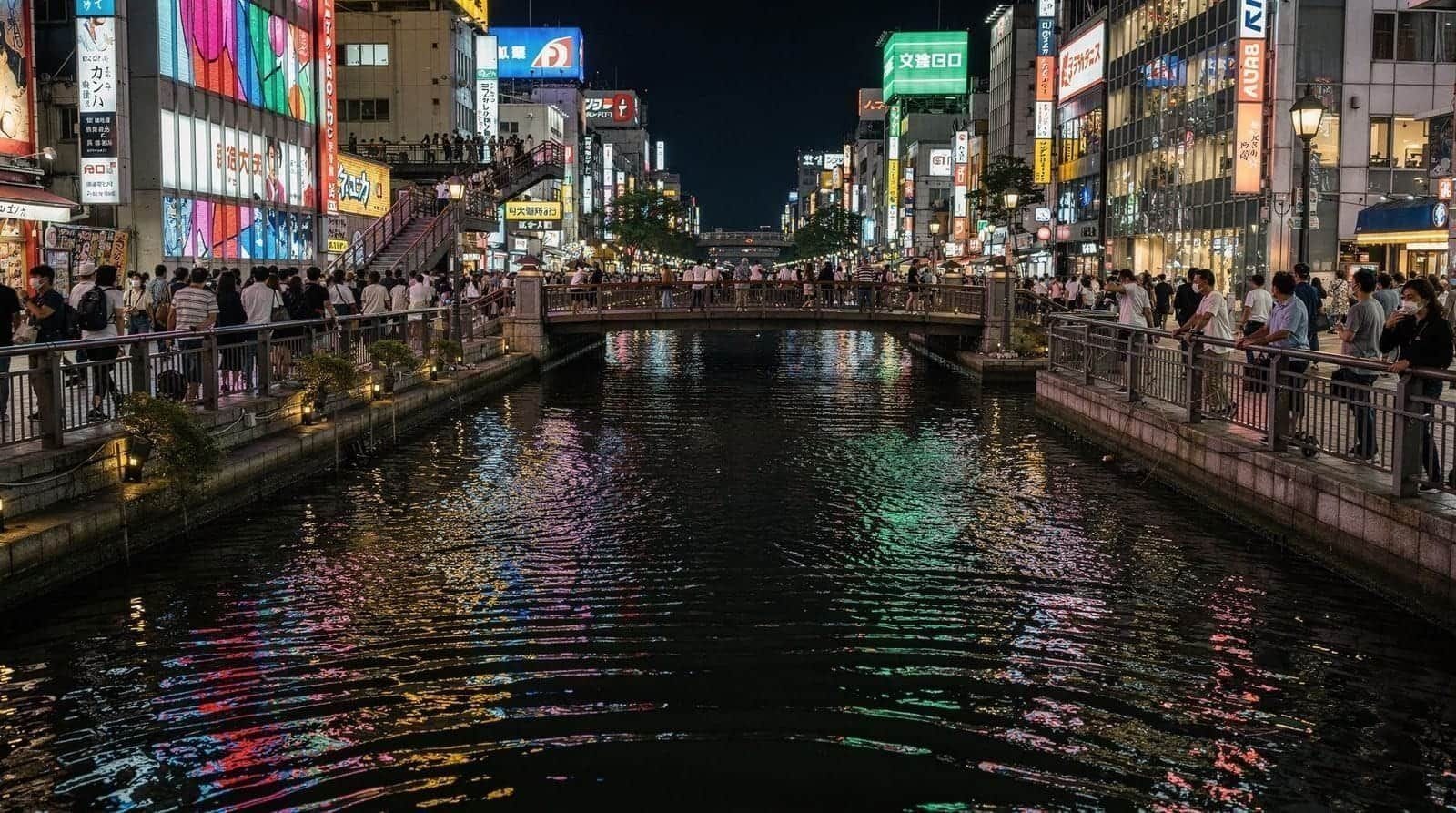
Dotonbori is the neon canal-front strip that shows up in nearly every photo of Osaka — the Glico running man, the mechanical crab, boats of tourists cruising past restaurant facades lit up in every direction after dark. It’s also the single most touristed stretch of restaurants in the city, which means the food ranges from genuinely excellent to purely decorative depending on exactly which building you walk into. None of that makes Dotonbori worth skipping; it makes it worth a little strategy.
The canal-front strip itself
The main stretch runs along the north bank of the Dotonbori canal between Ebisubashi Bridge and a few hundred meters east, a dense wall of restaurant signage — the giant crab (Kani Doraku), the pufferfish lantern, the running man (Glico) — that’s less a single street than a solid block of competing storefronts. Restaurants directly facing the water pay some of the highest commercial rents in the city, and that cost shows up on the menu: a bowl of ramen that runs ¥800 in Umeda can be ¥1,300-1,500 here for a comparable product. That’s not universally true — some canal-front spots are genuinely good and fairly priced — but it’s true often enough to be worth factoring into where you choose to sit down.
Kani Doraku and the giant crab
Kani Doraku, marked by its animated mechanical crab sign, is a legitimate, long-running crab restaurant chain rather than a pure tourist trap, and its crab dishes — steamed, grilled, or in hot pot — are a fair way to try Japanese crab cuisine in a single sitting.
The catch is price: a full crab course runs ¥8,000-15,000 ($70-130) per person depending on the crab type and preparation, considerably more than the same crab bought by the piece at Kuromon Ichiba Market a 10-minute walk away, covered in our Osaka street food guide. If crab is a priority but budget matters, Kuromon Market or a smaller neighborhood seafood restaurant is the better value; if the full sit-down crab-course experience under the famous sign is the point, Kani Doraku delivers it honestly.
How Dotonbori got its reputation
The canal itself dates to 1612, dug as a commercial waterway to move goods through what was then a rapidly growing merchant city, and the area developed a theater and entertainment district around it in the following centuries — Dotonbori was Osaka’s kabuki and bunraku puppet theater hub well before it became a food destination.
The neon signage that defines the strip today largely dates from the postwar boom of the 1950s-60s, when competing restaurants began building increasingly elaborate, illuminated storefronts to stand out along the crowded waterfront. The Glico running man sign, first installed in 1935 and rebuilt several times since (the current version dates from 2014), has become the singular symbol of the whole street, to the point that “meeting at Glico” is a standard way Osakans arrange to find each other in the crowds.
Kinryu Ramen: the reliable budget pick
Just off the main canal, Kinryu Ramen — recognizable by its golden dragon signage and tatami-style low seating — has stayed a consistent, inexpensive option despite decades of Dotonbori’s gentrification around it. A bowl runs ¥800-900, the broth is a straightforward pork-based tonkotsu, and it’s open late, making it a reliable stop after a night out rather than a destination in its own right. It’s not the best ramen in Osaka by any serious measure, but it’s honest, fast, and priced fairly for its location, which is its own kind of value in a neighborhood where that combination is harder to find than it should be.
Mizuno and Dotonbori’s okonomiyaki scene
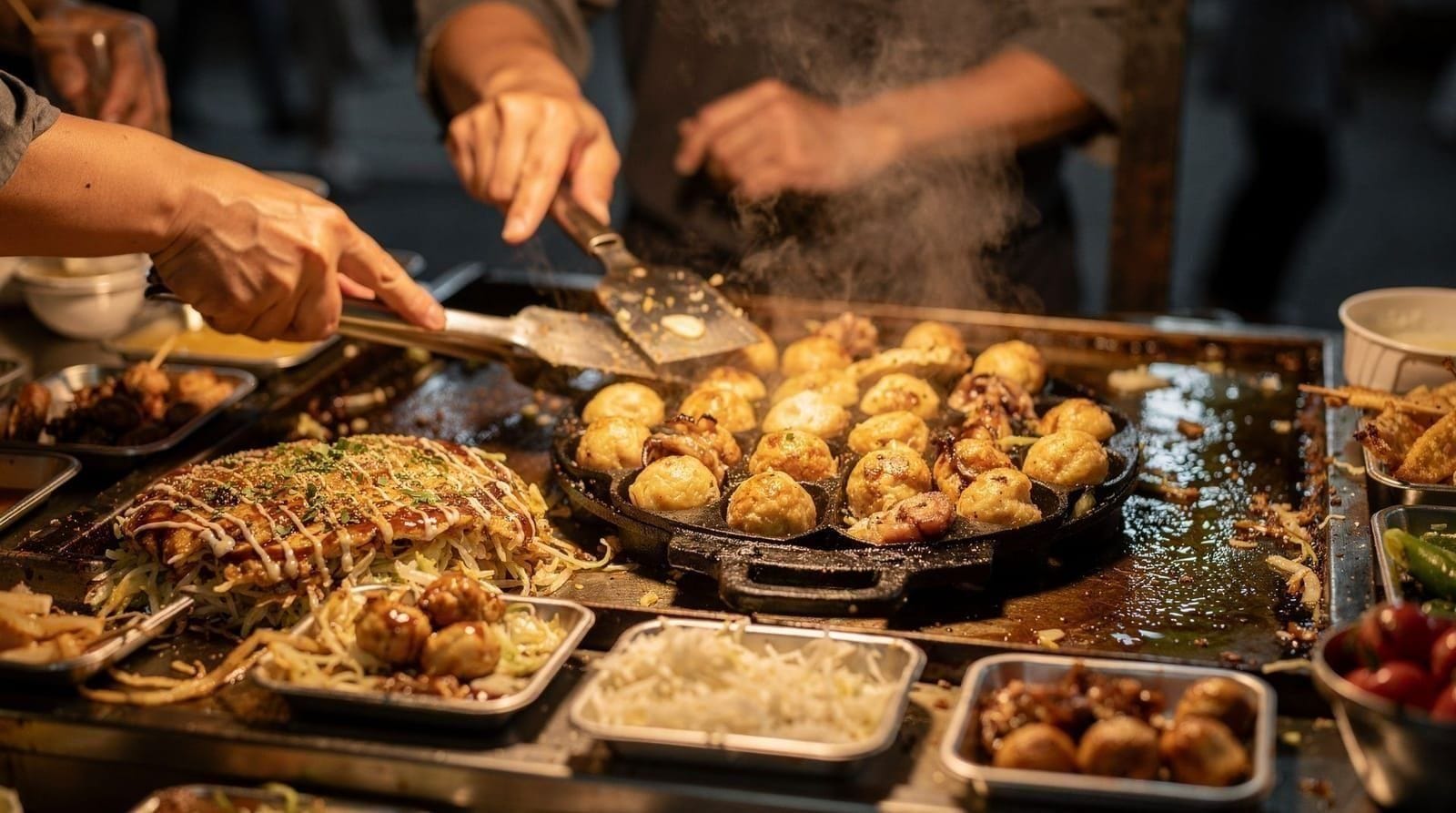
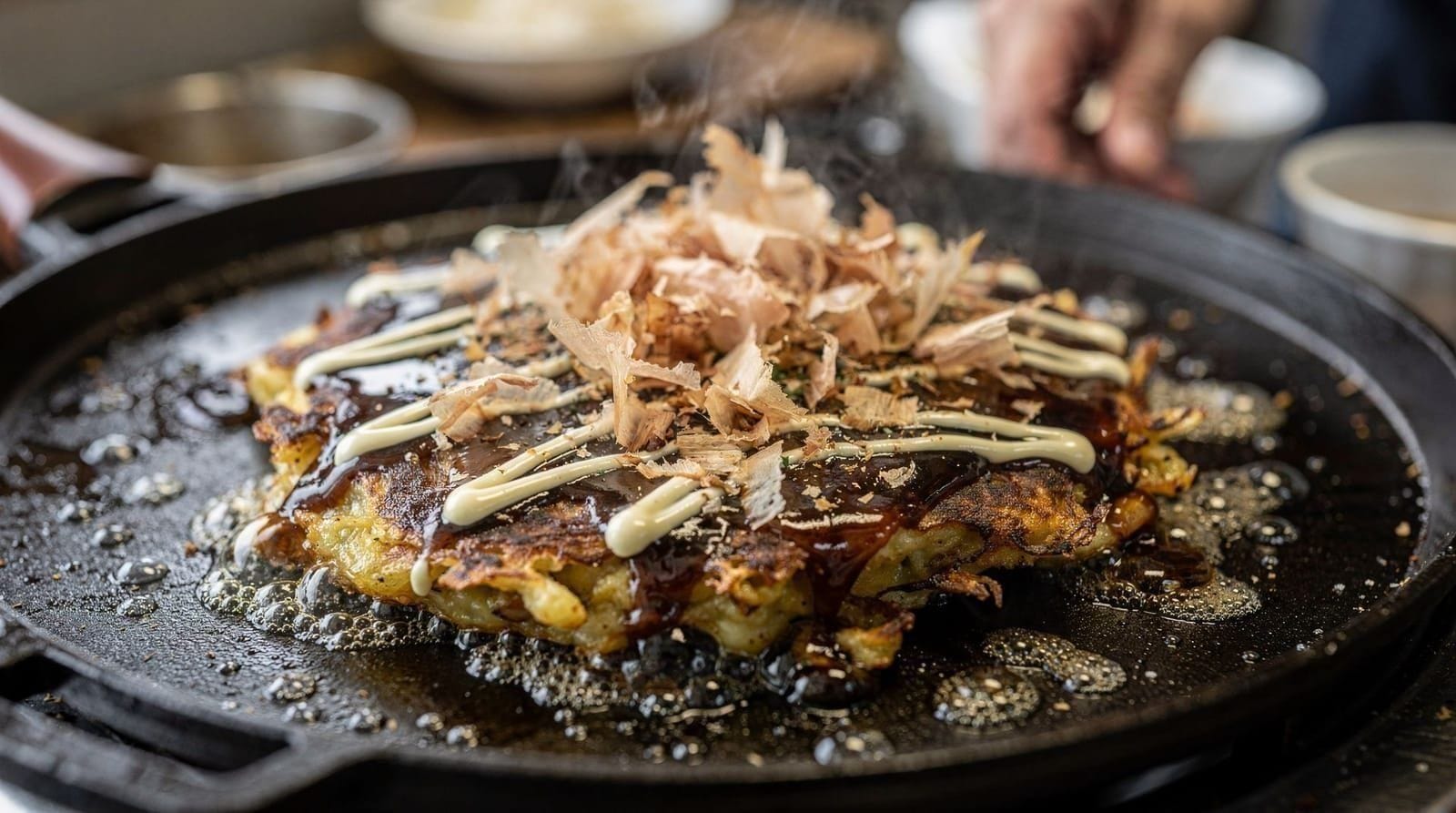
Mizuno, operating since 1953, is the name most associated with Dotonbori okonomiyaki and has held a Michelin Bib Gourmand recommendation in multiple recent Osaka guide editions — expect a genuine 30-60 minute wait most evenings, longer on weekends. Chibo, a larger chain with an English-friendly flagship nearby, is the practical alternative when Mizuno’s queue is too long, at a similar price point (¥900-1,600 per plate) and only a modest step down in quality. Our full okonomiyaki guide covers both in more depth alongside the Osaka-style versus Hiroshima-style distinction.
Hozenji Yokocho: quieter, older Osaka
One block south of the main canal, Hozenji Yokocho is a narrow, lantern-lit stone alley built around Hozen-ji, a small temple whose moss-covered Fudo Myoo statue (worshippers douse it with water as an offering, which is why it’s covered in moss) gives the street its name and its noticeably calmer atmosphere. The restaurants here — mostly small, traditional, counter-seating spots serving oden, yakitori, and simple seasonal dishes — charge closer to fair local prices than the canal-front a few dozen meters away, and the alley itself, with almost no chain signage, is one of the more atmospheric short walks in central Osaka. It’s easy to miss entirely if you don’t know to look for the turn off the main strip.
Shinsaibashi-suji: shopping-adjacent eating
Running perpendicular to Dotonbori, Shinsaibashi-suji is a long covered shopping arcade with its own scattering of restaurants and food stalls squeezed between clothing stores — a reasonable stop if you’re combining shopping with a quick meal, though the food here is generally less distinctive than Dotonbori’s specialties. It connects north toward Shinsaibashi Station and south back toward the canal, making it a practical connector rather than a food destination in its own right.
Takoyaki and okonomiyaki density on the strip
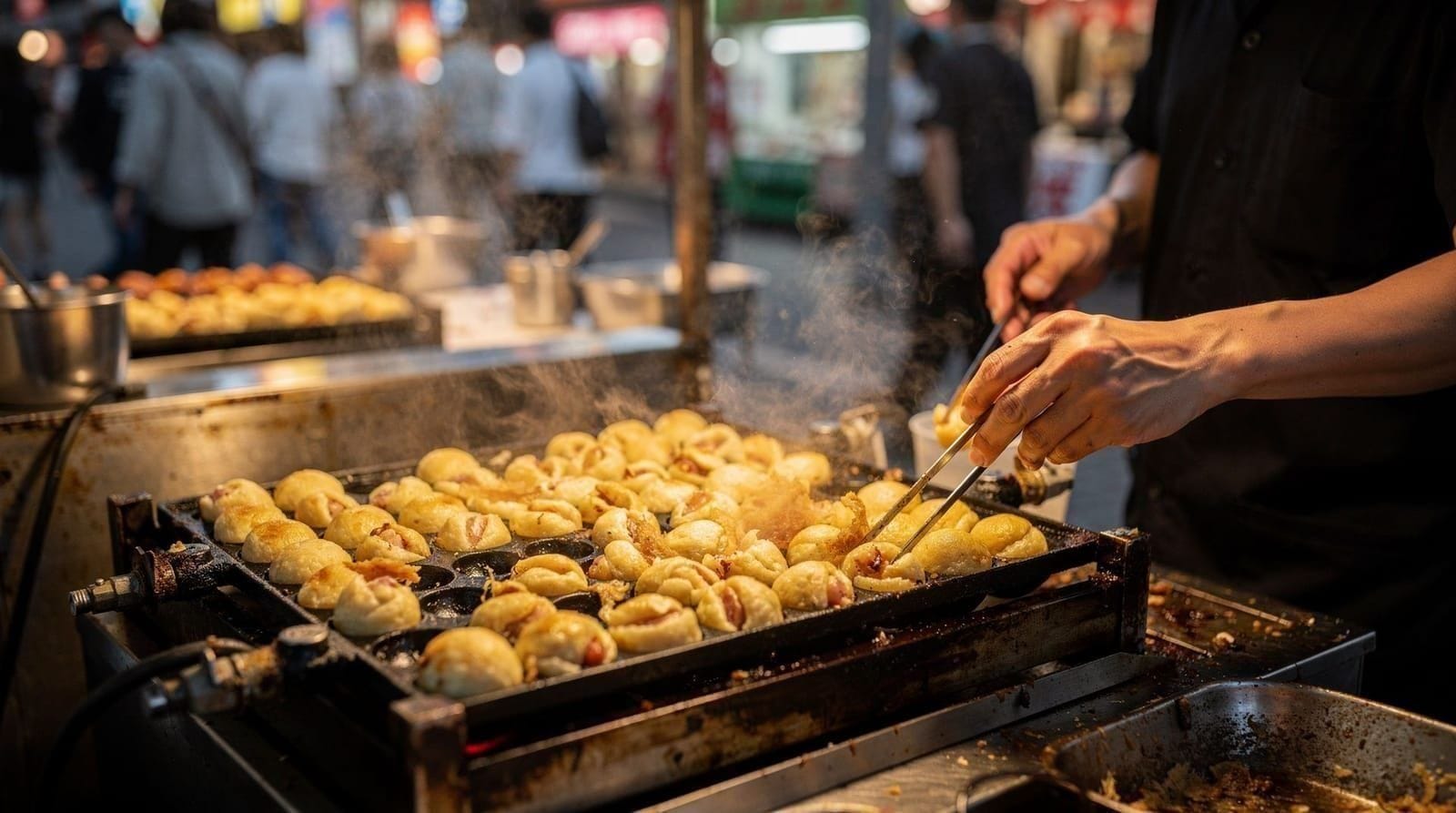
Dotonbori has the highest concentration of takoyaki stalls in the city, which is both its appeal and its trap — prices on the immediate canal-front run ¥600-800 for a standard eight-piece portion, ¥100-200 higher than an equivalent stall a block back in Namba or Amerikamura. Our dedicated takoyaki guide names specific chains (Wanaka, Juhachiban) worth seeking out over the unbranded stalls directly facing the water. The same logic applies to okonomiyaki and kushikatsu, both covered in their own dedicated guides.
Sushi and izakaya options on the strip
Beyond the signature street food, Dotonbori and the immediately surrounding blocks have a genuine density of conveyor-belt sushi (kaiten-zushi) chains and izakaya restaurants that get less photographic attention but are reliably good value — a plate of two nigiri pieces at a conveyor-belt chain typically runs ¥150-400 depending on the fish, and a full meal for one lands around ¥1,500-2,500. Izakaya (Japanese pubs serving small plates alongside drinks) are plentiful in the blocks between Dotonbori and Shinsaibashi, and picture menus with an order-by-tablet system have become common enough that language is rarely a real barrier, even at spots with no English signage outside.
Ramen beyond Kinryu
Dotonbori and the surrounding Namba blocks host dozens of ramen shops beyond Kinryu, ranging from tonkotsu (pork bone broth) chains to more refined shoyu (soy sauce) based bowls at smaller independent counters. Quality varies enormously and isn’t reliably signaled by queue length alone, since a long line sometimes reflects a single popular TV or social media mention rather than consistent quality. A reasonable rule: shops with a ticket-vending machine at the entrance (rather than a server taking your order) tend to be more focused on the food than on service turnover for tourist volume, and are usually a safer bet.
Bar-hopping after dinner
Once dinner’s done, Dotonbori transitions into one of Osaka’s busiest nightlife strips, with standing bars, highball counters, and karaoke boxes packed into the blocks around the canal and extending into neighboring Namba and Soemuncho. Our Dotonbori nightlife guide and Osaka bars and izakaya guide cover where to go and, importantly, which “seating charge” scams to avoid — a real problem specific to this stretch after dark.
Guided options for a first visit
If navigating Dotonbori’s mix of genuine finds and tourist traps solo feels like a lot for a first evening, the daytime Dotonbori food tour covers the neighborhood’s specialties with a guide steering you toward the better options, and the 3-hour Osaka night food tour does the same after dark, when the crowds and neon make solo navigation more disorienting. For a slower, lower-key way to see the strip, the 20-minute Dotonbori canal cruise gives a waterline view of the signage without needing to fight through the pedestrian crowds on the bridges.
Common tourist-trap patterns to recognize
A few patterns repeat across Dotonbori’s less honest restaurants regardless of cuisine: a staff member stationed outside specifically to approach visibly foreign tourists with an English pitch, a menu with photos but no visible prices next to them, and a “table charge” or “seating charge” added automatically to the bill without being mentioned up front — this last one is a legitimate custom at some traditional izakaya (a small per-person cover that includes an otoshi, a token starter dish, typically ¥300-500) but becomes a scam when it’s inflated to ¥1,000-2,000 specifically for tourists who don’t know to ask beforehand.
Confirming there’s a printed menu with visible prices, and asking directly whether there’s a table charge before sitting down, heads off both problems in under ten seconds.
Timing your visit
Dotonbori is busiest from about 6pm to 10pm daily, and considerably more so on weekends and Japanese public holidays, when the main bridges (Ebisubashi in particular) can back up with people trying to take photos. Visiting in the late morning or early afternoon (11am-3pm) gives a much calmer experience of the same signage and a shorter wait at Mizuno or other sit-down spots, at the cost of some of the neon atmosphere that only really works after dark. Splitting a visit across both a daytime and nighttime pass, if your schedule allows it, is the best way to get both the food and the photography without fighting the peak crowd either time.
Dietary restrictions in Dotonbori
Vegetarian, vegan, and halal dining has improved noticeably in Dotonbori over the past several years but remains a minority of the strip’s restaurants — dashi (usually fish-based) underlies most sauces and broths, including many that look plant-based on the surface, so a “vegetable” ramen or okonomiyaki isn’t automatically vegetarian without confirming the stock. A small but growing number of restaurants now display halal or vegan certification stickers near their entrance, and apps and printed guides distributed at the tourist information center near Namba Station (a short walk from the canal) list current options more reliably than a general web search, since the landscape changes from year to year.
How Dotonbori fits into a wider Osaka food trip
Dotonbori is one stop in a wider Osaka food circuit that includes Kuromon Ichiba Market’s fresh seafood, Shinsekai’s kushikatsu, and Umeda’s quieter local counters — our Osaka street food guide lays out how to sequence all of them across a day or two. For context on the neighborhood itself beyond food, see Dotonbori and Namba and the broader Osaka destination guide. If you’re building a longer, food-focused trip across the region, the 5-day Kansai food lovers itinerary extends the same logic to Kobe beef, Nishiki Market, and Uji matcha.
Cash, cards, and payment quirks
Larger chains and sit-down restaurants across Dotonbori (Mizuno, Chibo, Kinryu Ramen, Kani Doraku) generally accept cards and IC transit cards like ICOCA without issue, but many of the smaller unbranded takoyaki stalls and standing bars along the canal still operate cash-only, or add a small surcharge for card payment below a minimum spend.
Carrying ¥3,000-5,000 in cash for a single food evening avoids the awkwardness of a stall turning down a card at the counter, and 7-Eleven and FamilyMart ATMs nearby (both chains have branches within a couple of minutes of the canal) reliably accept foreign cards if a cash top-up is needed mid-evening. Tipping is not customary anywhere in Dotonbori, sit-down or stall — a bill presented without a tip line is standard, not an oversight.
Where the value actually is, at a glance
| Dish | Canal-front price | One block back | Verdict |
|---|---|---|---|
| Ramen | ¥1,300-1,500 | ¥800-900 | Same quality, walk one block |
| Takoyaki (8pc) | ¥600-800 | ¥400-600 | Named chains (Wanaka, Juhachiban) beat unbranded stalls |
| Okonomiyaki | ¥900-1,600 | Similar at Chibo | Mizuno worth the wait if time allows |
| Full crab course | ¥8,000-15,000 | Kuromon Market by the piece | Only for the sit-down experience under the sign |
What a smart Dotonbori evening actually looks like
The strongest version of a Dotonbori evening isn’t spent entirely on the canal-front — it’s a short loop: takoyaki from a named stall (Wanaka or Juhachiban rather than the nearest unbranded window), a step south into Hozenji Yokocho for a quieter drink or a small plate away from the crowds, then back to the main strip for photos of the Glico sign and the crab once it’s dark and the neon is at its best. Treating the canal-front as the photo backdrop rather than the default place to sit down and eat is the single biggest lever for getting Dotonbori’s atmosphere without paying its highest prices.
Frequently asked questions about Dotonbori food guide
Is food in Dotonbori overpriced?
Some of it, yes — restaurants directly on the canal-front pay premium rent reflected in the bill, and a handful specifically target tourists with inflated prices. Walking one block back into Shinsaibashi-suji or Hozenji Yokocho generally finds equivalent food for 15-30% less.What is the giant crab sign in Dotonbori?
It marks Kani Doraku, a crab restaurant chain with a mechanical crab sign that's become one of Dotonbori's most photographed landmarks. The restaurant itself is legitimate, though a full crab dinner runs ¥8,000-15,000 per person, considerably more than crab sold by the piece at Kuromon Ichiba Market.How many days do you need to eat through Dotonbori?
One evening covers the main strip's photo spots and a meal or two; two visits, including one during the day when it's quieter, let you sample takoyaki, okonomiyaki, and a sit-down dinner without rushing.Is Dotonbori safe to eat in at night?
Yes, in terms of physical safety — Osaka has very low violent crime. The main risk is touts pushing inflated "seating charge" bars and restaurants rather than any danger; walking past anyone stopping you with an English pitch on the street is the standard local advice.What's a good budget for a Dotonbori food evening?
¥3,000-4,000 ($26-35) covers takoyaki, a drink, and a shared okonomiyaki plate for one person at mid-range spots; add ¥2,000-3,000 more for a sit-down dinner at a dedicated restaurant rather than grazing from stalls.
Top experiences
Bookable activities with verified prices and instant confirmation on GetYourGuide.