Himeji
Himeji travel guide from Osaka — Himeji Castle's UNESCO keep, Koko-en's gardens, and the mountainside temple Engyo-ji, with prices and train times.
Himeji: Himeji castle 3-hour licensed guide
Duration: 3 hours
Quick facts
- Distance from Osaka
- 50-65 min by train
- Days needed
- 0.5-1
- Castle entry
- ¥1,000 (~$9.25)
- Koko-en garden
- ¥310 (~$2.85)
- Best months
- March-April, October-November
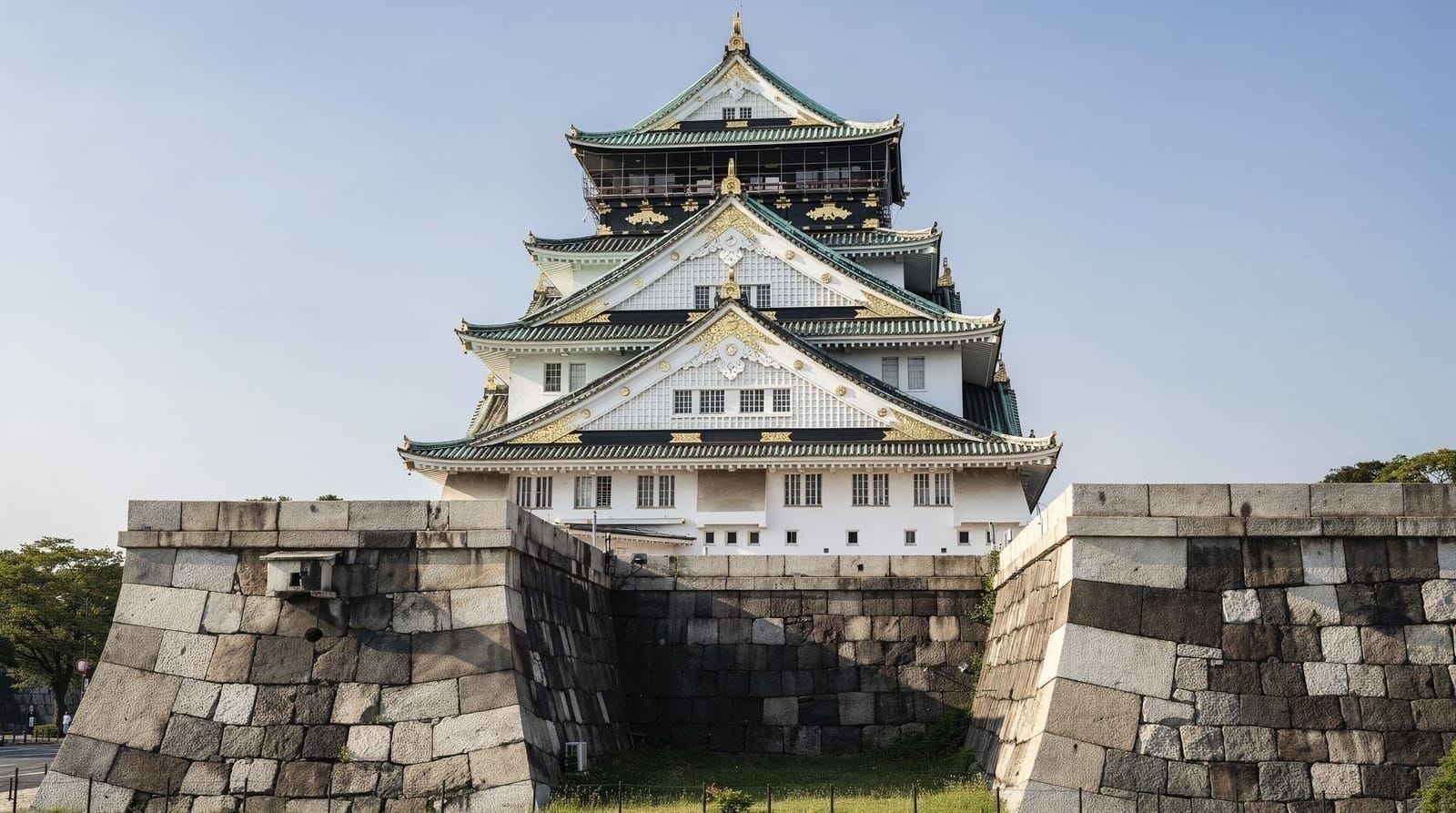
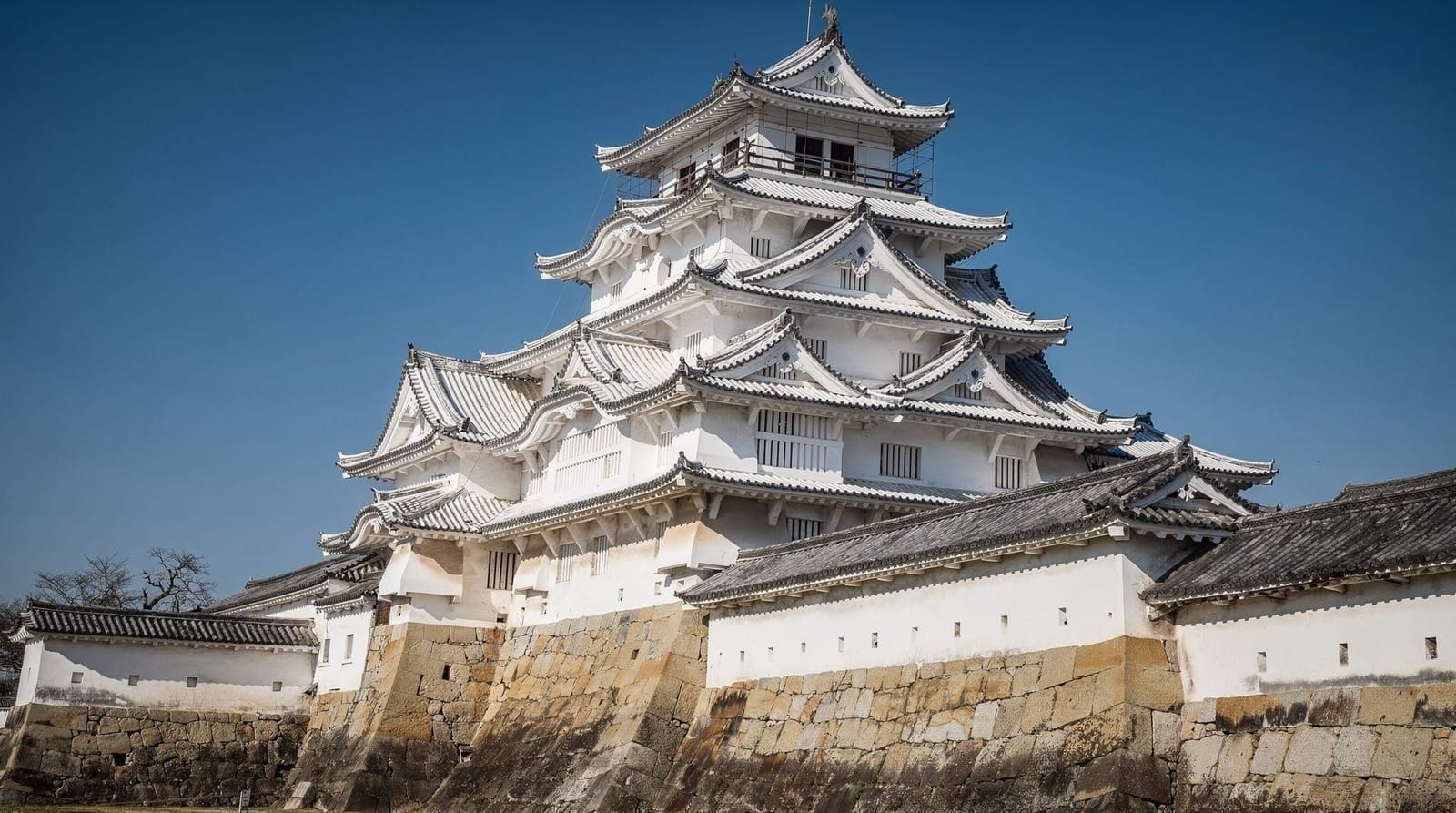
Himeji Castle is the single best-preserved original castle keep in Japan — never destroyed by fire, earthquake, or wartime bombing since its current form was completed in 1609, and a UNESCO World Heritage Site since 1993. Its white plastered walls and layered rooflines have earned it the nickname Shirasagi-jo, the White Heron Castle, for its resemblance to a bird taking flight. It’s about an hour from Osaka by train, which puts it comfortably within reach as a half-day or full-day trip, and the castle alone is worth the journey even if you see nothing else in the city.
| Where | Himeji, western Hyogo Prefecture |
| Cost | Castle ¥1,000; combined with Koko-en ¥1,050 |
| Time needed | Half a day for the castle; a full day with Engyo-ji |
| Getting there | 50-65 min by train from Osaka (30 min by Shinkansen) |
| Best time | Late March-early April, or October-November |
Getting from Osaka to Himeji
The JR Special Rapid service runs directly from Osaka Station to Himeji Station in about 65 minutes for roughly ¥1,520 (~$14.05), with no transfer required. The Shinkansen (bullet train) cuts this to around 30 minutes from Shin-Osaka Station, though at a considerably higher fare (around ¥3,000-4,500, ~$27.75-$41.65, depending on the train type), and is covered by a JR Rail Pass if you’re carrying one for a longer Japan trip.
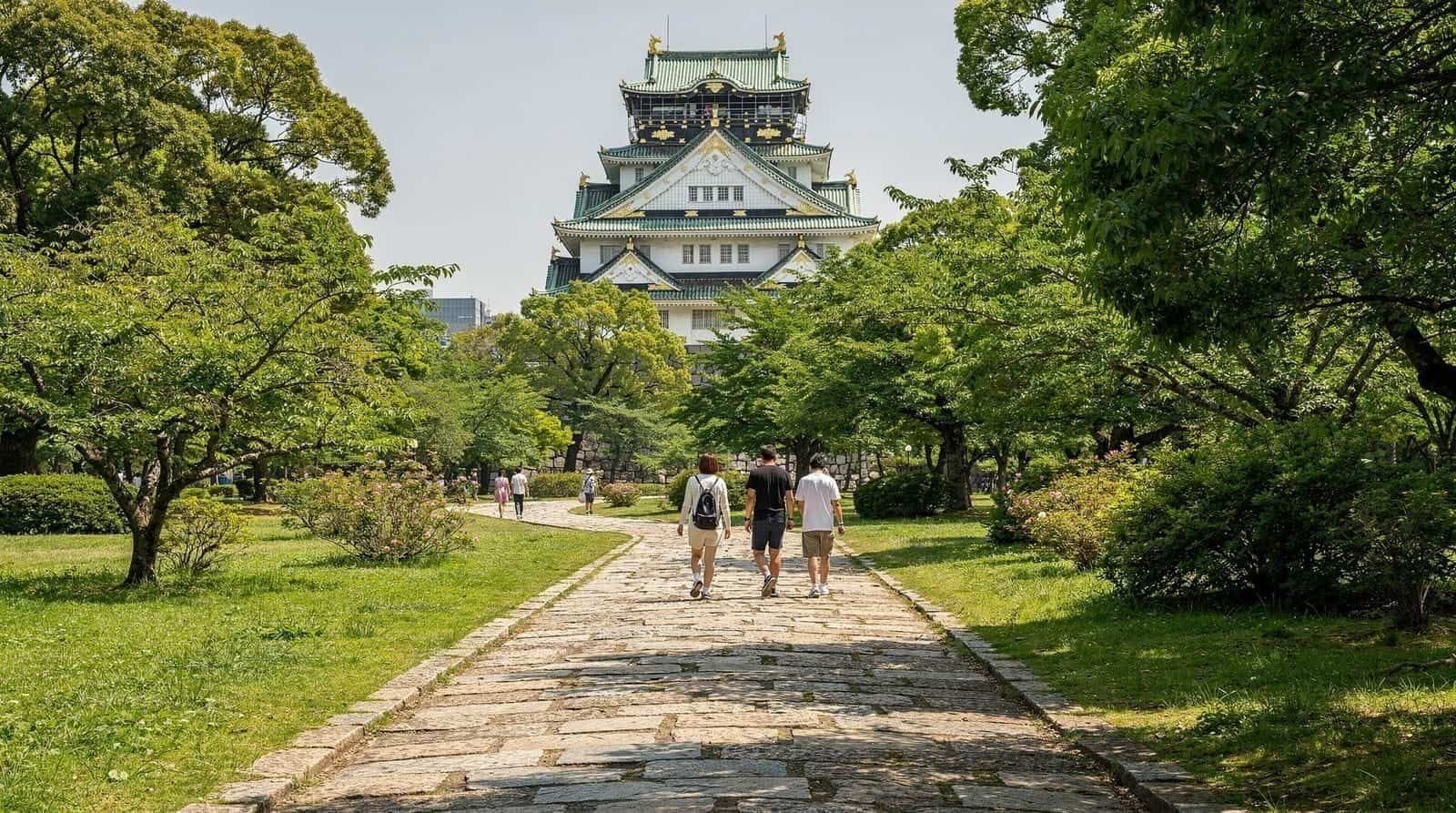
For a Kansai-focused visit without a national rail pass, the JR Special Rapid is the more economical choice and is included in the JR Kansai Wide Area Pass. From Himeji Station, the castle is a straight 15-20 minute walk up Otemae-dori, the main boulevard leading directly to the castle gate — impossible to miss, since the keep is visible from the station forecourt.
Himeji Castle itself
The castle complex is a genuine maze by design: the approach to the main keep winds through a deliberately confusing sequence of gates, dead-end paths, and baffle walls meant to slow down attacking forces, so first-time visitors often find the walk to the top takes longer than expected — budget 90 minutes to two hours for a full visit, more if you’re reading every information panel.
Entry is ¥1,000 ($9.25) for the castle grounds and main keep, and a combined ticket with Koko-en Garden costs ¥1,050 ($9.70), a small enough premium that it’s worth adding if you’re visiting the garden anyway. The keep’s interior has steep, narrow wooden stairs across six levels (plus a basement), and the building has no elevator or significant accessibility accommodation — a genuine consideration for visitors with mobility limitations or very young children who tire on stairs. The top floor rewards the climb with a view over the city and, on clear days, toward the Seto Inland Sea.
Because it’s an authentic Edo-period structure rather than a postwar concrete reconstruction (unlike several other famous Japanese castles, including Osaka Castle’s main keep), Himeji preserves original wooden joinery, tile roofing techniques, and defensive features like gun ports and stone-drop chutes still visible and explained by on-site signage in English. A small Shinto shrine, Osakabe-jinja, occupies a corner of the keep’s top floor — dedicated to a local protective deity and, according to castle tradition, moved there specifically to guard the building, a detail easy to walk past without noticing amid the view over the city.
Photographing the castle
The classic long-range shot — the full keep reflected in its moat with the layered rooflines stacked behind — is best taken from Otokoyama Haisui-ike, a small reservoir park a 10-15 minute walk northwest of the castle, away from the crowds directly at the main gate. Closer in, the approach along Otemae-dori offers a straight-on view with the castle framed at the end of the boulevard, particularly striking at night when the keep is illuminated after dark. Cherry blossom season adds pink foreground color to nearly any angle, which is part of why the castle park gets so crowded during the brief bloom window.
Himeji Castle 3-hour tour with a licensed guide is worth considering if the castle’s defensive layout and history interest you beyond a self-guided walk — a guide can point out details (like the shape of gun ports designed for different weapons, or the deliberate dead ends built to confuse attackers) that are easy to miss on the posted signage alone, and can cover the full grounds and Koko-en in one sitting if you’re also planning both the same day.
The Nishinomaru and Okiku’s well
The Nishinomaru (West Bailey), a separate walled section of the castle grounds a short walk from the main keep, held residences for the daimyo’s family and retainers and now houses a long covered corridor of small rooms once used by ladies-in-waiting, connected end to end and offering some of the best photo angles of the main keep from a distance.
Within the castle’s inner grounds, a well known as Okiku’s well is tied to one of Japan’s best-known ghost stories — a servant named Okiku, wrongly accused of losing one of a set of ten precious plates, was said to have been killed and thrown into the well, and her ghost is said to be heard counting plates at night, stopping at nine. The story predates the current castle and has been retold across kabuki theater and film for centuries; the well itself is a modest, easy-to-miss stop along the main visitor path, worth pointing a phone flashlight into if the legend interests you.
Koko-en Garden
Directly adjacent to the castle’s west side, Koko-en is a modern garden (completed in 1992) built on the former site of samurai residences, designed as nine separate walled gardens in the Edo-period style rather than one continuous space — a layout that gives it a sense of discovery as you move from one enclosed section to the next. Entry is ¥310 (~$2.85) alone, or ¥1,050 combined with the castle. A traditional teahouse within the garden serves matcha and a small sweet for an additional fee, a pleasant, quieter stop after the castle’s crowds and stairs.
Engyo-ji, “the Nikko of the west”
About 30 minutes from Himeji Station by bus and a cable car (the Shosha Ropeway) up Mt Shosha, Engyo-ji is a working Tendai Buddhist temple complex founded in 966, spread across the wooded mountainside with several halls connected by forest paths rather than concentrated in one compound. Its nickname, “Nikko of the west,” references its scale and the atmosphere of its main hall (Maniden), built on stilts against the mountainside in a style reminiscent of Kyoto’s Kiyomizu-dera.
The temple gained wider international recognition after parts of it were used as a filming location for “The Last Samurai” in 2003, and the complex’s genuinely secluded, forested feel — a contrast to the castle’s more urban setting — makes it a worthwhile pairing if you have most of a day in Himeji rather than just a couple of hours. The ropeway costs around ¥1,000 ($9.25) round trip, and temple grounds entry is roughly ¥500 ($4.65).
Himeji Castle and Engyo-ji temple guided tour combines both sights in a single day with transport handled, which is the practical way to do them together given the cable car and bus connections involved. A shorter alternative, Engyo-ji temple 3-hour tour, focuses on the mountain temple alone if the castle is already covered separately.
Beyond the castle
Himeji’s other sights sit firmly in the castle’s shadow, but for visitors with a full day or a family in tow, Himeji Central Park, a combined zoo, drive-through safari, and amusement park on the city’s outskirts (about 20 minutes by bus or car from the station), is a reasonable lower-key alternative or add-on, particularly for younger children who’ve had their fill of temple stairs. It’s a genuinely different kind of stop from everything else on this list and not something most castle-focused visitors build a trip around, but worth knowing about if the itinerary needs a change of pace.
Getting around Himeji
Otemae-dori, the main boulevard running dead straight from the station to the castle gate, covers almost everything most visitors need on foot — the castle, Koko-en, and the surrounding restaurant streets are all within this single 15-20 minute walk, and Himeji’s central sights don’t require a bus or taxi the way a Kyoto or Osaka day does.
Engyo-ji, the one sight genuinely outside easy walking distance, needs a roughly 15-minute bus ride from the station’s north side to the base of the Shosha Ropeway, followed by the cable car itself. Coin lockers are available at Himeji Station for day-trippers, and the tourist information counter just outside the station’s north exit stocks English-language maps and can advise on same-day bus timetables for Engyo-ji.
Where to stay
Himeji works well as a day trip from Osaka or Kobe given the reasonably short train ride, and most visitors don’t stay overnight, but the station area has a solid spread of business hotels for those extending a Kansai trip with an overnight here — useful if you’re combining an evening castle illumination viewing (the keep is lit up after dark, and the walk back down Otemae-dori with the illuminated castle ahead is a genuinely different view from the daytime visit) with an early departure the next morning toward Kobe, Okayama, or further west.
How much time Himeji actually needs
The castle and Koko-en Garden together take a comfortable half-day, including the walk from the station and lunch nearby — genuinely feasible as a fast day trip from Osaka with a mid-morning departure and an evening return. Adding Engyo-ji pushes the visit to a full day given the cable car and bus transfers involved. Very few visitors stay overnight in Himeji itself, since the city’s other sights are limited and Osaka or Kobe make for a more convenient base with a wider hotel selection.
Food near the castle
The streets around Otemae-dori and the station have a reasonable spread of casual restaurants, though Himeji isn’t known for a specific culinary specialty the way Kobe or Osaka are — anago (conger eel) is a modest local specialty, served grilled over rice (anago-don) at a handful of restaurants near the station, typically ¥1,200-2,000 (~$11.10-$18.50) for a set.
Himeji oden, a lighter regional take on the simmered-in-broth dish found across Japan, served here with a side of ginger-soy sauce for dipping rather than eaten from the broth alone, is another modest local variation worth trying if you spot it on a menu. For a wider selection, the JR Himeji Station building itself has a food court and several chain restaurants, a practical option if you’re catching a train shortly after the castle visit.
Seasonal timing
Cherry blossoms typically bloom in the last days of March into early April, and the castle’s white walls against pink blossoms is one of the more photographed combinations in the Kansai region, drawing correspondingly heavier crowds during that window. Autumn (October-November) brings clear skies well suited to the long sightlines from the castle’s upper floors, without the blossom-season crowds. Summer is hot and humid with limited shade on the exposed climb to the keep — visitors doing the full castle walk in July or August should plan for water and sun protection, since much of the path is uncovered stone.
The Nada Fighting Festival
If your visit happens to land in mid-October, Himeji’s Matsubara Hachiman Shrine, a short taxi ride from the station, hosts the Nada Fighting Festival (Nada no Kenka Matsuri), one of the more physically intense Shinto festivals in the Kansai region — teams of young men from the local neighborhoods slam ornate, multi-ton portable shrines (mikoshi) into each other, believing that a rougher collision pleases the local deity more than a gentle one. It’s a genuinely different, far less polished side of Himeji than the castle’s manicured grounds, and it draws a large local crowd rather than an international tourist one, worth knowing about if your dates happen to align with it.
Himeji versus Osaka Castle: which keep is “the real one”
Visitors who’ve already seen Osaka Castle sometimes wonder if a second castle day trip is worth it. The honest comparison:
| Himeji Castle | Osaka Castle | |
|---|---|---|
| Structure | Original Edo-period wood, 1609 | 1931/1997 concrete reconstruction |
| UNESCO status | Yes, since 1993 | No |
| Interior | Steep original wooden stairs, no elevator | Modern elevator, museum interior |
| Best for | Authentic architecture, photography | Convenience, city-center access |
If you can only justify one castle day, Himeji is the stronger historical experience; Osaka Castle is the easier, more accessible one to fit into a single afternoon without leaving the city. Seeing both isn’t redundant — they represent genuinely different things (an original structure versus a modern reconstruction with a museum inside), and the Osaka Castle guide covers that side in more depth.
If you’re short on time: the express version
Not every visitor can spare a half-day. For a tighter schedule, it’s possible to see the castle’s exterior, grounds, and the ground floor of the keep in as little as 90 minutes if you skip Koko-en Garden and Engyo-ji entirely and go straight up Otemae-dori from the station.
Himeji Castle express tour, 90 minutes is built specifically around this shorter window, a reasonable option if Himeji is a stopover on a longer Shinkansen journey rather than a dedicated day.
Combining Himeji with other Kansai stops
Himeji sits west of Kobe on the same JR line, making a Kobe-Himeji day loop a practical way to combine both without backtracking through Osaka — Kobe to Himeji takes about 40 minutes by JR Special Rapid. For visitors basing themselves in Osaka or Kyoto, Himeji is far enough (an hour or more each way) that it’s usually treated as its own dedicated day rather than combined with a second city on the same day. See the Kobe and Himeji day loop itinerary and the Himeji Castle ticket guide for planning details.
Himeji is also a practical stopover for visitors continuing west by Shinkansen toward Okayama or Hiroshima, since it sits directly on the Sanyo Shinkansen line — a half-day castle visit fits naturally into a longer westward Japan itinerary without requiring a dedicated round trip back to Osaka first, provided luggage is either forwarded ahead or manageable for a few hours of sightseeing.
Private guided tour of Himeji Castle from Osaka or Kyoto handles the round-trip transport if you’d rather not manage the train schedule yourself.
What a full day trip actually costs
Beyond the castle entry itself, a realistic full-day Himeji trip from Osaka — JR Special Rapid round trip, castle and Koko-en combined ticket, the Engyo-ji cable car and temple entry, and a casual lunch near the station — runs roughly ¥5,500-7,500 ($51-69) per person. Dropping Engyo-ji and the Shosha Ropeway from the day brings that down to around ¥3,500-4,500 ($32-42), since the JR fare and castle ticket are the two costs that don’t change regardless of how much of the city you see. Taking the Shinkansen instead of the JR Special Rapid adds roughly ¥1,500-3,000 each way for the time saved, worth it mainly if Himeji is a stopover on a longer westbound trip rather than a dedicated round trip from Osaka.
Himeji as a first stop before Kobe
Because Himeji sits west of Kobe on the same JR line, some visitors reverse the usual order and do Himeji first thing in the morning (when the castle and its approach are least crowded) before continuing east to Kobe for a Kobe beef dinner and an evening in Kitano or Harborland. This sequencing has a real advantage over the more common Osaka-then-Himeji-then-back pattern: it avoids doubling back through Osaka entirely, since Himeji, Kobe, and Osaka all sit on the same westbound JR corridor. The Kobe-Himeji day loop itinerary lays out the full sequencing either direction.
Frequently asked questions about Himeji
How do I get from Osaka to Himeji?
The JR Special Rapid runs directly from Osaka Station to Himeji Station in about 65 minutes for roughly ¥1,520. The Shinkansen from Shin-Osaka cuts this to about 30 minutes at a higher fare, worth it if you’re carrying a JR Rail Pass already.
How much does it cost to enter Himeji Castle?
Entry to the castle grounds and keep is ¥1,000 ($9.25). A combined ticket with Koko-en Garden costs ¥1,050 ($9.70).
Is Himeji Castle the original building, or a reconstruction?
It’s an authentic Edo-period structure completed in 1609, never destroyed by fire, earthquake, or wartime bombing — one of the few major Japanese castles that isn’t a postwar concrete reconstruction.
How much time do I need for Himeji Castle?
Budget 90 minutes to two hours for a full visit to the keep and grounds, including the maze-like approach through the castle’s defensive gates. A half-day covers the castle and Koko-en Garden together comfortably.
Is Himeji Castle wheelchair accessible?
Limited accessibility — the main keep has steep, narrow original wooden stairs across six levels with no elevator, which is a genuine consideration for visitors with mobility limitations. The castle grounds and Koko-en Garden are more accessible than the keep’s interior.
What is Engyo-ji, and is it worth visiting?
Engyo-ji is a mountainside Buddhist temple complex reachable by cable car from Himeji Station, known as “the Nikko of the west” for its scale and forested setting, and as a filming location for “The Last Samurai.” It’s worth the half-day detour if you have more than a quick castle visit planned.
Can I visit Himeji as a day trip from Osaka?
Yes — it’s a common day trip, with round-trip train time of roughly two hours and the castle itself needing about half a day. Adding Koko-en Garden or Engyo-ji extends it to a full day.
Should I do Himeji as a day trip from Osaka or from Kobe?
Either works, but starting from Kobe shaves roughly 25 minutes each way off the train ride compared to Osaka, and lets you sequence a Himeji morning with a Kobe beef dinner back in Kobe that evening without backtracking through Osaka at all.
What’s the best time of year to visit Himeji Castle?
Late March into early April for cherry blossoms against the white castle walls, or October-November for clear skies and fewer crowds. Summer visits should plan for sun exposure on the largely uncovered climb to the keep.
Top experiences
Bookable activities with verified prices and instant confirmation on GetYourGuide.