Osaka Castle guide
Osaka: Osaka castle museum tower ticket
Is Osaka Castle worth visiting?
Yes, with the right expectations — the current keep is a 1931 concrete reconstruction with a well-run museum inside, not an intact centuries-old building. The genuinely old parts are the moats and stone walls, some of the largest castle fortifications in Japan. Museum tower entry runs around ¥600 (~$5.55); most visitors spend 2-3 hours covering the grounds and tower.
Osaka Castle sits at the geographic and historical center of the modern city, roughly equidistant from Umeda and Namba, and its footprint has effectively shaped how central Osaka developed around it over the following four centuries. It is the closest thing the city has to a single must-see historical site, and it’s also one of the most commonly misunderstood — visitors expecting a centuries-old original structure sometimes leave disappointed, while visitors who understand what they’re actually looking at generally don’t. This guide covers the castle’s real history, what a visit costs, and the honest caveats worth knowing before you go.
| Where | Central Osaka, between Umeda and Namba |
| Cost | Grounds free; museum tower around ¥600 |
| Time needed | 2-3 hours for grounds + museum |
| Getting there | JR Osakajokoen Station, 10-15 min from Umeda/Namba |
| Best time | Weekday mornings, outside cherry blossom season |
The castle you see today is a 1931 reconstruction
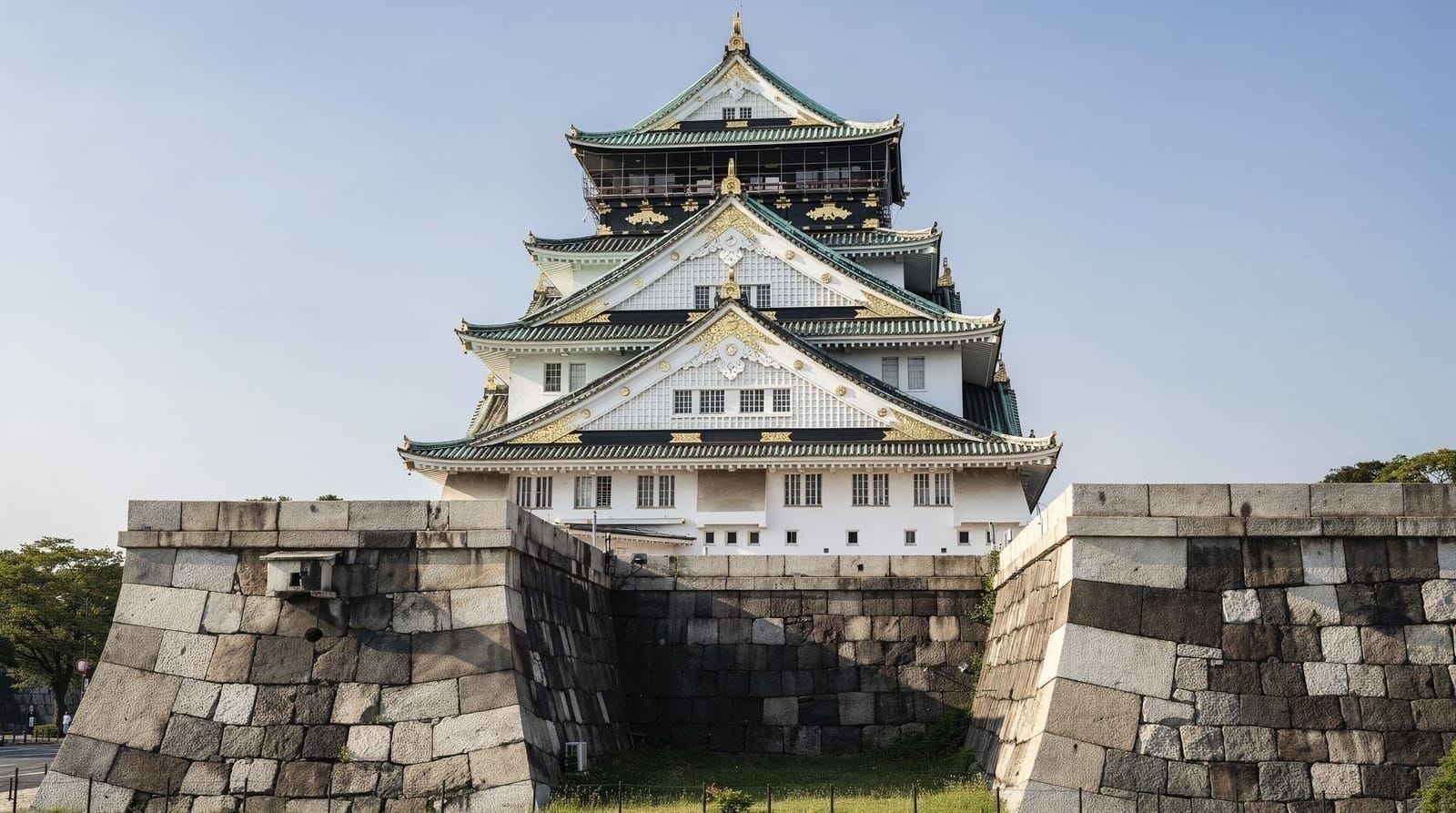
The keep standing in the park now is a concrete reconstruction built in 1931, rebuilt again after WWII bombing damage and most recently renovated in 1997 with modern museum fittings inside. None of the current structure predates 1931. The original castle, built by Toyotomi Hideyoshi starting in 1583 as a display of his newly unified power over Japan, was destroyed in the 1615 siege that ended the Toyotomi clan’s rule; a Tokugawa-era rebuild burned down in 1665 after a lightning strike. Knowing this going in reframes the visit correctly — this is a well-organized museum in castle form, set inside genuinely old and impressive fortifications, rather than an intact historical building.
What is original: the moats and stone walls
The park’s inner and outer moats, still filled with water, and the stone walls surrounding them are the genuinely old, largely original parts of the site. Some individual stones in the outer wall weigh well over 100 tons, quarried from islands in the Seto Inland Sea and transported to Osaka using period techniques — barges, log rollers, and enormous manual labor — that remain a subject of engineering fascination today.
The largest single stone, Higo-ishi, is estimated at around 130 tons and sits near the Sakuramon Gate, easy to walk past without registering the scale unless you know to look for it. Walking the full moat perimeter takes about 45 minutes at an easy pace and is, for many visitors, the more genuinely impressive part of the visit.
Inside the museum tower
The museum floors cover Osaka’s feudal history, Hideyoshi’s rise, and the castle’s construction and destruction, with English signage throughout and an observation floor at the top giving a wide view over the park and surrounding city. It’s a straightforward, well-organized museum — an hour is enough for most visitors, longer if you read every panel.
Osaka Castle museum tower ticket booked ahead saves time at the entrance during cherry blossom season, when queues can stretch 20-30 minutes.
The siege that ended the Toyotomi clan
The castle’s most consequential historical moment came in the winter and summer sieges of 1614-1615, when Tokugawa Ieyasu’s forces besieged Hideyoshi’s son, Hideyori, ultimately breaching the castle’s defenses and ending the Toyotomi clan’s claim to power — a turning point that cemented over two centuries of Tokugawa shogunate rule until the Meiji Restoration in 1868. The museum’s exhibits cover this period in useful detail, including large-scale folding screen paintings (byobu) depicting the siege, though the originals are held elsewhere and displays here are generally reproductions or rotating loans.
Nishinomaru Garden and cherry blossom season
Nishinomaru Garden, a fenced lawn area on the western side of the keep, has a small separate admission fee but is the best cherry blossom viewing spot in the immediate area — around 300 trees, with the castle tower visible behind them, making it one of the more photogenic sakura spots in the city during the last week of March into early April. Outside blossom season, it’s a quiet lawn with far fewer visitors than the main approach to the keep, worth including in a visit at any time of year for the contrast with the busier eastern side of the park.
Toyokuni Shrine and other spots inside the park
Toyokuni Shrine, within the castle grounds, is dedicated to Toyotomi Hideyoshi himself, the castle’s original builder, and is a smaller, quieter stop than the main keep — worth a five-minute detour if the history of the Toyotomi clan’s rise and fall interests you.
Castle, temple, and shrine walking tour combines the park with nearby religious sites in a single guided outing, useful for connecting the museum’s history to the specific locations tied to it around the grounds.
Guided options for more context
For visitors who want the history explained rather than read off wall panels, Osaka Castle half-day private guided tour gives a more in-depth, personalized walk through the grounds and museum than a self-guided visit typically covers. A more route-focused option, Osaka Castle history walking tour with tower entry, bundles the guided walk with museum admission in a single booking.
What the visit actually costs
The park grounds and moat walk are free. The museum tower costs around ¥600 (~$5.55), and Nishinomaru Garden charges a modest separate fee, mainly relevant if visiting specifically for cherry blossoms. Compared to many of Kansai’s paid historical sites, Osaka Castle is genuinely inexpensive for what it covers, with the museum ticket being the only real cost most visitors incur.
The castle’s role in the Sengoku period, briefly explained
Osaka Castle’s construction and subsequent destruction sit within the broader Sengoku period (“Warring States period,” roughly 1467-1615), a century and a half of near-constant civil conflict between rival feudal lords (daimyo) before Japan’s unification and the start of the more stable Edo period.
Hideyoshi’s castle represented the near-completion of that unification process, and its eventual fall to Tokugawa forces in 1615 is generally considered the definitive end point of the Sengoku period itself, making the site’s history a genuinely pivotal marker in Japanese history rather than simply a regional curiosity. Visitors with a broader interest in this era of Japanese history will find the museum’s exhibits place Osaka Castle’s story within this wider context more clearly than most standalone historical accounts.
Tourist traps and honest warnings
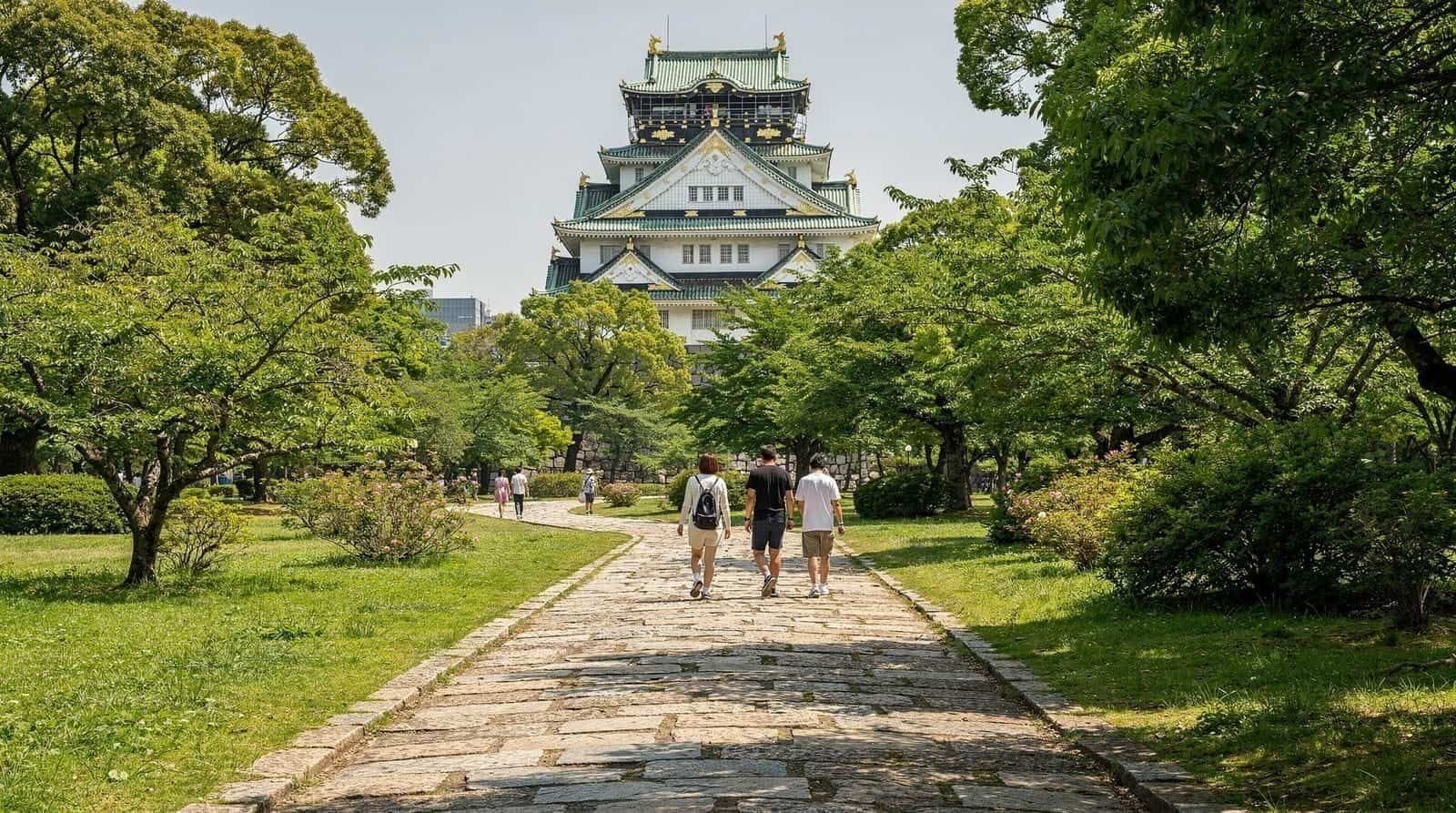
The castle itself is fairly priced and not a trap in the usual sense, though the surrounding approach has scattered souvenir stalls at typical markup. The bigger practical issue is crowding: cherry blossom season and Japanese public holidays (particularly Golden Week in late April-early May) bring long queues for the museum tower, and the park’s main paths can feel closer to Dotonbori-level crowds than the “quiet historical site” reputation suggests. Visiting on a weekday morning, outside peak season, gets you a genuinely calm couple of hours.
Accessibility at Osaka Castle
The park’s main paths are flat, paved, and generally accessible for wheelchairs and strollers, a contrast to many of Kansai’s hillside historical sites. The museum tower has elevator access to most floors, though the final observation level typically requires a short flight of stairs — worth confirming current accessibility details directly with the museum if this is a firm requirement, since arrangements can shift with ongoing renovations. For a route-focused breakdown of the full grounds with accessibility notes built in leg by leg, see our Osaka Castle walking route.
Seasonal illumination and evening events
Outside cherry blossom season, the castle grounds occasionally host evening illumination events, projecting light displays onto the keep’s exterior walls after dark — these run on a limited seasonal schedule (historically tied to autumn and winter) rather than year-round, so checking current dates before planning an evening visit is worth doing. Even without a formal event, the illuminated keep is visible from several points in the park after sunset, offering a quieter atmosphere than the daytime crowds.
Practical ticket and hours information
The museum tower is generally open daily from around 9am to 5pm (last entry typically 4:30pm), with extended hours during specific seasonal events like cherry blossom illuminations. Tickets can be purchased at the entrance or booked online in advance, and while walk-up purchase is usually straightforward outside peak season, advance booking removes any queue risk during the busiest weeks of the year. The park grounds themselves have no fixed closing time in the way the museum tower does, meaning an evening walk along the moats after the tower closes is entirely possible and, as covered above, offers a quieter, different atmosphere than the daytime visit.
Visiting with kids
The park’s wide, flat paths and open lawns make it one of the more manageable historical sites in Osaka for young children, and the sheer scale of the moats and walls tends to land well even without much interest in the history. The museum tower has an elevator to the upper floors, though the final approach to the observation level typically involves stairs.
A step-by-step route through the grounds
For a specific, ordered walking route covering the moats, Higo-ishi, the museum tower, Nishinomaru Garden, and Toyokuni Shrine, see our Osaka Castle walking route, which lays out realistic timing leg by leg rather than describing the sights in isolation.
Getting here and connecting onward
JR Osakajokoen Station, on the Loop Line, sits right at the park’s northeast edge and is the most direct approach; Tanimachi 4-chome Station (subway) is a slightly longer walk but closer to the Osaka Museum of History. Both are 10-15 minutes from Umeda or Namba. From here, it’s a short ride to Shinsekai and Tennoji, or back into central Osaka for Dotonbori. Full district detail at our Osaka Castle area destination guide, and city-wide context at the Osaka destination guide.
When Osaka Castle gets exceptionally busy
Beyond the general cherry blossom and Golden Week crowding already covered, a few specific dates push crowds well past the park’s usual weekend levels. Osakajo Hall’s larger concerts and events, when scheduled, bring dense crowds specifically to the eastern side of the park and around Osakajokoen Station in the hours before and after the event, occasionally affecting train service frequency on the JR Loop Line.
The New Year period also draws unusually large crowds to Toyokuni Shrine specifically, tied to hatsumode (the first shrine visit of the year), a practice most Japanese visitors observe at a shrine near home or a historically significant one — checking a calendar for any of these specific dates before planning a quiet, uncrowded visit is worth the extra effort.
Combining the castle with the rest of a Kansai trip
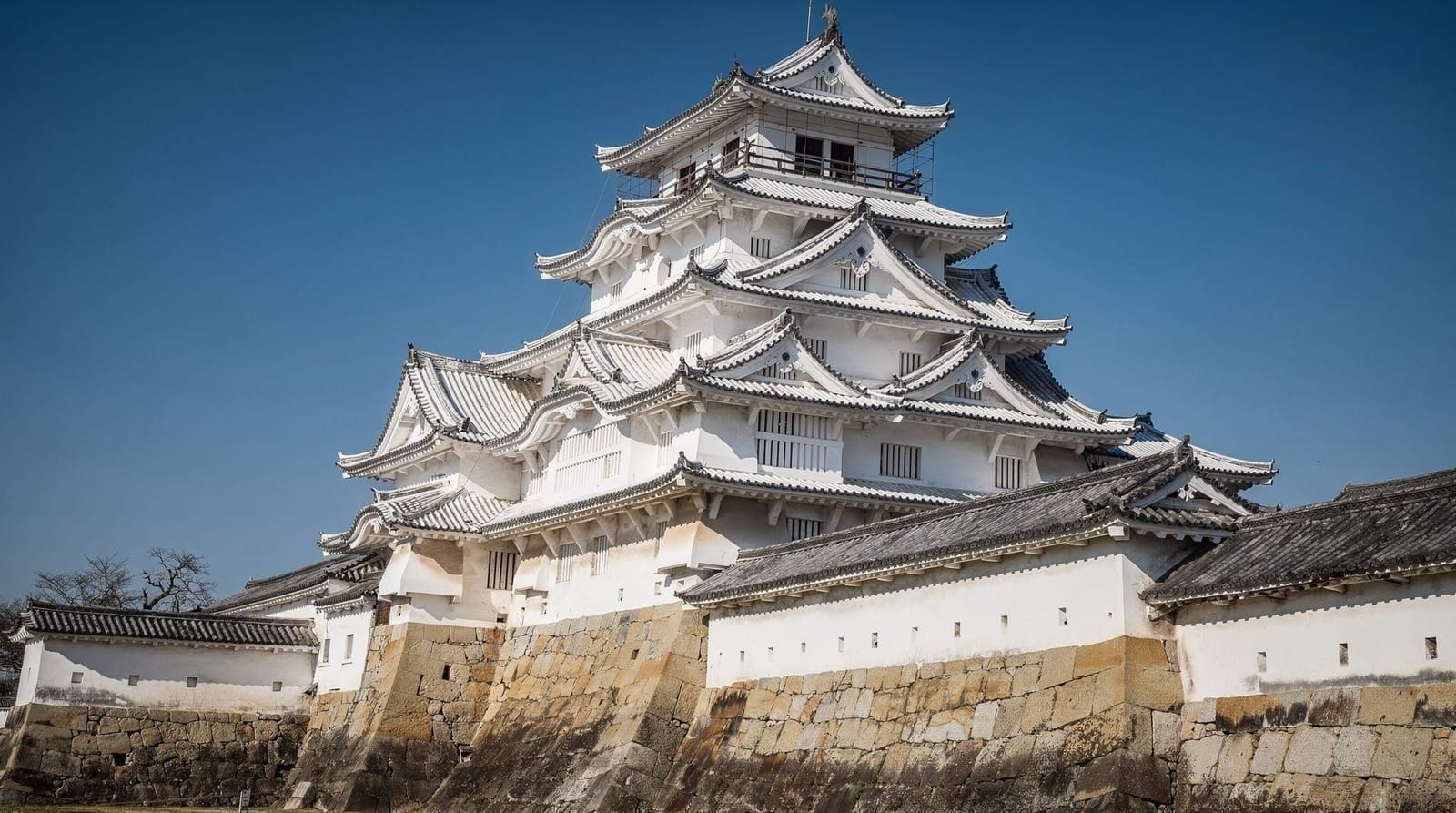
If Osaka Castle is one stop in a broader look at the region’s feudal history, it pairs naturally with Himeji Castle, Japan’s best-preserved original castle keep and a genuinely different experience — Himeji shows what a castle built for its original purpose actually looked like, in contrast to Osaka’s reconstructed, museum-focused version. Visitors interested in the broader Toyotomi-Tokugawa history covered here may also find Nijo Castle in Kyoto worth comparing, since the two sites bookend the same political transition from opposite sides.
Toyotomi Hideyoshi: the man behind the castle
Understanding Osaka Castle’s history means understanding Toyotomi Hideyoshi himself, one of the three unifiers of Japan alongside Oda Nobunaga and Tokugawa Ieyasu. Born to a low-ranking peasant family — an unusual origin for someone who rose to become Japan’s supreme military ruler — Hideyoshi served under Nobunaga before consolidating power after his death in 1582, eventually controlling nearly all of Japan through a mix of military campaigns and shrewd political alliances.
He built Osaka Castle starting in 1583 specifically as a display of that consolidated power, choosing the site partly for its strategic position at the convergence of several rivers and partly to eclipse the scale of any rival’s fortification in the country. His death in 1598 left a power vacuum that Tokugawa Ieyasu ultimately filled, leading to the sieges that destroyed Hideyoshi’s original castle and ended his clan’s rule less than two decades after the castle’s completion.
Archaeological finds beneath the current park
Excavations conducted during various renovation and construction projects within Osaka Castle Park over the past several decades have uncovered foundation stones and artifacts from the original Toyotomi-era castle buried beneath the current Tokugawa-era layout and the 1931 reconstruction — a reminder that at least two distinct historical castles occupy roughly the same footprint, one layered over the other. Some of these findings are displayed within the museum tower’s exhibits, giving visitors a rare direct look at physical remnants from the castle’s original 16th-century construction rather than only the later reconstructions that make up what’s visible above ground today.
The castle in popular culture and modern Osaka identity
Osaka Castle functions today as much as a civic symbol as a historical site — its silhouette appears throughout Osaka’s branding, from tourism materials to local sports team imagery, and the park hosts numerous public events beyond sightseeing, including seasonal festivals, fireworks displays, and large-scale concerts at the adjacent Osakajo Hall arena. This civic role, layered onto the site’s genuine historical significance, is part of why the castle draws both history-focused visitors and locals attending an entirely unrelated concert or festival on the same grounds, worth knowing if the park feels busier than expected for reasons unrelated to sightseeing on a given day.
Comparing Osaka Castle to Japan’s other reconstructed castles
Osaka Castle isn’t unique in being a modern reconstruction rather than an original structure — a number of Japan’s most-visited castles, including Nagoya Castle and Kumamoto Castle, are similarly concrete reconstructions built in the 20th century after their originals were lost to fire, war, or demolition during the Meiji era’s dismantling of feudal-era fortifications.
This context is worth knowing specifically because it reframes the “reconstruction, not original” caveat covered earlier in this guide as a broader pattern across Japanese castle tourism rather than something specific to Osaka — genuinely original castle keeps, like Himeji Castle, are the exception in Japan rather than the rule, which is part of why Himeji’s UNESCO-listed authenticity carries particular significance among castle enthusiasts.
A quick comparison: Osaka Castle versus Himeji Castle
| Osaka Castle | Himeji Castle | |
|---|---|---|
| Authenticity | 1931 concrete reconstruction | Original, UNESCO-listed keep |
| Grounds | Flat, park-like, easy walking | Steeper, original defensive maze |
| Museum tower cost | ~¥600 | Higher entry fee |
| Best for | History-as-museum, easy access | Seeing an intact original castle |
Frequently asked questions about Osaka Castle
Is Osaka Castle worth visiting if it’s not the original building?
Yes, with the right expectations — it’s a well-run museum on Osaka’s feudal history with a strong observation view, set inside genuinely old and impressive stone fortifications. Visitors expecting an intact centuries-old structure are sometimes disappointed; visitors expecting a museum in a dramatic setting generally aren’t.
How long does it take to see Osaka Castle?
Two to three hours covers the park, the moat walk, and the museum tower at a comfortable pace. Add 30-45 minutes for Nishinomaru Garden during cherry blossom season.
When is the best time to see cherry blossoms at Osaka Castle?
Late March through the first week of April, with peak bloom typically falling around April 1. Nishinomaru Garden, on the castle’s western side, is the strongest single spot for blossom photos with the tower in the background.
Is there an entrance fee for Osaka Castle Park?
The park grounds and moat walk are free; the museum tower and Nishinomaru Garden both charge separate small admission fees.
How do I get to Osaka Castle from Namba or Umeda?
Both are about 10-15 minutes by train — take the JR Loop Line to Osakajokoen Station for the most direct approach, or the subway to Tanimachi 4-chome for a slightly longer walk that also passes the Osaka Museum of History.
Is Osaka Castle crowded?
It can be, especially on weekends, Japanese public holidays, and throughout cherry blossom season, when the museum tower queue can run 20-30 minutes. Weekday mornings outside peak season are noticeably quieter.
Top experiences
Bookable activities with verified prices and instant confirmation on GetYourGuide.