Central Kyoto
Central Kyoto guide — Nijo Castle, the Imperial Palace, Nishiki Market, and downtown Kawaramachi, with real prices and transport from Osaka.
Kyoto: Kyoto Nijo castle Ninomaru palace ticket
Quick facts
- Distance from Osaka
- 28-43 min by train
- Nijo Castle entry
- ¥800-1,300 (~$7.40-$12)
- Kyoto Imperial Palace
- Free (advance booking optional)
- Nishiki Market entry
- Free
Central Kyoto — roughly the Kawaramachi, Shijo, and Karasuma area between Kyoto Station and the Kamo River — is the least temple-heavy, most walkable part of the city, and the natural place to spend an evening eating rather than sightseeing. It also holds two of Kyoto’s more substantial historical sights, Nijo Castle and the Imperial Palace, both a manageable walk or short bus ride from the covered Nishiki Market food arcade.
| Where | Kawaramachi/Shijo/Karasuma, between Kyoto Station and the Kamo River |
| Cost | Nijo Castle ¥800-1,300; Imperial Palace and Nishiki Market free to enter |
| Time needed | Half a day to a full day |
| Getting there | 28-43 min by train from Osaka |
| Best time | Any season; weekday mornings for Nishiki Market |
Getting there from Osaka
JR Special Rapid from Osaka Station to Kyoto Station takes 28-29 minutes for about ¥580, and central Kyoto is a further 15-minute bus or subway ride (Karasuma Line) from there. The Hankyu Kyoto Line runs directly from Umeda to Kawaramachi Station in about 43 minutes for around ¥410, dropping you inside this district without a second transfer — often the more convenient option if central Kyoto is your first stop of the day rather than Kyoto Station.
Nijo Castle
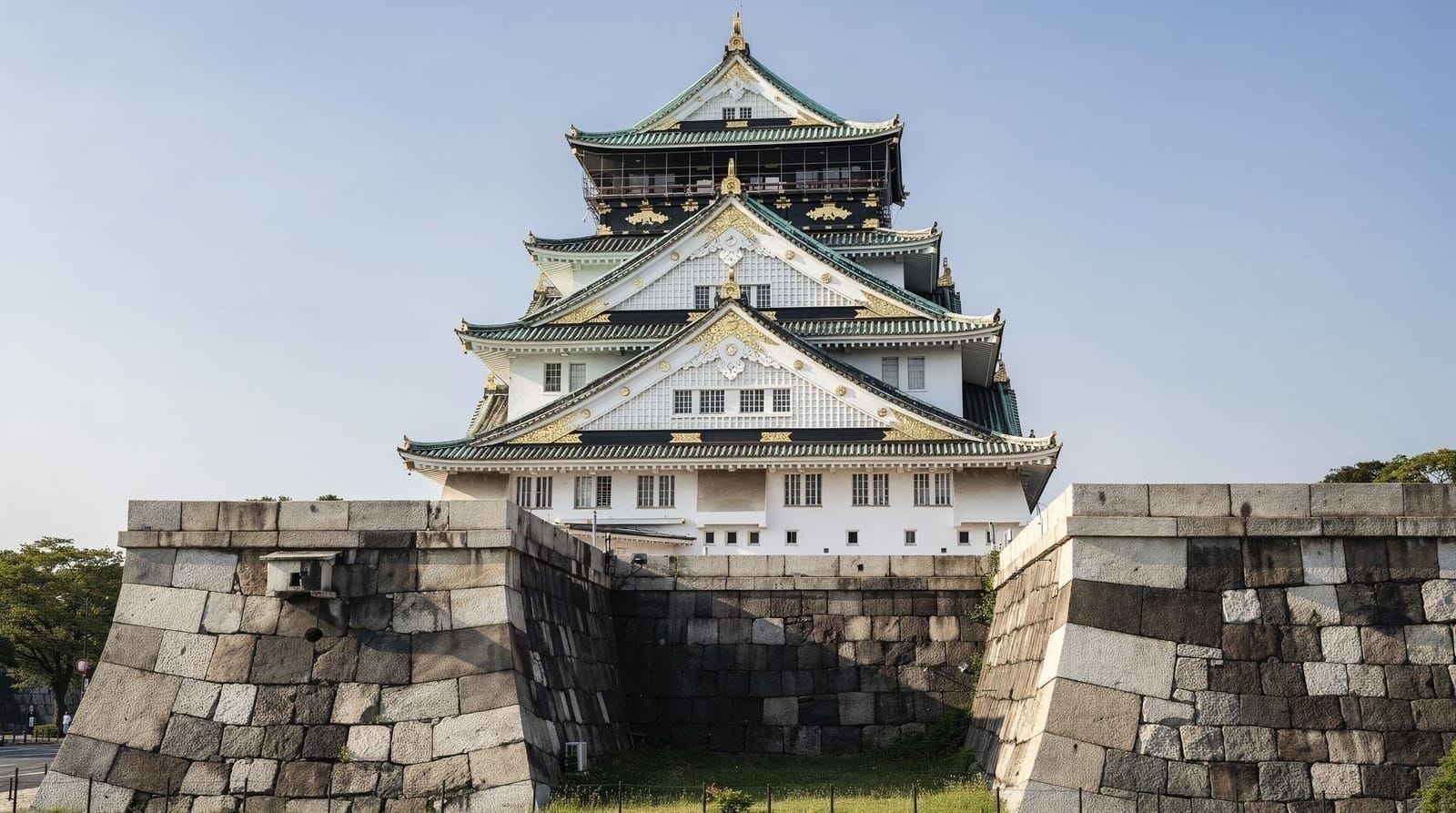
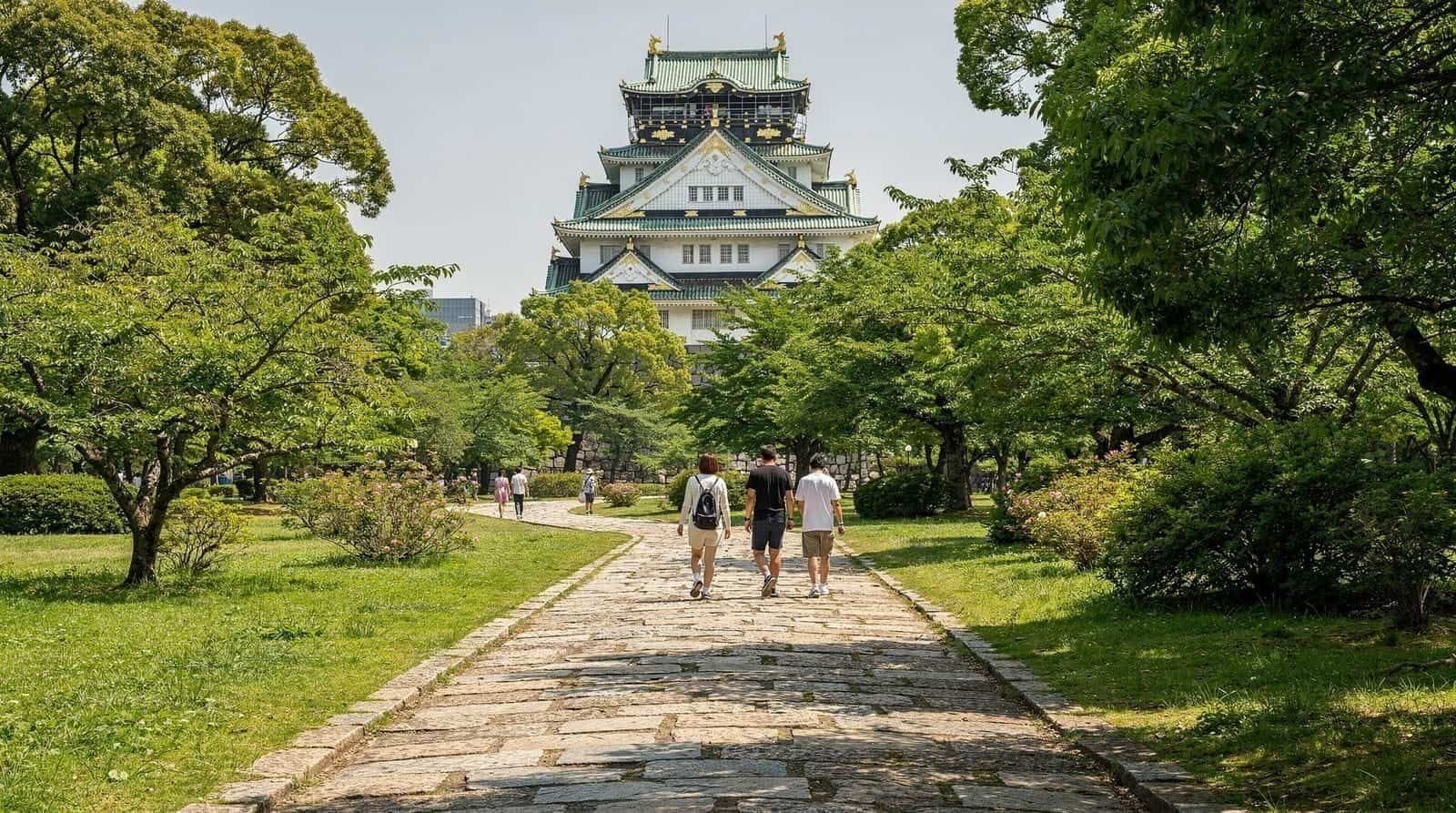
Nijo Castle was built in 1603 as the Kyoto residence of the Tokugawa shogunate, and its Ninomaru Palace is famous for “nightingale floors” — floorboards deliberately built with metal fittings that chirp underfoot, a low-tech security measure meant to alert guards to intruders. General grounds admission runs around ¥800, with an additional fee (bringing the combined total to roughly ¥1,300, or about $12) to enter the Ninomaru Palace interior itself, which requires a timed reservation slot at busier periods. The palace interior can’t be photographed, unlike the grounds and gardens, which is worth knowing before planning a visit around photography.
The castle’s history is bookended by two pivotal moments in Japanese political history: it was built to display Tokugawa Ieyasu’s authority at the start of the shogunate, and in 1867 the last shogun, Tokugawa Yoshinobu, announced the return of political power to the emperor in this same Ninomaru Palace, effectively ending over 250 years of shogunate rule and setting the stage for the Meiji Restoration.
Walking through the palace’s reception rooms, with their painted sliding doors (fusuma) depicting tigers, pines, and hawks meant to project authority to visiting feudal lords, gives a clearer sense of that history than any single plaque can. The surrounding Ninomaru Garden, designed in the traditional strolling-garden style with a central pond, is included in the general admission and is worth the walk even without paying for the palace interior.
Nijo Castle’s grounds close earlier than most Kyoto sights (last entry typically around 4pm, with the castle itself closing by 5pm), and it’s closed entirely on certain Tuesdays through the year for maintenance — worth checking before building a day’s schedule around it, since it’s less forgiving of a late-afternoon arrival than temples with longer hours.
Nijo Castle and Ninomaru Palace ticket bundles both admission tiers into a single booking, which avoids a second queue at the palace entrance during busy periods.
Nijo Castle 60-minute guided tour is a faster option if the castle is one stop among several planned for the day, covering the nightingale floors and the palace’s political history without the full self-guided pace.
Kyoto Gyoen park itself
Kyoto Gyoen, the public park surrounding the Imperial Palace, is worth treating as more than a walkway to the palace gates. Covering roughly 63 hectares in the heart of the city, it’s the largest green space in central Kyoto, with wide gravel paths, several ponds, and stands of plum and cherry trees that bloom slightly earlier than the rest of the city’s more famous viewing spots, drawing a smaller, more local crowd during blossom season.
Sento Imperial Palace, a separate former retirement residence within the same park grounds, has its own strolling garden open by guided tour reservation and sees a fraction of the visitor numbers of the main palace. Unlike Nijo Castle, entry to both the park and the main Imperial Palace grounds costs nothing, making this the best free option in central Kyoto for a quiet walk between more structured sightseeing stops.
Kyoto Imperial Palace
The Kyoto Imperial Palace, the emperor’s residence until the capital moved to Tokyo in 1868, sits inside the large public park Kyoto Gyoen and has been open to the public without advance reservation since 2016, though booking a free guided tour slot online in advance through the Imperial Household Agency’s website is still recommended in peak season to guarantee entry timing. The palace grounds themselves are free and open daily except Mondays and a few set holidays. Compared to Nijo Castle’s dense historical detail, the Imperial Palace is more about scale and formal garden layout than individual rooms.
Nishiki Market
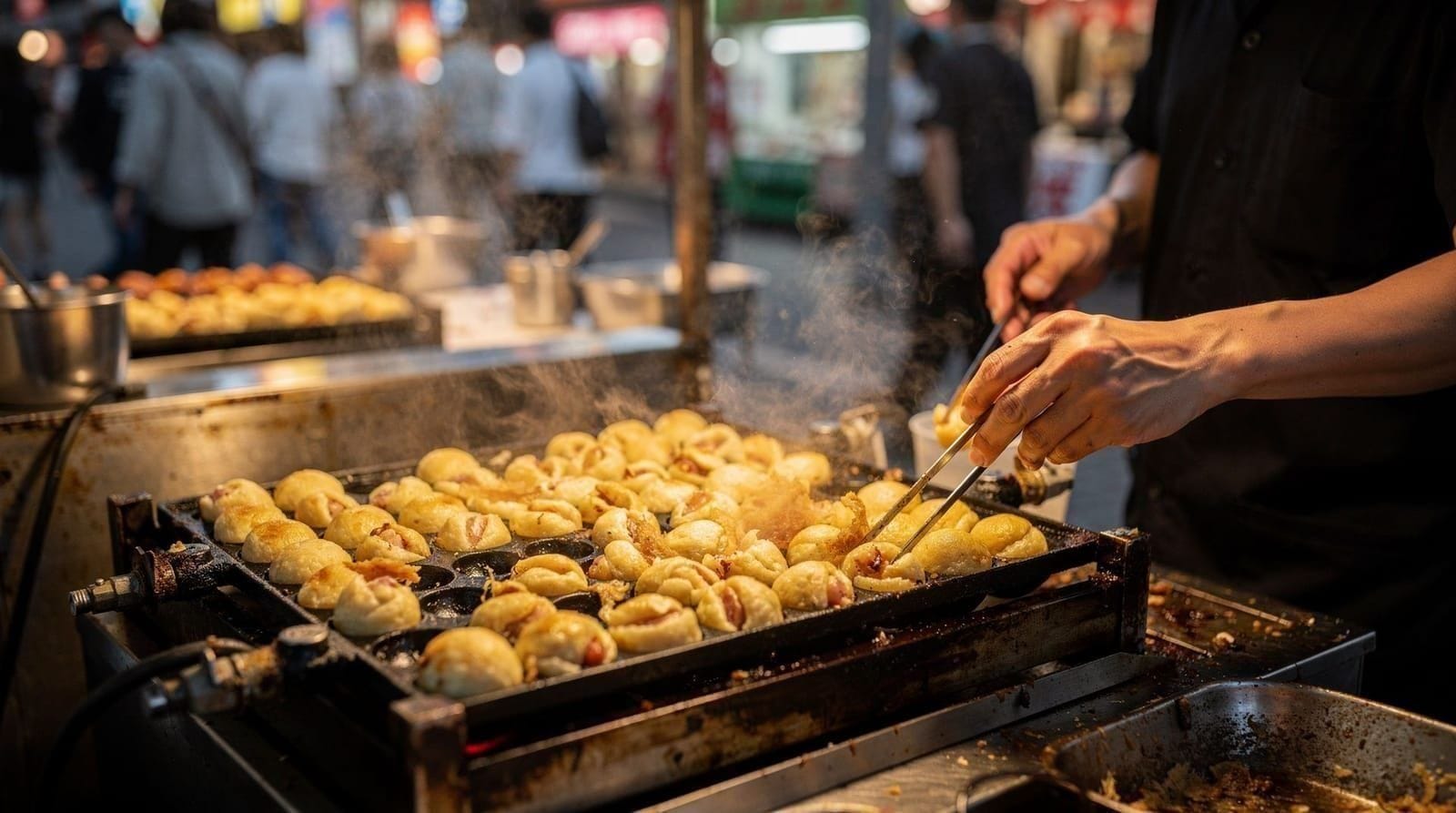
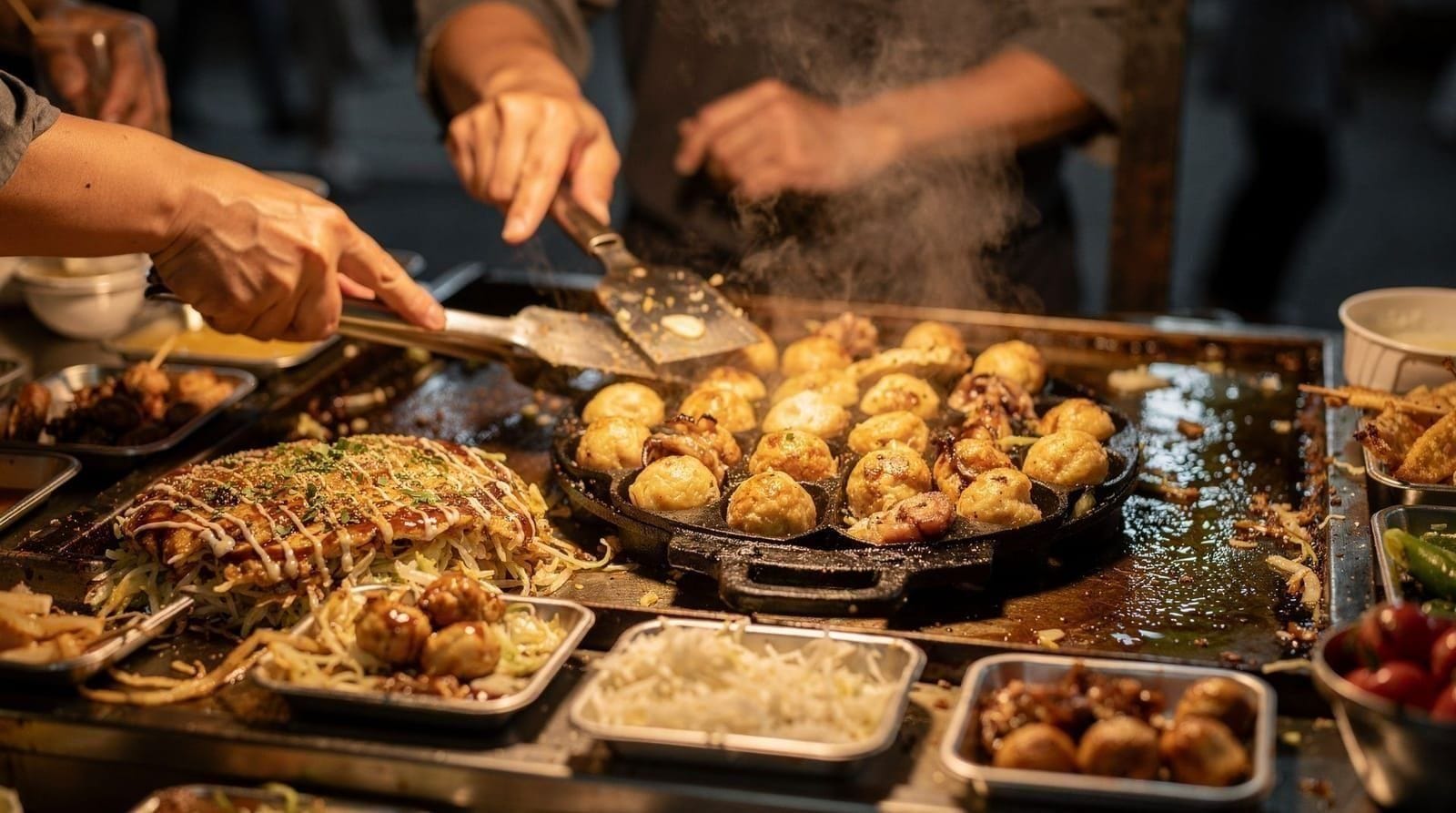
Nishiki Market is a roughly 400-meter covered shopping arcade that’s operated as Kyoto’s produce and food market since the 14th century, earning it the nickname “Kyoto’s kitchen.” Today it’s a mix of working food stalls, souvenir shops, and a handful of restaurants, with individual food items typically running ¥300-800 (~$2.80-$7.40) — skewered octopus, fresh tofu, pickled vegetables, and matcha sweets are the most commonly sampled items while walking through. It’s a narrow arcade, and foot traffic gets genuinely congested by late morning; arriving before 10am on a weekday is the clearest way to actually browse rather than shuffle.
Nishiki Market walking food tour with a local guide adds context on what’s actually being sold at each stall, useful since English signage is inconsistent and some vendors specialize in ingredients unfamiliar to first-time visitors.
Kyoto International Manga Museum
A short walk from Karasuma-Oike Station, the Kyoto International Manga Museum occupies a converted 1929 elementary school building and holds roughly 300,000 manga volumes across its shelves and reading rooms, a mix of historic and contemporary titles spanning the medium’s development in Japan. Entry runs around ¥1,200 (~$11.10), and unlike most museums, visitors are encouraged to actually sit and read rather than just view — the shelved “manga wall” running the length of the building’s main corridor is the museum’s signature image. It’s a reasonable rainy-day option or a break from temple-heavy sightseeing, though most of the collection is in Japanese only, with a smaller English-language section.
Kyoto Tower
Kyoto Tower, the roughly 131-meter red-and-white tower directly opposite Kyoto Station, is the city’s tallest structure and its most debated piece of modern architecture — building height restrictions elsewhere in Kyoto exist partly in reaction to the tower’s construction in 1964, which some residents felt clashed with the city’s historic skyline. The observation deck, around ¥900-1,300 (~$8.30-$12) depending on time slot, gives a wide view over the city and the surrounding mountains, though it’s a modern-city view rather than a temple-and-garden one. It’s a reasonable stop if you have an hour to spare near the station rather than a destination worth planning a day around.
Downtown shopping and dining
Kawaramachi and the Teramachi and Shinkyogoku covered arcades running parallel to it form Kyoto’s main downtown shopping stretch — a mix of department stores, chain retail, and small specialty shops, with prices generally comparable to similar arcades in Osaka. Pontocho, the narrow dining alley along the Kamo River, sits at this district’s eastern edge and is covered in more detail in the Gion and Higashiyama destination page, given its closer ties to that district’s evening atmosphere.
Kyoto insider sake experience with food pairing runs in this part of the city and pairs several sake styles with small dishes over about three hours, a reasonable evening option after a day of sightseeing.
Where to stay
Central Kyoto offers the best balance in the city between walkability, dining options, and access — it’s a short bus or taxi ride from Kyoto Station, walkable to Nishiki Market and Nijo Castle, and closer to Gion in the evening than the station area itself. Prices here sit between the budget options clustered around Kyoto Station and the premium rates commanded by hotels directly inside Gion or Higashiyama.
A practical walking route
Because central Kyoto is genuinely walkable in a way most of the city’s temple districts aren’t, a reasonable half-day route runs Nijo Castle in the morning, a walk south through the Karasuma business district (nothing particularly scenic, but a look at how the city actually functions outside its historic core) to Nishiki Market by late morning, then east to the Kamo River and Pontocho by early evening. The whole route covers roughly 3-4 kilometers, manageable on foot for most visitors, with buses or the Karasuma subway line as a fallback for any leg if the walking adds up.
Practical notes
For a broader look at getting around Kansai on IC cards and rail passes, see the ICOCA card guide and JR Kansai Area Pass guide. Central Kyoto has the best coin locker and public toilet coverage in the city, concentrated around Kyoto Station, Karasuma-Oike Station, and the larger department stores along Kawaramachi — a useful base if you’re storing luggage for a same-day return to Osaka or elsewhere in Kansai.
Free wifi is more reliably available here than in the temple districts, at station areas and inside most department stores and cafes. Unlike Gion or the temple districts further out, this area has no meaningful early-morning crowd advantage, since Nijo Castle and the Imperial Palace both open on fixed schedules regardless of what time visitors arrive — the exception is Nishiki Market, which is genuinely calmer before 10am on weekdays.
Why this district is worth a slower pace
Compared to the temple districts, central Kyoto rarely produces the single striking photograph that Fushimi Inari’s gates or Arashiyama’s bamboo do, which is exactly why it’s easy to underrate on a first visit focused on checking off headline sights. Its value is cumulative rather than singular — a castle with real political history, a market that’s fed the city for centuries, a genuinely walkable layout — and it rewards travelers willing to slow down for an afternoon rather than treat it as a transit corridor between more photogenic districts.
Central Kyoto versus Kyoto’s temple districts
Because central Kyoto rarely produces a single headline photo, it helps to see how it stacks up against Arashiyama, Fushimi, and Gion on the things that actually matter for planning.
| District | Main draw | Weather dependence | Crowd timing |
|---|---|---|---|
| Central Kyoto | Castle, market, downtown dining | Low — mostly indoor/covered | Fairly even, except Nishiki Market before 10am |
| Arashiyama | Bamboo grove, Tenryu-ji | High — outdoor photo stops | Crowded from 10am |
| Fushimi | Torii gate trail | High — outdoor hike | Crowded from 10am |
| Gion & Higashiyama | Kiyomizu-dera, geisha lanes | Moderate — stepped outdoor lanes | Crowded 10am-4pm, calmer evenings |
That low weather-dependence and even crowd pattern is exactly why central Kyoto works well as a rainy-day fallback or a rest day between more crowd-sensitive districts.
A rainy-day or rest-day plan
Because Nijo Castle, the Manga Museum, Nishiki Market’s covered arcade, and most of the downtown shopping streets are indoor or covered, this is the district to default to on a wet day or after a heavier morning of temple-hopping elsewhere. A reasonable sequence: Nijo Castle first (it has the earliest last-entry cutoff of anything covered here), Nishiki Market for lunch, then the Manga Museum or downtown shopping through the afternoon before dinner in Pontocho or Kawaramachi. For the practicalities of moving around on transit passes during a longer Kansai trip, see the Kansai attraction passes guide and the getting around Osaka guide.
Related planning
For the rest of Kyoto’s districts, see the main Kyoto destination page, Fushimi Inari, Arashiyama, and northern Kyoto around Kinkaku-ji. The Nishiki Market guide covers specific stalls in more depth, and the Kyoto day trip itinerary from Osaka shows how central Kyoto fits into a single-day visit alongside the city’s temple districts. If you’re planning a longer regional trip, the best time to visit Osaka guide covers seasonal timing that applies equally to Kyoto.
Frequently asked questions about central Kyoto
How much time do I need for central Kyoto?
A half-day comfortably covers Nijo Castle and Nishiki Market; a full day allows for the Imperial Palace, downtown shopping, and an evening in Pontocho as well.
Is Nijo Castle worth the entry fee?
Yes for most visitors — the combined ¥1,300 ticket covers both the grounds and the Ninomaru Palace’s nightingale floors and painted screens, which carry genuine political history behind them, including the 1867 announcement that ended the shogunate.
Do I need to book the Kyoto Imperial Palace in advance?
No — the palace grounds have been open without advance reservation since 2016, though booking a free guided tour slot online ahead of a peak-season visit still helps guarantee entry timing.
Top experiences
Bookable activities with verified prices and instant confirmation on GetYourGuide.