Gion and Higashiyama
Gion and Higashiyama guide — geisha district etiquette, Kiyomizu-dera, Ninenzaka and Sannenzaka lanes, transport from Osaka, and when to avoid crowds.
Kyoto: Kyoto Gion geisha district walking tour
Duration: 2 hours
Quick facts
- Distance from Osaka
- 45-55 min by train
- Days needed
- Half day to a full day
- Best time to visit
- Early morning or after 5pm
- Kiyomizu-dera entry
- ¥500 (~$4.60)
Gion is Kyoto’s preserved geisha district and Higashiyama the hillside neighborhood next to it, and together they form the most walkable concentration of old Kyoto still standing — wooden machiya townhouses, a UNESCO-adjacent wooden temple on stilts, and narrow stone-paved slopes that have looked roughly the same for centuries. It’s also the part of Kyoto most affected by overtourism, which makes timing the single biggest factor in whether you enjoy it or fight through it.
| Where | Gion-Shijo Station area, eastern Kyoto |
| Cost | Kiyomizu-dera ¥500; Yasaka Shrine and Gion streets free |
| Time needed | Half a day to a full day |
| Getting there | 45-55 min by train from Osaka |
| Best time | Before 9am or after 5pm |
Getting there from Osaka
The most direct route skips Kyoto Station entirely: the Keihan Main Line runs from Yodoyabashi or Kyobashi in Osaka to Gion-Shijo Station in about 50 minutes without a transfer, dropping you a few minutes’ walk from Hanamikoji Street. Alternatively, take the JR Special Rapid from Osaka Station to Kyoto Station (28-29 minutes, around ¥580) and continue by bus or a 15-20 minute walk east. If you’re combining this with Fushimi Inari or central Kyoto the same day, routing through Kyoto Station makes more sense logistically even though it’s the slower option to Gion specifically.
Gion: what it actually is
Gion remains a working geisha district, not a themed attraction — the geiko (Kyoto’s term for geisha) and maiko (apprentices) who walk between appointments in the early evening are working, not performing for photographs. This distinction matters because tourist behavior around Gion has gotten bad enough that the local council has posted no-photography restrictions on some private alleys, with fines for violations.
Hanamikoji Street is the district’s main spine, lined with ochaya (teahouses) that operate by introduction only — you can’t walk in off the street. What you can do is book a proper guided walking tour, which explains the geiko/maiko apprenticeship system, the different kimono styles that distinguish rank, and the actual etiquette expected of visitors.
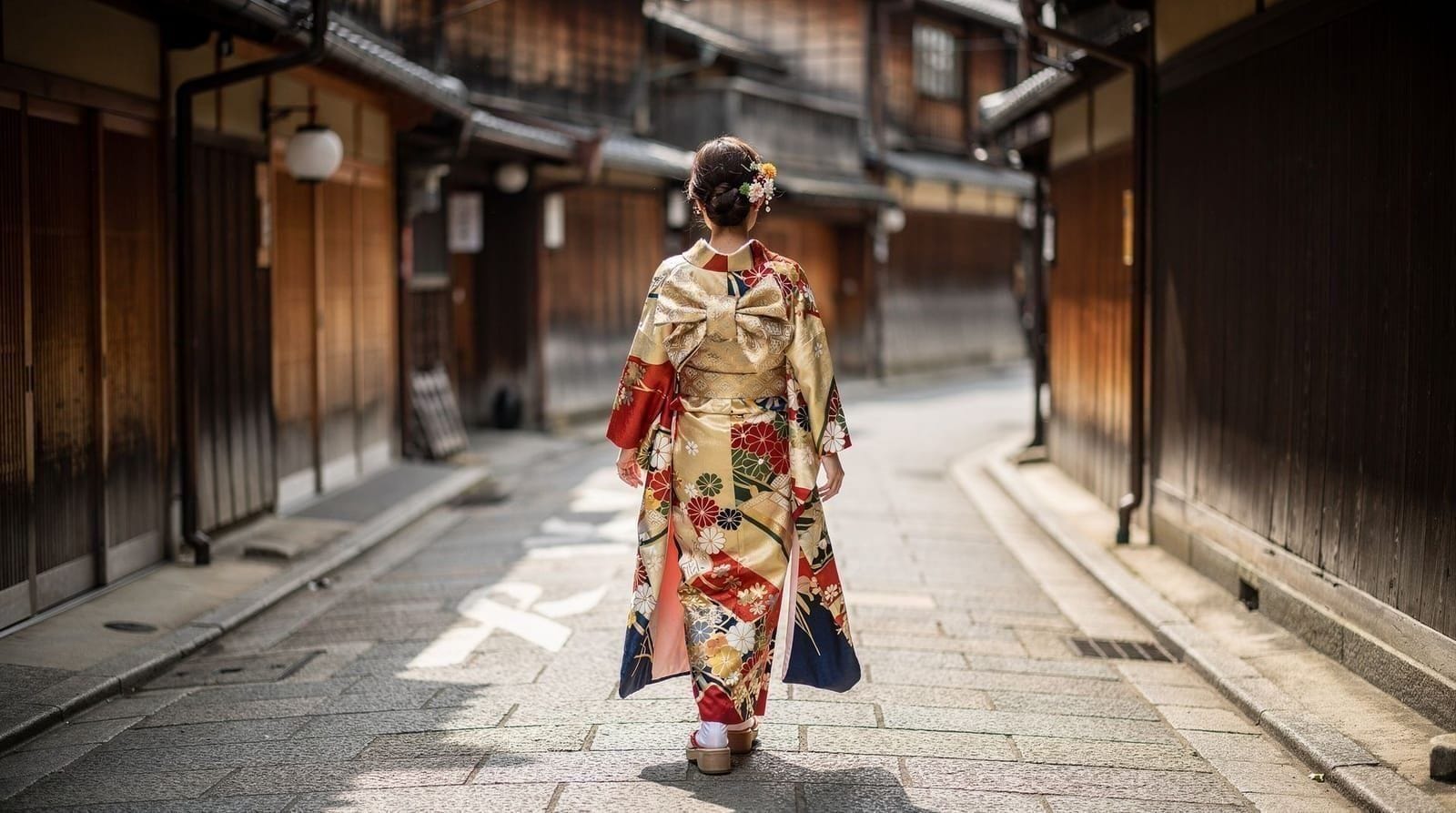
Gion geisha district walking tour covers this history at street level with a guide who can point out the visual cues (hairstyle, obi style, footwear) that distinguish a maiko from a geiko, which is nearly impossible to pick up from a guidebook.
Higashiyama and Kiyomizu-dera
Kiyomizu-dera is Higashiyama’s anchor sight: a wooden temple built in 778 (rebuilt in its current form in 1633) whose main hall extends off the hillside on a wooden stage supported by 139 pillars, without a single nail. The stage gave rise to the Japanese expression “jumping off the stage at Kiyomizu,” a rough equivalent of “taking the plunge,” referencing a now-banned Edo-period practice of leaping off in hopes of a wish being granted.
Entry is currently around ¥500 (~$4.60). The temple connects to Gion via two sloped pedestrian streets, Ninenzaka and Sannenzaka, lined with traditional shops, teahouses, and a stretch that features in more Kyoto postcards than almost anywhere else in the city — which is precisely why it’s jammed with tour groups from roughly 10am to 4pm.
Kiyomizu-dera, Higashiyama, and Yasaka Shrine tour links the temple to nearby Yasaka Shrine (Gion’s guardian shrine, founded over a thousand years ago and free to enter) in a single guided route.
Yasaka Shrine and Maruyama Park
Yasaka Shrine sits at Gion’s eastern edge, marking the boundary between the flat entertainment district and the Higashiyama hillside. Founded over a thousand years ago, it’s free to enter and stays open around the clock, with a vermilion main gate that’s become one of Gion’s most-photographed spots in its own right, separate from the geisha district’s alleys.
Directly behind the shrine, Maruyama Park is Kyoto’s oldest public park and its most popular hanami (cherry blossom viewing) spot, centered on a large weeping cherry tree that’s illuminated at night during the bloom. Outside cherry blossom season, the park is a quieter, shaded walking route between Yasaka Shrine and the temples further up the hillside, including Chion-in, headquarters of the Jodo-shu Buddhist sect and home to one of Japan’s largest temple gates.
Etiquette specifics worth knowing before you go
Beyond the general no-photography rules on some private Gion alleys, a few practical points matter here specifically. Ochaya (teahouses) and most machiya interiors are not open to walk-in visitors regardless of how inviting the entrance looks — treat any door without a posted sign as private.
If you do encounter a geiko or maiko en route to an appointment, keeping a respectful distance and not blocking the street is the baseline expectation; several widely reported incidents of tourists grabbing kimono sleeves for photos are the direct reason some alleys near Hanamikoji are now off-limits to non-residents after dark. Shoes come off before entering Kiyomizu-dera’s main hall interior and most teahouses, so slip-on footwear saves time at each threshold.
Practical notes and costs
Kiyomizu-dera’s ¥500 entry covers the main hall and stage; the temple grounds themselves (the approach path, pagoda views, and Otowa Waterfall, where visitors queue to drink from one of three streams said to grant health, longevity, or academic success — choosing only one, as tradition holds that taking from all three is considered greedy) are free to walk through even without paying for the hall.
Coin lockers are available near both the Higashiyama bus stop and at Kiyomizu-dera’s base, useful if you’re carrying bags before checking into a hotel elsewhere in the city. The approach streets (Kiyomizu-zaka, Ninenzaka, Sannenzaka) are stepped and cobbled throughout, which is worth knowing if mobility or stroller access is a concern — there’s no flat alternative route between the temple and Gion.
When crowds actually get bad
The Ninenzaka/Sannenzaka slopes and Hanamikoji Street are the two chokepoints in this district. Weekday mornings before 9am are noticeably calmer — shops are still opening, and the day-trip and tour-bus crowd hasn’t arrived yet. The reverse also works: after about 5pm, when day-trippers head back toward the station or Osaka, Gion’s lantern-lit streets empty out and the atmosphere shifts entirely, which is also the time of day maiko are most likely to be seen moving between appointments. Weekends, especially in cherry blossom season (late March-early April) and during Gion Matsuri (all of July, with the main float processions on July 17 and 24), push crowd levels into genuinely uncomfortable territory at any hour.
Historic lanes worth the detour
Beyond Ninenzaka and Sannenzaka, Ishibe-koji is a quieter cobblestone lane near Kodai-ji Temple that sees a fraction of the foot traffic, and the Philosopher’s Path — a canal-side walk connecting Ginkaku-ji (Silver Pavilion) to Nanzen-ji further north — is one of the best cherry blossom viewing spots in the city precisely because it’s a 20-30 minute walk rather than a single photogenic corner. Kodai-ji itself has a rock garden and bamboo grove considerably less crowded than Arashiyama’s, worth knowing about if you’ve already done the Arashiyama bamboo grove and want a second, quieter version.
Kimono rental
Renting a kimono for the day is one of the more popular things to do in this district specifically, since the historic streets provide the visual backdrop, and most rental shops are clustered around Kiyomizu-dera’s approach and near Gion-Shijo Station. A full-day rental with basic styling typically runs ¥4,000-8,000 (~$37-$74), with photoshoot add-ons and higher-end fabric options pushing that higher. Full details, including which shops handle foreign-language bookings, are in the kimono rental guide.
Getting back to Osaka or elsewhere in Kyoto
From Gion-Shijo Station, the Keihan line runs back to Yodoyabashi or Kyobashi in Osaka in about 50 minutes, no transfer needed. If you’re continuing to another district the same day — Fushimi Inari is a straightforward continuation south on the same Keihan line, while central Kyoto or Kyoto Station require a short walk or bus connection instead.
Food in the area
Pontocho, a narrow alley running parallel to the Kamo River just west of Gion, is Kyoto’s other classic dining strip — traditional restaurants with riverside seating platforms (yuka) open in summer, ranging from affordable yakitori to serious kaiseki. It’s a five-minute walk from Gion-Shijo Station, making it a natural dinner stop after an afternoon in Higashiyama.
Where to stay
Staying inside Gion or Higashiyama puts you within walking distance of Kiyomizu-dera and the evening geiko/maiko activity, at a price premium over central Kyoto or the Kyoto Station area. It’s the right call if evening atmosphere matters more to your trip than proximity to the train station for day trips elsewhere in Kansai.
Seasonal notes specific to this district
Maruyama Park’s weeping cherry tree typically peaks in the same late March-early April window as the rest of Kyoto, and the illuminated night viewing draws large crowds that spill into Yasaka Shrine and the lower streets of Gion until late evening.
Autumn foliage (mid-to-late November) is arguably better suited to Higashiyama than to Gion specifically — Kodai-ji’s gardens and the wooded approach to Kiyomizu-dera turn color noticeably, and the temple runs special evening illumination sessions during peak foliage weeks, extending opening hours well past sunset. Summer in this district means the same 28-35°C heat and humidity as the rest of Kansai, made worse on the shadeless stone-paved slopes; an early morning or evening visit avoids both the crowds and the worst of the midday heat.
A practical note on timing your visit
If you only have one window of time in Kyoto for this district, evening (arriving around 4-5pm and staying through dinner) generally beats early morning, since it combines the calmer streets with the chance of seeing geiko or maiko heading to appointments, plus the option of dinner in Pontocho afterward. Early morning is the better choice specifically if Kiyomizu-dera’s temple hall and unobstructed photos of Ninenzaka and Sannenzaka are the priority, since the temple itself closes by early evening (typically around 6pm, earlier in winter) while the streets and shrine stay accessible later.
Related planning
For the rest of Kyoto’s districts, see the main Kyoto destination page, Fushimi Inari and the sake district, the Arashiyama bamboo grove, and northern Kyoto around Kinkaku-ji. If you’re planning a full Kansai trip beyond Kyoto, the 5-day Kansai itinerary covers how this district fits alongside Osaka and Nara. The geisha and Gion guide and the Gion district guide go deeper on etiquette and history than fits here.
Kimono rental near Gion with photoshoot is worth booking ahead in cherry blossom or autumn foliage season, when the popular shops fill up by mid-morning.
Gion and Higashiyama versus Kyoto’s other districts
| District | Best time | Crowd pattern | Signature experience |
|---|---|---|---|
| Gion & Higashiyama | Before 9am or after 5pm | Worst 10am-4pm on Ninenzaka/Sannenzaka | Geisha district history, hillside temple |
| Arashiyama | Before 8am | Worst 10am-4pm | Bamboo grove photography |
| Fushimi | Before 8am or after dark | Worst 10am onward | Torii gate trail |
| Central Kyoto | Any time | Fairly even | Castle, market, downtown |
Gion is the only one of these four with a genuine evening advantage rather than just a morning one — the geiko/maiko sightings and lantern-lit streets after 5pm are a specifically evening experience that Arashiyama and Fushimi don’t really offer.
Building a full day around Gion and Higashiyama
A realistic full-day sequence: Kiyomizu-dera and the Ninenzaka/Sannenzaka slopes first thing (before 9am, ideally arriving right at opening), then Yasaka Shrine and Maruyama Park by mid-morning before the day-trip crowds peak, a break for lunch in central Kyoto or Pontocho, then back to Gion in the late afternoon for Hanamikoji Street and dinner as the geiko/maiko activity picks up. This front-loads the temple side of the district (which benefits most from an early arrival) and saves the geisha-district atmosphere for when it’s actually at its best. For a shorter version, the historic Higashiyama walking route guide lays out a tighter half-day version of the same idea.
Frequently asked questions about Gion and Higashiyama
What is the best time to visit Gion to avoid crowds?
Before 9am or after 5pm. The Ninenzaka and Sannenzaka slopes and Hanamikoji Street are consistently crowded from roughly 10am to 4pm, worse on weekends and during cherry blossom season or Gion Matsuri in July.
Can I take photos of geisha in Gion?
Only from a respectful distance and never by blocking the street or grabbing at kimono. Some private alleys near Hanamikoji now carry no-photography rules with fines, a direct response to past tourist behavior.
How much does it cost to enter Kiyomizu-dera?
Around ¥500 (~$4.60) for the main hall and stage. The approach path, pagoda views, and Otowa Waterfall are free to walk through without paying the hall entry.
Is Gion worth visiting if I only have half a day in Kyoto?
Yes, if timed well — an early morning covering Kiyomizu-dera and the sloped lanes, or a late afternoon into evening for Gion’s atmosphere, both work as a half-day visit without needing the full day.
Top experiences
Bookable activities with verified prices and instant confirmation on GetYourGuide.