Gion district guide
Kyoto: Kyoto Gion geisha district walking tour
Duration: 2 hours
What is Gion and can tourists actually experience geisha culture there?
Gion is Kyoto's preserved geisha district, still functioning as a working entertainment quarter rather than a themed attraction — geiko (Kyoto's term for geisha) and maiko (apprentices) walk between appointments in the early evening, but ochaya (teahouses) operate by introduction only and can't be walked into. A guided walking tour or a booked cultural experience (kimono, tea ceremony, a scheduled geisha performance) is the realistic way to engage with the culture respectfully.
Gion is the part of Kyoto most photographed and least understood by first-time visitors — a preserved historic district that reads, at a glance, like a themed attraction but functions, underneath the tourist foot traffic, as a genuine working entertainment quarter with centuries of continuous practice behind it. Understanding the actual system — who geiko and maiko are, how teahouses operate, and why certain streets now carry photography restrictions — makes the difference between a respectful visit and one that (unintentionally) contributes to the exact behavior that’s strained the district’s relationship with tourism in recent years.
| Where | Central Kyoto, east bank of the Kamo River, adjacent to Higashiyama |
| Best time | Early evening (5-7pm) for a chance of seeing geiko/maiko; weekday mornings for calm |
| Getting there | Keihan Main Line from Osaka to Gion-Shijo (~50 min) or JR to Kyoto Station + bus/walk |
| Cost | Free to walk; kimono rental around ¥4,000-8,000 (~$37-74); tours from around ¥5,000-10,000 |
| Booking | Not needed to walk the district; book ahead for cultural experiences and kimono rental |
| Nearby | Higashiyama temples, Kiyomizu-dera, Yasaka Shrine, Shirakawa Canal |
| Pairs well with | Higashiyama walk, Nishiki Market lunch, or an evening Dotonbori contrast in Osaka |
Why Gion draws such intense visitor interest
Gion’s pull on visitor imagination is worth understanding briefly before diving into the practical detail below, since it explains both the district’s appeal and the tension around overtourism covered later in this guide.
Geiko and maiko represent one of the last living, continuously practiced traditional arts in Japan operating largely outside modern commercial packaging — unlike many cultural experiences that have been adapted specifically for tourist consumption, the geiko/maiko system exists first and foremost to serve its traditional client base of introduced guests, with visitor curiosity a secondary, sometimes uncomfortable byproduct rather than the point of the institution. This distinction — a living culture that visitors are permitted to glimpse respectfully, rather than a show staged for them — is the single most important frame for understanding everything else in this guide.
Geiko and maiko: what the terms actually mean
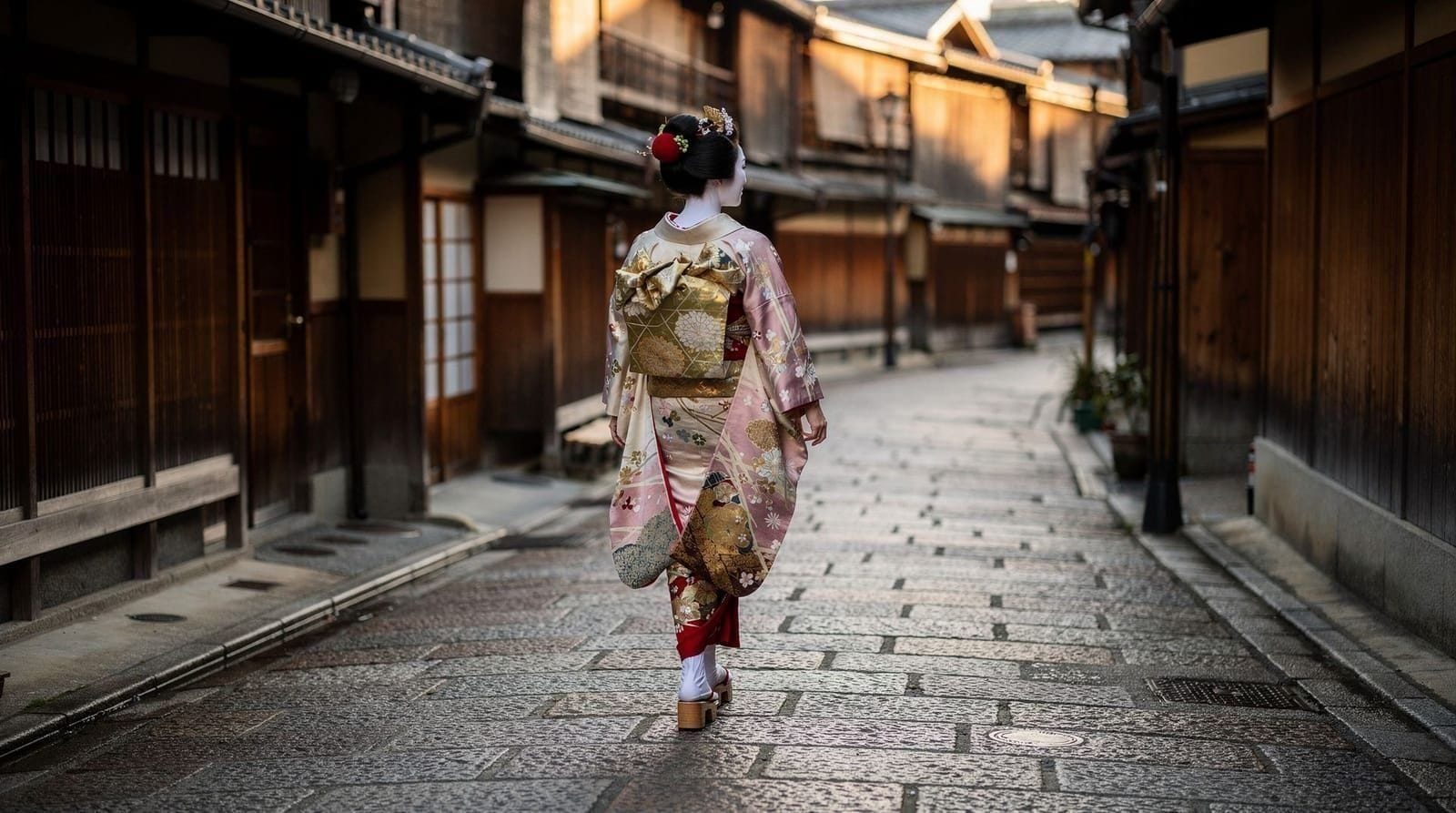
Geiko is the Kyoto-specific term for what’s more widely known outside the region as geisha — a professional entertainer trained in traditional music, dance, and conversation, who performs at private engagements rather than for casual passersby. Maiko are apprentice geiko, typically training from their mid-teens through their early twenties, distinguishable by more elaborate hairstyles (their own hair, rather than the wig a fully qualified geiko wears), longer and more colorful obi sashes trailing near the ground, and taller, more ornate footwear.
The apprenticeship system is genuinely rigorous, involving years of training in shamisen (a traditional stringed instrument), dance, tea ceremony, and the social skills required to host formal engagements — a maiko’s transition to full geiko status, marked by a ceremony called erikae, typically comes after several years of training.
Hanamikoji Street and the ochaya system
Hanamikoji Street is Gion’s main spine, lined with ochaya (teahouses) where geiko and maiko host private engagements — these operate strictly by introduction, meaning a new customer generally can’t book a visit without an existing relationship or a referral from a regular client, a system that’s remained largely unchanged for generations specifically to maintain the exclusivity and trust that formal engagements depend on. Walking Hanamikoji in the early evening, when geiko and maiko move between appointments, gives a visible sense of the district’s continued function, though what you’re seeing is a working commute, not a performance staged for photographs.
Gion geisha district walking tour covers this history at street level with a guide who can point out the visual cues — hairstyle, obi style, footwear — that distinguish a maiko from a geiko, genuinely difficult to pick up without guidance.
Photography rules and why they exist
Some private alleys near Hanamikoji now carry no-photography restrictions with posted fines, a direct response to a well-documented pattern of tourist behavior over the past several years — grabbing kimono sleeves for photos, blocking narrow streets to get a shot, and following geiko or maiko too closely on their way to appointments.
This isn’t a blanket ban across all of Gion, but it reflects a genuine shift in how the local council manages the tension between preserving the district’s living culture and accommodating the volume of visitors it now receives. The practical takeaway: check posted signage on specific alleys, keep a respectful distance from anyone in kimono moving with apparent purpose, and treat any private-looking doorway as exactly that.
Ochaya, machiya, and what’s actually open to visitors
Beyond the private ochaya, Gion’s streets are lined with machiya — traditional wooden townhouses, some converted into shops, restaurants, or small museums open to the public, others still private residences. The general rule: a door with a posted sign, a lit entrance, and visible signage is open to visit; anything without those signals should be treated as private regardless of how inviting the traditional architecture looks from outside. A handful of former ochaya have been converted into restaurants or cultural experience venues open to bookings, offering a legitimate, structured way to see a teahouse interior without needing an existing introduction.
Booked cultural experiences: the realistic way in
For visitors who want more direct engagement with geiko/maiko culture than a street-level walk provides, several structured, bookable experiences exist specifically for this purpose — a scheduled show featuring maiko performing traditional dance, a game demonstration, or a hosted tea session, run through venues set up to receive first-time visitors rather than requiring an existing ochaya relationship.
Gion walking tour with geisha show and traditional game combines the district walk with a scheduled performance, a practical way to see maiko perform in a legitimate, respectful setting rather than attempting to photograph one on the street. World of geisha walking tour goes deeper into the history and social structure of the geiko/maiko system for visitors specifically interested in the cultural context beyond a single evening performance.
Shirakawa Canal: a quieter photogenic stretch
A short walk from Hanamikoji, the Shirakawa Canal’s willow-lined stretch, with traditional wooden buildings backing directly onto the narrow waterway, offers a quieter, less crowded photo opportunity than the main Gion streets, particularly appealing in the early morning before shops open.
This stretch retains much of the same architectural character as Hanamikoji without carrying the same photography restrictions, since it’s a more general public thoroughfare rather than one of the specific private alleys where geiko and maiko frequently pass on their way to appointments — a reasonable alternative stop for photography-focused visitors who want the Gion aesthetic without navigating the more sensitive etiquette considerations of the district’s most restricted alleys.
Yasaka Shrine and Maruyama Park
Yasaka Shrine, at Gion’s eastern edge, is the district’s guardian shrine, founded over a thousand years ago, free to enter, and open around the clock, with a vermilion main gate that’s one of the area’s most photographed spots in its own right, separate from the private alleys covered above. Directly behind it, Maruyama Park — Kyoto’s oldest public park — centers on a large weeping cherry tree illuminated at night during bloom season, and functions as a genuinely public, unrestricted space in contrast to the more sensitive residential alleys nearby.
What to wear when visiting Gion (without renting a kimono)
Even without renting a kimono, Gion’s traditional atmosphere is worth dressing modestly and comfortably for — smart-casual clothing and flat, comfortable walking shoes suit the district’s cobbled streets better than heels or sandals, and overly casual beachwear or athletic gear tends to feel visibly out of place against the historic wooden architecture, even though no formal dress code is enforced. This is less a hard rule than a matter of matching the district’s atmosphere, similar to how one might naturally dress a notch more carefully for a historic old-town district anywhere in the world.
Kimono rental: a respectful way to engage with the aesthetic
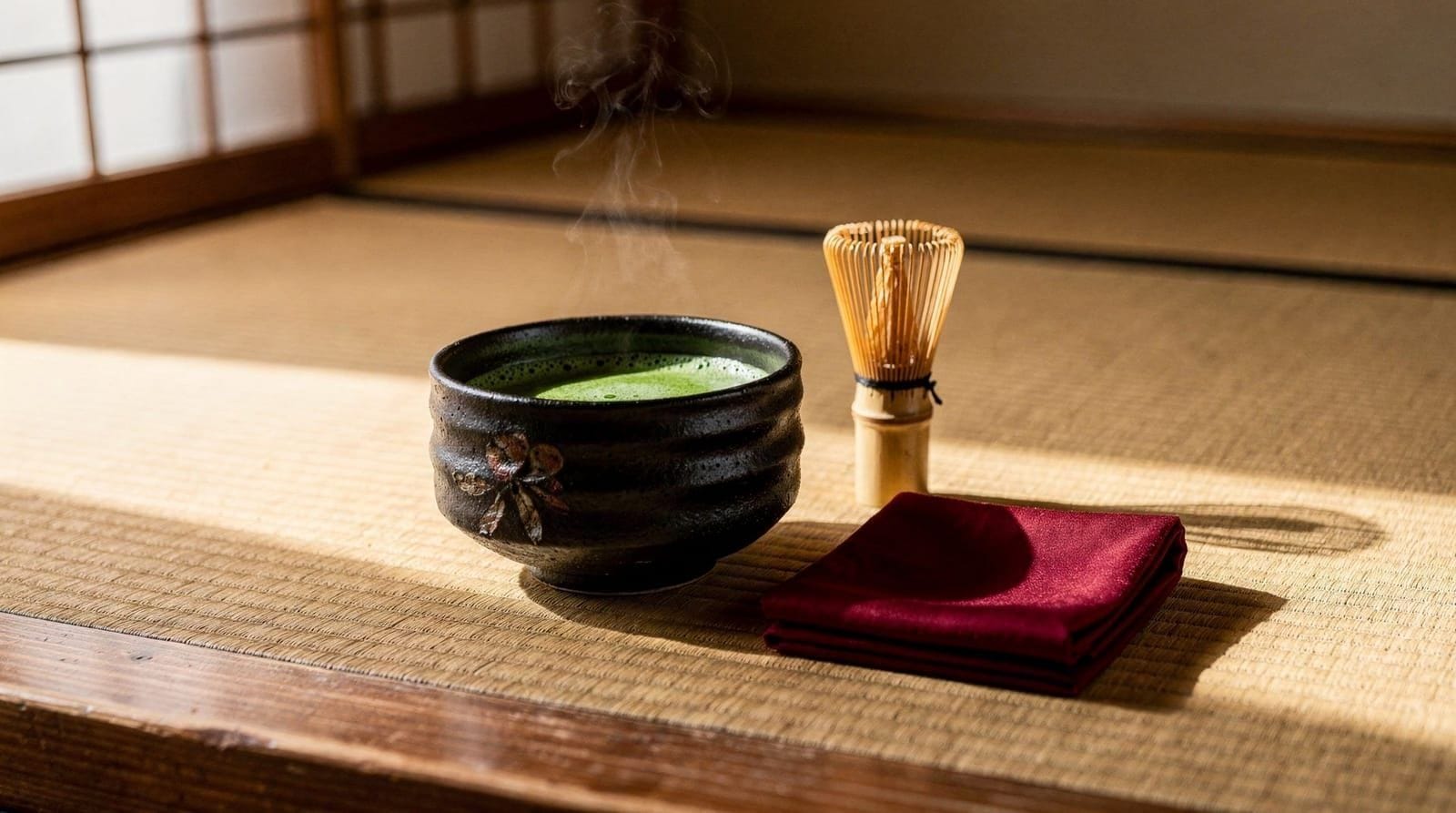
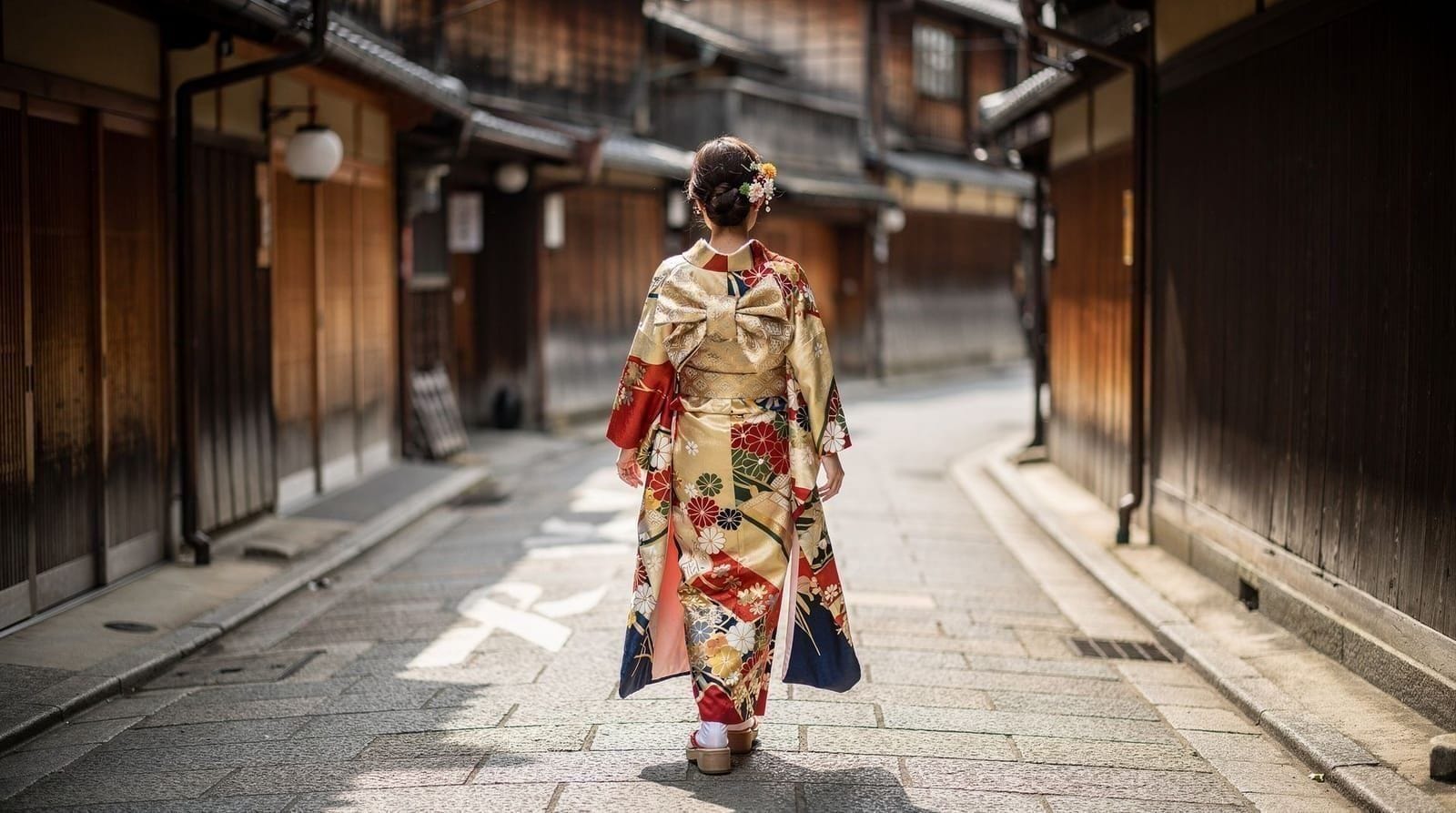
Renting a kimono for the day is one of the more popular ways visitors engage with Gion’s historic atmosphere, and it’s a legitimate, respectful practice distinct from photographing working geiko or maiko — most rental shops cluster around Gion-Shijo Station and the approach to Kiyomizu-dera, with a full-day rental including basic styling running roughly ¥4,000-8,000 (~$37-74).
Gion maiko cultural walking tour pairs a guided walk with kimono-adjacent cultural context, a reasonable option for visitors who want to combine the historical explanation with the visual experience of the district in traditional dress themselves, rather than attempting to photograph someone else’s.
Gion Matsuri: the district’s biggest annual event
Gion Matsuri, held throughout July with its main float processions on July 17 and 24, is one of Japan’s largest and oldest festivals, dating back over a thousand years to a purification ritual intended to ward off plague. The festival transforms Gion and central Kyoto into a genuinely different scene — elaborately decorated yamaboko floats, food stalls, and crowds far beyond the district’s usual foot traffic, worth experiencing at least once but requiring a different set of crowd-management expectations than a normal visit.
When to visit for the calmest experience
Weekday mornings before 9am are noticeably calmer in Gion — shops are still opening, and the day-trip and tour-bus crowd hasn’t arrived. Evening (after about 5pm), when day-trippers head back toward the station, brings a different kind of calm along with the best chance of seeing geiko or maiko moving between appointments — generally the better window if witnessing the district’s living culture, rather than photographing empty streets, is the priority.
Language and interacting with staff in Gion
English is inconsistently available in Gion, more so at venues and shops set up specifically to receive foreign visitors (kimono rental shops, structured cultural experience venues) and considerably less so at traditional restaurants and any genuine ochaya, which don’t generally cater to tourists at all. A few polite Japanese phrases — sumimasen (excuse me), arigatou gozaimasu (thank you) — go further here than in more internationally oriented parts of Kyoto, partly because Gion’s traditional businesses have less daily exposure to English-speaking customers than, say, central Kyoto’s shopping district.
Etiquette summary
Beyond the photography restrictions on specific alleys, the core etiquette points are straightforward: don’t approach or touch anyone in kimono, don’t block narrow streets for a photo, treat unmarked doors as private, and keep conversation and noise at a level appropriate to a residential district rather than a tourist attraction. None of this requires special preparation — it’s the same baseline courtesy expected in any lived-in neighborhood, just one that happens to also be visually striking enough to draw crowds.
Weather and seasonal visiting notes
Gion’s narrow streets and traditional wooden architecture offer little shelter from rain, and the stone paving on some approach streets becomes slippery when wet, worth factoring into footwear choices during Kyoto’s rainy season (mid-June to mid-July). Summer heat (28-35°C, June-August) makes an evening visit considerably more comfortable than a midday one, coinciding conveniently with the better window for spotting geiko and maiko discussed above. Winter, while colder, sees Gion’s crowds thin out noticeably compared to spring and autumn peaks, making it a genuinely underrated season for a calmer visit if the cherry blossoms or autumn foliage aren’t a specific priority.
Getting to Gion and connecting onward
The Keihan Main Line runs from Yodoyabashi or Kyobashi in Osaka to Gion-Shijo Station in about 50 minutes without a transfer. Alternatively, JR Special Rapid from Osaka Station to Kyoto Station (28-29 minutes) connects via a 15-20 minute bus or walk east. Gion sits directly adjacent to Higashiyama’s temple district — our Higashiyama walking route lays out a full step-by-step path from Kiyomizu-dera down into Gion, and the Gion and Higashiyama destination guide covers the wider district’s food and lodging options.
Comparing Gion to Osaka’s nightlife culture
Gion’s quiet, tradition-bound evening atmosphere is a useful contrast to Osaka’s louder, more casual nightlife scene — both are legitimate, very different expressions of Kansai’s evening culture, and visitors splitting time between the two cities often find the contrast itself instructive about how differently Kyoto and Osaka approach the same time of day. Our Kansai versus Tokyo culture guide touches on this same theme from a broader regional angle.
The history of Gion as a licensed entertainment district
Gion’s origins trace to the 17th century, when teahouses began serving travelers and worshippers visiting nearby Yasaka Shrine, gradually evolving into a licensed pleasure and entertainment district over the following century as Kyoto’s merchant and samurai classes sought sophisticated venues for entertaining. The geiko/maiko system as it exists today formalized during this period, developing its own internal hierarchy, training structures, and the exclusive introduction-based ochaya system that persists largely unchanged into the present.
Gion survived Japan’s modernization in the Meiji era (from 1868) and the widespread destruction of World War II relatively intact compared to many historic Japanese urban districts, which is part of why it remains one of the country’s most architecturally coherent examples of a traditional entertainment quarter rather than a modern reconstruction.
The five hanamachi of Kyoto
Gion is the best known but not the only hanamachi (“flower town,” the traditional term for a geisha district) in Kyoto — the city recognizes five historic hanamachi in total: Gion Kobu (the largest and most visited, covered throughout this guide), Gion Higashi (a smaller, adjacent district), Pontocho (along the Kamo River, covered in our Gion and Higashiyama destination guide), Miyagawa-cho, and Kamishichiken (Kyoto’s oldest hanamachi, located near Kitano Tenmangu Shrine, north of the districts covered in this guide).
Each maintains its own distinct geiko and maiko, training traditions, and annual public dance performances (odori), and visitors specifically interested in this culture beyond Gion Kobu’s main tourist path may find Kamishichiken or Miyagawa-cho worth researching separately, given their comparatively lower tourist volume.
Annual public dance performances (odori)
Each hanamachi holds an annual public dance performance showcasing its geiko and maiko’s training in traditional dance, music, and stagecraft — Gion’s version, the Miyako Odori, has run each spring since 1872 and remains one of the most accessible, structured ways for visitors to see geiko and maiko perform without needing an ochaya introduction, since tickets are sold publicly rather than through private booking channels. These performances run for a set period each year (typically April for Miyako Odori) and represent one of the only times outside a paid, structured experience that the general public can watch a full geiko/maiko performance directly, making them worth specifically checking dates for if a trip’s timing allows.
Kiyomizu-dera and the walk into Gion
Many visitors arrive in Gion on foot from Kiyomizu-dera, Kyoto’s famous hillside temple a 15-20 minute walk to the southeast. Our Kiyomizu-dera guide covers the temple itself and the approach streets (Sannenzaka and Ninenzaka), which feed naturally into Gion’s northern edge near Yasaka Shrine — a logical single-afternoon combination rather than two separate trips, since the walk between them passes through some of Higashiyama’s most photogenic preserved streetscape.
Food and tea near Gion
Gion itself has relatively few casual restaurants open to walk-in visitors, since much of its dining is bound up in the introduction-only ochaya system described above. For a more accessible food experience nearby, Nishiki Market — Kyoto’s “kitchen,” a covered arcade of food stalls and small shops — sits about 20 minutes on foot or a short taxi ride northwest, and pairs well with a Gion visit as a lunch or snack stop before or after the district walk. Traditional sweet shops and matcha cafés are scattered through Gion’s side streets, generally easier to identify by a simple posted menu than the private ochaya are.
Gion versus Arashiyama for a different Kyoto mood
Visitors splitting a Kyoto day between two districts often pair Gion with Arashiyama, on the opposite side of the city — where Gion’s atmosphere is urban, historic, and tied to the geiko/maiko system, Arashiyama’s is river-and-bamboo-forest scenery with a more nature-focused pace. Our Arashiyama bamboo grove guide covers that side of Kyoto in detail; the two districts sit far enough apart (about 40-50 minutes by train or bus) that combining them in a single day is possible but tight, and most visitors find splitting them across two mornings or afternoons more comfortable.
Frequently asked questions about the Gion district
Can I take photos of geiko and maiko in Gion?
Some private alleys near Hanamikoji now restrict photography with posted fines, a response to past incidents of tourists blocking streets or grabbing kimono sleeves. Check posted signage, keep a respectful distance, and never approach someone in kimono directly for a photo.
Can I visit an ochaya (teahouse) as a first-time visitor?
Not directly — ochaya operate by introduction only. Booked cultural experiences (a scheduled maiko performance, a hosted tea session) at venues set up to receive visitors are the realistic alternative.
What’s the difference between a geiko and a maiko?
Maiko are apprentices, typically training from their mid-teens into their early twenties, identifiable by their own styled hair, longer trailing obi sashes, and taller footwear. Geiko are the fully qualified professionals, wearing a wig and simpler, more subdued styling.
When is the best time to see geiko or maiko in Gion?
Early evening, roughly 5-7pm, when they’re most likely to be moving between appointments. Mornings and daytime hours are calmer for sightseeing but far less likely to include any sightings.
Is Gion worth visiting outside of Gion Matsuri?
Yes — Gion Matsuri (all of July, with main processions on July 17 and 24) is a major event worth experiencing, but the district’s everyday atmosphere, particularly in the early evening, is the more typical and arguably more revealing way to see how it actually functions.
Is it rude to wander into Gion’s back alleys out of curiosity?
Treat any narrow, quiet alley off the main streets as private residential space rather than a photo backdrop, even where there’s no posted sign. Many of these alleys back directly onto ochaya and private homes, and quietly walking through without lingering, photographing doorways, or raising your voice is the expected standard — the same courtesy you’d extend to any lived-in residential street, just applied a little more carefully given how much foot traffic the district already absorbs.
How does a Gion evening compare to Osaka’s Dotonbori for a first-timer choosing between the two?
They serve different moods on the same trip rather than competing for the same night: Gion is quiet, historic, and best experienced slowly on foot, while Dotonbori is loud, food-driven, and best experienced at speed. Visitors based in Osaka doing a Kyoto day trip often walk Gion in the late afternoon and early evening, then return to Osaka for a Dotonbori dinner — the contrast between the two is part of what makes splitting a Kansai trip between both cities worthwhile.
Top experiences
Bookable activities with verified prices and instant confirmation on GetYourGuide.