Kiyomizu-dera guide
Kyoto: Kyoto Kiyomizu-dera Higashiyama Yasaka tour
Duration: 3 hours
What makes Kiyomizu-dera's wooden stage significant?
Kiyomizu-dera's main hall stage juts 13 meters over the hillside, supported entirely by wooden pillars joined without a single nail, using an interlocking joinery technique. Admission is ¥400 (about $3.70), and the temple sits at the top of the Ninenzaka and Sannenzaka slopes in Kyoto's Higashiyama district.
A wooden temple stage jutting 13 meters off a hillside, held up entirely by interlocking beams with no nails anywhere in the structure, gave rise to a Japanese expression still used today — “jumping off the stage at Kiyomizu,” roughly equivalent to “taking the plunge,” referencing an Edo-period belief that surviving a leap from the stage would grant a wish. Kiyomizu-dera earns its reputation honestly: the engineering is genuinely impressive up close, the view over Kyoto from the stage is one of the city’s best, and the temple anchors the most atmospheric stretch of the Higashiyama district.
| Where | Top of Ninenzaka/Sannenzaka, Higashiyama |
| Cost | ¥400 (about $3.70) |
| Time needed | 45 min-1.5 hours with the slope streets |
| Hours | 6am-6pm (later in summer) |
| Best time | At opening (6am) or after 5pm |
The stage and how it was actually built
The main hall’s stage uses a technique called kake-zukuri, in which wooden pillars — some nearly 18 meters tall, made from zelkova trees — support the platform through interlocking joinery rather than nails or metal brackets. The current structure dates to a 1633 reconstruction under shogun Tokugawa Iemitsu, following one of several fires that destroyed earlier versions of the temple across its history (Kiyomizu-dera’s founding dates to 778, though almost nothing from that original period survives).
The stage was built this way partly out of structural necessity on the steep hillside site and partly as a demonstration of carpentry skill, and it remains one of the most photographed examples of traditional Japanese wooden joinery still standing.
Admission and hours
Entry costs ¥400 (about $3.70) for adults, paid at the gate near the temple’s approach. The grounds open at 6am and close at 6pm for most of the year, extending slightly later in summer, and the temple occasionally holds special evening illumination events during spring cherry blossom season and autumn foliage season, when the grounds stay open after dark on specific announced dates — worth checking if travel timing lines up, since the lit-up stage and hillside at night is a genuinely different sight from the daytime view.
Kiyomizu-dera, Higashiyama, and Yasaka guided tour covers the stage’s construction technique and the temple’s repeated fire-and-rebuild history in more depth than the posted signage.
The Otowa waterfall
Below the main hall, three separate streams fall from the Otowa spring (the temple’s name, Kiyomizu-dera, translates to “pure water temple,” referencing this spring directly). Each stream is said to grant a different benefit — longevity, success in love, and wisdom — and visitors queue with long-handled cups to drink from one. Local tradition holds that trying to drink from all three at once is considered greedy and undermines the wish; choosing a single stream is the accepted approach.
Jishu Shrine and the love stones
A short walk from the main hall sits Jishu Shrine, a smaller Shinto shrine dedicated to a deity of love and matchmaking, popular with visitors testing its two “love stones,” positioned about 18 meters apart. Tradition holds that walking between them with eyes closed, without veering off course, predicts success in love — a lighthearted stop that draws a steady stream of visitors regardless of the shrine’s more serious devotional purpose for locals.
Approaching through Ninenzaka and Sannenzaka
Kiyomizu-dera is reached via the Ninenzaka and Sannenzaka slope streets, two preserved stretches of traditional wooden shops and teahouses climbing the Higashiyama hillside. These streets are genuinely beautiful in early morning light or after 5pm, when shop lanterns come on and foot traffic thins, and genuinely crowded at midday in peak season, when the narrow stone-paved slopes can bottleneck with tour groups moving in both directions. The streets themselves have no admission fee and are worth allocating separate time to browse rather than treating purely as a corridor to the temple.
Kiyomizu temple and Gion backstreet private tour combines the temple visit with the quieter backstreets connecting toward Gion, useful for avoiding the most congested sections of Ninenzaka on a guided route.
Crowd timing
The temple opens at 6am, and arriving at or shortly after opening is the single most effective way to see both the stage and the approach streets without crowds — by mid-morning, tour buses have arrived and the slope streets fill in earnest. Late afternoon, after 5pm, offers a second calmer window as day-trippers head back toward the station, with the added benefit of softer light for photos of the stage and hillside.
Tea and food along the way
Several traditional teahouses sit within a short walk of the temple, including options serving tea ceremony experiences specifically framed around the Kiyomizu setting.
Tea ceremony in a traditional teahouse near Kiyomizu is a reasonable way to build in a slower, seated cultural stop after the temple visit and slope-street walking, and pairs well with the fuller tea ceremony guide for context on etiquette before attending.
Connecting to Gion and the rest of Higashiyama
Kiyomizu-dera sits at the southern end of the Higashiyama district, connected by the slope streets down toward Gion, Yasaka Shrine, and Hanamikoji, making it natural to treat the temple as the start or end point of a longer Higashiyama walk rather than an isolated stop. Visitors interested in the geisha district specifically should note that the quiet backstreets near Kiyomizu connect directly into Gion’s private alleys, covered in more depth in the Gion and geisha district guide.
Historic Higashiyama walking tour extends the Kiyomizu visit into a fuller walk through the district’s temples, shrines, and preserved streets.
The temple’s founding legend
Kiyomizu-dera’s origin story involves a monk named Enchin who, according to temple tradition, followed a vision of a golden stream to its source at the Otowa waterfall in 778, where he met an ascetic hermit who had been practicing austerities at the spring for decades. After the hermit’s departure, Enchin took up the site and later enshrined an image of Kannon, the Buddhist deity of mercy, that remains the temple’s primary object of worship — a legend that directly explains why the Otowa spring, rather than the stage or the main hall, is technically the spiritual origin point of the entire temple complex, even though most visitors experience the stage as the highlight.
Sub-halls and lesser-visited corners
Beyond the main hall and Jishu Shrine, Kiyomizu-dera’s grounds include Okunoin, a smaller secondary hall behind the main structure offering a different, less crowded angle on the stage and valley below, and Koyasu Pagoda, a short uphill walk from the main complex, associated with safe childbirth and rarely visited by the bulk of day-trippers who stop at the main hall and turn back. These quieter corners reward visitors willing to spend an extra 20-30 minutes exploring past the main photo points, particularly valuable during peak-crowd hours when the main stage area is at its most congested.
Night illumination events in detail
During the spring cherry blossom season (typically late March into early April) and the autumn foliage season (mid-to-late November), Kiyomizu-dera holds special evening opening hours on specific announced dates, with the temple grounds, stage, and surrounding hillside lit dramatically after dark.
These events draw significant crowds of their own — arguably comparable to or exceeding daytime peak crowds — but the visual effect of the illuminated stage against a dark hillside, sometimes with a pink or orange-lit haze from spotlights on cherry blossoms or maple leaves, is different enough from the daytime view that many repeat visitors consider it worth the crowd trade-off. Specific dates vary by year and are announced closer to each season, so checking current-year listings before planning around this specifically is advisable.
Budget and combination tickets
Beyond the standard ¥400 main hall admission, some sub-halls and special exhibitions (such as occasional access to normally closed inner areas during specific seasonal events) charge separately, typically an additional ¥300-400. There’s no single combination ticket covering all of Higashiyama’s paid sights, so a day covering Kiyomizu-dera, Yasaka Shrine (free), and any additional sub-temple visits should budget each admission fee individually rather than expecting a bundled discount.
The temple’s religious affiliation and denomination
Kiyomizu-dera belongs to the Hosso school of Japanese Buddhism, one of the country’s oldest Buddhist sects, and operated independently of Kyoto’s larger Tendai and Enryaku-ji religious hierarchy for much of its history — a source of periodic historical tension, including instances of armed conflict between Kiyomizu-dera’s monks and rival temple factions during Japan’s medieval period, when temples sometimes maintained their own armed monk-warriors (sohei) to defend land and influence. Most visitors never encounter this history in the temple’s modern presentation, which focuses overwhelmingly on the stage and its architecture rather than institutional history.
Shopping and souvenirs on the approach
The Ninenzaka and Sannenzaka slope streets leading to Kiyomizu-dera are lined with shops selling Kyoto-specific souvenirs — Kiyomizu-yaki pottery (named for its historical association with this exact neighborhood, where ceramic kilns once operated), yatsuhashi (a cinnamon-and-red-bean folded confection considered a signature Kyoto sweet), and a range of traditional crafts and textiles. Prices skew higher than in less touristed parts of the city given the location, but the density and quality of shops here is genuinely a step above generic souvenir stalls found near less significant sights, making the walk itself a worthwhile part of the visit even independent of the temple.
Combining Kiyomizu-dera with a full Higashiyama day
A logical full-day sequence starts at Kiyomizu-dera near opening (6am), moves down through Ninenzaka and Sannenzaka while the streets are still quiet, continues into Yasaka Shrine and Maruyama Park, and finishes in Gion in the late afternoon and evening once the district’s atmosphere shifts with lantern lighting. This sequencing follows the natural downhill flow of Higashiyama’s geography and avoids backtracking, while also front-loading the day’s most crowd-sensitive stop (Kiyomizu-dera itself) into the calmest available time window.
The view from the stage versus the view of the stage
A detail that surprises some first-time visitors is that the famous postcard image of Kiyomizu-dera — the stage jutting dramatically off the hillside against a backdrop of trees or cherry blossoms — isn’t actually visible from the stage itself, since you’re standing on it rather than looking at it. That external view is best captured from a separate vantage point slightly downhill and to the side, near Okunoin or along the path toward Jishu Shrine, a detail worth knowing for visitors specifically chasing the classic photograph rather than assuming the stage itself offers that angle.
Yasaka Pagoda and the surrounding preserved streets
A short walk downhill from Kiyomizu-dera toward Gion, the five-story Yasaka Pagoda (formally Hokan-ji) rises above the surrounding traditional streetscape and has become one of the most photographed single structures in the Higashiyama district, largely because its position at the top of a narrow, sloped street creates a naturally framed composition that’s hard to get wrong even for casual photographers. The pagoda itself is occasionally open to visitors for interior access on a limited schedule, offering a rare chance to climb an active historic pagoda’s interior stairs, though this isn’t guaranteed on any given day and should be treated as a bonus rather than a planned stop.
Accessibility considerations
Kiyomizu-dera’s approach via Ninenzaka and Sannenzaka involves a genuine uphill climb over stone-paved, sometimes uneven surfaces, making the walk challenging for wheelchair users or visitors with significant mobility limitations, and there’s no alternative flat route to the temple given its hillside position. Within the temple grounds themselves, the main hall and stage are reached via additional steps, though the core viewing areas are more manageable than the approach streets. Visitors with mobility concerns should budget extra time and consider a taxi as close to the temple entrance as vehicles are permitted, rather than attempting the full pedestrian approach from Kiyomizu-Gojo or Higashiyama-Yasui bus stops.
First visit versus repeat visits
First-time visitors tend to focus almost entirely on the stage and the main postcard view, which is a reasonable priority given the visit’s fame, but repeat visitors increasingly gravitate toward the quieter corners — Okunoin, Koyasu Pagoda, an evening illumination event, or simply a dusk visit when the slope streets glow with shop lanterns rather than tour-bus foot traffic. Neither approach is wrong, but knowing that a second or third visit tends to reward slower, less postcard-focused exploration helps set realistic expectations for return travelers wondering whether Kiyomizu-dera has more to offer beyond the first visit’s highlight reel.
Souvenirs specific to Kiyomizu-dera
Beyond the general Higashiyama shopping street offerings, the temple’s own shop sells items tied specifically to the Otowa waterfall’s three blessings (longevity, love, and wisdom charms sold separately), along with shrine stamps and small ceramic pieces referencing the temple’s connection to Kiyomizu-yaki pottery. Given the temple’s popularity, expect the shop to be genuinely busy during peak hours, another reason an early or late visit smooths out more than just the photography experience.
Kiyomizu-dera’s UNESCO status and ongoing conservation
Kiyomizu-dera was inscribed as part of the Historic Monuments of Ancient Kyoto UNESCO listing in 1994, recognized specifically for its historical and architectural significance rather than any single feature in isolation, and the temple undergoes periodic conservation work — most notably a major roof restoration completed in the mid-2010s that replaced the main hall’s cypress bark shingle roofing, a labor-intensive traditional technique requiring specially trained craftspeople increasingly rare in modern Japan.
Visitors during active conservation periods sometimes encounter partial scaffolding around specific structures, a temporary but genuine part of maintaining a centuries-old wooden building still in active religious use rather than treated purely as a static museum piece.
The view corridor controversy
In recent years, a modern high-rise development near Kyoto Station sparked local debate over protecting the historic view corridors that let Kiyomizu-dera’s stage and the wider Higashiyama hillside remain visible from various points across the city without modern buildings intruding on the skyline — part of a broader, ongoing tension in Kyoto between development pressure and heritage preservation that occasionally surfaces around specific building height restrictions near culturally significant sites like Kiyomizu-dera. Most visitors never encounter this debate directly, but it underscores how actively the city continues managing its relationship between historic character and modern growth, an ongoing process rather than a settled matter.
Combining a Kiyomizu-dera morning with an evening elsewhere
Because the temple’s calmest hours sit right at opening, a Kiyomizu-dera visit pairs naturally with a full day that shifts toward central Kyoto or Arashiyama by midday, once the morning’s crowd-avoidance window has closed. Saving Gion’s evening atmosphere for later the same day, after Kiyomizu-dera and the slope streets have been covered while quiet, makes efficient use of the district’s two distinct daily rhythms rather than trying to experience both at their best within the same narrow morning window.
A note on the temple’s continued religious use
Despite its enormous tourist popularity, Kiyomizu-dera remains an active Buddhist temple with ongoing services and a resident clergy, and visitors do occasionally encounter genuine religious observance happening alongside the general sightseeing crowd — worshippers offering incense, praying at specific halls, or participating in a scheduled ceremony. Being mindful of this dual identity, rather than treating every corner of the grounds purely as a photo opportunity, is a small but meaningful courtesy at a site that continues functioning as a place of genuine faith for many visitors alongside its role as one of Japan’s most photographed tourist attractions.
Weather considerations beyond crowd timing
Kiyomizu-dera’s stage and the Ninenzaka-Sannenzaka approach are almost entirely outdoors, so rain gear matters more here than at temples with covered walkways, and the stone-paved slope streets become genuinely slippery underfoot when wet, worth factoring into footwear choice regardless of forecast. On the positive side, rain thins crowds noticeably even in peak season, and the stage’s hillside view takes on a moodier, mist-softened character under overcast skies that some repeat visitors prefer to a clear-sky visit. Summer visits benefit from an early start beyond the crowd-avoidance logic alone, since the exposed stone paving and stage area offer little shade during the hottest midday hours between June and August.
Visiting with young children
The uphill climb via Ninenzaka and Sannenzaka is manageable for most families, though strollers face real friction on the uneven stone paving, and carrying rather than pushing very young children is often the more practical approach for the final stretch. Once inside, the temple grounds involve additional steps around the main hall and stage, and the Otowa waterfall’s queuing lines can test a young child’s patience during midday crowds — an early (6am) or late (after 5pm) visit works better for families for exactly the same reason it works better for avoiding crowds generally, since a calmer, less congested stage area gives children more room to look around without being jostled.
Solo travelers and quieter corners
Kiyomizu-dera is a genuinely comfortable solo destination — the temple grounds and slope streets are safe and well-trodden at any hour within opening times, and an early or late solo visit in particular offers a quieter, more contemplative experience than the midday crowd allows. Okunoin and the path toward Jishu Shrine, mentioned above as photography vantage points, also work well as a solo traveler’s quieter alternative to lingering at the main stage viewpoint, where crowds tend to concentrate most heavily and can make an extended solo pause feel more conspicuous than at the site’s less-visited corners.
A realistic time budget for Higashiyama including Kiyomizu-dera
Visitors often underestimate how much time the full Kiyomizu-dera experience takes once the slope streets are included rather than just the temple itself — budgeting 45 minutes for the temple grounds alone undersells the experience, since Ninenzaka and Sannenzaka reward a slower browse through their shops and teahouses rather than a quick walk-through. A more realistic total, including the temple, the slope streets, and a tea or snack stop, runs 1.5 to 2 hours, and travelers trying to squeeze Kiyomizu-dera into a tightly packed single Kyoto day should budget accordingly rather than assuming the shorter, temple-only estimate covers the full stop.
Comparing Kiyomizu-dera to Kyoto’s other major temples
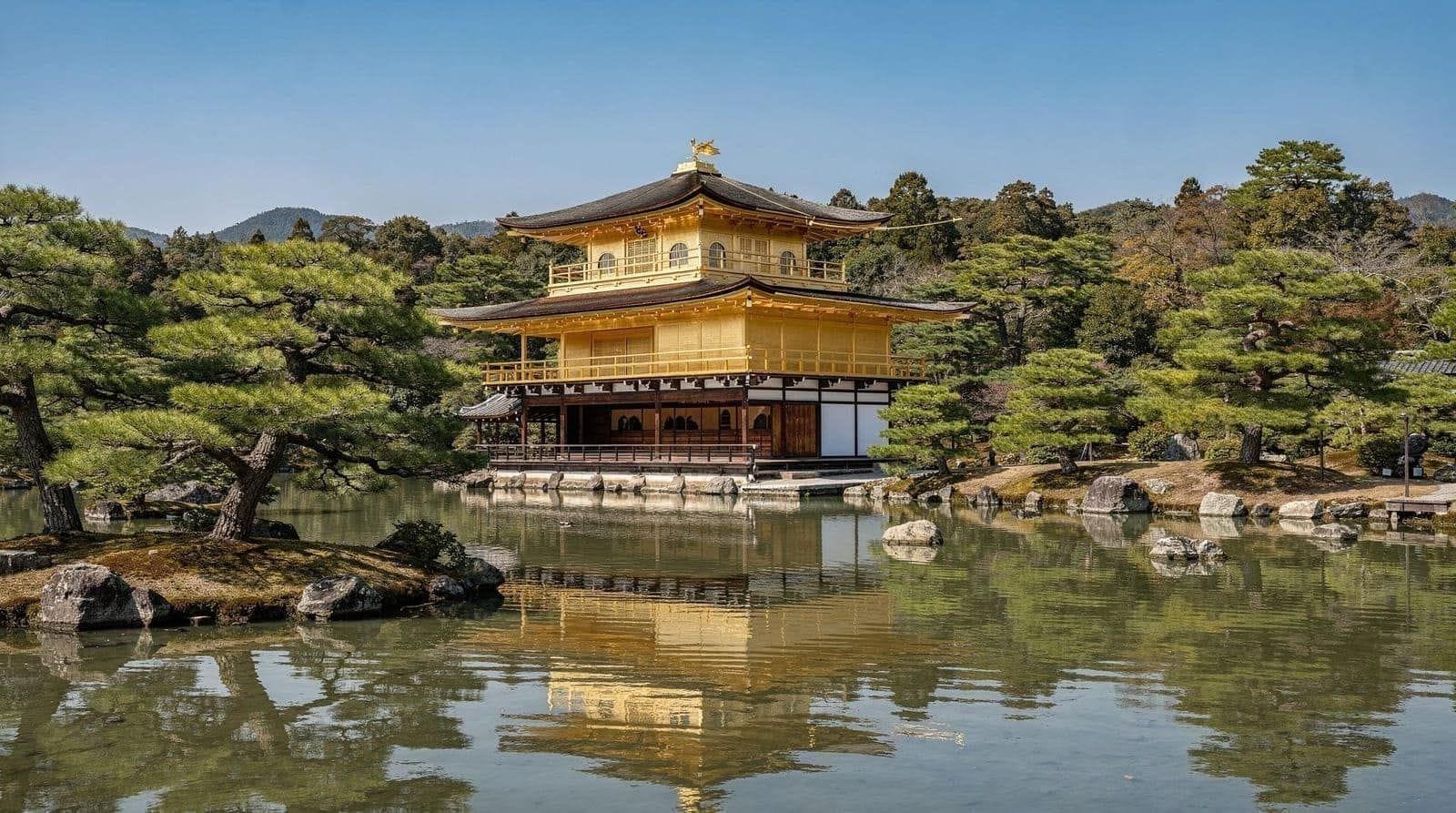
Kiyomizu-dera’s wooden stage offers a different appeal from Kinkaku-ji’s gold-leaf pavilion or Fushimi Inari’s torii gate trail — this is the temple to visit for architecture and hillside views rather than a single striking image or a long hike.
A fuller side-by-side ranking sits in the best temples in Kyoto guide, and travelers building a temple-focused Kansai itinerary that extends to Nara’s Todai-ji or the mountain complex at Koyasan will find Kiyomizu-dera’s compact half-day format leaves room for either as a same-trip pairing. For a broader look at the Kyoto destination and how to sequence a multi-day visit around all five of the city’s districts, see the main Kyoto guide.
Frequently asked questions about Kiyomizu-dera guide
How much does it cost to visit Kiyomizu-dera?
Admission is ¥400 (roughly $3.70) for adults, paid at the entrance near the main gate. Some sub-halls and special exhibitions charge separately.What are Kiyomizu-dera's opening hours?
The temple opens at 6am and closes at 6pm most of the year, extending to around 6:30pm in summer, with occasional evening illumination events during spring and autumn that keep it open after dark on specific dates.Why was the stage built without nails?
The stage uses a traditional Japanese joinery technique called kake-zukuri, interlocking wooden beams supported by tall pillars rather than metal fasteners — partly a structural choice suited to the steep hillside, and partly a demonstration of carpentry skill that has been maintained through repeated historical reconstructions.What is the Otowa waterfall at Kiyomizu-dera?
Below the main hall, three separate streams of water fall from the Otowa spring, each said to grant a different benefit — longevity, success in love, or wisdom. Tradition holds that drinking from all three at once is considered greedy, so visitors are meant to choose just one.When is the best time to visit Kiyomizu-dera to avoid crowds?
Early morning at opening (6am) or after 5pm are noticeably calmer than midday, particularly on the approach through the Ninenzaka and Sannenzaka slope streets, which get genuinely crowded from late morning through the afternoon in peak season.Is Kiyomizu-dera accessible for visitors with mobility limitations?
Only partly — the approach via Ninenzaka and Sannenzaka involves a genuine uphill climb over uneven stone paving with no flat alternative route, given the temple's hillside position. A taxi as close to the entrance as vehicles are permitted, plus extra time, is the more practical option for visitors with mobility concerns.Can I see Kiyomizu-dera's famous stage view from the stage itself?
No — the classic postcard image of the stage jutting off the hillside is captured from a separate vantage point slightly downhill, near Okunoin or along the path toward Jishu Shrine, since you can't photograph the stage while standing on it.
Top experiences
Bookable activities with verified prices and instant confirmation on GetYourGuide.