The best temples in Kyoto
Kyoto: Kyoto best of small group walking tour
Which temples in Kyoto are actually worth prioritizing?
Five genuinely earn their reputation beyond the photo — Fushimi Inari for its torii gate scale, Kinkaku-ji for its single striking gold pavilion image, Kiyomizu-dera for its nail-free wooden stage, Tenryu-ji in Arashiyama for its garden, and Ryoan-ji for its rock garden. Everything past those five is optional and depends on personal interest.
Kyoto has roughly 2,000 temples and shrines, which means almost any “must-see” list is, by definition, leaving out 1,995 of them — a fact that makes healthy skepticism toward these rankings reasonable. Even so, a handful of Kyoto’s temples justify their reputation on more than photogenic marketing, and knowing which five or six actually deliver, versus which ones are optional depending on personal interest, saves a lot of wasted time on a first visit.
| Where | Spread across Kyoto’s districts — south (Fushimi), north, east (Higashiyama), west (Arashiyama) |
| Cost | Free (Fushimi Inari) to around ¥500-600 per temple |
| Time needed | 30 minutes to 3 hours per temple depending on the site |
| Getting there | Bus, subway, or JR depending on district; no single pass covers all five |
| Best time | Before 8am for Fushimi Inari and Arashiyama; opening time for the rest |
Fushimi Inari Taisha: the one for scale
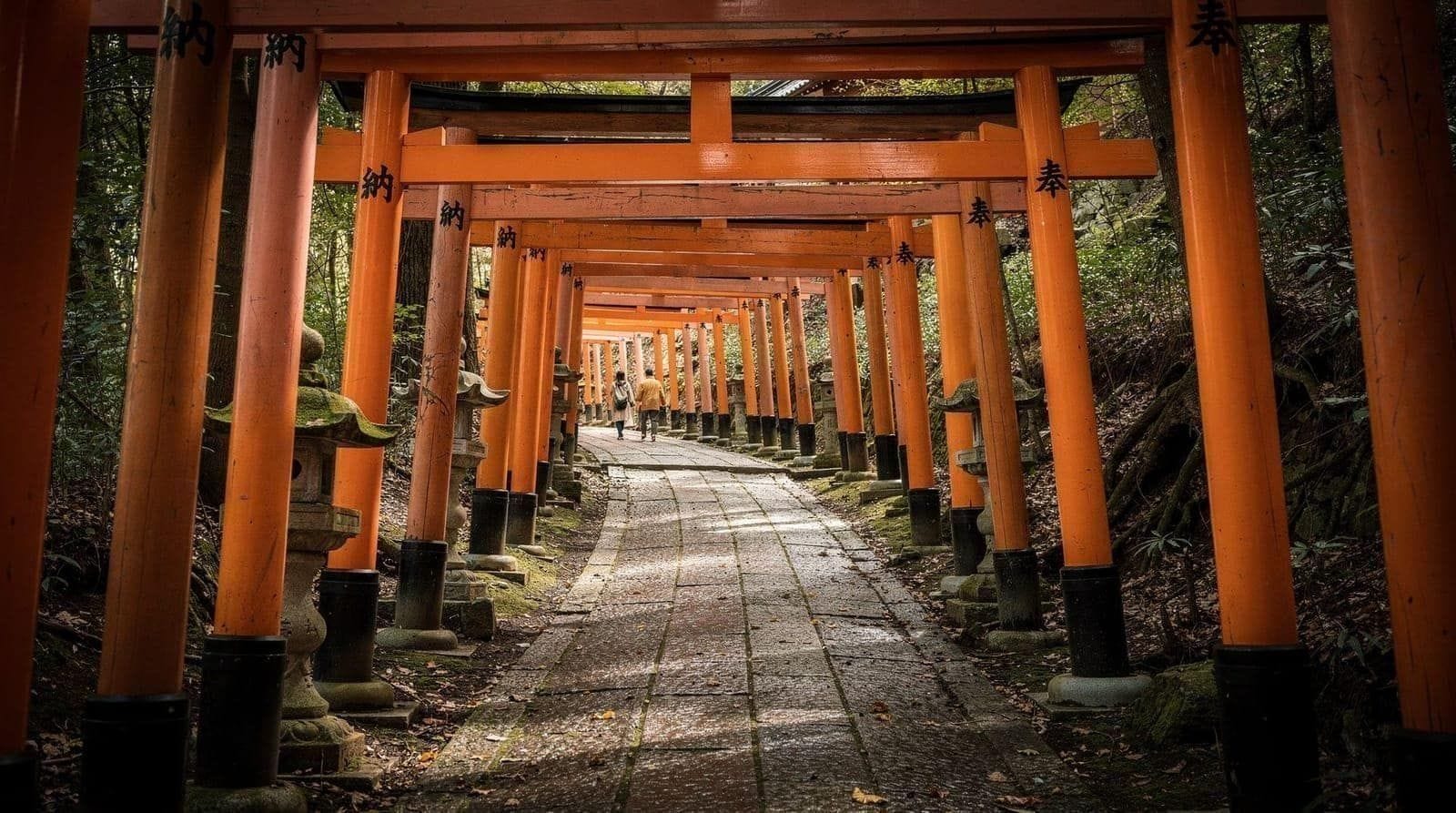
Nothing else in Kyoto — or arguably in Japan — matches Fushimi Inari’s sheer accumulation of torii gates, thousands of them climbing a working mountain over a roughly 4-kilometer round trip. It’s free, open 24 hours, and crowded by mid-morning; the honest strategy is arriving before 8am, when the lower gates are close to empty and the light is best for photos. Most visitors turn back after the Yotsutsuji intersection roughly 30-40 minutes up, though the crowd thins noticeably past that point for anyone willing to keep climbing.
Guided Fushimi Inari walking tour explains the gate donation system and kitsune symbolism that most visitors miss walking through alone.
Kinkaku-ji: the one for a single image
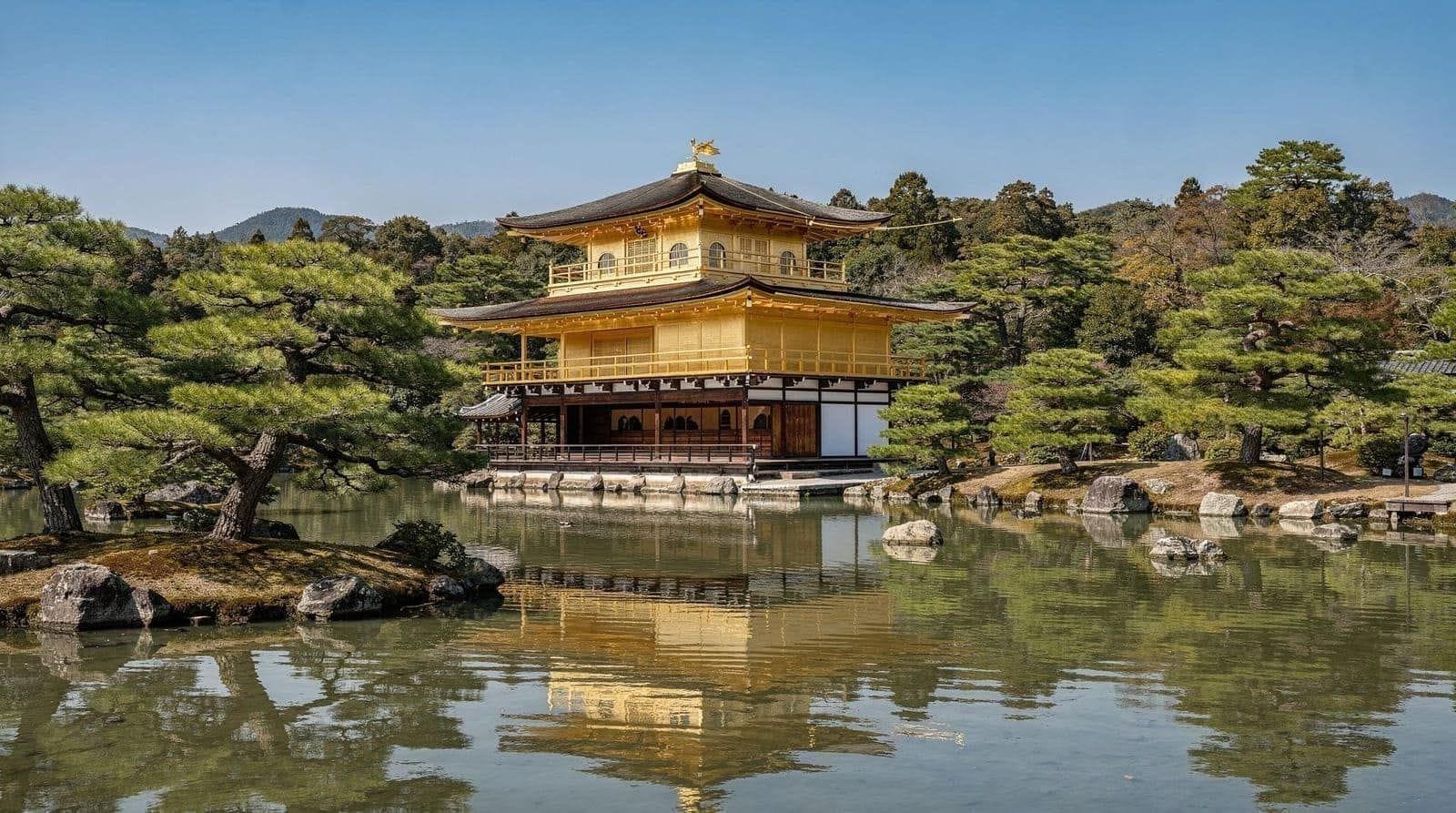
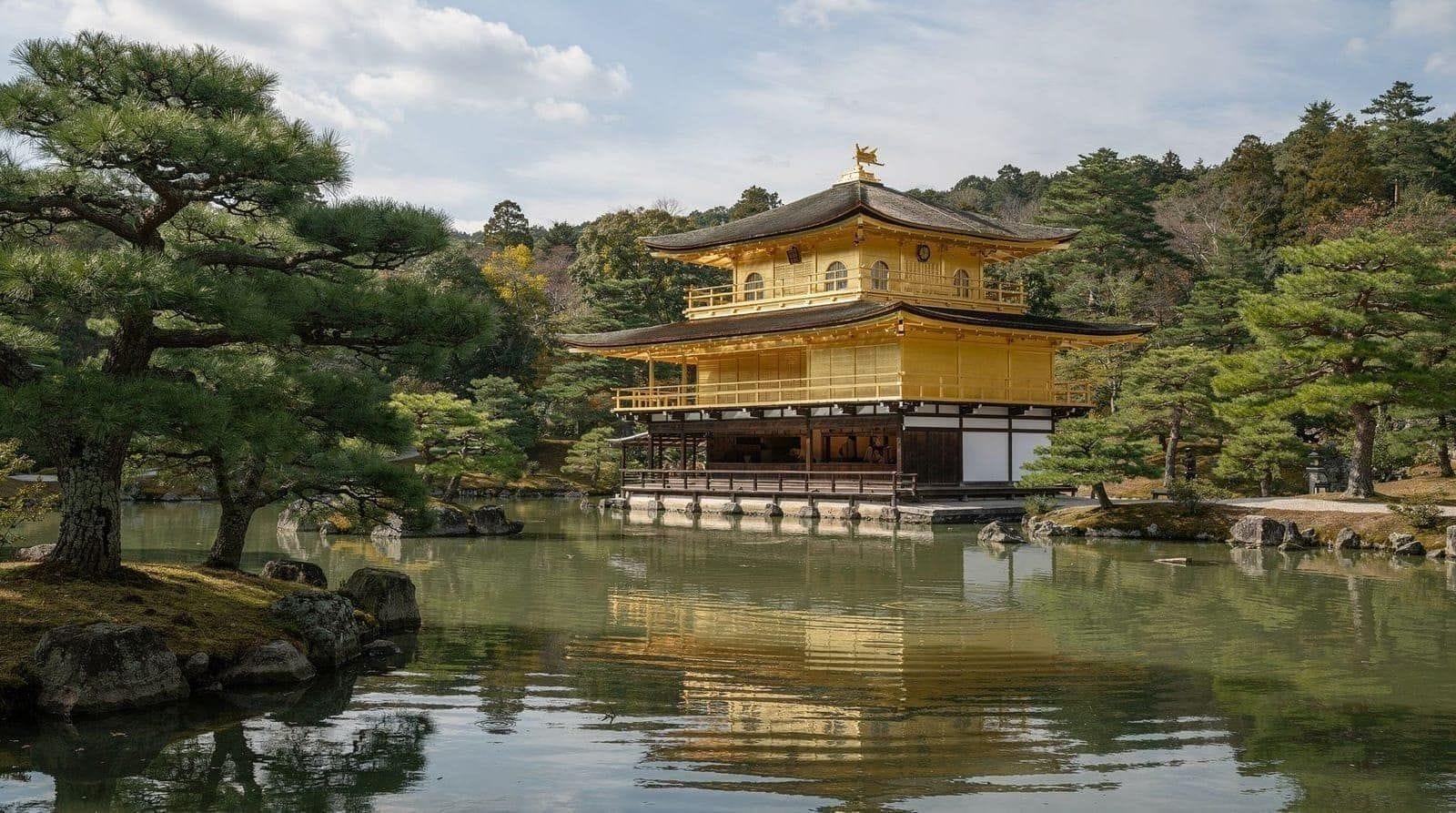
Kinkaku-ji’s gold-leaf pavilion reflected in its pond is Kyoto’s other essential photograph, and unlike Fushimi Inari, it’s a compact site — most visits run 30-45 minutes along a fixed garden path with no interior access. The full Kinkaku-ji guide covers the temple’s 1950 arson history (the basis for Mishima’s novel about the site) and why the current gold-covered building is a 1955 reconstruction rather than the 14th-century original. Admission runs ¥500, with hours 9am-5pm, and since there’s a fixed closing time rather than 24-hour access, crowds spread more evenly through the day than at Fushimi Inari.
Guided Kinkaku-ji tour covers the layered architectural styles across the pavilion’s three floors.
Kiyomizu-dera: the one for architecture and hillside views
Kiyomizu-dera’s main hall stage, jutting 13 meters off the hillside on wooden pillars joined without a single nail, is Kyoto’s best example of traditional joinery engineering, and the view over the city from the stage — plus the approach through the Ninenzaka and Sannenzaka slope streets — makes this the temple most worth combining with a longer Higashiyama walk rather than a standalone visit. Admission is ¥400, with hours 6am-6pm, extending later during occasional spring and autumn illumination events.
Tenryu-ji: the one for the garden
In Arashiyama, Tenryu-ji is a UNESCO-listed Zen temple whose garden — a pond-centered design incorporating the surrounding Arashiyama hills as “borrowed scenery” — is widely considered among Kyoto’s finest examples of Japanese garden design, predating many of the city’s more famous temple gardens. Garden admission runs about ¥500, with an extra ¥300 to enter the temple building itself. It sits a short walk from Arashiyama’s bamboo grove, which is genuinely crowded by mid-morning and close to empty before 8am, following the same early-arrival logic that applies across most of Kyoto’s popular sights.
Ryoan-ji: the one for the rock garden
Near Kinkaku-ji, Ryoan-ji holds Japan’s most famous karesansui (dry landscape) rock garden — a rectangle of raked white gravel containing 15 stones arranged so that, from any single viewing point along the temple veranda, at least one stone is always hidden from sight. The design’s exact meaning has been debated by scholars for centuries without consensus, and the garden’s quiet strangeness is genuinely worth the 10-15 minutes most visitors spend seated on the veranda contemplating it, a different pace entirely from the walk-and-photograph rhythm of Fushimi Inari or Kinkaku-ji.
What’s genuinely optional
Past these five, Kyoto’s temple options become a matter of personal interest rather than obligation. Ginkaku-ji (the “Silver Pavilion,” which was never actually covered in silver) pairs with a walk along the Philosopher’s Path and appeals to visitors who preferred Kinkaku-ji’s garden setting to its gold facade.
Ginkaku-ji, Philosopher’s Path, and Nanzen-ji tour covers this quieter northern circuit for visitors with time for a third or fourth temple day.
Nanzen-ji, with its unusual brick aqueduct running through the temple grounds (a Meiji-era water infrastructure project incorporated into the historic site), and Daitoku-ji’s scattered sub-temples both reward visitors specifically interested in Zen Buddhism’s institutional history rather than single standout sights.
How to actually schedule these temples
Trying to see all five in one day is possible but exhausting and transit-heavy, since they’re spread across different districts — Fushimi Inari sits south of the station, Kinkaku-ji and Ryoan-ji sit in the north (bus-only access), Kiyomizu-dera anchors Higashiyama in the east, and Tenryu-ji sits west in Arashiyama. A more realistic split: day one covers Fushimi Inari at dawn plus central Kyoto; day two covers Arashiyama’s Tenryu-ji in the morning and Gion/Higashiyama’s Kiyomizu-dera in the afternoon or evening; day three, if available, covers northern Kyoto’s Kinkaku-ji and Ryoan-ji together, since they sit close to each other.
Best of Kyoto small group walking tour is worth considering for a first visit, since it covers several of these temples across a single guided day without requiring independent transit planning between districts.
A quick reference: cost and time for each
Fushimi Inari costs nothing and takes 30 minutes to 3 hours depending on how far up the mountain you go. Kinkaku-ji costs ¥500 and takes 30-45 minutes. Kiyomizu-dera costs ¥400 and takes 45-60 minutes including the surrounding slope streets. Tenryu-ji costs ¥500 for the garden (plus ¥300 for the building) and takes 30-45 minutes, not counting the adjoining bamboo grove walk. Ryoan-ji costs roughly ¥500-600 and rewards a slower 30-45 minute visit given the rock garden’s contemplative pace. None of the five requires advance reservations under normal circumstances, though special evening illumination events at Kiyomizu-dera and elsewhere sometimes do.
| Temple | Cost | Time | District | Best for |
|---|---|---|---|---|
| Fushimi Inari | Free | 30 min-3 hrs | South, near the station | Scale, photography, a real hike |
| Kinkaku-ji | ~¥500 | 30-45 min | North (bus only) | A single striking image |
| Kiyomizu-dera | ~¥400 | 45-60 min | East, Higashiyama | Architecture, hillside views |
| Tenryu-ji | ~¥500-800 | 30-45 min | West, Arashiyama | Garden design |
| Ryoan-ji | ~¥500-600 | 30-45 min | North, near Kinkaku-ji | Contemplative rock garden |
Why some famous names didn’t make the top five
Sanjusangendo, known for its 1,001 life-sized Kannon statues arranged in ranks inside a single long hall, is a genuinely striking sight that some visitors would rank above several temples on this list — it’s excluded here mainly because its appeal is narrower and more specific (repetition and scale of a single statue type) compared to the broader architectural, garden, and historical interest of the top five, not because it’s lesser.
Nijo Castle, while UNESCO-listed and historically significant as the shogunate’s Kyoto residence, is technically a castle rather than a temple, and its “nightingale floor” security feature and Ninomaru Palace interior make it a worthwhile stop on its own terms, covered separately from this temple-focused ranking. Visitors with a full week in Kyoto should consider both as strong additions once the core five are covered.
How weather affects the ranking in practice
Rainy days shift the calculus meaningfully: Fushimi Inari’s stone steps become slippery and its appeal (a long outdoor hike) diminishes considerably in poor weather, while Kinkaku-ji’s compact, mostly covered viewing path and Ryoan-ji’s covered veranda seating hold up better under rain. Kiyomizu-dera’s exposed stage and the Ninenzaka/Sannenzaka approach streets get slick on wet stone paving, worth noting for visitors with less sturdy footwear. On a rainy day, prioritizing Kinkaku-ji or Ryoan-ji over Fushimi Inari or an extended Higashiyama walk is a reasonable adjustment.
First-timer versus repeat-visitor priorities
For a genuine first-time visitor with only one or two days for temples, Fushimi Inari and Kinkaku-ji are the two non-negotiable stops, given their combination of visual impact and manageable time commitment — both can be covered in a single busy day if sequenced with an early Fushimi Inari start followed by a bus ride north. Repeat visitors, or those with three-plus days, get more value shifting priority toward Kiyomizu-dera’s Higashiyama district (which rewards slower exploration) and Tenryu-ji’s garden in Arashiyama, both of which offer a different, less checklist-driven pace than the two most-photographed sights.
What to skip if time is genuinely short
On a true single-day Kyoto visit — the kind day-tripping from Osaka on a tight schedule — the honest recommendation is to pick one temple district rather than attempting all five covered here. Fushimi Inari alone, visited at dawn and combined with a few hours in central Kyoto or Gion, delivers more genuine satisfaction than a rushed, transit-heavy attempt to see Fushimi Inari, Kinkaku-ji, and Kiyomizu-dera all in the same day, which typically means seeing each for 20 minutes rather than experiencing any of them properly.
Temple etiquette that applies across all five
A few etiquette basics apply consistently regardless of which temples make the cut: removing shoes wherever required (indicated by a raised floor and shoe racks at the entrance), speaking quietly inside main halls, not touching statues or offerings, and following photography restrictions where posted, most commonly inside specific inner halls rather than across entire temple grounds. None of Kyoto’s major temples require formal dress, though modest clothing (covered shoulders and knees) is generally appreciated at any actively used religious site, Shinto or Buddhist alike.
How this list was framed and its limits
This ranking prioritizes sights that combine historical or architectural significance with a genuinely distinctive visual or experiential payoff — the criteria that consistently surfaced across all five picks.
It deliberately excludes several other well-known Kyoto temples not because they lack merit, but because their appeal is narrower or more specialized: Nanzen-ji’s aqueduct rewards architecture enthusiasts specifically, Daitoku-ji’s sub-temples reward visitors with a particular interest in tea ceremony history (several sub-temples have deep ties to famous tea masters), and Byodo-in, while extraordinary, sits in Uji rather than Kyoto proper and is covered separately in guides focused on that area. A visitor with unlimited time in Kyoto would eventually want to see most of these; a visitor with two or three days is better served focusing on the five covered in depth here first.
Visiting temples with children
Of the five temples ranked here, Fushimi Inari’s outdoor, exploratory nature (climbing stairs, spotting fox statues, an actual physical hike) tends to hold children’s attention better than Kinkaku-ji’s more passive, look-but-don’t-touch viewing format or Ryoan-ji’s contemplative, seated rock garden experience, which asks for a stillness that younger children sometimes struggle with. Kiyomizu-dera’s stage and the surrounding slope streets, with their shops and snack stalls, offer a reasonable middle ground — enough visual interest and movement to keep children engaged without requiring the sustained hiking stamina Fushimi Inari’s full route demands.
Combining a temple day with food
Each of Kyoto’s major temple districts has a strong food identity worth building into the day rather than treating meals as an afterthought: Fushimi’s inari-zushi and kitsune udon near the shrine itself, Arashiyama’s yudofu (simmered tofu) restaurants near Tenryu-ji, and Higashiyama’s wide range of teahouses and traditional sweets shops along the Ninenzaka and Sannenzaka slopes leading to Kiyomizu-dera. Planning a temple visit around a specific district’s food specialty, rather than treating the temple and the meal as separate errands, tends to produce a more satisfying, less rushed day overall.
Accessibility across the five temples
Of the five, Kinkaku-ji and Ryoan-ji offer the most manageable terrain for visitors with mobility limitations, given their relatively flat garden paths, while Fushimi Inari’s full mountain hike and Kiyomizu-dera’s hillside approach through Ninenzaka and Sannenzaka present genuine physical challenges without a viable flat alternative route. Tenryu-ji’s garden falls in between, with mostly flat paths around the pond but some uneven ground near the surrounding hillside sections. Travelers planning a temple-focused trip with accessibility needs should weigh this variation carefully rather than assuming uniform ease of access across Kyoto’s major sights.
A note on temple stamp collecting (goshuin)
Many visitors, both Japanese and international, collect goshuin — calligraphic stamps unique to each temple or shrine, written by temple staff in a dedicated stamp book (goshuincho) purchased specifically for this purpose — as a way of documenting a multi-temple trip beyond ordinary photographs. Each of the five temples covered here offers its own distinct goshuin, typically costing ¥300-500 per stamp, and the practice adds a small but meaningful ritual to visiting: a brief wait while the calligraphy is completed by hand, differing slightly from temple to temple and even day to day depending on which staff member is writing.
How this list holds up against changing crowd patterns
Kyoto’s tourism volume has grown substantially over the past decade, and all five temples covered here have seen crowd levels increase correspondingly, which is part of why the early-morning and off-peak timing advice woven throughout this guide matters more today than it might have a decade ago. None of the five have introduced timed-entry ticketing or hard visitor caps as of this writing, unlike some other heavily visited world sites, meaning the crowd-timing strategies covered here remain the primary lever available to visitors wanting a calmer experience, rather than a booking system doing that work automatically.
A note on temple names and terminology
Japanese temple names commonly end in specific suffixes carrying their own meaning — “-ji” and “-dera” both mean temple (the pronunciation shifts depending on the preceding sound), “-in” typically denotes a sub-temple or smaller associated hall within a larger complex, and “-taisha” or “-jinja” indicate a Shinto shrine rather than a Buddhist temple. Recognizing these suffixes helps visitors quickly distinguish a major head temple from one of its sub-temples when researching options, and clarifies at a glance whether a given site belongs to Japan’s Buddhist or Shinto tradition, two related but doctrinally distinct religious systems that coexisted and blended for much of Japanese history before their formal Meiji-era separation.
Where to find more detail on each temple
Each of the five temples ranked here has its own dedicated guide on this site covering admission specifics, exact hours, history, and practical logistics in far more depth than this comparative ranking allows — worth consulting once a final shortlist has been narrowed down from this overview, particularly for the etiquette and crowd-timing nuances specific to each individual site.
Final thoughts on prioritizing a first Kyoto temple visit
If forced to choose only one temple from this entire list, Fushimi Inari remains the most defensible single pick for most first-time visitors, combining free admission, genuine scale, and an experience that photographs meaningfully differently depending on how far up the mountain a visitor is willing to walk. But the honest answer for anyone with more than a single day is that no one temple substitutes for the other four — each earns its place on this list by delivering something the others don’t, and the real skill in planning a Kyoto temple visit is sequencing enough of them, at the right times of day, rather than searching for one definitive “best.”
Combining a Kyoto temple day with Osaka
Visitors based in Osaka rather than Kyoto can reach any of these five temples as a day trip, since Kyoto sits roughly 15-30 minutes from Osaka by JR or private rail depending on the line. Fushimi Inari and central Kyoto make the most efficient single-day combination given their proximity to Kyoto Station, while Arashiyama’s Tenryu-ji and northern Kyoto’s Kinkaku-ji/Ryoan-ji pairing each work better as a dedicated half-day given the added local transit once off the train.
For a full breakdown of the transport options and timing from Osaka specifically, see the Osaka to Kyoto day trip guide and the Osaka to Kyoto transport guide, both of which cover this exact commute in more logistical depth than this temple-focused ranking.
Booking a guided temple tour versus going independently
None of the five temples require advance booking, and all are straightforward to reach independently with a bus or subway pass and this guide’s timing advice. A guided option earns its cost mainly on a first visit with limited time: a good guide reads the crowd in real time, adjusting the order of stops to dodge a tour bus arrival or a sudden queue, and fills in the historical and religious context (torii donation systems, karesansui rock garden theory, the Ashikaga shogunate’s role in Kinkaku-ji’s original construction) that a self-guided visit often misses entirely.
For a fast-paced, checklist-driven first day, that context and adaptive routing are worth the modest premium; for a slower, repeat, or budget-focused visit, independent temple-hopping using the crowd-timing advice throughout this guide works just as well.
Frequently asked questions about Kyoto’s best temples
Can I visit all five best temples in one day?
It’s physically possible but not advisable — they’re spread across different districts requiring bus, subway, and on-foot transit between each, and rushing typically reduces each visit to 20 minutes. Splitting across two or three days, as outlined in the scheduling section above, gives a genuinely better experience.
Which single temple should I choose if I only have time for one?
Fushimi Inari, for most first-time visitors — it’s free, open 24 hours, and delivers a distinctive, photographable experience regardless of how far up the mountain you walk. Kinkaku-ji is the next-best single choice if a compact, fixed-path visit fits the schedule better.
Beyond Kyoto: temples worth the extra trip
Travelers with time beyond Kyoto’s city limits should weigh Nara’s Todai-ji, housing Japan’s largest bronze Buddha inside one of the world’s largest wooden buildings, and the mountain temple complex at Koyasan, home to Okunoin’s cemetery and dozens of temples offering overnight shukubo stays — a genuinely different, quieter category of temple experience from anything inside Kyoto proper.
Osaka’s own, far less crowded temple history is covered in the Osaka temples and shrines overview, and Kasuga Taisha’s lantern-lined forest approach in Nara offers a Shinto counterpoint to this guide’s largely Buddhist focus. For overall trip planning across the Kyoto destination, see the main Kyoto guide for how to sequence a multi-day visit around all five of the city’s districts.
Top experiences
Bookable activities with verified prices and instant confirmation on GetYourGuide.