Fushimi Inari Taisha guide
Kyoto: Kyoto Fushimi Inari guided walking tour
Duration: 2-3 hours
What is Fushimi Inari Taisha and when should I go?
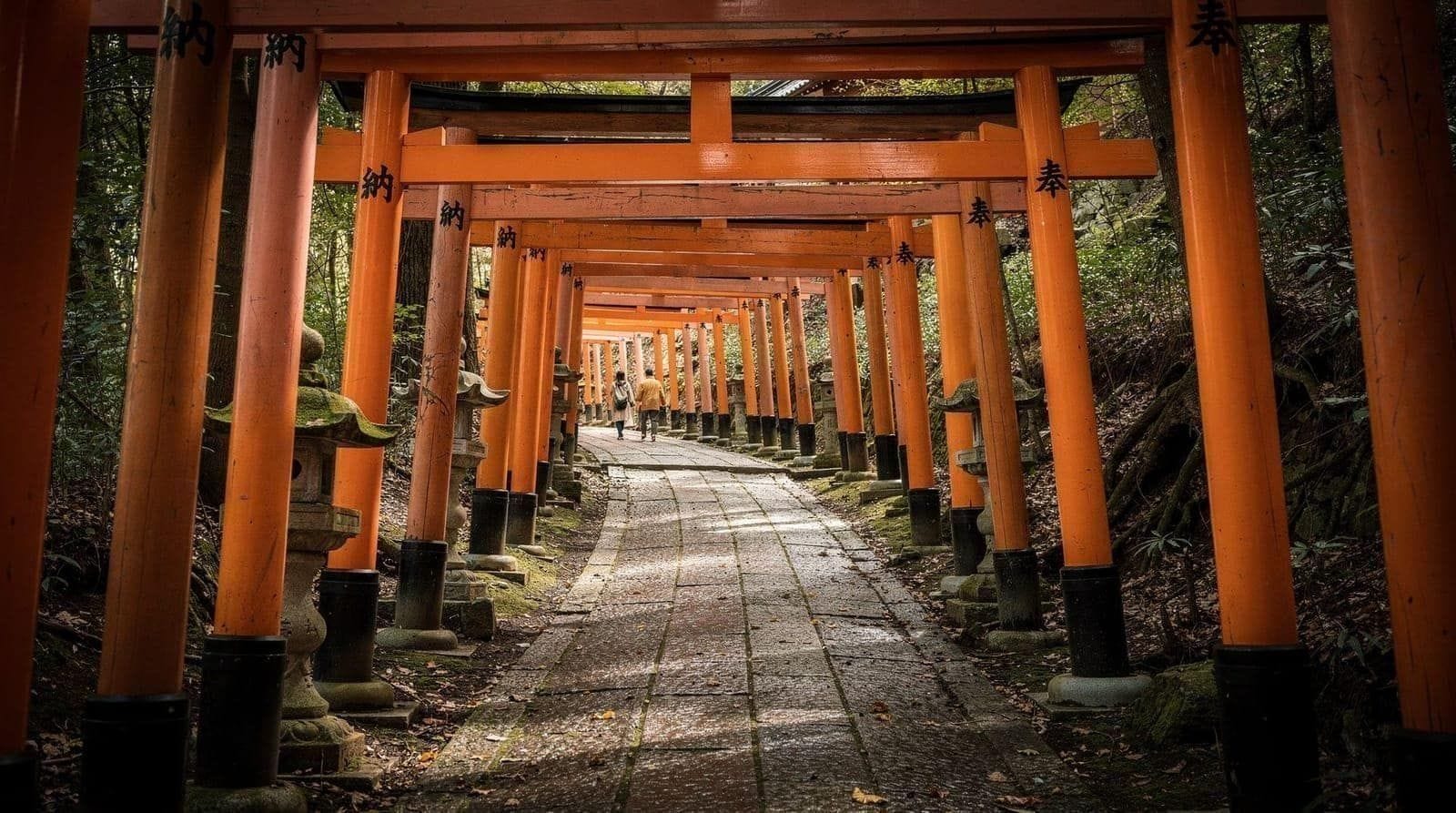
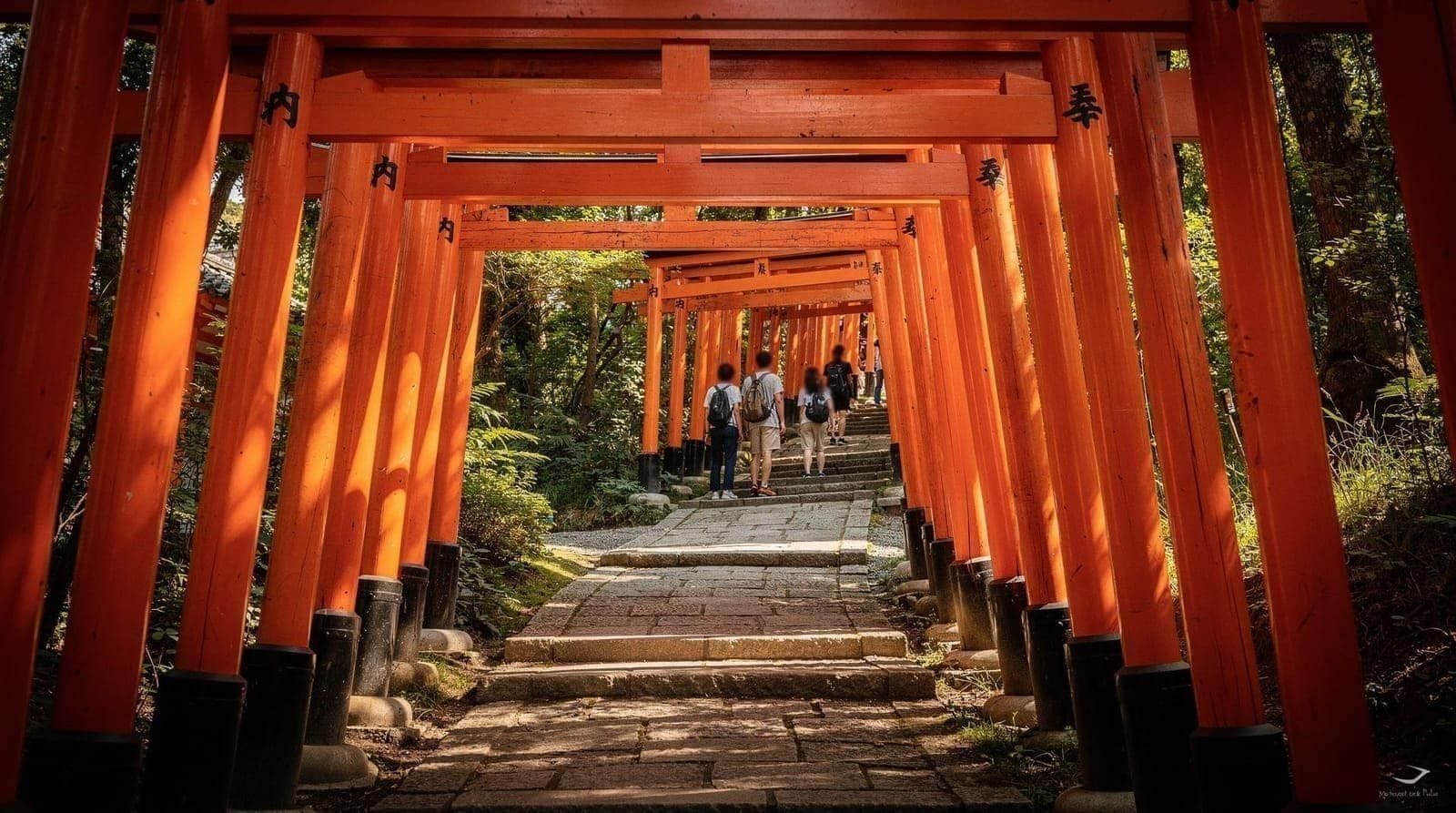
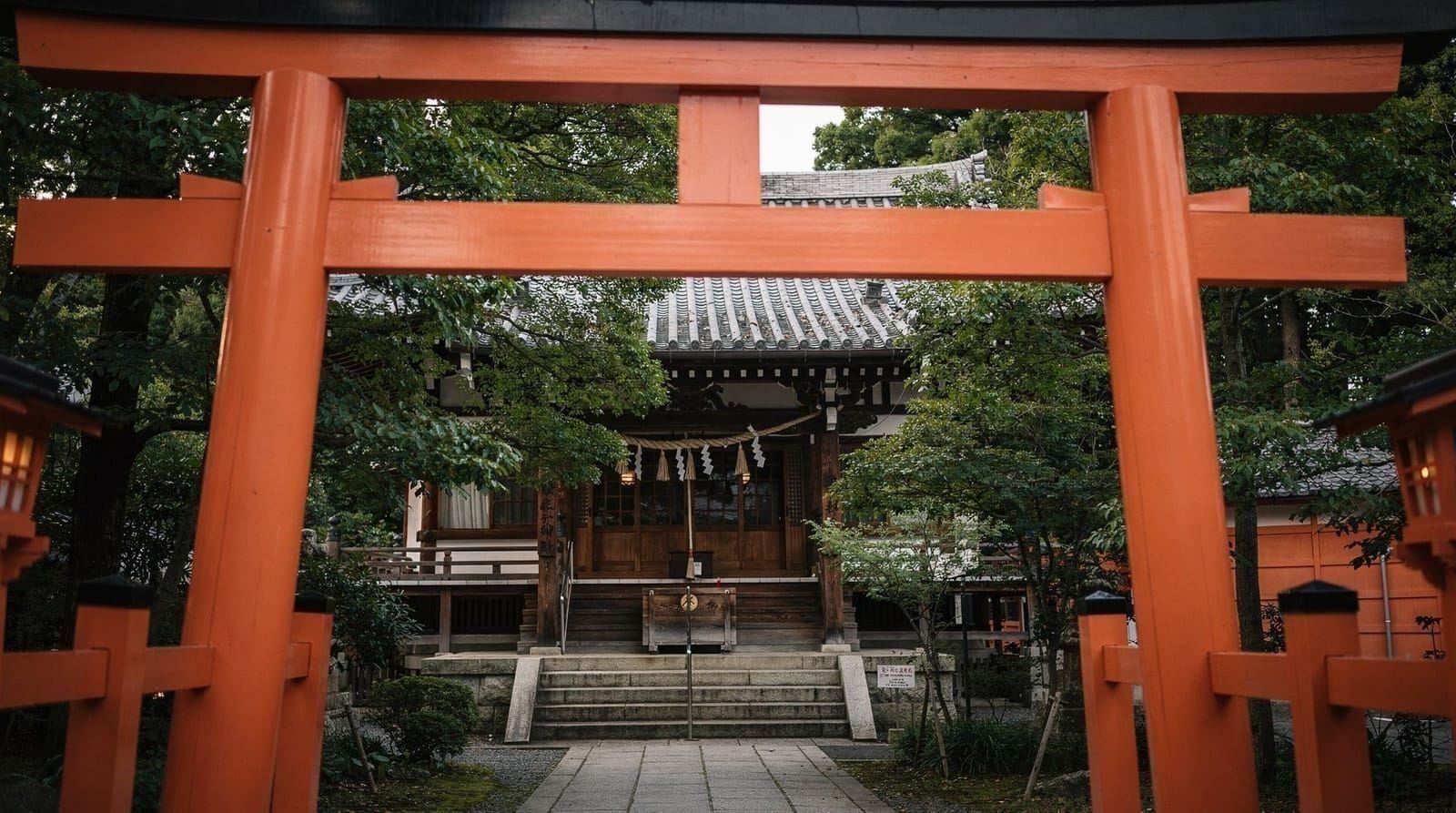
Fushimi Inari Taisha is a Shinto shrine south of Kyoto Station famous for its thousands of vermilion torii gates climbing Mount Inari. Entry is free and the grounds never close, but arrive before 8am to see the lower gates without tour-bus crowds — by mid-morning the Senbon Torii section becomes a slow shuffle.
| Where | South of Kyoto Station, JR Inari or Keihan Fushimi Inari Station |
| Cost | Free, no ticket, no gate |
| Time needed | 30-45 min to Yotsutsuji; 2-3 hours round trip to the summit |
| Getting there | ~35-45 min from Osaka via Kyoto Station |
| Best time | 6am-8am, before tour buses arrive |
Thousands of vermilion torii gates climbing a forested mountain south of Kyoto Station make Fushimi Inari Taisha the single most photographed religious site in the Kansai region, and one of the few major sights in Japan that costs nothing and never locks its gates. That combination — free, permanently open, genuinely striking — is exactly why it also gets crowded fast, and why the difference between a good visit and a frustrating one usually comes down to what time you show up rather than what you do once you’re there.
Getting to Fushimi Inari from Osaka and Kyoto
The shrine sits directly beside JR Inari Station on the JR Nara Line, two minutes and one stop from Kyoto Station — this is the easiest approach if you’re day-tripping from Osaka, since the JR Special Rapid from Osaka Station to Kyoto Station takes about 28 minutes, followed by the short Nara Line hop.
From central Kyoto, the Keihan Main Line’s Fushimi Inari Station is an even shorter walk to the main gate and connects directly to Gion-Shijo and Sanjo without needing to pass through Kyoto Station at all — useful if your day starts in Gion or Higashiyama rather than at the station. Neither route requires a reservation or a special ticket beyond ordinary train fare, and both run every 10-15 minutes through the day.
What the gates actually are
Inari is the Shinto deity of rice, sake, business, and prosperity, and the fox (kitsune) statues flanking the shrine buildings are considered the deity’s messengers, not the deity itself — a common misconception among first-time visitors. The torii gates lining the mountain path aren’t shrine property in the way a building would be; each one is donated by an individual or a company as a request or thanks for success, with the donor’s name painted on the back in black characters.
Prices for a new gate currently range from roughly ¥400,000 for the smallest size up to well over ¥1 million for the largest, and there’s a waiting list — new gates replace older ones on a rotating basis as wood weathers, which is why some gates along the trail look freshly painted and others look faded. The densest section, close to the main shrine buildings, is called Senbon Torii (“thousand torii”), though the real total across the whole mountain runs into the several thousands.
The hike to the summit
The full loop from the main gate to the 233-meter summit and back covers close to 4 kilometers and takes 2-3 hours for most people, including photo stops, though it’s a genuine hike rather than a paved tourist path — expect stone steps, some steep sections, and no elevator or cable car option. The first real landmark is the Yotsutsuji intersection, roughly 30-40 minutes up depending on pace, which opens onto a view over Fushimi and central Kyoto and marks the point where most casual visitors turn back.
Past Yotsutsuji, the crowd drops sharply and the trail becomes noticeably quieter and more forested, with smaller sub-shrines, teahouses selling inari-zushi (fried tofu pouches stuffed with rice, named for the same deity), and the Omokaru-ishi stone pair at Okusha Hohaisho — a small tradition where you lift one of two stone lanterns after making a wish, and its weight relative to your expectation is meant to tell you whether the wish will come true. There’s no wrong point to turn around; the shrine doesn’t expect or require visitors to reach the summit.
When to actually go
Fushimi Inari never closes, which removes the usual crowd-control mechanism other sights rely on — there’s no ticket window limiting how many people are inside at once. In practice this means the 6am to 8am window is close to empty, with soft early light that photographs well against the orange gates.
By 10am, tour groups and day-trippers have arrived in numbers, and the lower Senbon Torii section becomes a slow shuffle rather than a walk, with lines forming for photos at the more famous bends in the path. Late afternoon and evening thin out again somewhat, and a handful of operators run genuine after-dark walking tours, since the gates are lit intermittently along the lower sections after sunset and the atmosphere shifts entirely once the crowds leave.
Guided Fushimi Inari walking tour covers the donation system, the kitsune symbolism, and which side paths are worth a detour — details that are easy to miss on a solo visit since there’s minimal signage in English beyond the main gate.
Etiquette worth knowing
Like most Shinto shrines, there’s a purification basin (temizuya) near the main entrance — rinse your left hand, then your right, then your mouth using the ladle provided, without touching the ladle to your lips directly. Bowing at the main gate before entering and again when leaving is customary but not mandatory for visitors who aren’t practicing the religion. Walking on either side of the path rather than dead center is a minor courtesy that matters more here than at most shrines, since the trail narrows considerably in the Senbon Torii section and foot traffic runs both directions at once.
The sake district isn’t part of the shrine visit
A separate part of Fushimi ward, called Fushimi Momoyama, holds a historic sake-brewing district with canal-side streets and the Gekkeikan Okura Sake Museum — it shares the “Fushimi” name with the shrine but sits roughly 2 kilometers away, reachable by a short additional train ride on the Keihan line rather than on foot from the shrine gates. Travelers sometimes assume the two are within walking distance of each other because of the shared name; they aren’t, and treating them as a single stop tends to eat more transit time than expected.
Full mountain hiking tour to the summit is worth considering if you want the complete Yotsutsuji-to-summit route with a guide who can point out the smaller sub-shrines that have no English signage.
Practical details
There’s no admission fee anywhere on the mountain and no ticket to buy — the shrine’s operating costs come from gate donations and offerings rather than visitor fees. Bathrooms exist near the main gate and at a couple of points partway up, but they thin out closer to the summit, so plan accordingly on the longer hike. Food stalls near the entrance sell inari-zushi, kitsune udon (named for the fox motif, topped with fried tofu), and standard festival snacks, with prices in the ¥300-700 range. Comfortable walking shoes matter more here than at almost any other Kyoto sight, given the stone steps and elevation gain if you’re doing the full route.
Evening walking tour of Fushimi Inari is a genuinely different experience from the daytime crowds — lanterns light stretches of the lower path and the atmosphere turns noticeably quieter and more atmospheric once day-trippers have left.
Pairing Fushimi Inari with the rest of Kyoto
Because it sits south of the main tourist districts, Fushimi Inari pairs most naturally with an early-morning start followed by a shift toward central Kyoto or Gion and Higashiyama once the shrine gets crowded. Visitors comparing Kyoto’s major temples side by side — Fushimi Inari against Kinkaku-ji and Kiyomizu-dera — will find a fuller ranking in the best temples in Kyoto guide.
If you’re extending the trip toward Nara’s Todai-ji or the mountain shrine complex at Koyasan, Fushimi Inari works well as a half-day anchor before moving on, and travelers building a fuller Kansai temple itinerary sometimes pair it with an overnight stay in Koyasan later in the trip.
For context on the wider Kyoto destination and how to sequence a multi-day visit, see the main Kyoto guide, and for a broader look at Kansai’s shrine architecture and etiquette differences, the Kansai temples and shrines overview covers how Fushimi Inari’s Shinto style contrasts with Osaka’s older Buddhist temples like Shitenno-ji.
Weather, seasons, and how they change the visit
Fushimi Inari is walkable year-round, but conditions shift the experience meaningfully by season. Summer (June-August) brings 28-35°C heat and high humidity to the exposed lower gates, and the tsuyu rainy season in mid-June turns the stone steps genuinely slippery — sturdy shoes matter more here than at almost any flat-ground Kyoto sight. Autumn (November) brings cooler hiking weather and a scattering of maple color partway up the mountain, without the dedicated foliage crowds that hit Arashiyama or the Philosopher’s Path. Winter is cold but dry, with the thinnest crowds of the year and occasional light snow dusting the vermilion gates, a striking, rarely photographed version of the site.
Spring’s cherry blossom season (late March-early April) doesn’t concentrate around Fushimi Inari the way it does elsewhere in Kyoto, since the mountain has relatively few flowering trees directly on the trail, so the shrine actually sees comparatively less of a seasonal crowd spike than sakura-focused sights, even though general tourist volume in the city is at its yearly peak.
Accessibility considerations
The mountain trail beyond the main shrine buildings involves stone steps, uneven surfaces, and a genuine elevation gain, which makes the full summit hike impractical for wheelchair users or visitors with significant mobility limitations. The lower Senbon Torii section and the main shrine grounds themselves are more manageable, on paved or packed-earth paths without stairs, and give a meaningful sense of the gate tunnels without requiring the full 2-3 hour round trip.
Strollers can handle the lower paths but become impractical past the first climbing sections, and there’s no stroller rental or storage service on site, so visitors with young children in strollers should plan on carrying both child and stroller past a certain point or turning back at the Yotsutsuji intersection. There are no handrails along most of the stone steps, so visitors with balance concerns should take the ascent slowly and use a walking stick if one is normally needed elsewhere.
Common mistakes first-time visitors make
The most frequent misstep is treating Fushimi Inari as a quick photo stop rather than budgeting real time — arriving at 11am expecting an empty shrine, or allocating only 30 minutes when the worthwhile sections extend well past the crowded lower gates. A second common mistake is assuming the sake district in Fushimi Momoyama is walkable from the shrine gates simply because both share the Fushimi name; it requires a separate train connection roughly 2 kilometers away.
A third is underestimating the hike itself — flip-flops or sandals become genuinely uncomfortable on the stone steps past the first 20 minutes, and visitors without water sometimes find themselves relying on vending machines that thin out closer to the summit. A fourth, more subtle mistake is standing in the middle of the narrow Senbon Torii passage to take a photo, which blocks foot traffic moving in both directions during busy hours — stepping to one side for photos keeps the flow moving for everyone.
Food and rest stops along the trail
Small teahouses and food stalls are scattered along the ascent, particularly clustered near the base and again around Yotsutsuji, selling inari-zushi, kitsune udon, grilled rice crackers (senbei), roasted sparrow on a stick (a genuinely traditional, slightly unusual local snack for adventurous eaters), and cold drinks — prices run a bit higher than in central Kyoto given the location, typically ¥400-900 per item.
These stops double as informal rest points on the climb, with outdoor seating overlooking the view back toward the city, and they thin out considerably past Yotsutsuji, so stocking up on water before continuing toward the summit is a reasonable precaution, especially in summer heat. None of the stalls take reservations, and most operate on a cash-first basis, though card acceptance has grown at the larger ones near the main gate.
A note on budget
Because admission is free, Fushimi Inari is one of the least expensive major sights in the Kansai region to visit independently — the only real costs are transit (roughly ¥250-580 depending on route) and whatever food or souvenirs are purchased along the trail. This makes it a good candidate to pair with a paid guided tour without feeling like a double expense, since the guide fee is effectively the only cost of the visit beyond transit. Souvenir shops near the main gate sell fox-themed charms, small torii gate replicas, and shrine seals (goshuin, collected in a dedicated stamp book called a goshuincho, sold on site for those starting a collection across multiple shrines during their trip), typically ¥300-1,500 depending on the item.
Photography at Fushimi Inari
The classic shot down a tunnel of tightly packed gates works best in the Senbon Torii section near the base, ideally captured during the early morning window before crowds fill the frame — a genuinely empty gate tunnel photo is one of the harder shots to get past 9am on any day of the week. Higher up the mountain, past Yotsutsuji, the gates space out more, offering compositions that include surrounding forest rather than a solid wall of vermilion, a different but equally valid version of the site that gets far less social media attention despite being arguably more representative of what most of the mountain actually looks like.
Wide-angle lenses exaggerate the tunnel effect in the dense lower sections, while a slight telephoto compression works better for the more spaced-out upper gates. Overcast days, somewhat counterintuitively, often produce better results than harsh sun, which creates strong dappled shadows through the gate slats that can look messy in photos.
Local legends and lesser-known shrine features
Beyond the main Inari deity and kitsune symbolism, Fushimi Inari’s grounds include Okusha Hohaisho, an inner worship site partway up the mountain considered the spiritual center of the entire shrine complex by some traditions, and Shin-ike (the “New Pond”), a small pond near one of the trail’s side paths where visitors traditionally clap and listen for an echo — local folklore holds that the direction the echo seems to come from indicates the direction a missing person might be found, a tradition tied to searching for lost family members that predates modern search methods.
Neither feature draws anywhere near the crowds of the main gate tunnels, and both reward visitors willing to read trail signage carefully or follow a guide who knows to point them out.
A note on respectful behavior beyond basic etiquette
Because Fushimi Inari functions as a living, actively used shrine rather than a preserved historical site, visitors occasionally encounter locals engaged in genuine prayer or ritual at the smaller sub-shrines scattered along the path — pausing photography briefly or giving space in these moments, rather than treating every corner of the mountain as an equally available photo backdrop, is a small courtesy that matters more here than at purely secular sights. Similarly, climbing on gates, sub-shrine structures, or stone fox statues for photos is both disrespectful and, in some cases, physically risky given the age and condition of certain structures.
What an early-morning visit actually buys you
The difference between an 7am arrival and a 10am arrival at Fushimi Inari isn’t marginal — it’s closer to visiting two different places. At 7am, the Senbon Torii tunnel is close to empty, the light comes through the gates at a low angle that photographs noticeably better than flat midday sun, and the only sounds are birds and the occasional other early visitor. By 10am, tour buses have arrived in numbers, the same 20-meter stretch of gates becomes a shuffling queue for photos, and the quiet, meditative quality that makes the shrine worth visiting in the first place is largely gone from the lower sections.
For visitors based in Osaka, this means treating Fushimi Inari as a genuine early start — leaving the hotel by 6-6:15am for a 7am arrival — rather than folding it into a leisurely late-morning Kyoto day, which is the single biggest lever for getting the version of the shrine that shows up in photos rather than the crowded reality most late-morning visitors actually experience.
Combining with a Kyoto Station-based day
Because Fushimi Inari sits just one JR stop from Kyoto Station, it works well as the literal first stop of a Kyoto day for visitors staying in or passing through Kyoto Station itself — drop bags at a station locker, ride the two minutes to Inari Station, do the early-morning climb, then return to Kyoto Station by mid-morning to continue into central Kyoto or catch a connecting train elsewhere in Kansai. This sequencing avoids backtracking through the station twice in the same day and keeps the shrine visit to a genuinely efficient early-morning block rather than a longer detour later when crowds have built.
Rain and the hike
Rain doesn’t cancel a Fushimi Inari visit — a light drizzle is arguably atmospheric against the vermilion gates — but the stone steps past the lower sections become genuinely slick underfoot in wet weather, and the summit hike specifically warrants extra caution or a shortened turnaround point if conditions are heavy. A collapsible umbrella fits easily in a day bag and covers the lower Senbon Torii section adequately; a rain jacket works better than an umbrella for the exposed, hands-needed sections higher up the mountain.
Nearby sights worth combining
The Nara deer park and Todai-ji sit roughly 45 minutes south by train and make a reasonable second stop on a longer day if Fushimi Inari is an early-morning first stop rather than a full-day commitment. Closer by, Kasuga Taisha shares Fushimi Inari’s Shinto lantern-and-vermilion aesthetic despite sitting in a different city, and travelers interested in shrine architecture specifically sometimes visit both within the same trip for comparison. For a very different, quieter shrine experience entirely, the mountain cemetery at Koyasan’s Okunoin offers a contrasting Buddhist counterpoint to Fushimi Inari’s Shinto gates.
How far to walk before turning back
| Point | Time from base | Worth it? |
|---|---|---|
| Senbon Torii (dense gate tunnel) | 5-15 minutes | Essential, but crowded after 9am |
| Yotsutsuji intersection | 30-45 minutes | Best view over Kyoto; most visitors’ turnaround point |
| Beyond Yotsutsuji, sub-shrines | 45-90 minutes | Quiet, forested, genuinely different atmosphere |
| Summit (233m) | 90-120 minutes | Modest view; the journey matters more than the summit itself |
There’s no wrong stopping point on this list — the shrine doesn’t expect anyone to reach the top, and the biggest jump in atmosphere (crowd thinning out, forest closing in) happens right at Yotsutsuji, not at the summit. Visitors with limited time or mobility get most of the experience’s value within the first 45 minutes.
Frequently asked questions about Fushimi Inari Taisha guide
Is Fushimi Inari free to visit?
Yes. There is no admission fee for the shrine grounds or the torii gate trail, and no ticket booth anywhere on the mountain. The shrine's income comes from the torii gates themselves, which are donated by individuals and companies rather than paid for by visitors.What time does Fushimi Inari open and close?
The outdoor shrine grounds and torii gate paths are open 24 hours, every day. The shrine office and some indoor facilities keep standard daytime hours, roughly 8:30am to 4:30pm, but the gates themselves have no gate of their own.How long does the full hike to the summit take?
Round trip to the 233-meter summit and back to the main gate takes 2-3 hours at a moderate pace, including stops. Most visitors turn back after 30-45 minutes at the Yotsutsuji intersection, which has the best view over Kyoto and Fushimi and marks the point where the crowd thins out dramatically.What is the best time of day to visit Fushimi Inari?
Between 6am and 8am. The shrine never closes, so early morning is genuinely quiet with soft light for photos. By 10am, tour buses and day-trippers fill the lower gates; by early afternoon the first 20 minutes of the Senbon Torii can feel like a queue rather than a walk.Do I need to pay to enter individual torii gates or take photos?
No. Photography is unrestricted throughout the public trail, and there is no fee to walk through any section of the gates, including the densely packed Senbon Torii tunnel near the base.Is Fushimi Inari worth visiting if I've already seen photos of it?
Yes, mainly because photos flatten the scale — the trail runs roughly 4 kilometers with thousands of gates spread across a working mountain, not a single tunnel. Walking even 20 minutes past the first crowded stretch shows a quieter, more forested version of the shrine that rarely appears in photos.Can I combine Fushimi Inari with other Kyoto sights in one day?
Yes, but plan for transit time. Fushimi Inari sits south of central Kyoto, roughly 15-20 minutes by train from Gion or Kiyomizu-dera, so an early-morning visit here followed by central Kyoto or Higashiyama in the afternoon is a realistic single-day pairing.Is the sake district near Fushimi Inari walkable from the shrine?
No. The Fushimi Momoyama sake-brewing district shares the Fushimi ward name but sits about 2 kilometers away — a separate train ride (2-3 stops on the Keihan or JR Nara Line), not a walking extension of the shrine visit.
Top experiences
Bookable activities with verified prices and instant confirmation on GetYourGuide.