Koyasan overnight temple stay
Koyasan: Koyasan Okunoin cemetery Kobo Daishi
Duration: 2 hours
Koyasan is the one place in this region that rewards staying overnight over rushing through as a day trip — a mountaintop monastic complex founded in 816 CE by the monk Kobo Daishi, reachable only by train and funicular, where dozens of temples still offer shukubo (temple lodging) with a vegetarian monk’s dinner and an optional 6am prayer service. This itinerary treats it as a genuine overnight rather than a long day trip, which is the difference between seeing Okunoin cemetery at dawn and seeing it as one stop among several.
| Where | Koyasan, Wakayama Prefecture, ~2hrs from Osaka |
| Getting there | Nankai Koya Line limited express + cable car from Namba |
| Time needed | 2 days, 1 night (shukubo temple stay) |
| Cost | Roughly ¥17,000-25,000 ($150-220) per person, lodging + transport |
| Best time | Book weeks ahead; sakura/koyo weekends fill fastest |
What makes Koyasan different from everywhere else in this region
Every other itinerary on this site can be done as a day trip from Osaka without meaningfully compromising the experience. Koyasan is the exception, largely because its two defining experiences — the 6am fire ceremony and Okunoin cemetery outside daylight hours — simply don’t exist for a day-tripper. Kongobu-ji, Danjo Garan, and even Okunoin’s daytime walk are all worthwhile on their own, but the shukubo stay is what separates a genuine visit here from checking a UNESCO World Heritage Site off a list.
Why an overnight, not a day trip
Koyasan is roughly two hours from Osaka by train and funicular each way — technically doable as a very long day trip, covered in our Osaka to Koyasan day trip guide, but that version means missing both the fire ceremony at dawn and Okunoin cemetery’s most atmospheric hours, early morning and after dark, when day-trippers have already left. If time only allows a day trip, that guide is the honest alternative; if an overnight is possible, this itinerary is worth the extra logistics.
Getting there from Osaka
Nankai Electric Railway from Osaka’s Namba Station to Gokurakubashi Station, about 90 minutes via limited express (the Koya Line), followed by the Koyasan Cable Car, a 5-minute funicular climbing the final steep stretch to Koyasan Station itself. From there, a local bus covers the last stretch into the temple town center — most shukubo are a short walk or bus ride from the bus terminal.
Total door-to-door time from central Osaka runs close to 2 hours, and this is genuinely the whole point of treating it as an overnight rather than squeezing it into a single day alongside anything else. A Koyasan destination guide has the full station-by-station breakdown. The Koyasan World Heritage Ticket, sold at Nankai stations in Osaka, bundles the round-trip rail fare, cable car, and unlimited local bus travel on the mountain into a single discounted pass, worth buying before departure rather than paying for each leg separately.
Day 1, afternoon: arrival and Danjo Garan
Arrive by early-to-mid afternoon and check into your shukubo — booking ahead is essential, since many temples cap the number of overnight guests and fill up on weekends and during peak sakura or koyo season. Danjo Garan, the complex’s central temple precinct, is a short walk from most lodging and includes the vivid vermillion Konpon Daito pagoda, rebuilt in 1937 after a series of fires, and Kongobu-ji, the head temple of Shingon Buddhism, with a rock garden (Banryutei) said to be Japan’s largest, arranged to represent a pair of dragons emerging from a sea of clouds.
Give this an unhurried hour or two rather than rushing toward Okunoin immediately — the afternoon light through the cedar-lined precinct is worth slowing down for, and there’s no benefit to arriving at Okunoin exhausted from a rushed first afternoon.
Day 1, evening: shukubo dinner and Okunoin at dusk
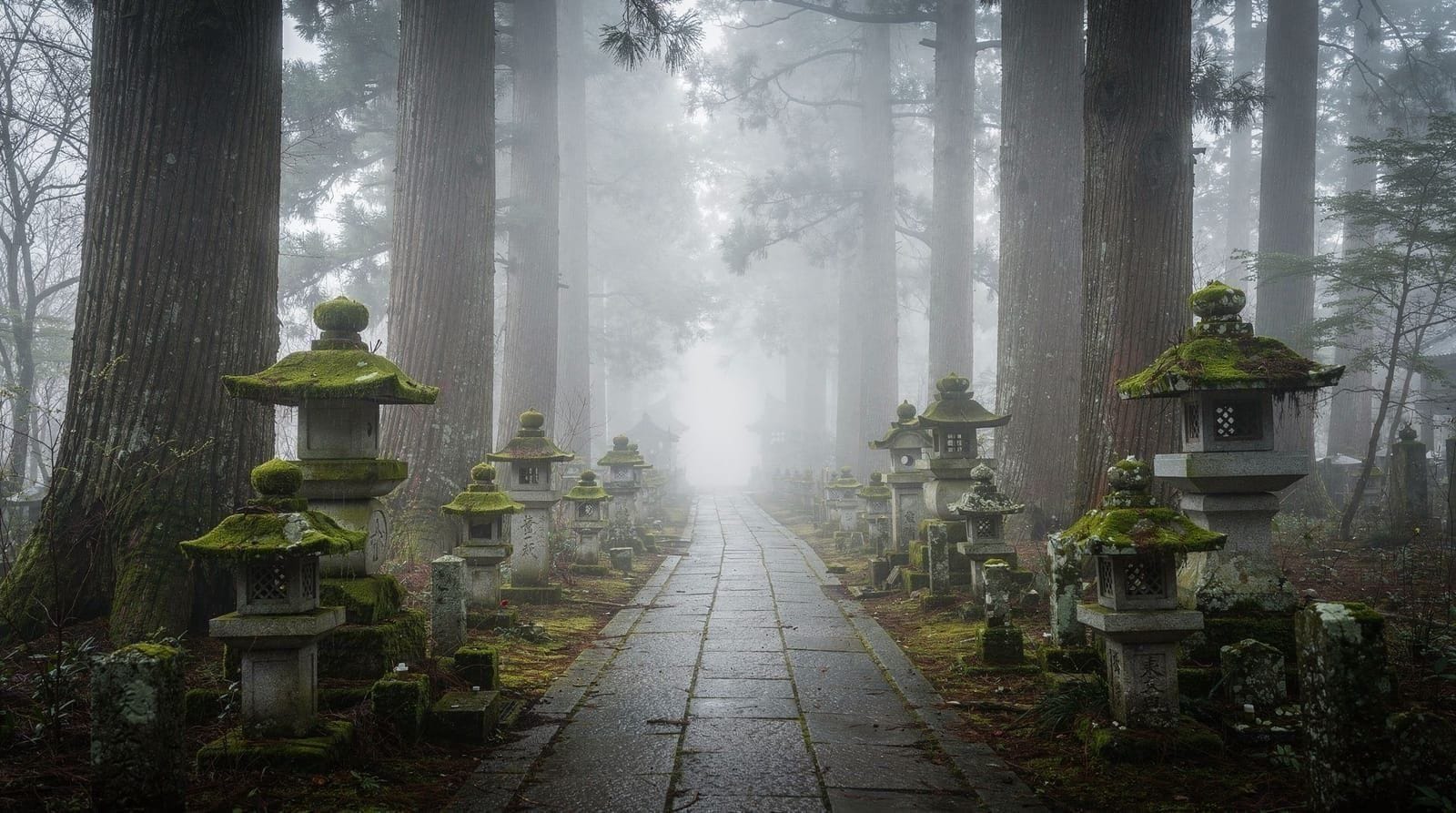
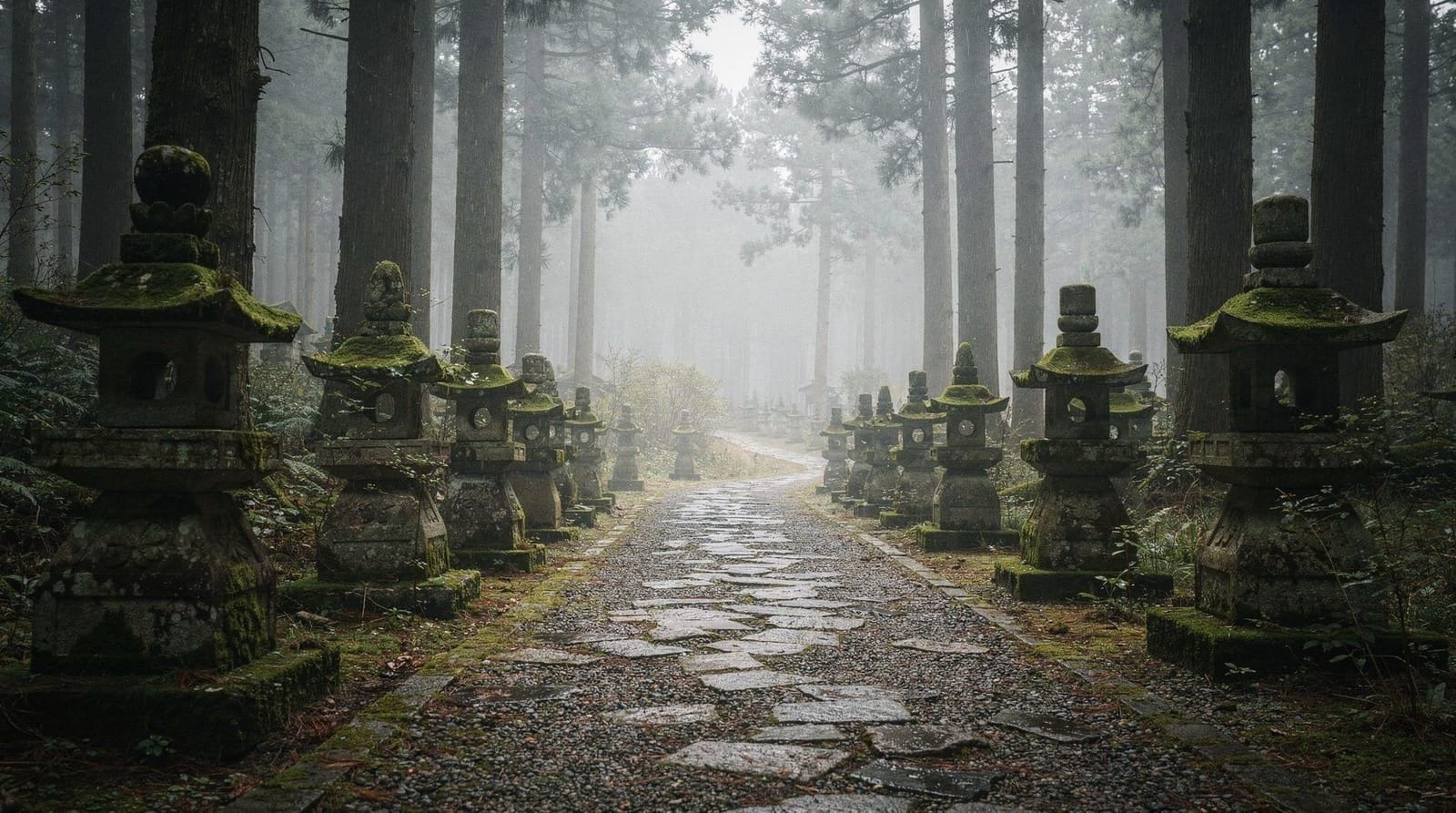
Shukubo dinner (shojin ryori) is a multi-course vegetarian meal built around tofu, seasonal vegetables, and mountain vegetables, typically served in your room around 6pm — arrive back at the temple in time for it, since most shukubo run on a fixed schedule rather than à la carte dining. After dinner, Okunoin cemetery — Japan’s largest, with over 200,000 stone lanterns and memorials lining a 2km cedar-forest path to Kobo Daishi’s mausoleum — takes on a genuinely different character after dark, lit by stone and hanging lanterns with almost no other visitors.
A Koyasan sacred silence night tour covers this after-dark walk with a guide, useful given how disorienting the unlit side paths can be without one. See our Okunoin guide.
Day 2, early morning: the fire ceremony and dawn at Okunoin
Most shukubo hold an optional 6am prayer service (gomataki, a fire ceremony) in the temple’s main hall — attending is not obligatory but is generally considered the point of a temple stay rather than an add-on, and most guests who skip it regret it. Afterward, breakfast (another simple shojin ryori-style meal) is typically served around 7-7:30am.
If there’s time before checkout, a return walk through Okunoin at dawn — before day-trip crowds arrive from Osaka around mid-morning — is the single best window to see the cemetery, with mist frequently settling among the cedars. A Okunoin cemetery and Kobo Daishi mausoleum tour covers the path’s history and the mausoleum’s significance in more depth than a solo walk typically absorbs. Our Koyasan temple stay guide covers shukubo etiquette in full — shoes off at the entrance, quiet in shared corridors, and following the temple’s own schedule rather than treating it as a hotel.
Day 2, late morning: departure or a slower second day
Checkout at most shukubo is around 9-10am. If departing that morning, retrace the route back via the cable car and Nankai limited express to Osaka, arriving early afternoon. If a full second day is available instead of a rushed departure, a full-day private Koyasan tour from Osaka style pace — visiting the Reihokan Museum’s Buddhist art collection and Nyonindo (the historic “women’s hall,” a reminder that Koyasan barred women from the sacred precincts until 1872, a restriction lifted only in the Meiji era) — rounds out the visit before the return trip.
Either way, the descent by cable car and train feels noticeably different from the arrival the previous day, if only because the two-hour journey no longer carries the anticipation of a first visit.
A brief note on Koyasan’s history and significance
Kobo Daishi (posthumously known as Kukai) founded Koyasan in 816 CE as the headquarters of Shingon Buddhism, one of Japan’s major esoteric Buddhist schools, after studying the tradition in China. Followers believe Kobo Daishi is not dead but in eternal meditation within his mausoleum at the end of the Okunoin path, and shukubo monks continue to bring him meals twice daily as though he were still alive — a detail that adds real weight to a walk through Okunoin that might otherwise read as simply a scenic cemetery. Understanding this context, even briefly, changes how the whole overnight lands, which is part of why a guided visit to Okunoin is worth the modest cost for anyone unfamiliar with Shingon Buddhism before arriving.
What to pack and what to expect
Shukubo rooms are traditional tatami-and-futon style, generally without private bathrooms (shared baths, often onsen-style, are standard), and can be cool in shoulder seasons since many temple buildings aren’t centrally heated the way hotels are — bring a layer for the morning fire ceremony if visiting outside summer, and expect genuinely cold hallways and bathing areas in winter given Koyasan’s elevation. Wi-Fi is commonly available but don’t expect hotel-grade amenities; the appeal here is the setting and ritual, not comfort. Comfortable, easy-to-remove shoes matter throughout the stay, since shoes come off at nearly every building entrance, and a light robe or loungewear is usually provided for wearing around the temple in the evening.
Budget for this overnight
Shukubo lodging with dinner and breakfast included typically runs ¥12,000-20,000 ($105-175) per person per night, noticeably more than a standard Osaka hotel room but inclusive of two meals, and it’s worth comparing that total against a hotel-plus-restaurant equivalent rather than judging it purely against a room rate. Round-trip Nankai rail and cable car fare from Osaka runs about ¥4,300 ($38) with the discounted Koyasan World Heritage Ticket, which also covers local buses once on the mountain.
Beyond lodging and transport, expect modest additional costs for Danjo Garan and Kongobu-ji admission (around ¥500-1,000/$4-9 combined) and any souvenirs from the temple town’s small shops, many of which sell handmade Buddhist prayer items and local wood crafts. Our Kansai budget calculator helps weigh this against a day-trip alternative, and a JPY currency converter keeps costs in context while budgeting.
Two-day summary
| When | Activity |
|---|---|
| Day 1, afternoon | Arrival, check-in, Danjo Garan and Kongobu-ji |
| Day 1, evening | Shukubo dinner (shojin ryori), Okunoin after dark |
| Day 2, 6am | Fire ceremony (gomataki) |
| Day 2, 7-7:30am | Breakfast |
| Day 2, morning | Okunoin at dawn before checkout, or Reihokan Museum |
| Day 2, midday | Cable car and Nankai limited express back to Osaka |
Combining Koyasan with Wakayama’s coast or Kumano Kodo
For visitors with more than the two days this itinerary covers, Koyasan connects reasonably well southward to the Kumano Kodo pilgrimage trails or Wakayama’s coast, rather than backtracking straight to Osaka after checkout. Our Kumano Kodo destination guide and Wakayama destination guide cover onward routing if the trip has room for a third day beyond this overnight; most Osaka-based visitors, though, treat Koyasan as a standalone round trip and return the same afternoon.
What if the shukubo I want is fully booked?
Popular shukubo, particularly ones well-reviewed by English-speaking visitors, fill months ahead for peak sakura and koyo weekends specifically. If a preferred temple is unavailable, most shukubo offer a broadly similar experience — dinner, the fire ceremony, and proximity to Okunoin — so booking through an agency that shows real-time availability across several temples is more productive than fixating on one specific name. Building in flexibility on the exact date, if the trip allows it, also meaningfully widens the options.
Frequently asked questions about a Koyasan overnight
Is a Koyasan overnight worth it over a day trip?
For most visitors, yes — the fire ceremony and Okunoin cemetery at dawn or after dark are genuinely different experiences from a midday walk-through, and Koyasan’s two-hour transit each way makes a day trip feel rushed on both ends.
Do I need to book the shukubo temple stay in advance?
Yes, ideally weeks ahead, especially for weekends or sakura/koyo season — many temples cap overnight capacity and popular ones fill up well before travel dates.
What is shojin ryori?
The vegetarian Buddhist cuisine served at shukubo, built around tofu, seasonal vegetables, and mountain plants prepared without meat, fish, or strong alliums like garlic and onion, in line with monastic dietary principles.
Is the 6am fire ceremony mandatory?
No, it’s optional at most temples, but skipping it means missing what many guests consider the actual point of a shukubo stay rather than just lodging in a temple.
How cold does it get at Koyasan?
Koyasan sits at roughly 800 meters elevation and runs noticeably cooler than Osaka or Kyoto year-round — bring layers even in summer for the early morning, and expect genuinely cold temple buildings in winter.
Can I visit Koyasan as part of a longer Kansai trip?
Yes — it pairs naturally with Wakayama’s coast or the Kumano Kodo pilgrimage trails to the south, though most Osaka-based visitors treat it as a standalone overnight rather than combining it with another destination on the same trip.
Do I need to speak Japanese to stay at a shukubo?
No — many shukubo that regularly host foreign visitors provide instructions in English for meal times, bathing, and the morning ceremony, though the level of English varies by temple. Booking through an established agency or a temple known for accommodating international guests reduces friction if this is a concern.
What if I can’t handle a vegetarian meal for one night?
Shojin ryori is genuinely well-regarded cuisine in its own right, built around seasonal vegetables and tofu prepared with real technique rather than being a lesser substitute for a meat-based meal — most guests, including those who wouldn’t otherwise choose vegetarian food, find it a highlight of the stay rather than a compromise.
Is Koyasan crowded during peak season?
Yes, particularly on weekends during sakura and koyo season, when both day-trippers and overnight guests compete for limited shukubo capacity — booking lodging months ahead for those windows is genuinely necessary, more so than almost anywhere else covered on this site.
Should I bring cash to Koyasan?
Yes — while larger shukubo increasingly accept cards, smaller temple shops, some admission fees at Danjo Garan and Kongobu-ji, and certain lodging balances are still cash-preferred or cash-only, so carrying enough yen for the full stay is safer than assuming card acceptance throughout.
Is Koyasan worth visiting outside sakura or koyo season?
Yes — the fire ceremony and Okunoin’s atmosphere don’t depend on cherry blossoms or autumn color, and visiting outside those peak windows means easier shukubo booking and a quieter cemetery walk, arguably closer to the experience’s original intent.
Top experiences
Bookable activities with verified prices and instant confirmation on GetYourGuide.