Wakayama
Wakayama travel guide from Osaka — Wakayama Castle, the Kumano Kodo pilgrimage gateway, and the Kii Peninsula coast, with prices and train times.
Wakayama: Wakayama Tokugawa castle southern coast
Quick facts
- Distance from Osaka
- 60-75 min by train
- Days needed
- 1 (2-3 for the wider peninsula)
- Castle entry
- ¥410 (~$3.80)
- Best months
- April-May, October-November
Wakayama City sits an hour south of Osaka at the mouth of the Kii Peninsula, and it functions less as a headline destination in its own right than as the practical gateway to the region’s bigger draws further south: the Kumano Kodo pilgrimage trails, Nachi Falls, and the Shirahama coast. The city itself has one genuinely worthwhile sight — Wakayama Castle, seat of one of the three branches of the ruling Tokugawa clan during the Edo period — plus a workable seafood scene and, offshore, a fortified island most visitors never hear about.
| Distance from Osaka | 60-75 min by train |
| Days needed | 1 (2-3 for the wider peninsula) |
| Cost | Castle entry ¥410; Tomogashima ferry extra |
| Getting there | JR Kuroshio (Shin-Osaka/Tennoji) or Nankai Main Line (Namba) |
| Best time | April-May or October-November |
Getting from Osaka to Wakayama
The JR Kisei Line’s special rapid “Kuroshio” service connects Osaka’s Shin-Osaka and Tennoji stations to Wakayama Station in about 60-75 minutes, with fares around ¥2,400-2,800 ($22.20-$25.90) depending on the exact train. The Nankai Main Line offers a cheaper alternative from Namba Station to Wakayamashi Station (a different, more central station than JR Wakayama), taking about 60-70 minutes on a limited express for roughly ¥1,020 ($9.45), or longer on a regular rapid service for less. Wakayamashi Station is closer to the castle and central shopping streets, while JR Wakayama Station is the better connection point if you’re continuing south toward the Kii Peninsula’s coast or the Kumano region by JR train.
Wakayama Castle
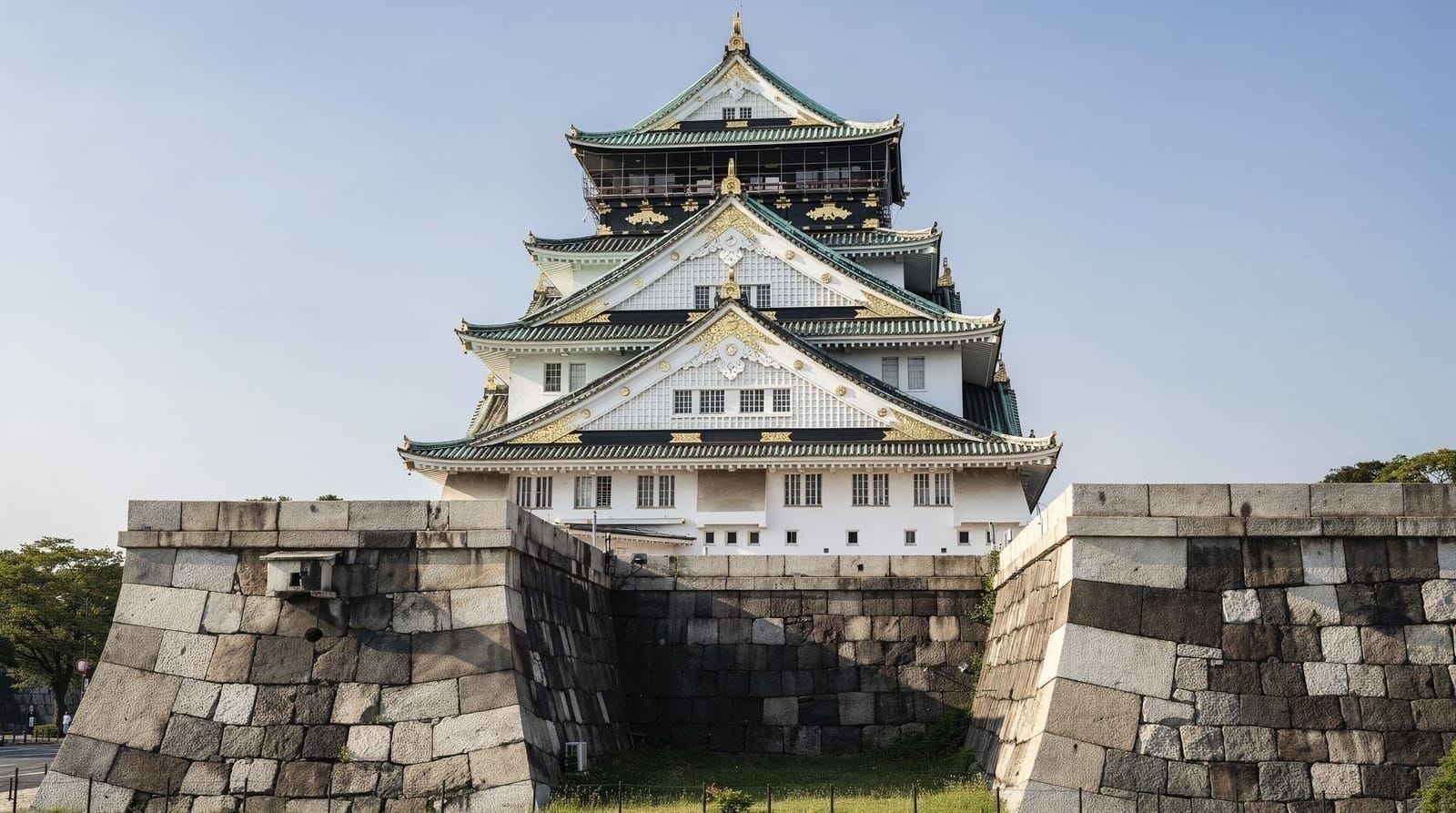
Wakayama Castle was built in 1585 and served for over 250 years as the seat of the Kishu Tokugawa, one of the three most senior branches of the Tokugawa shogunate alongside the main Edo line — a genuinely significant castle historically, even though it sees a fraction of the visitors that Osaka or Himeji Castle draw. The current keep is a 1958 concrete reconstruction (the original was destroyed in a 1945 air raid), but the surrounding stone walls and moat layout are original, and the compact hilltop site makes for an easy climb with harbor views from the top. Entry to the keep is ¥410 (~$3.80), and the surrounding park is free and popular locally for cherry blossom viewing in spring.
Wakayama Tokugawa castle and southern coast tour pairs the castle with a look at the coastline the Kishu Tokugawa were historically responsible for defending, useful context for a site that’s otherwise easy to see as “just another castle” without the Tokugawa family history behind it.
Samurai and costume experiences
A handful of operators near the castle offer samurai costume rental and photo sessions set against the keep and its walls, a lighter, more experiential way to engage with the site beyond walking through it — a popular add-on for families and photographers, typically running an hour or two including changing time and a short guided walk in costume. It’s a genuinely popular option with domestic visitors as well as international ones, and outfits generally range from basic ashigaru (foot soldier) costumes to more elaborate samurai armor replicas for an additional fee.
Wakayama samurai experience with castle tour combines the costume experience with a guided visit to the keep itself.
Tomogashima, the fortified island
A genuinely under-visited detour: Tomogashima is a small group of uninhabited islands in Wakayama Bay, reachable by a roughly 20-minute ferry from Kada Port (itself about 30 minutes from central Wakayama by local train and a short walk or taxi), that once held Meiji-era coastal artillery fortifications.
The overgrown brick ruins, now half-swallowed by forest, have drawn comparisons to a real-world version of the floating castle setting in the animated film “Laputa: Castle in the Sky,” and the island has a genuine off-the-beaten-path feel that’s increasingly rare this close to Osaka. There’s no accommodation on the island, so it’s a day-trip-only destination, and ferry schedules are limited (typically a handful of round trips per day), so checking the timetable before heading to Kada is worth doing rather than assuming a ferry will be waiting.
Tomogashima Island and Wakayama Castle day trip from Osaka handles the ferry timing and combines it with the castle in a single day, which simplifies the otherwise fiddly logistics of coordinating a small-island ferry schedule independently.
Marina City and Kuroshio Ichiba fish market
A short bus ride from central Wakayama, Wakayama Marina City is a reclaimed-island leisure complex built around Kuroshio Ichiba, a lively indoor fish market where vendors auction and grill fresh tuna and other Kii Peninsula catch in front of visitors — a genuinely entertaining, hands-on alternative to a formal seafood restaurant, with tuna cutting demonstrations held several times daily and food stalls selling grilled skewers and rice bowls for ¥500-1,500 (~$4.65-$13.90).
The same complex includes Porto Europa, a modestly scaled European-village-themed amusement park, and Kishu Kuroshio Onsen, a hot spring facility with ocean views — a reasonable half-day combination for families or anyone wanting a lighter, less historically dense stop than the castle.
Getting around Wakayama
Central Wakayama — the castle, Wakayamashi Station, and the downtown shopping arcades — is walkable, with the castle a 10-15 minute walk from Wakayamashi Station. Marina City and Kada Port (for the Tomogashima ferry) both require a local bus or taxi from the city center, roughly 20-30 minutes depending on traffic. A rental car is a reasonable option for visitors planning to continue further south along the coast toward Shirahama or the Kumano region, since bus frequency drops noticeably outside the city itself.
Food in Wakayama
Wakayama ramen, a soy-and-pork-bone broth style distinct from Osaka or Kyoto’s ramen traditions, is the city’s best-known food export, typically served with a side of hayazushi (a quick-pickled mackerel sushi eaten as a snack while waiting for the ramen, a local custom specific to this city). A bowl runs ¥700-1,000 (~$6.50-$9.25) at the shops clustered around the station and downtown.
Being a coastal city, Wakayama also has solid, reasonably priced seafood — the local specialty here leans toward simply grilled or raw fish from the Kii Peninsula’s waters rather than a signature dish. Wakayama Prefecture is also Japan’s largest producer of mikan (mandarin oranges) and umeboshi (pickled plums), and both show up widely in local sweets and souvenirs — worth picking up a bag of dried plum snacks or mikan-based sweets from a station shop before heading back to Osaka.
Where to stay
Most visitors treat Wakayama City as a day trip rather than an overnight base, given its proximity to Osaka, but the area around Wakayamashi Station and JR Wakayama Station has a reasonable spread of business hotels for those breaking up a longer Kii Peninsula trip here before continuing south the next day toward Shirahama or the Kumano region. Hotels here run noticeably cheaper than comparable options in central Osaka or Kyoto, which makes an overnight stop worth considering even for visitors who don’t strictly need to break up the journey south — a relaxed evening in a quieter city, with the castle lit up after dark, is a reasonable change of pace from a busier Kansai itinerary.
Kishu lacquerware and local crafts
Beyond food and castles, Wakayama Prefecture has a long tradition of Kishu lacquerware (Kishu shikki), particularly from the town of Kuroe further south along the coast, though a handful of shops in Wakayama City itself carry pieces ranging from everyday bowls and chopsticks to higher-end decorative items. It’s a less commonly sought-out souvenir than matcha or sake from elsewhere in Kansai, which makes it a genuinely distinctive gift for visitors who’ve already covered the more obvious regional specialties. Prices vary enormously by craftsmanship, from a few thousand yen for simple lacquered chopsticks to considerably more for a hand-finished bowl or tray.
Wakayama as a base for the wider peninsula
The genuine reason many visitors pass through Wakayama City is as a jumping-off point rather than a destination in itself: JR and bus connections from Wakayama Station run south toward Koyasan via a different route than the direct Nankai line from Osaka, and further south toward the Kumano Kodo pilgrimage trails, Nachi Falls, and the Shirahama coast — a genuinely different, slower-paced side of the Kansai region compared to the Osaka-Kyoto-Nara core.
Visitors planning to explore the southern Kii Peninsula in any depth should expect at least two to three days given the distances involved (Wakayama City to the Kumano shrines is itself another two to three hours by train and bus).
Wakayama customizable private day tour is a flexible option if you want to combine the castle with a specific coastal or historical stop not covered by a fixed itinerary. See the greater Kansai 7-day itinerary for how Wakayama and the wider peninsula fit into a longer trip, and the Osaka to Koyasan day trip guide for the alternate route through this area.
Paying your way in Wakayama
Wakayama City is less card-forward than central Osaka — chain restaurants and the castle’s ticket counter generally take cards, but Kuroshio Ichiba’s fish market stalls and smaller downtown eateries often expect cash. An ICOCA card works on JR trains through the city, though the Nankai Main Line and some local buses require checking IC card compatibility in advance, since not every regional operator has fully adopted it. Carrying some yen is the safer default outside the JR network.
Seasonality at a glance
| Season | Months | Conditions | Highlight |
|---|---|---|---|
| Cherry blossom | Late Mar-early Apr | Mild, moderate crowds | Wakayama Castle Park |
| Summer | Jun-Sep | Hot, humid, highest typhoon exposure in Kansai | Coastal breezes at Marina City |
| Autumn | Oct-Nov | Mild, comfortable for the Tomogashima ferry | Castle park foliage |
| Winter | Dec-Feb | Cool, dry, fewer crowds | Quiet castle visits |
Wakayama City Museum and local history
Adjacent to the castle grounds, the Wakayama City Museum covers the Kishu Tokugawa domain’s history in more depth than the castle’s on-site signage, including its role as one of the “Gosanke” — the three collateral Tokugawa branches created specifically to provide an heir if the main shogunal line failed, which it did in the 19th century when a Kishu-born Tokugawa became shogun.
Entry is a modest fee (around ¥370, ~$3.40), and it’s a useful stop for visitors who want more context on why this particular castle mattered beyond its architecture. The Wakayama Prefectural Museum of Modern Art and the Museum of Modern Literature, both a short walk from the castle in the same public park, add a broader cultural detour for a rainy day or a second pass through the city.
Seasonal timing
Spring (April-May) brings cherry blossoms to Wakayama Castle’s park and mild temperatures well suited to the Tomogashima ferry crossing. Autumn (October-November) is similarly comfortable. Summer (June-September) is hot and humid like the rest of Kansai, but the southern Kii Peninsula coast, including Wakayama, sees the region’s highest typhoon exposure between August and September — worth checking forecasts before a coastal day trip in that window, since ferry services to Tomogashima are among the first things suspended in rough weather.
Frequently asked questions about Wakayama
How do I get from Osaka to Wakayama?
The JR Kisei Line’s special rapid “Kuroshio” service runs from Shin-Osaka or Tennoji to JR Wakayama Station in 60-75 minutes. The Nankai Main Line from Namba to Wakayamashi Station is a cheaper alternative on a similar timeline, and lands closer to the castle.
Is Wakayama Castle the original building?
No — the current keep is a 1958 concrete reconstruction, since the original was destroyed in a 1945 air raid. The surrounding stone walls and moat are original to the 16th-century construction.
What is Tomogashima?
A small group of uninhabited islands in Wakayama Bay with overgrown Meiji-era artillery fortifications, reachable by a short ferry from Kada Port. It’s a day-trip-only destination with no accommodation and limited ferry schedules.
Is Wakayama worth visiting on its own, or only as a gateway?
The castle and Tomogashima are worth a day on their own merits, but most visitors treat Wakayama primarily as the practical gateway to the Kumano Kodo, Nachi Falls, and the Shirahama coast further south on the Kii Peninsula.
Can I visit Wakayama as a day trip from Osaka?
Yes — the train ride is about an hour each way, and the castle plus Tomogashima or a samurai experience fit comfortably into a single day.
What’s the local food specialty in Wakayama?
Wakayama ramen, a soy-and-pork-bone broth distinct from Osaka’s ramen style, typically eaten alongside hayazushi, a quick-pickled mackerel sushi served as a side while waiting for the noodles.
How many days do I need for the wider Kii Peninsula beyond Wakayama City?
At least two to three additional days if you plan to see the Kumano Kodo trails, Nachi Falls, and the Shirahama coast, since these sights are spread another two to three hours south of Wakayama City by train and bus.
Can I pay by card in Wakayama?
Chain restaurants and the castle ticket counter generally accept cards, but Kuroshio Ichiba’s fish market stalls and smaller downtown eateries often expect cash — carry some yen alongside an IC card.
How do I book the Tomogashima ferry?
Ferries run a limited number of round trips daily from Kada Port; checking the current timetable before heading out is worth doing, since there’s no accommodation on the island and missing the last return means an unplanned wait.
Top experiences
Bookable activities with verified prices and instant confirmation on GetYourGuide.