Nachi Falls
Nachi Falls guide — Japan's tallest single-drop waterfall, Kumano Nachi Taisha, and Seiganto-ji's pagoda, with real prices and honest travel times.
Wakayama: Wakayama Kumano Nachi Taisha Seiganto-ji waterfall
Quick facts
- Distance from Osaka
- 4-5 hours (train + bus)
- Waterfall height
- 133m, Japan's tallest single drop
- Shrine entry
- Free (treasure hall extra)
- Days needed
- 1 (overnight recommended)
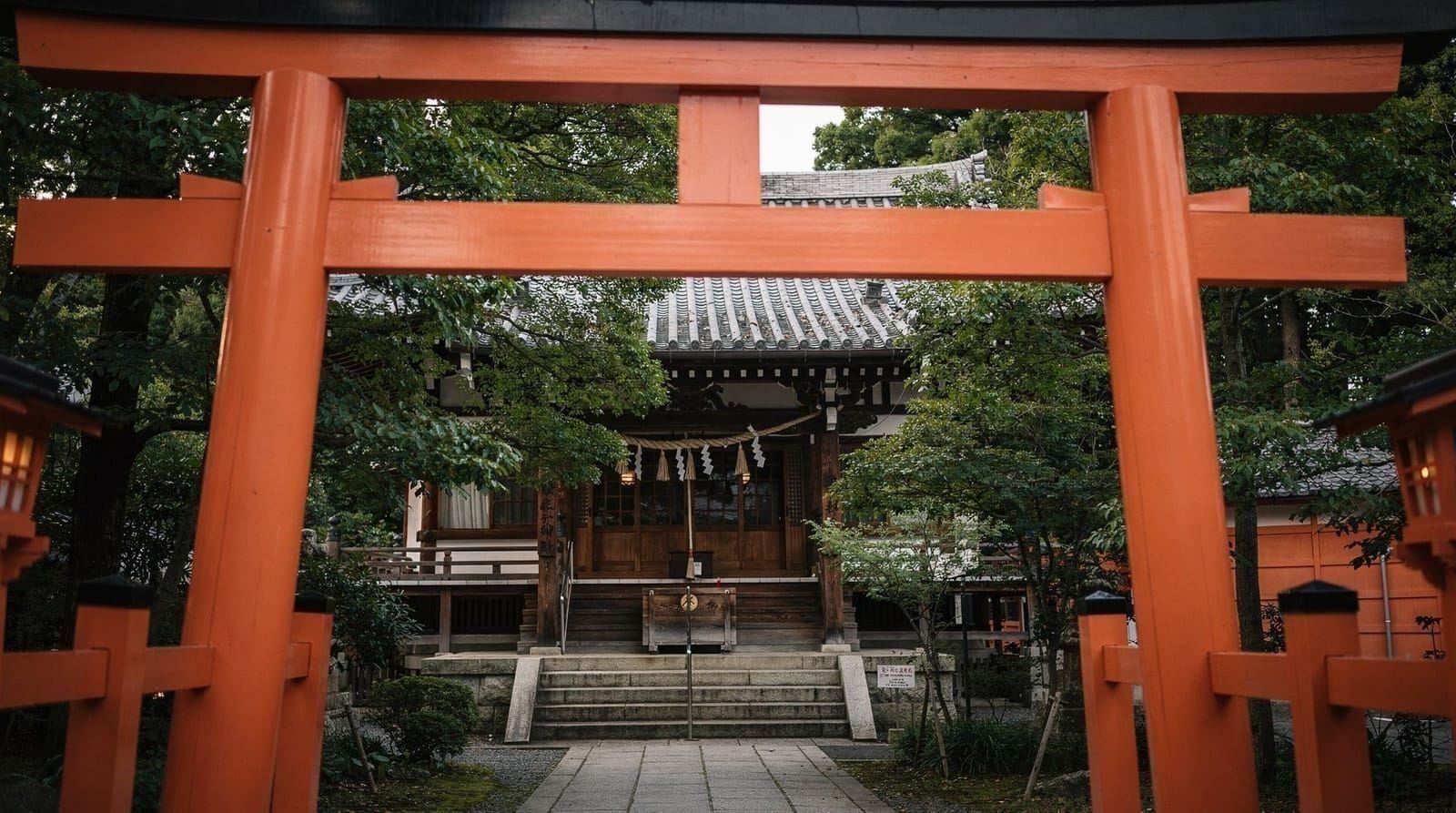
Nachi Falls drops 133 meters in a single unbroken sheet, making it Japan’s tallest single-drop waterfall, and it sits directly beside Kumano Nachi Taisha, one of the three grand shrines of the Kumano Kodo pilgrimage network. The combination visible from the shrine’s approach — vermilion shrine buildings, the three-story pagoda of neighboring Seiganto-ji, and the waterfall framed behind them — is one of the most reproduced single images of the Kii Peninsula, and it’s worth being upfront that reaching it is a genuine undertaking rather than a casual add-on to an Osaka-based trip.
The falls themselves have been an object of religious worship since well before the shrine’s formal establishment, worshipped directly as a kami (a Shinto deity inhabiting the natural feature itself) rather than merely as scenery — a form of nature worship that predates organized Shinto shrine architecture and still shapes how the site is treated today.
| From Osaka | 4-5 hours each way (train + bus); overnight recommended |
| Waterfall height | 133m, Japan’s tallest single drop |
| Shrine entry | Free (treasure hall and closer viewpoint extra, ~¥300 each) |
| Time needed | 2-3 hours at the site; 1 day minimum overall |
| Best time | October-November, or after rainfall for fuller flow |
Getting there — plan for a full day of travel
Nachi Falls sits on the Kii Peninsula’s southeastern coast, and from Osaka the journey runs four to five hours each way: the JR Kisei Line’s “Kuroshio” limited express from Shin-Osaka or Tennoji reaches Kii-Katsuura Station in roughly 3.5-4 hours, followed by a local bus (about 25-30 minutes) up into the hills to the shrine and falls. Given this, treating Nachi Falls as a day trip from Osaka means a very long day with limited time actually at the site — an overnight in Kii-Katsuura or nearby Nachikatsuura, both small coastal towns with onsen ryokan, is a considerably more comfortable way to see it without rushing straight back onto a train.
A rental car is a genuine alternative worth considering for this specific region — bus frequency along the Kii Peninsula’s southeastern coast is limited to a handful of departures a day, and a car removes the need to time a visit around a single return bus, at the cost of navigating narrow mountain roads without the safety net of public transit.
The waterfall and shrine together
From the bus stop, a short walk leads to a viewing platform with the classic framed view of the falls behind Seiganto-ji’s pagoda — free to view and one of the more reliably rewarding photo stops in the region regardless of weather, since the waterfall itself is dramatic even on an overcast day. A separate path climbs closer to the base of the falls (a modest additional fee, around ¥300, ~$2.80, for the closer viewing platform), where the sound and spray are considerably more immersive than from the distant framed view. Kumano Nachi Taisha’s shrine grounds are free to enter; a small fee (¥300, ~$2.80) applies to the treasure hall, which holds artifacts related to the shrine’s role in the broader Kumano pilgrimage tradition.
Kumano Nachi Taisha and Seiganto-ji waterfall tour covers the shrine, pagoda, and both waterfall viewpoints with a guide who can explain the site’s place in the Kumano Sanzan (the three grand shrines) and the Shinto-Buddhist syncretism visible in the shrine and pagoda standing side by side — a historical arrangement (shrines and temples sharing sacred sites) that was far more common before Meiji-era religious reforms formally separated the two.
Daimonzaka, the stone-paved approach
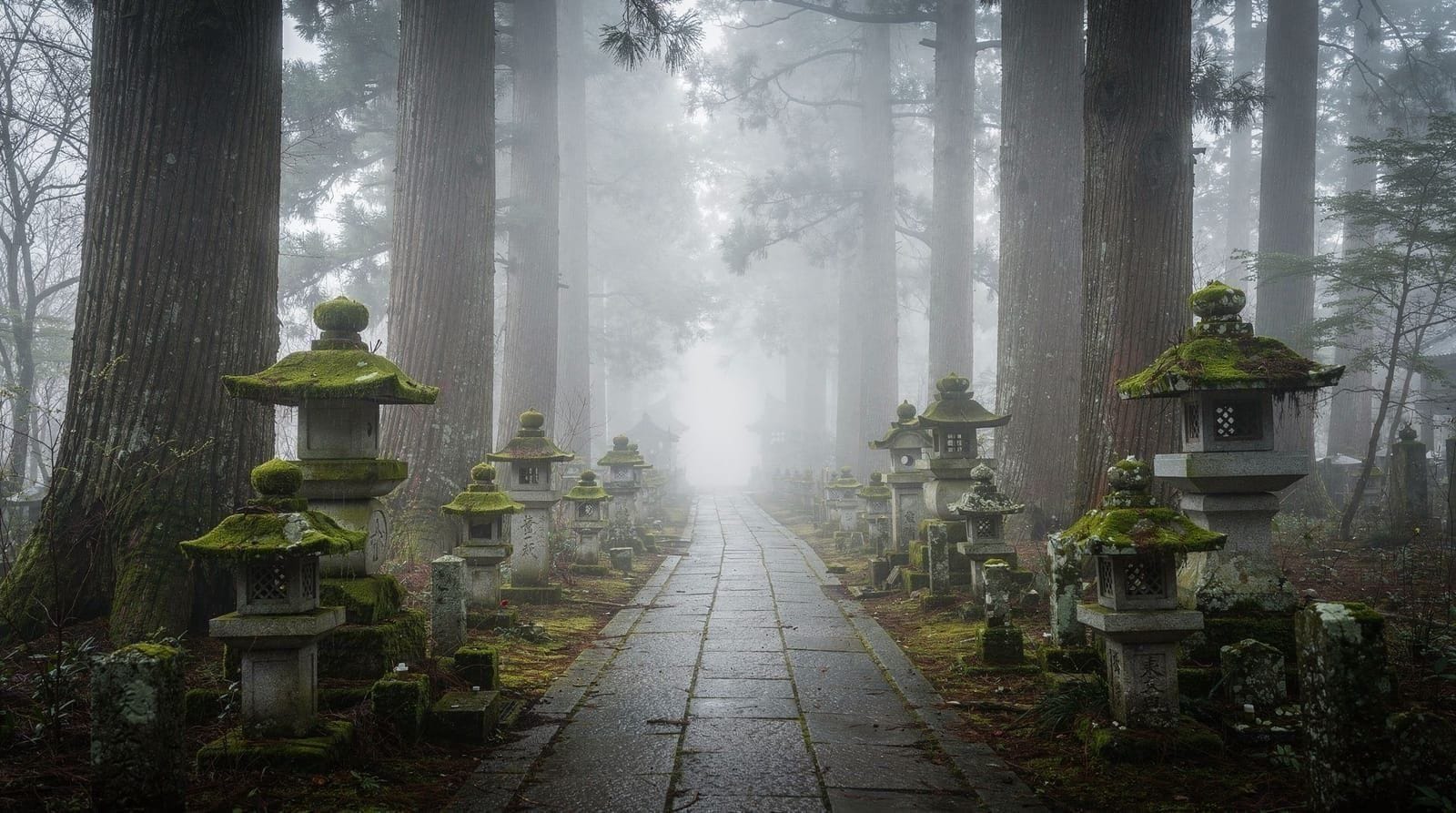
Rather than taking the bus directly to the shrine and falls, hikers can start one stop earlier at Daimonzaka, a roughly 600-meter stretch of ancient stone steps lined with towering old-growth cedars, some estimated at over 800 years old, that forms the final approach to Kumano Nachi Taisha on the Nakahechi pilgrimage route.
It’s one of the most photographed single stretches of the entire Kumano Kodo network, and walking it (about 30-40 minutes uphill) rather than skipping straight to the shrine by bus gives a genuine sense of arriving at the shrine the way pilgrims have for centuries, rather than simply pulling up to a parking area. Traditional rental costumes (Heian-period court dress) are available near the trailhead for visitors who want photos in period clothing along the cedar-lined steps, a popular if slightly touristic option.
Seiganto-ji
Seiganto-ji, the Buddhist temple standing immediately beside the Shinto shrine, is itself the first stop on the Saigoku Kannon Pilgrimage, a 33-temple circuit across western Japan dating to the 8th century — meaning Nachi sits at the intersection of two entirely separate, historically significant pilgrimage traditions (the Kumano Kodo and the Saigoku circuit), a detail easy to miss without a guide’s context. The temple’s three-story pagoda, rebuilt in 1972 after the original burned, is the structure that appears in the classic framed photograph of the falls.
Combining Nachi Falls with the wider region
Nachi Falls is the natural southeastern endpoint for visitors walking the Kumano Kodo’s Nakahechi route, and it’s also reachable in combination with an overnight extension from Koyasan, given both sit within the wider Kii Peninsula pilgrimage network, though the direct road and rail connection between the two takes several hours.
Mt Koya and Nachi Falls private day trip combines both sites for visitors with a full day and a private vehicle, a practical way to link two of the region’s most significant but geographically distant sights without piecing together public transit schedules. For a version starting from a Wakayama base with additional hidden trail sections, Wakayama hidden trails and Nachi Falls day tour covers a quieter approach to the falls away from the main viewing platform crowds. For visitors building a longer trip around all three — Koyasan, Wakayama, and Nachi Falls — from a Kyoto or Osaka base, Osaka, Kyoto, Mt Koya, Wakayama, and Nachi waterfall trip covers the full multi-day route in a single organized itinerary.
Nachi Fire Festival
If timing allows, Nachi Taisha hosts the Nachi Fire Festival (Nachi no Ogi Matsuri) each July 14, one of Japan’s more visually striking Shinto festivals — a dozen enormous ceremonial torches, each weighing around 50kg and carried by teams of men in white robes, are paraded up and down the stone steps near the waterfall in a ritual believed to welcome the mountain deities down to the shrine and back. It draws a significant crowd for a rural shrine this remote, and accommodation in Nachikatsuura books up well in advance of the date — worth planning specifically around if the festival itself is the draw rather than a bonus.
Nachikatsuura, the coastal town
The nearby coastal town of Nachikatsuura is a working fishing port, one of Japan’s largest tuna landing sites, and a reasonable overnight base with a scattering of onsen ryokan overlooking the harbor. It’s a quieter, more practical stop than a scenic destination in its own right, but it’s the realistic place to stay if breaking up the long journey to and from Nachi Falls with an overnight.
The town’s early-morning tuna auction, held at the fishing port, is open to visitors on a limited basis and worth checking with a local ryokan about, given the town’s status as one of the country’s largest landing points for the fish — a genuinely different kind of Kansai experience from the temples and gardens further north. Several harbor-front ryokan and hotels offer set dinners built entirely around the day’s catch, a reasonable way to eat well after a long day of travel and sightseeing.
Nachisan, the broader shrine complex
Beyond the main Kumano Nachi Taisha and Seiganto-ji pairing, the mountainside above is dotted with subsidiary shrines and smaller waterfalls collectively referred to as Nachisan, some connected by short forest trails from the main complex. Most visitors on a limited schedule stick to the main viewing platforms, but hikers with an extra hour or two can explore further up the mountain for a quieter, less-photographed perspective on the same sacred landscape — a genuine option for repeat visitors or those pairing the falls with a longer Kumano Kodo hiking day.
How much time Nachi Falls needs
The shrine, pagoda, and both waterfall viewpoints can be covered in about two to three hours once you’ve arrived, which is a small fraction of the total day given the four-to-five-hour journey each way from Osaka. This is the core reason an overnight nearby, rather than a same-day round trip, makes the visit considerably more worthwhile relative to the travel time invested.
Seasonal timing
October and November bring foliage color to the hillsides around the falls, a genuinely striking combination with the shrine’s vermilion buildings. The waterfall’s volume varies noticeably with recent rainfall — a visit shortly after rain shows considerably more water volume than during a dry spell, particularly in late summer.
Typhoon season (August-September) brings both the fullest waterfall flow and the highest risk of bus service disruption on this exposed stretch of coast, worth checking forecasts for before committing to the long journey. Winter brings noticeably fewer visitors and a cooler, clearer atmosphere around the falls, though the coastal Kii Peninsula climate is milder than inland Kansai, rarely dropping to genuinely cold temperatures even in January.
| Season | Water volume | Crowds | Notes |
|---|---|---|---|
| Spring (Mar-May) | Moderate | Light-moderate | Mild coastal weather, good hiking conditions |
| Summer (Jun-Aug) | Variable, spikes after rain | Light | Typhoon risk Aug-Sep can disrupt buses |
| Autumn (Oct-Nov) | Moderate-high | Moderate | Best combination of foliage color and flow |
| Winter (Dec-Feb) | Lower, steadier | Lightest | Mild coastal climate, quiet viewing platforms |
Wakayama and the wider Kii Peninsula
Nachi Falls sits within Wakayama Prefecture, and visitors building a longer trip around the region often base themselves in Wakayama city or along the coast rather than treating Nachi as an isolated day trip from Osaka. Wakayama’s own castle, Kuroshio market seafood, and the Shirahama Coast further south round out a multi-day itinerary that spreads the long travel time across several stops rather than concentrating it into a single exhausting round trip. This regional framing matters more here than for most Kansai day-trip destinations, given how far Nachi actually sits from Osaka.
Shirahama Coast as a relaxing add-on
South of Nachi along the same JR Kisei Line, the Shirahama Coast offers white-sand beaches and one of Japan’s oldest hot spring towns, a genuinely different pace from the shrine-and-waterfall visit at Nachi. Visitors already committing to the long journey down the Kii Peninsula sometimes extend the trip by a night or two to include Shirahama, splitting the exhausting travel time across a beach-and-onsen stop rather than a single rushed there-and-back day focused only on the falls.
Hiking the wider Kumano Kodo network
Nachi Falls’ role as the Nakahechi route’s endpoint means it’s also a natural point of reference for hikers planning a longer multi-day walk through the wider pilgrimage network rather than a single-site visit. The Kumano Kodo hiking guide covers route options, difficulty levels, and where to base overnight stays along the trail, useful context for deciding whether to approach Nachi as a standalone train-and-bus destination or as the final stretch of a longer walking itinerary.
Frequently asked questions about Nachi Falls
How long does it take to get to Nachi Falls from Osaka?
Four to five hours each way: roughly 3.5-4 hours by JR limited express from Shin-Osaka or Tennoji to Kii-Katsuura Station, followed by a 25-30 minute local bus up to the shrine and falls.
Is Nachi Falls worth a day trip from Osaka, given the travel time?
It’s possible but means a very long day for a comparatively short time at the site itself (2-3 hours). An overnight in Kii-Katsuura or Nachikatsuura makes the trip considerably more worthwhile relative to the travel invested.
How tall is Nachi Falls?
133 meters in a single unbroken drop, making it Japan’s tallest single-drop waterfall.
Is there an entrance fee for Nachi Falls?
The main viewing platform is free. A closer viewpoint near the waterfall’s base has a modest additional fee (around ¥300). The shrine grounds are free; the treasure hall charges a small fee.
What is the relationship between Kumano Nachi Taisha and Seiganto-ji?
They’re a Shinto shrine and a Buddhist temple standing side by side on the same sacred site, a historically common arrangement (shrine-temple syncretism) that was more widespread before Meiji-era reforms formally separated Shinto and Buddhist institutions across Japan.
Can I combine Nachi Falls with the Kumano Kodo or Koyasan?
Yes — Nachi Falls is the southeastern endpoint of the Kumano Kodo’s Nakahechi route and part of the same wider Kii Peninsula pilgrimage network as Koyasan, though direct travel between Koyasan and Nachi Falls takes several hours.
What’s the best time to see the waterfall at its most dramatic?
Shortly after rainfall, when water volume is noticeably higher, or during October-November foliage season for the best combination of color and water flow.
Top experiences
Bookable activities with verified prices and instant confirmation on GetYourGuide.