Osaka to Koyasan day trip guide
Koyasan: From Osaka Mt. Koya 1 day private walking
Can Koyasan be done as a day trip from Osaka?
Yes, but it's the most transit-heavy day trip covered on this site — roughly two hours each way by train, cable car, and bus, meaning four hours of a single day go to transit alone. It's doable and covers Okunoin's cemetery and the main temple complex, but it misses the dawn and after-dark atmosphere that make Koyasan distinctive, which only an overnight temple stay allows.
Koyasan is the one destination on this site where the honest answer to “should I do this as a day trip” is genuinely mixed. The mountain temple town, founded in 816 by the monk Kobo Daishi as the headquarters of Shingon Buddhism, rewards an overnight stay in a way few other Kansai destinations do — but a single day is still a real, worthwhile option for visitors without the extra night to spare, provided expectations are set correctly beforehand.
| Where | Mount Koya, about 2 hours from Osaka’s Namba Station |
| Cost | ~¥2,860-3,620 one-way; World Heritage Ticket bundles transit |
| Time needed | Full day for a day trip; overnight for the fuller experience |
| Getting there | Nankai Koya Line train, cable car, then local bus |
| Weather note | Roughly 800m up — noticeably colder than Osaka year-round |
The transit reality: about two hours each way
The standard route runs on the Nankai Koya Line: an express or limited express train from Osaka’s Namba Station to Gokurakubashi Station takes about 90-100 minutes, followed by the Koyasan Cable Car’s steep five-minute climb to Koyasan Station, then a shared bus covering the final 10 minutes into the temple town itself, since the town spreads along a ridge rather than clustering at the cable car terminus.
Total one-way travel time runs close to two hours door to door, and total cost from Namba to Koyasan town is roughly ¥2,860-3,620 (~$26.50-$33.50) depending on whether you take the limited express (an extra ¥760 for about 10 minutes saved). On a single-day round trip, this means close to four hours of a single day go to transit alone, before any sightseeing starts.
What a single day actually covers
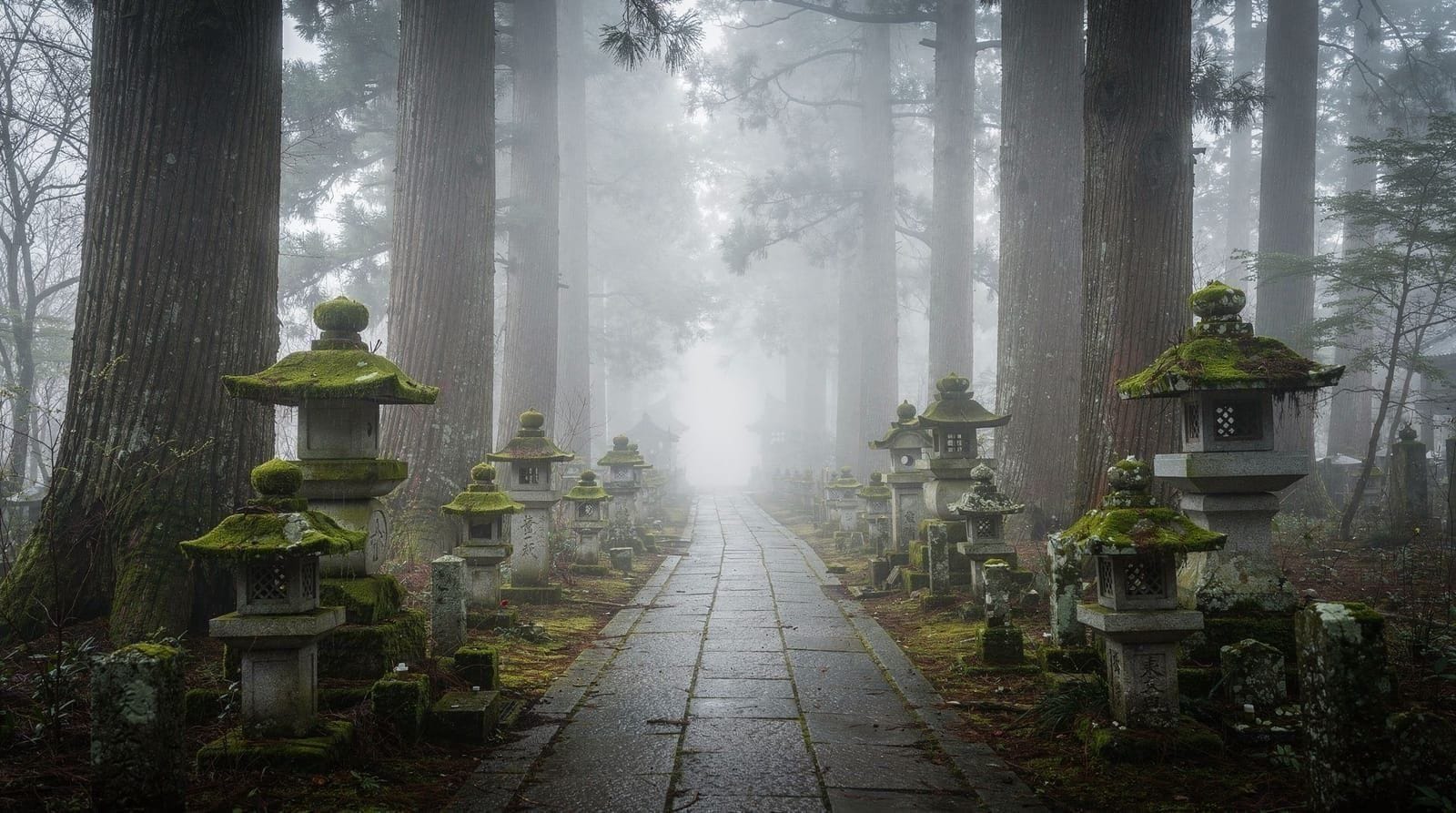
Within the roughly six to seven hours of daylight sightseeing time a day trip leaves, the core Koyasan experience — walking Okunoin’s forest cemetery to Kobo Daishi’s mausoleum, and seeing the Danjo Garan temple complex with its vermilion Konpon Daito pagoda — fits comfortably. What a day trip genuinely misses is Koyasan’s dawn and after-dark atmosphere, which by most accounts (including the tour operators who run guided walks specifically timed around it) is the mountain’s most distinctive quality: the same forest path at midday, with a Nankai train timetable pressing on the schedule, is a meaningfully different experience from the same walk at dawn or under lantern light after dark, unhurried by a return-train deadline.
Okunoin cemetery and Kobo Daishi guided tour covers the core day-trip experience — the 2-kilometer forest walk past roughly 200,000 tombstones to the mausoleum — with historical context on the eternal meditation belief central to why the site is treated the way it is.
Danjo Garan and Kongobuji: beyond Okunoin
Koyasan’s other major complex, Danjo Garan, includes the vermilion Konpon Daito pagoda and a cluster of temple halls representing the mountain’s role as Shingon Buddhism’s headquarters. Nearby, Kongobuji, the head temple of the Shingon sect, holds Banryutei, Japan’s largest rock garden, arranged with white granite gravel from Kyoto and stones from Shikoku to evoke a pair of dragons emerging from clouds.
Koyasan highlights tour with a special guide, 4 hours covers Okunoin alongside these additional sites in a single guided route, an efficient way to see the mountain’s main highlights within the time a day trip realistically allows.
Guided versus independent for a day trip
Given the transit complexity — train, cable car, and bus, each on its own schedule — a guided day trip removes a genuine layer of logistics that independent travelers have to manage themselves, particularly valuable on a day-trip timeline where a missed connection has more consequence than on an overnight stay with slack built in.
From Osaka: Mt. Koya 1-day private walking tour is built specifically around the day-trip constraint, structuring the walking route to fit within the transit-limited daylight hours available. Mount Koya full-day private guided tour from Osaka covers a similarly comprehensive single day with a private guide managing the pace against the return-train schedule.
Why an overnight changes the visit
Staying overnight at one of Koyasan’s roughly 60 shukubo (temple lodgings that take overnight guests) allows an early-morning Okunoin walk before day-trippers arrive on the first train, and a proper evening visit after they’ve left — the two windows a same-day round trip can’t realistically access given the transit time on both ends. Temple stays typically run ¥15,000-25,000 per person (~$139-$232), including vegetarian monastic cuisine (shojin ryori) and, at some temples, an invitation to join morning prayers. Full detail on choosing and booking a shukubo sits in the Koyasan temple stay guide.
Honest cold-weather warning
Koyasan sits roughly 800 meters up in the mountains, and even visitors who’ve checked an Osaka forecast are sometimes caught off guard by how much colder the mountain runs — genuinely cold at night even in shoulder seasons, and properly cold with snow in winter (December-February), when some temple lodgings close entirely. For a day trip specifically, this matters less than for an overnight stay, but layering for a noticeably cooler mountain climate than whatever Osaka is experiencing the same day is still worth planning for, particularly for an early-morning or late-afternoon visit when temperatures drop fastest.
A realistic day-trip schedule
Departing Namba by 7-7:30am on the earliest reasonable limited express puts you in Koyasan town by roughly 9:30am. Budget 1.5-2 hours for Okunoin (the walk plus time at the mausoleum), then 1-1.5 hours for Danjo Garan and Kongobuji, leaving a reasonable buffer for lunch (shojin ryori is available at several restaurants in town even without an overnight temple stay) before the return journey, ideally departing Koyasan by mid-afternoon to avoid a late-evening arrival back in Osaka after an already long day.
The Koyasan World Heritage Ticket
For a day trip specifically, the Koyasan World Heritage Ticket, sold at Nankai stations in Osaka, bundles round-trip train travel, the cable car, and unlimited local bus rides around the mountain into a single discounted pass — worth buying before departure rather than paying each transit leg separately, since a day trip already involves enough separate transfers without adding individual ticket purchases at each one.
Should you day trip or stay overnight?
If Koyasan is one stop among several on a tightly scheduled Kansai trip and an extra night isn’t available, a day trip is a legitimate way to see Okunoin and the main temple complex — just go in knowing you’re seeing a version of the mountain without its most distinctive dawn-and-dusk quality. If Koyasan is a trip highlight rather than a checklist item, or if the schedule has any flexibility at all, the overnight shukubo experience is worth prioritizing over almost anything else this guide could suggest instead.
Day trip versus overnight: what you actually gain or lose
| Day trip | Overnight (shukubo) | |
|---|---|---|
| Transit | ~4 hours round trip | Same, but spread across two days |
| Okunoin at dawn/dusk | Missed | Included |
| Cost | Transit + admission only | ¥15,000-25,000/person incl. meals |
| Pace | Compressed by return-train schedule | Unhurried |
Frequently asked questions about Osaka
Is a Koyasan day trip worth it if I can’t stay overnight?
Yes, with the caveat that you’ll see the mountain at its busiest, most ordinary hours rather than its distinctive dawn or after-dark atmosphere. It still covers Okunoin’s cemetery walk and the Danjo Garan complex properly, and remains one of the more unusual day trips available from Osaka.
What should I pack for a Koyasan day trip?
Layers, even in shoulder seasons — the mountain runs noticeably colder than Osaka given its roughly 800-meter elevation, and comfortable walking shoes for the 2-kilometer Okunoin forest path are essential.
Related planning
For the full temple-stay experience, see the Koyasan temple stay guide; for Okunoin’s history and etiquette in depth, see the Koyasan Okunoin guide. The main Koyasan destination page covers broader trip logistics, and the Kumano Kodo hiking guide covers a historically connected but considerably more remote extension for visitors with extra days in the wider Wakayama region.
Top experiences
Bookable activities with verified prices and instant confirmation on GetYourGuide.