Osaka's temples and shrines
Osaka: Osaka Shitenno-ji Isshin-ji bone buddha tour
Duration: 2 hours
Does Osaka have temples and shrines worth visiting beyond Kyoto?
Yes — Shitenno-ji, founded in 593, is one of Japan's oldest officially administered Buddhist temples, and Sumiyoshi Taisha, founded in 211, predates Buddhist architectural influence entirely. Both sit outside Osaka's main castle-and-Dotonbori tourist circuit and see far fewer visitors than Kyoto's temples.
Osaka’s reputation runs toward food, neon, and Universal Studios rather than religious architecture, and most first-time visitors treat the city as a base for Kyoto and Nara day trips rather than a temple destination in its own right. That reputation undersells what’s actually here: Shitenno-ji is one of the oldest officially administered Buddhist temples in the country, Sumiyoshi Taisha predates Buddhist architectural influence altogether, and a scattering of smaller, stranger sites — including a temple with Buddha statues built from cremated ash — sit within the city limits, mostly ignored by travelers rushing toward the JR line to Kyoto.
| Where | Tennoji (Shitenno-ji, Isshin-ji), south (Sumiyoshi Taisha), north (Osaka Tenmangu) |
| Cost | Mostly free; Shitenno-ji’s inner garden/treasure hall ¥300-500 |
| Time needed | Half a day for the core sites |
| Getting there | JR/subway to Tennoji, Nankai/Hankai to Sumiyoshi, Tanimachi line to Tenmangu |
| Crowds | Minimal outside Sumiyoshi’s New Year and Tenmangu’s July festival |
Shitenno-ji: Japan’s oldest officially administered temple
Founded in 593 by Prince Shotoku, an early and pivotal figure in establishing Buddhism in Japan, Shitenno-ji is widely cited as the oldest Buddhist temple in the country to be continuously, officially administered since its founding (several older sites exist as ruins or reconstructions with less continuous institutional history).
The current buildings are reconstructions — like most wooden temples in Japan, Shitenno-ji has burned down and been rebuilt multiple times over 1,400-plus years, most recently after World War II bombing — but the temple’s layout follows a distinctive early-Buddhist design called Shitenno-ji-style garan, with a gate, pagoda, main hall, and lecture hall arranged in a straight line, an older configuration than the more elaborate layouts seen at later temples.
Shitenno-ji private tour covers the temple’s founding history and its role in establishing Buddhism in Japan, context that’s easy to miss without a guide given the temple’s relatively sparse English signage.
Isshin-ji and its bone Buddha statues
A short distance from Shitenno-ji, Isshin-ji has a genuinely unusual claim: several of its Buddha statues (called Okotsubutsu) are constructed partly from the compressed cremated ashes of tens of thousands of former worshippers who requested their remains be used this way, a tradition unique to this temple rather than standard Japanese Buddhist practice. It’s a striking, slightly unsettling detail that most visitors have never heard of before arriving, and one of the more distinctive stories in Osaka’s religious history.
Shitenno-ji and Isshin-ji combined tour pairs both temples into a single half-day route, useful given how close together they sit and how different their respective stories are.
Sumiyoshi Taisha: older than Buddhist influence
South of the city center, Sumiyoshi Taisha is one of Japan’s oldest shrines, founded according to tradition in 211, and built in the Sumiyoshi-zukuri architectural style — a straight-lined design that predates the curved rooflines Buddhist architecture later introduced to Japanese religious buildings. Its arched vermilion Sorihashi drum bridge is one of the more photographed single features among Osaka’s shrines, and the shrine remains one of the region’s most popular hatsumode (New Year) destinations, drawing crowds well over two million in the first days of January.
Osaka Tenmangu and the Tenjin Matsuri
Osaka Tenmangu, in the northern part of the city near Umeda, is dedicated to Sugawara no Michizane, a Heian-period scholar later deified as the god of learning — a popular stop for students visiting ahead of exams, who leave wooden ema plaques with wishes written on them. The shrine hosts the Tenjin Matsuri each July 24-25, one of Japan’s three largest festivals, featuring a river procession of boats and a fireworks display over the Okawa river — a genuinely major local event that draws over a million spectators but remains less known internationally than Kyoto’s Gion Matsuri held the same month.
How these sites compare to Kyoto’s temple circuit
Osaka’s temples and shrines don’t compete with Kyoto’s on sheer density or the singular visual impact of sites like Kinkaku-ji or Fushimi Inari, and there’s no honest case for skipping Kyoto’s temple circuit in favor of Osaka’s.
What Osaka offers instead is history that predates Kyoto’s own temple-building era in some cases (Shitenno-ji, Sumiyoshi Taisha), stranger, more specific stories (Isshin-ji’s bone Buddha), and — practically speaking — the complete absence of crowds. Visitors who’ve spent a few days working through the temple density of Kyoto or Nara often find an unhurried afternoon at Shitenno-ji or Sumiyoshi Taisha a useful change of pace, without the queues, tour buses, or photo-spot bottlenecks.
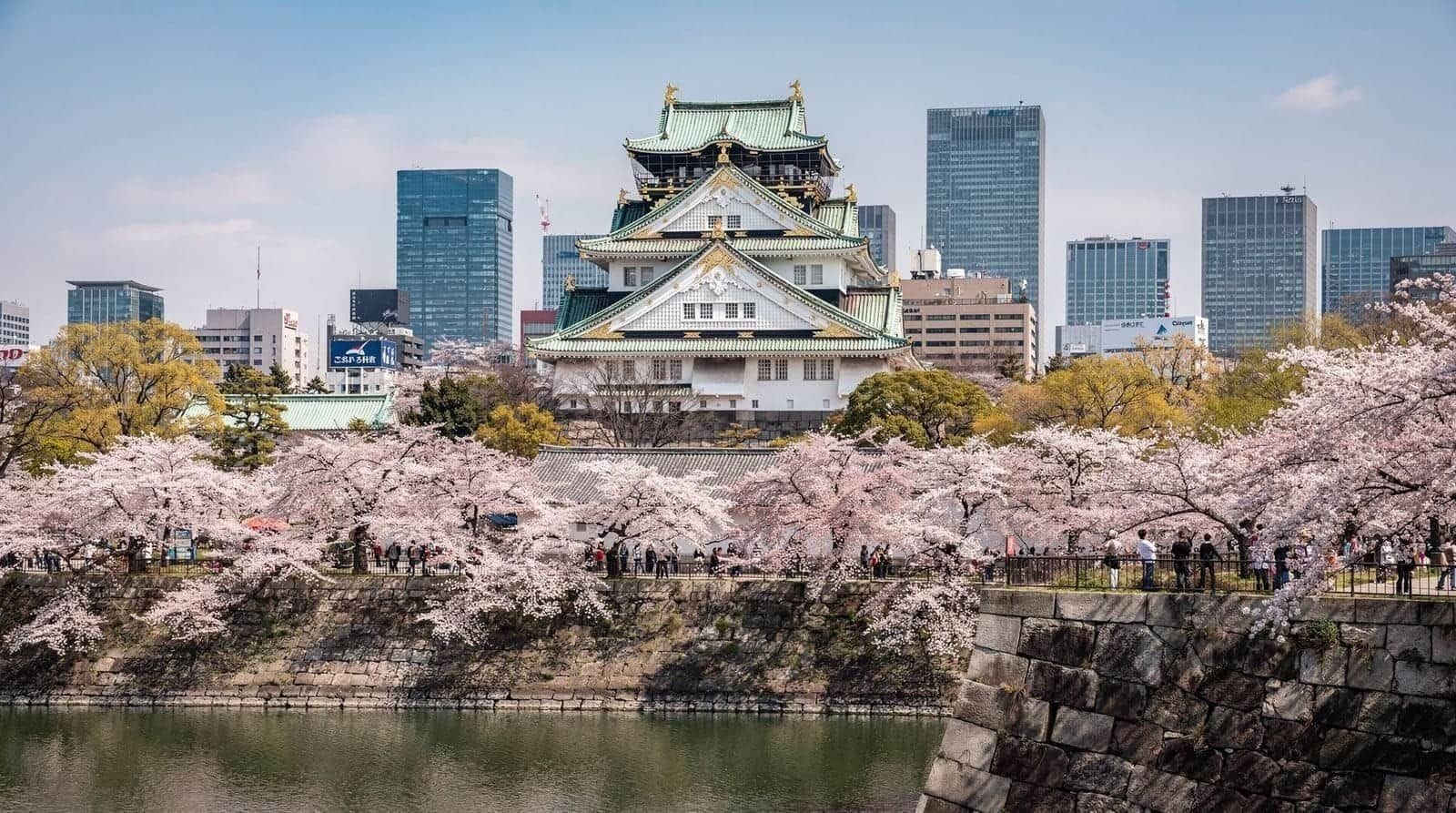
Osaka castle, temple, and shrine walking tour combines several of these historic sites with the castle grounds into a single guided half-day, a practical way to see Osaka’s older religious history without planning transit between each site individually.
Shitenno-ji’s turtle pond and market days
Beyond the main garan layout, Shitenno-ji’s grounds include Gokuraku-jodo Garden, a Pure Land-style pond garden built to represent Buddhist paradise, and a turtle pond near the temple’s Rokujido hall where locals release turtles as an act of merit-making — a quieter, less-photographed corner of the complex that most guided tours skip in favor of the main pagoda and hall.
On the 21st and 22nd of each month, Shitenno-ji hosts a large flea and antiques market across its grounds, drawing local vendors selling everything from vintage kimono to ceramics and old photographs — a genuinely different, more chaotic and commerce-driven atmosphere from the temple’s usual quiet, and worth timing a visit around for travelers interested in browsing rather than pure sightseeing.
Osaka Tenmangu in more depth
Beyond its Tenjin Matsuri fame, Osaka Tenmangu functions year-round as a popular shrine for students and job seekers seeking academic or career success, given its dedication to the deified scholar Sugawara no Michizane, and the surrounding Tenjinbashisuji shopping arcade — one of Japan’s longest covered shopping streets — makes the shrine easy to combine with an afternoon of browsing rather than treating it as an isolated stop. The shrine’s main hall, like most of Osaka’s older wooden structures, has been rebuilt multiple times after fire, with the current buildings dating to the 19th century following a large fire in 1837 connected to a local uprising.
Isshin-ji’s broader history
Isshin-ji’s founding dates to 1185, tied to the priest Honen, a pivotal figure in Japanese Pure Land Buddhism, and the temple’s practice of incorporating cremated remains into its Buddha statues began in the early 20th century as a response to space constraints in Osaka’s crowded urban cemeteries — a practical solution that took on its own devotional meaning over time. The temple was almost entirely destroyed during World War II bombing raids on Osaka and rebuilt afterward, meaning the current Okotsubutsu statues, while continuing a decades-old practice, are more recent creations than the tradition itself might suggest.
A comparison of admission costs across Osaka’s sites
Nearly all of Osaka’s temples and shrines covered here — Shitenno-ji’s outer grounds, Isshin-ji, Sumiyoshi Taisha, and Osaka Tenmangu — are free to enter, with only Shitenno-ji’s inner garden and treasure hall charging a modest separate fee (typically ¥300-500). This makes a temple-focused Osaka afternoon one of the least expensive sightseeing blocks available in the city, a useful contrast for travelers who’ve spent the previous days paying admission at Kyoto’s more consistently ticketed sights.
Getting around to Osaka’s temples and shrines
Shitenno-ji and Isshin-ji sit close together near Tennoji Station, making them an easy pairing with a visit to Shinsekai and Tennoji for food and the retro entertainment district nearby. Sumiyoshi Taisha requires a separate trip south via the Nankai Main Line or the retro Hankai Tramway, while Osaka Tenmangu sits closer to Umeda and Kita, reachable via the Tanimachi subway line. None of these sites require more than standard train or subway fare, and none involve the reservation or ticket-timing complexity of some of Kyoto’s more visited temples.
Building temples into a broader Kansai itinerary
For travelers weighing how much time to allocate to Osaka’s religious sites against Kyoto’s, Nara’s, or the mountain temple complex at Koyasan, the honest answer is that Osaka’s temples work best as a half-day supplement rather than a full-day destination.
A single afternoon covering Shitenno-ji, Isshin-ji, and time in Shinsekai and Tennoji fits comfortably alongside a Kansai trip anchored by Kyoto’s Fushimi Inari and Kinkaku-ji, Nara’s Todai-ji, and — for travelers with an extra day — an overnight temple stay at Koyasan. Those wanting a fuller ranked comparison of the region’s must-see temples specifically should see the best temples in Kyoto guide, which covers the sites most travelers prioritize first.
Why Osaka’s religious history gets overlooked
Part of the reason Osaka’s temples receive less international attention than Kyoto’s has less to do with historical significance and more to do with Osaka’s own self-presentation and modern reputation — the city rebuilt aggressively after World War II bombing and the earlier Edo-period fires, prioritizing commercial and residential development over the kind of comprehensive historical preservation and tourism branding Kyoto pursued as its former imperial capital status made temple preservation a more central part of civic identity.
Osaka’s temples, several of them older than Kyoto’s own founding as capital in 794, exist somewhat quietly within a city that markets itself primarily around food, comedy, and modern entertainment rather than religious heritage.
A half-day itinerary combining several sites
A realistic half-day covering Osaka’s temple history might start at Shitenno-ji and Isshin-ji near Tennoji Station in the morning, continue with lunch and a walk through Shinsekai’s retro entertainment district, and finish with an afternoon trip south to Sumiyoshi Taisha via the Nankai Main Line or the Hankai Tramway. This sequence keeps transit relatively efficient while covering the city’s three most significant religious sites in a single day, without requiring an early start or aggressive pacing.
Osaka’s temples and shrines during festivals
Beyond Sumiyoshi Taisha’s hatsumode crowds and Osaka Tenmangu’s Tenjin Matsuri, several of the city’s temples hold smaller seasonal events worth knowing about — Shitenno-ji’s monthly flea market (21st-22nd) draws a genuinely different, more commerce-focused crowd than its usual quiet daily visitors, while Isshin-ji occasionally holds memorial services connected to its ash-Buddha tradition, generally low-key events not specifically publicized to tourists but not restricted from respectful observation either.
Shitenno-ji’s ongoing role in Japanese Buddhism
Beyond its historical significance, Shitenno-ji remains an active center of the Wa-shu school of Buddhism, a denomination specifically founded to honor Prince Shotoku’s particular interpretation and synthesis of Buddhist teaching, distinct from the larger established schools like Zen or Pure Land Buddhism more commonly encountered elsewhere in Kansai. The temple continues to host ordination ceremonies, study programs, and public lectures aimed at both practicing Buddhists and the general public, a level of ongoing institutional activity that some of the more purely tourist-oriented temples in Kyoto, however historically significant, have moved further away from in favor of a primarily sightseeing-oriented visitor experience.
Visiting during Obon and other Buddhist observances
Osaka’s Buddhist temples, Shitenno-ji and Isshin-ji included, see a marked increase in local visitor activity during Obon, the mid-August festival honoring deceased ancestors, when many Japanese families visit family graves and associated temples as part of the observance. Isshin-ji’s ash-Buddha tradition makes it a particularly significant Obon destination for families with a specific personal or ancestral connection to the temple’s memorial practices, and visitors touring during this period should expect a somewhat different, more solemn atmosphere than an ordinary weekday visit, alongside genuinely higher foot traffic than the temple sees for most of the year.
Osaka Tenmangu’s shopping arcade connection
The Tenjinbashisuji shopping arcade adjoining Osaka Tenmangu stretches roughly 2.6 kilometers, making it one of Japan’s longest covered shopping streets, and its proximity to the shrine means a visit here naturally extends into browsing local shops, cafes, and small restaurants rather than a purely religious stop. This pairing — shrine plus shopping arcade — is a distinctly Osaka combination, reflecting the city’s general tendency to blend commerce and tradition more casually than Kyoto’s more formally preserved, separated approach to its historic sites.
Photography and modest dress at Osaka’s sites
None of the sites covered here impose strict dress codes, and photography is generally permitted throughout public grounds, with restrictions limited to specific inner sanctuary buildings where signage indicates otherwise, consistent with etiquette at most Kansai temples and shrines. Given how few international tourists visit these sites relative to Kyoto’s major attractions, photographers may find it easier to capture uncluttered shots of the architecture here than at almost any comparably significant site in Kyoto.
How much time these sites collectively deserve
For travelers weighing whether Osaka’s temples earn a place on an already packed Kansai itinerary, a reasonable rule of thumb: allocate half a day if genuinely interested in religious history and architecture beyond Kyoto’s more famous sights, or skip entirely in favor of more time in Kyoto or Nara if temples aren’t a primary trip interest and Osaka’s food and entertainment districts are the bigger draw. Neither choice is wrong — Osaka’s own tourism identity has never centered on temples the way Kyoto’s has, and there’s no obligation to treat every historically significant site as mandatory sightseeing on a limited-time trip.
Osaka’s temples in the context of the city’s broader reconstruction history
Osaka’s willingness to rebuild aggressively rather than obsessively preserve every historical fragment traces back partly to the sheer scale of destruction the city faced across its history — repeated Edo-period fires, the 1615 Siege of Osaka that leveled much of the castle town, and extensive World War II bombing that flattened large sections of the city center.
This history of repeated, near-total rebuilding shaped a civic culture more comfortable prioritizing functional renewal over strict historical preservation, in noticeable contrast to Kyoto, which was deliberately spared major Allied bombing during World War II specifically because of its cultural significance, allowing far more of its historic urban fabric to survive intact into the present day.
One more practical note on timing
None of the sites in this guide require the dawn-timing strategy essential to enjoying Fushimi Inari or Kiyomizu-dera without crowds, since visitor numbers here remain modest throughout the day even during peak Kansai travel seasons — a genuine scheduling advantage for travelers building a flexible itinerary that doesn’t require an early alarm specifically for this portion of the trip.
A final comparison worth keeping in mind
Visitors sometimes ask whether Osaka’s temples are “worth it” compared to simply spending more time in Kyoto — the honest answer depends entirely on what’s already been covered elsewhere in the trip. For a first-time visitor who hasn’t yet seen Kyoto’s major sights, that time is almost always better spent there first; for a repeat visitor or someone specifically drawn to overlooked history and quiet, uncrowded sites, Osaka’s temples offer a genuinely rewarding afternoon that most itineraries never make room for.
Setting realistic expectations for an Osaka temple day
None of the sites covered in this guide will out-dazzle Kyoto’s headline temples on pure visual spectacle, and travelers arriving with that specific expectation should recalibrate before visiting. The genuine payoff here is historical depth — Shitenno-ji and Sumiyoshi Taisha both predate significant parts of Kyoto’s own temple-building era — combined with the practical benefit of near-empty grounds, a trade worth making for travelers who’ve already had their fill of tour-bus crowds elsewhere in the region and want a calmer, more contemplative afternoon.
Osaka’s overview
For general orientation on Osaka’s neighborhoods and how a temple-focused afternoon fits into a broader stay, see the Osaka destination page and the Osaka Castle area guide, which sits a short distance from several of the sites covered here.
Comparing Osaka’s three main temple areas
| Area | Main site | Character | Time needed |
|---|---|---|---|
| Tennoji | Shitenno-ji, Isshin-ji | Oldest history, close together | 2-3 hours |
| South Osaka | Sumiyoshi Taisha | Pre-Buddhist shrine architecture | 1-1.5 hours |
| North Osaka | Osaka Tenmangu | Shopping-arcade pairing, festival energy | 1 hour |
What a guided visit adds that a solo walk-through misses
Shitenno-ji’s sparse English signage means a fair amount of the temple’s founding role in establishing Buddhism in Japan, and the significance of its garan layout relative to later temple designs, is easy to walk past without context.
Osaka castle, temple, and shrine walking tour bundles several of these historic sites with the castle grounds, useful for visitors who’d rather have the history explained in sequence than piece it together from scattered signage.
Frequently asked questions about Osaka
Are Osaka’s temples worth visiting if I’m also going to Kyoto?
Yes, as a complement rather than a substitute. Kyoto’s temple circuit is denser and more visually spectacular, but Osaka’s sites — several older than Kyoto’s own founding as capital — offer a quieter, uncrowded half-day that pairs well with a Kyoto-focused trip rather than competing with it.
Do I need to book tickets in advance for Shitenno-ji or Sumiyoshi Taisha?
No. Neither requires advance booking or timed entry; both accept walk-in visitors throughout opening hours, unlike some of Kyoto’s more visited, ticketed sights.
Top experiences
Bookable activities with verified prices and instant confirmation on GetYourGuide.