Northern Kyoto and Kinkaku-ji
Northern Kyoto guide — Kinkaku-ji's Golden Pavilion, Ryoan-ji's rock garden, and Daitoku-ji's Zen sub-temples, with bus routes and real prices.
Kyoto: Kyoto Kinkaku-ji golden pavilion guided tour
Duration: 1.5 hours
Quick facts
- Distance from Osaka
- 70-80 min (train plus bus)
- Kinkaku-ji entry
- ¥500 (~$4.60)
- Ryoan-ji entry
- ¥600 (~$5.55)
- Best time to visit
- Weekday morning, right at opening
Northern Kyoto is spread out and bus-dependent, which keeps it a notch calmer than the tightly packed Higashiyama slopes, even though its main sight, Kinkaku-ji, is Kyoto’s second most-visited attraction after Fushimi Inari. Beyond the gold pavilion, this district holds two of Kyoto’s most contemplative Zen sites — a rock garden built to hide one of its fifteen stones from every viewing angle, and a monastery complex where several sub-temples see a fraction of Kinkaku-ji’s foot traffic.
| From Osaka | 70-80 min (train + bus) |
| Kinkaku-ji entry | ¥500 (~$4.60) |
| Ryoan-ji entry | ¥600 (~$5.55) |
| Time needed | Half a day |
| Best time | Weekday morning, right at opening |
Getting there from Osaka
There’s no direct train to this district. Take JR Special Rapid or Hankyu from Osaka to Kyoto Station or Kawaramachi Station, then transfer to a city bus — routes 101, 102, or 205 all serve Kinkaku-ji from Kyoto Station in roughly 35-40 minutes, depending on traffic. Total travel time from Osaka runs 70-80 minutes including the bus leg, longer than any other Kyoto district covered on this site, which is the main reason to pair it with a single other stop rather than trying to combine it with somewhere across town. A one-day city bus pass, sold at Kyoto Station’s bus terminal, pays for itself after two rides and covers the return trip plus a stop at Ryoan-ji or Daitoku-ji on the same route.
Kinkaku-ji
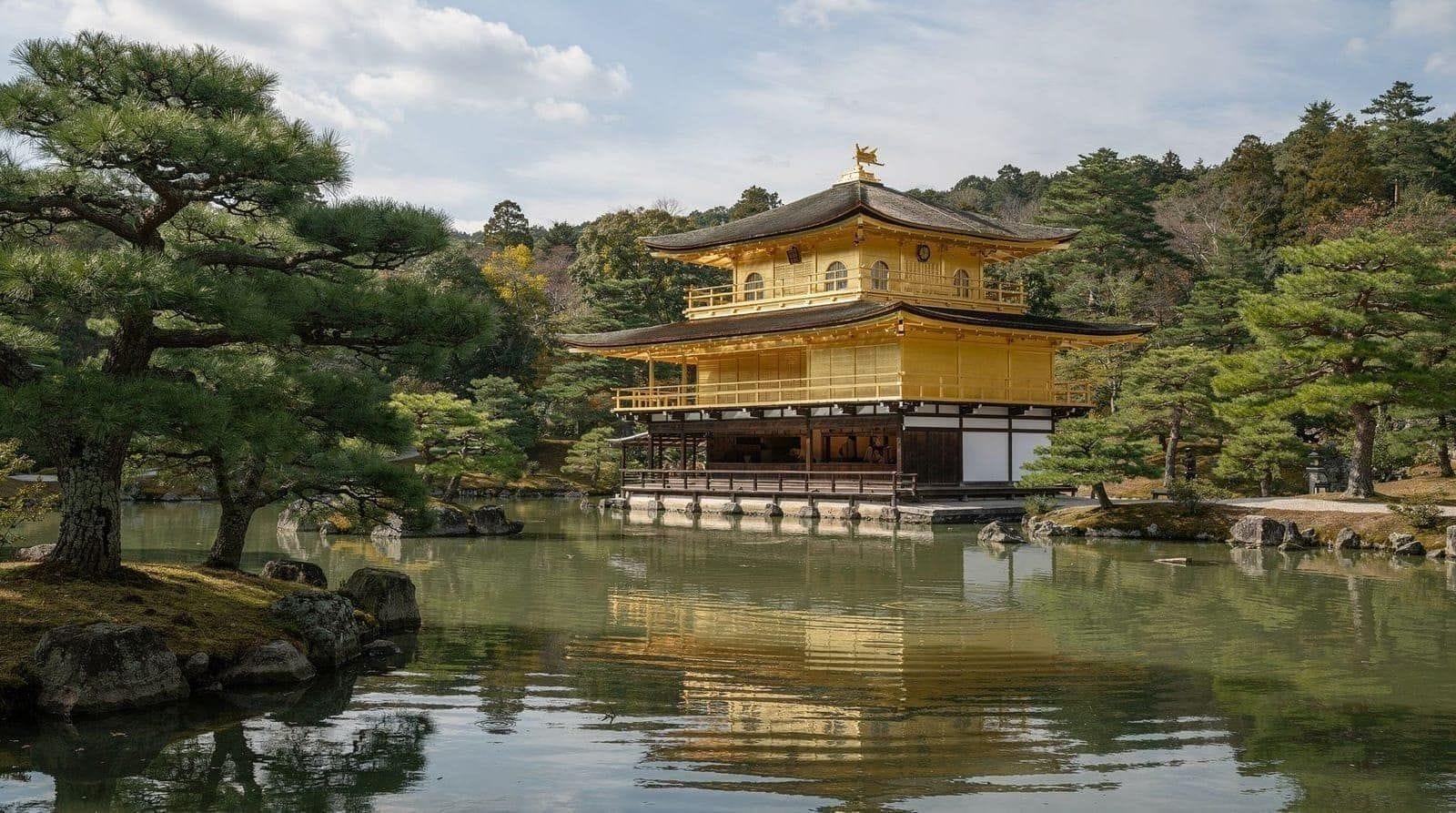
Kinkaku-ji, formally Rokuon-ji, is a Zen Buddhist temple whose top two floors are covered in gold leaf, built originally in 1397 as a retirement villa for a shogun and converted to a temple after his death. The current structure dates to 1955, a reconstruction after the original was destroyed in a 1950 arson fire — a detail rarely mentioned on-site but relevant to understanding why the gold leaf looks so uniformly pristine rather than centuries-worn.
Entry runs around ¥500 (~$4.60), with the temple grounds open roughly 9am to 5pm and no exceptions for early or late access, unlike Fushimi Inari’s 24-hour shrine grounds. Because of the fixed hours and admission fee, crowding here is more evenly distributed across the day than at free sights, though weekday mornings right at opening are still the calmest window.
Kinkaku-ji guided tour covers the temple’s history, including the 1950 fire and reconstruction, which the posted English signage barely touches on.
Ryoan-ji
A short bus ride or roughly a 20-minute walk from Kinkaku-ji, Ryoan-ji holds Japan’s most famous karesansui (dry landscape) rock garden: a rectangle of raked white gravel containing 15 stones arranged in five groups, positioned so that from any single viewing angle along the veranda, at least one stone is always out of sight — a deliberate design choice whose exact meaning is still debated among scholars. Entry is around ¥600 (~$5.55). The garden rewards sitting rather than a quick photo and walk-by; benches along the veranda are there for a reason, and the site is noticeably quieter than Kinkaku-ji even at similar times of day.
Daitoku-ji
Daitoku-ji is a large, still-functioning Zen monastery complex a further bus ride from Ryoan-ji, made up of a main temple plus more than 20 sub-temples, only a handful of which are open to the public on any given day (some rotate seasonal openings). Daisen-in and Koto-in are the two most commonly open sub-temples with notable gardens — Daisen-in for a compact, symbolically dense rock garden depicting a river’s journey to the sea, Koto-in for a moss and maple garden that peaks in autumn foliage season. Entry to each sub-temple is separate, typically ¥500-600 each. This is the quietest of the three sights in this district by a clear margin, worth the extra bus transfer if Zen gardens rather than the gold pavilion photo are the actual draw.
Zen meditation session at a hidden temple in this district is a genuine seated meditation (zazen) practice led by a resident monk, not a demonstration — worth knowing going in, since it involves sitting still and mostly in silence for the session’s duration.
Ninna-ji
A short bus ride southwest of Ryoan-ji, Ninna-ji is a UNESCO World Heritage temple founded in 888 as the retirement residence of an emperor who became a monk, a pattern (imperial retirement into monastic life) that shaped several of Kyoto’s grandest temple complexes. Its five-story pagoda and a grove of Omuro cherry trees — a shorter, later-blooming variety planted specifically at ground level rather than towering overhead, making them unusually easy to photograph up close — make it one of the better cherry blossom spots in the city precisely because it blooms about a week or two after the rest of Kyoto’s trees, extending the viewing season for visitors who miss the main peak elsewhere.
Entry to the temple grounds runs around ¥500, with an additional fee for the inner garden during cherry blossom season. It sees meaningfully fewer visitors than Kinkaku-ji despite similar UNESCO status, largely because it requires a further bus transfer past Ryoan-ji.
The history behind the gold leaf
Kinkaku-ji’s design reflects three distinct architectural styles stacked on top of each other, one per floor: the ground floor in the Shinden style of Heian-period aristocratic residences, the second floor in the Bukke style associated with samurai households, and the top floor, entirely covered in gold leaf, in a Zen temple style topped with a bronze phoenix. This layering was a deliberate statement by Ashikaga Yoshimitsu, the shogun who built it, blending imperial, military, and religious authority into a single structure.
The 1950 arson fire that destroyed the original building was set by a young monk at the temple, an event later fictionalized in Yukio Mishima’s 1956 novel “The Temple of the Golden Pavilion” — a detail that adds context for visitors who arrive expecting centuries-old timber and are instead looking at a mid-20th-century reconstruction, faithfully rebuilt to the original design but structurally only around 70 years old.
Combining it with Nijo Castle and Nishiki Market
Because bus routes through this district often continue toward central Kyoto, a single day covering Kinkaku-ji in the morning and Nijo Castle or Nishiki Market in the afternoon is a realistic itinerary without excessive backtracking.
Golden Pavilion, Nijo Castle, and Nishiki Market tour is built around exactly this route, useful if coordinating bus transfers yourself feels like more logistics than it’s worth for a single day.
Calligraphy with a temple priest
Zen calligraphy experience with a temple head priest, offered at a temple in this district, runs about 90 minutes and includes basic instruction in shodo (brush calligraphy) alongside a short talk on Zen practice — a quieter alternative to a straight sightseeing itinerary if the temples themselves have started to blur together by the second or third stop.
Food in the area
This district has fewer dedicated restaurants than central Kyoto or Gion, since it’s built around temple visits rather than dining, but a handful of options are worth knowing. Shojin ryori (Buddhist vegetarian temple cuisine, built around tofu, seasonal vegetables, and rice rather than meat or fish) is served at a few restaurants near Ryoan-ji and Daitoku-ji, some run by the temples themselves as a way to fund upkeep — set meals typically run ¥3,000-6,000 (~$28-$55) and require no advance booking at the more casual options. Around Kinkaku-ji’s main approach, small cafes sell matcha soft-serve and simple noodle dishes aimed at the steady tourist flow, priced a notch higher than equivalent food in less-visited parts of the city.
Best time of year for this district
Kinkaku-ji photographs differently depending on the weather more than most Kyoto temples, since the gold leaf’s reflection in the surrounding pond is the whole point — a still, windless day gives a near-perfect mirror image, while a breezy day breaks the reflection into ripples.
Winter, particularly after a rare Kyoto snowfall, is considered by many repeat visitors to be the single best time to see the pavilion, since gold against white snow is a genuinely different image from the more commonly photographed green or autumn-foliage backdrop — though snow in Kyoto is inconsistent and can’t be planned around reliably. Cherry blossom season here peaks slightly later than at Fushimi Inari or in central Kyoto, especially at Ninna-ji, giving a short extended window for blossom viewing after the rest of the city’s peak has passed.
Practical notes
Bus travel in this district is genuinely slower than train travel elsewhere in Kyoto, especially during weekday rush hour or cherry blossom and autumn foliage peak season, when city buses can run standing-room-only and behind schedule. Building in extra time between Kinkaku-ji and Ryoan-ji or Daitoku-ji is worth it rather than cutting the schedule close. Coin lockers are limited in this district compared to Kyoto Station or Kawaramachi, so it’s worth dropping heavier bags at a station locker before heading out on the bus routes.
Is Kinkaku-ji worth the extra travel time?
Given the 70-80 minute journey each way from Osaka and the further bus transfers between individual sights within the district, it’s a fair question. The honest answer is that Kinkaku-ji’s single striking image — gold leaf reflected in still water — is genuinely distinct from anything else in Kyoto’s temple circuit and worth seeing once, but it’s also a brief visit (most people spend 30-45 minutes on the grounds, since photography and a single walking loop is essentially the whole experience). The extra value in dedicating a half-day to this district comes from pairing it with Ryoan-ji’s rock garden and, time permitting, Daitoku-ji’s sub-temples, which reward a slower pace that Kinkaku-ji alone doesn’t offer.
Combining with a full Kansai itinerary
Because this district requires the longest single travel time from Osaka of any Kyoto area covered on this site, it fits best as a dedicated half-day rather than an add-on squeezed between other stops. Travelers on a tight one or two-day Kyoto visit often skip it entirely in favor of Fushimi Inari, Arashiyama, and Gion, which is a reasonable trade-off given the extra bus logistics involved — Kinkaku-ji rewards a visit but isn’t essential in the way the more accessible districts are for a first-time trip.
Related planning
For the rest of Kyoto’s districts, see the main Kyoto destination page, Fushimi Inari, Arashiyama, and Gion and Higashiyama. The Kinkaku-ji guide and Kyoto’s best temples guide cover more of this district’s sights in depth, and the greater Kansai 7-day itinerary shows how a full day here fits into a longer regional trip. For getting around Kyoto’s bus network more broadly, see the ICOCA card guide.
Best time of year, in table form
| Season | Conditions | Notes |
|---|---|---|
| Spring (Mar-May) | Mild | Ninna-ji’s late-blooming cherries extend the season past the city’s peak |
| Summer (Jun-Aug) | Hot, humid | Fewer crowds than spring/autumn; gardens still worth a slower visit |
| Autumn (Oct-Nov) | Mild, crisp | Koto-in’s maples peak; Kinkaku-ji busier with foliage-season visitors |
| Winter (Dec-Feb) | Cold, occasional snow | Repeat visitors’ favorite: gold leaf against snow, if it falls |
Comparing this district’s gardens
Ryoan-ji, Daisen-in, and Koto-in each take a different approach to the Zen garden format, and visitors unfamiliar with the genre sometimes find them harder to appreciate without knowing what distinguishes one from another. The Kyoto gardens guide breaks down the differences between karesansui (dry rock-and-gravel gardens like Ryoan-ji’s), moss gardens (like Koto-in’s), and pond-and-borrowed-scenery gardens found elsewhere in the city, useful context before spending an hour sitting in front of a garden that, without that framing, can look like a plain gravel yard to a first-time visitor.
The Higashiyama alternative, for comparison
Visitors deciding between a half-day here and a half-day in Higashiyama, on the opposite side of the city, are essentially choosing between two very different paces — this district’s Zen gardens reward sitting quietly, while Higashiyama’s walking route is a livelier, more crowded stretch of preserved streets, shops, and temples. Neither is objectively better; the choice comes down to whether a contemplative or a bustling half-day suits the rest of your Kyoto itinerary that day.
Kimono photos against the gold pavilion
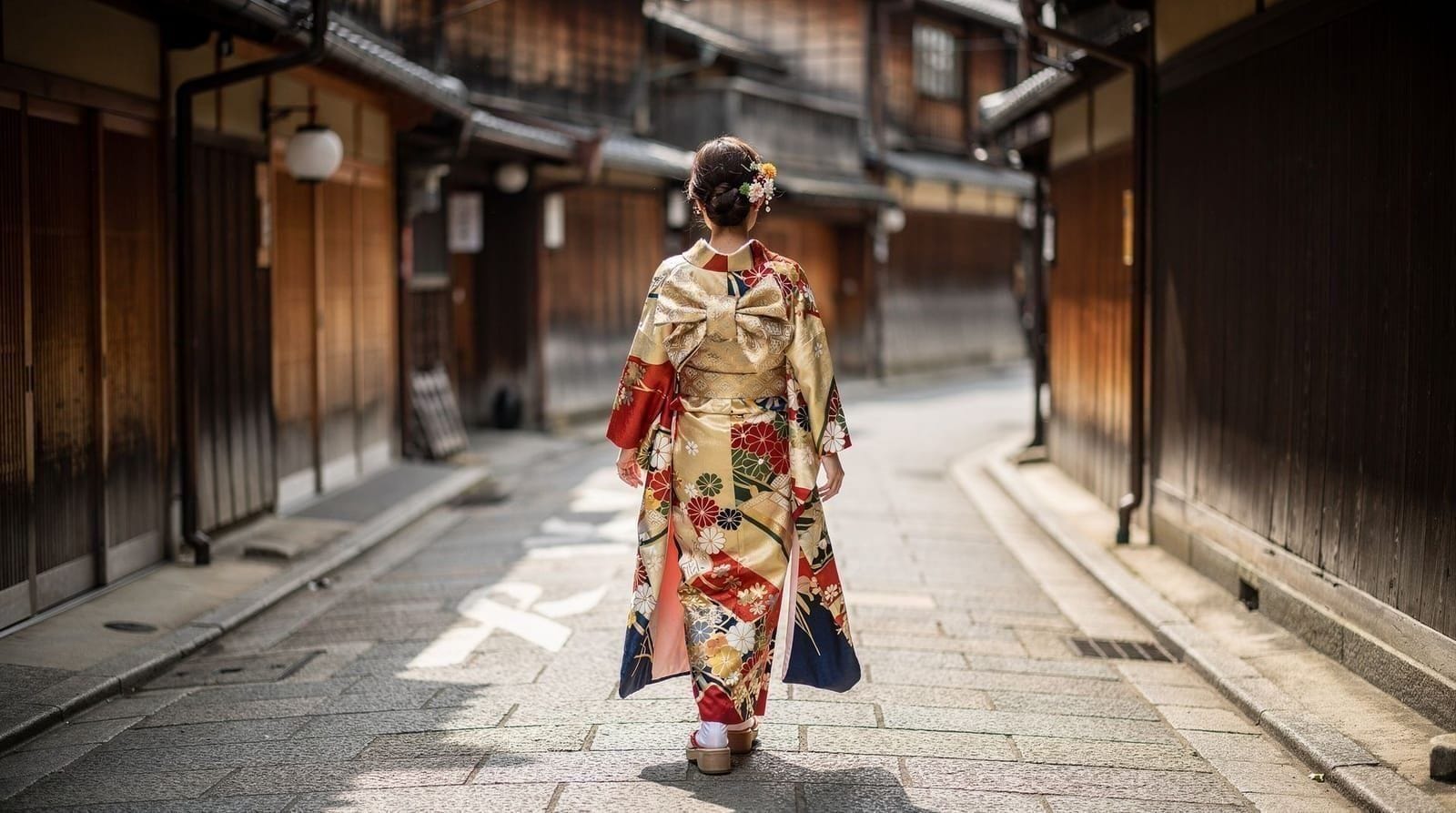
Kinkaku-ji’s reflecting pond and gold leaf make it one of the more popular backdrops in Kyoto for visitors who’ve rented a kimono earlier in the day, alongside the more traditional Gion and Kiyomizu-dera settings. The kimono rental guide covers rental logistics and notes that the walking distance and bus transfers to reach this district are a genuine consideration in comfortable footwear versus traditional sandals (zori) — worth factoring in before committing to a full day in rented dress that also includes this district’s longer travel time.
Top experiences
Bookable activities with verified prices and instant confirmation on GetYourGuide.