Fushimi
Fushimi guide — Fushimi Inari's red torii gates and the Fushimi Momoyama sake district, with train times from Osaka, prices, and crowd timing.
Kyoto: Kyoto Fushimi Inari guided walking tour
Duration: 2-3 hours
Quick facts
- Distance from Osaka
- 40-50 min by train
- Fushimi Inari entry
- Free, open 24 hours
- Best time to visit
- Before 8am
- Full summit hike
- 2-3 hours round trip
Fushimi refers to two things that share a name but sit several train stops apart: Fushimi Inari Taisha, the shrine with thousands of vermilion torii gates that’s become one of the most photographed sights in Japan, and Fushimi Momoyama, a separate historic sake-brewing district a short ride further south. Most visitors only ever hear about the first. Both are worth knowing about, and neither requires more than a half-day.
| Where | Fushimi Inari Station (shrine) / Fushimi-Momoyama Station (sake district) |
| Cost | Shrine free; sake museum tasting ~¥600 |
| Time needed | Half a day; add 2-3 hours for the full summit hike |
| Getting there | 40-50 min by train from Osaka |
| Best time | Before 8am for the shrine; afternoon for the sake district |
Getting there from Osaka
For the shrine, the Keihan Main Line runs directly from Yodoyabashi or Kyobashi in Osaka to Fushimi Inari Station in about 50 minutes with no transfer — the most efficient route if the shrine is your only stop. Alternatively, take JR Special Rapid from Osaka Station to Kyoto Station (28-29 minutes), then one stop further on the JR Nara Line to Inari Station (about 5 minutes), landing you directly across the street from the shrine’s main entrance. For the Momoyama sake district, continue south on the Keihan line to Fushimi-Momoyama Station or the JR Nara Line to Momoyama Station — roughly 10 minutes further from Fushimi Inari, not walkable between the two.
Fushimi Inari Taisha
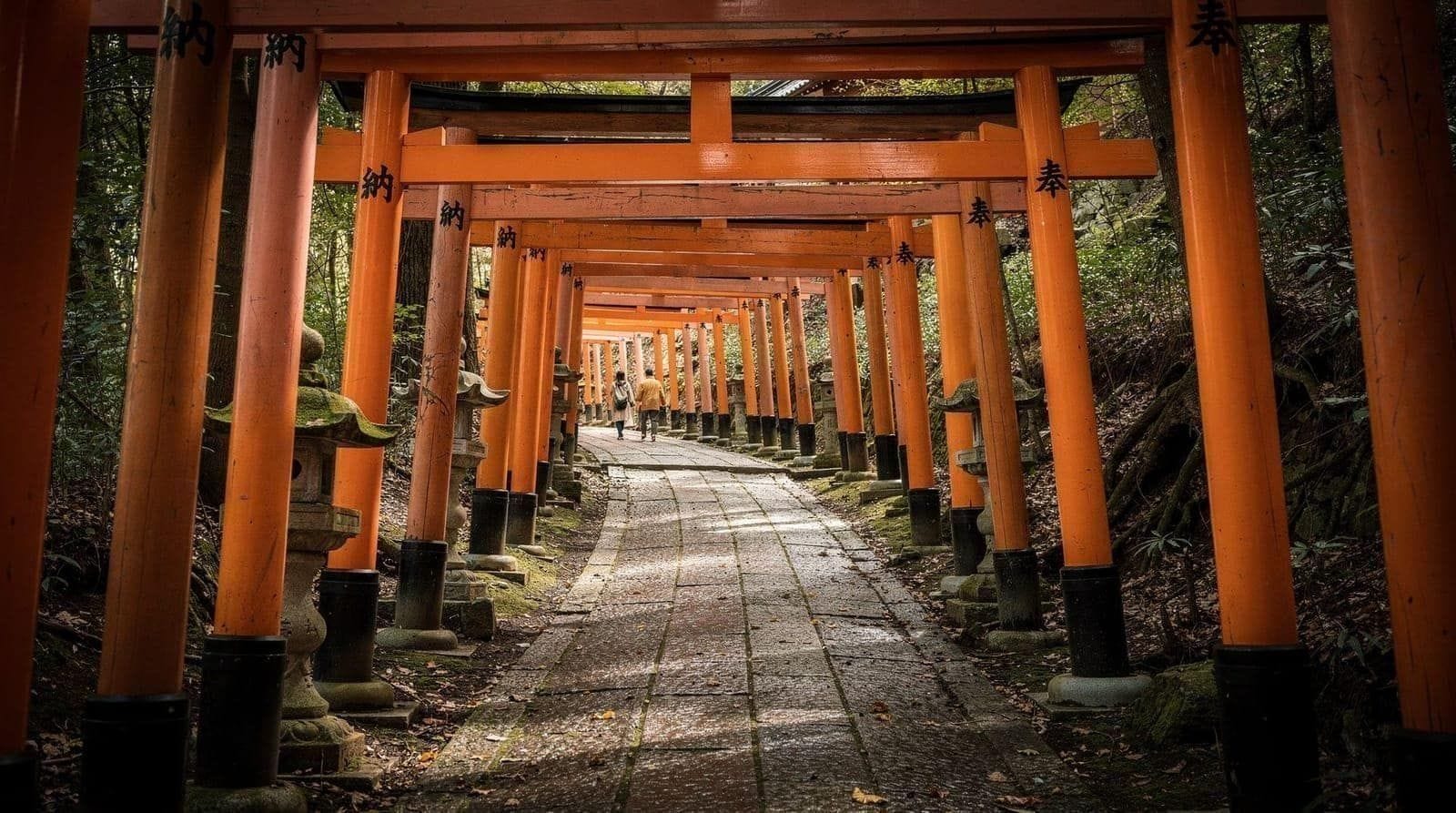
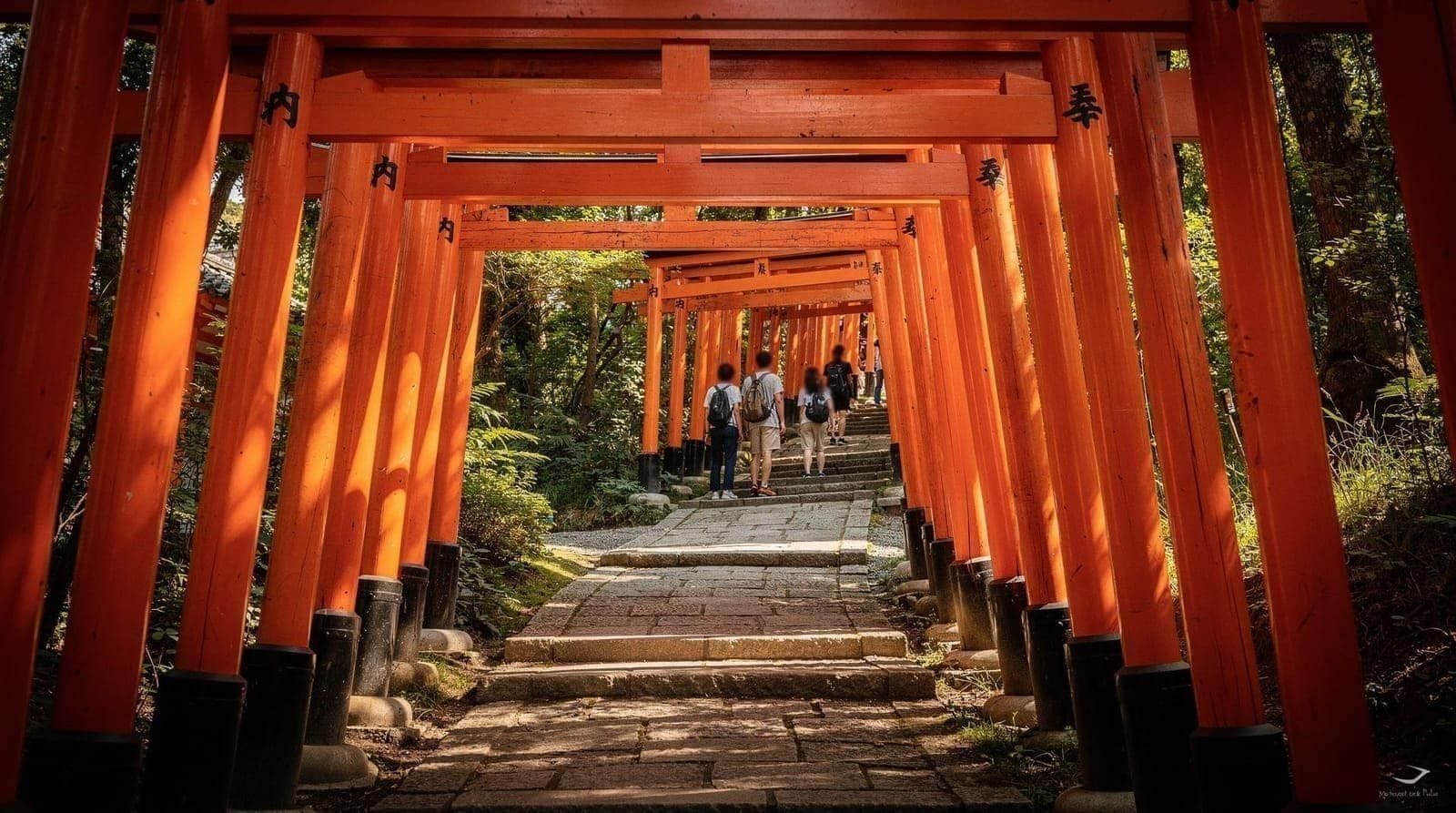
Fushimi Inari is the head shrine for Inari, the Shinto deity of rice, sake, and business prosperity, which explains the sheer number of gates: each one is donated by an individual or a company as a form of gratitude or petition for continued success, not placed by the shrine itself. Estimates put the total number of torii gates along the mountain trail somewhere in the thousands, most densely packed along the Senbon Torii (“thousand torii gates”) stretch near the base. The shrine has no admission fee and no gate hours — it’s open and accessible 24 hours a day, which also means there’s no ticketed crowd control, unlike Kinkaku-ji further north.
The full trail to the summit of Mount Inari and back takes 2-3 hours, climbing steadily through smaller sub-shrines and fewer gates the higher you go. Most visitors turn back after the first 20-30 minutes, once the crowd has thinned and the gates start to feel repetitive photographically — the genuinely worthwhile stretch for most people is the base area through the first viewpoint (Yotsutsuji intersection, roughly 30-45 minutes up), which also offers a clear view over Kyoto.
Guided Fushimi Inari walking tour covers the gate-donation system and the shrine’s connection to Inari worship, context that’s easy to miss without a guide since on-site signage is minimal.
Crowd timing at the shrine
This is the single most crowd-sensitive sight covered on this site. Before 8am, the lower gates are close to empty and the light through the vermilion torii is genuinely striking. By 10am, tour buses have arrived and the Senbon Torii stretch becomes a slow, shoulder-to-shoulder shuffle that continues through the afternoon. Weekends and cherry blossom season (late March-early April) push this further. A less obvious option: Fushimi Inari night walking tour visits after dark, when the gates are lit only by scattered stone lanterns — a completely different atmosphere from the daytime crowds, and one of the only ways to see the shrine both quiet and lit.
Fushimi Momoyama: the sake district
A few stops south of the shrine, Fushimi Momoyama has been one of Japan’s major sake-producing districts for centuries, thanks to naturally soft groundwater drawn from beneath the area (the same water table historically supplied Fushimi Castle, the district’s namesake). The Gekkeikan Okura Sake Museum, housed in a preserved Meiji-era brewery building, runs a self-guided exhibit on traditional sake-making with a tasting included in the entry price of around ¥600 (~$5.50). Streets nearby retain a canal-side, low-rise feel that contrasts with the shrine district’s crowd-focused atmosphere — this area is not on most first-time visitors’ itineraries, which is part of the appeal.
Fushimi sake brewery tour with 18 tastings is a substantial tasting session across multiple breweries, worth planning around rather than treating as a quick add-on given the number of samples involved.
Fushimi sake district tour with boat ride adds a traditional boat trip along the Uji River’s Fushimi canal system, a slower-paced way to see the brewery district’s waterfront warehouses.
The sub-shrines and torii donation system in more detail
Scattered throughout the mountain trail, beyond the main Senbon Torii stretch, are hundreds of smaller sub-shrines (tsuka) — miniature stone shrines, many privately maintained, dedicated by individual worshippers over more than a century of continuous devotion.
New torii gates are still commissioned today: a small gate runs somewhere in the range of ¥175,000-1,300,000 (roughly $1,600-$12,000) depending on size, with the donor’s name and the date inscribed on the back in vertical characters, visible if you look at the reverse side of any gate rather than only the painted front. This is also why the gates are never removed or replaced on any fixed schedule — each stands until its wood naturally degrades, which is why gates of visibly different ages sit side by side throughout the trail.
A note on history
The Fushimi area, not just the shrine but the wider district including Momoyama, was also the site of the Battle of Toba-Fushimi in January 1868, the opening engagement of the Boshin War that ended the Tokugawa shogunate and restored imperial rule — a pivotal, if now mostly unmarked, moment in modern Japanese history that unfolded across streets most visitors walk through today without any indication of what happened there.
Fushimi Castle, rebuilt in the 1960s as a concrete replica (not open to the public as a functioning museum in the way Osaka Castle or Himeji Castle are) sits on a hill nearby and is a reminder of the district’s role as a strategic base for Toyotomi Hideyoshi in the late 16th century, well before its current identity as a shrine and sake town.
Getting between the shrine and the sake district in practice
Because Fushimi Inari Station and the Momoyama sake district sit on the same Keihan and JR lines but several stops apart, the practical way to see both in one day is shrine first (ideally at opening, for the crowd-avoidance reasons above), then a short train ride south rather than attempting to walk between them — the distance is roughly 3-4 kilometers along unremarkable urban streets with nothing to see along the way. Budget the train legs as a deliberate transition between two different experiences rather than an inconvenience: the shrine is dense, photo-focused, and crowd-heavy; the sake district is quiet, slower-paced, and built around tasting rather than sightseeing.
Food beyond the shrine’s stalls
Momoyama’s streets have a handful of small soba and udon restaurants serving the district’s brewery workers as much as visitors, generally cheaper than equivalent restaurants in central Kyoto or Gion, with set lunches commonly running ¥900-1,500 (~$8.30-$14). Sake-based desserts — amazake (a low-alcohol or non-alcoholic fermented rice drink) and sake-lees flavored sweets — show up at several shops near the Gekkeikan museum, worth trying even for visitors who don’t otherwise drink alcohol, since amazake is often alcohol-free.
Practical notes
If you’re combining Fushimi with a wider Kyoto itinerary, the 3-day Osaka planning guide covers how to sequence a shrine-heavy morning against an afternoon elsewhere. Toilets and coin lockers are available near Inari Station and around the shrine’s main approach, but options thin out once you’re on the mountain trail itself, so plan accordingly if you’re doing the full summit hike.
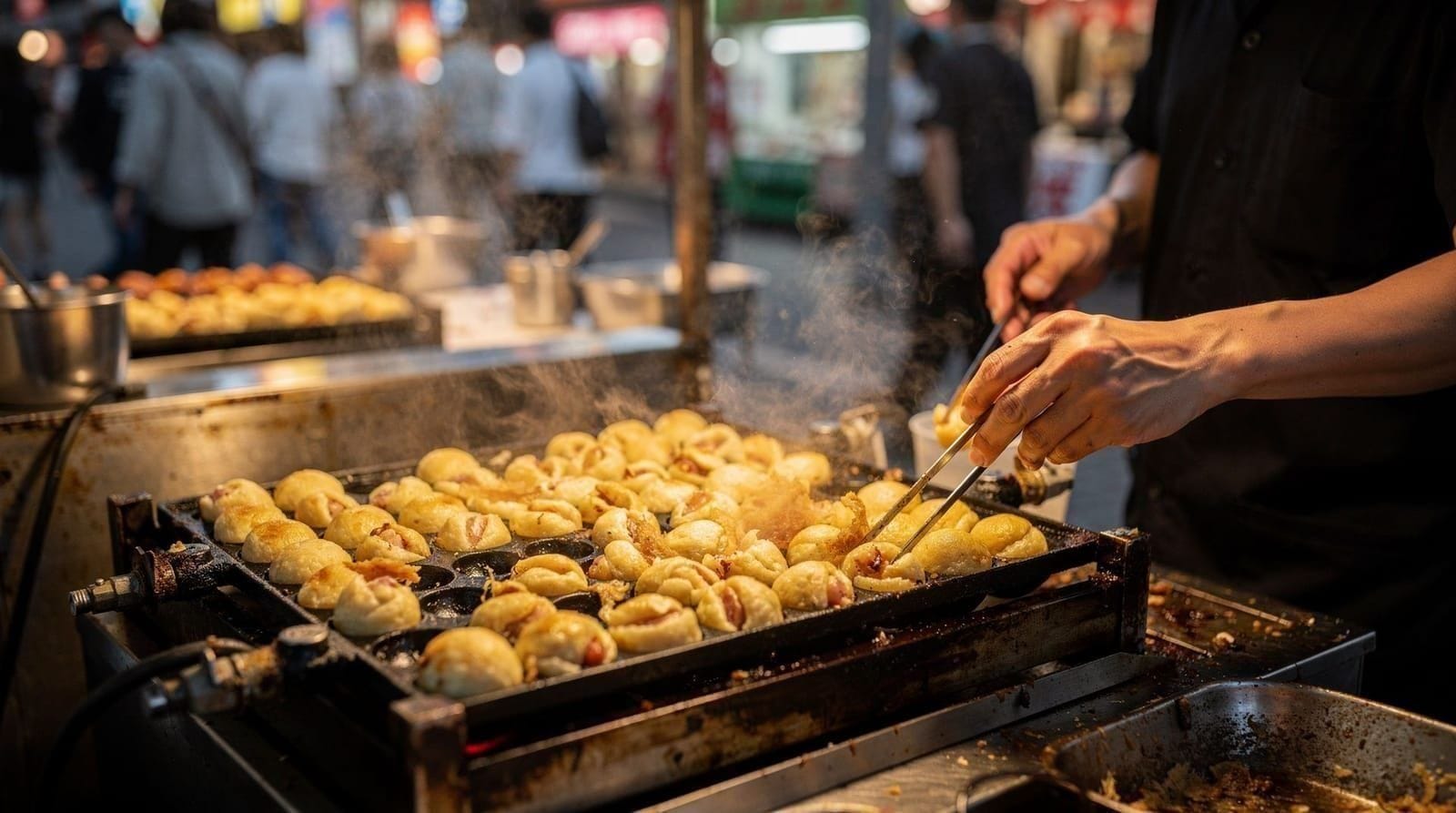
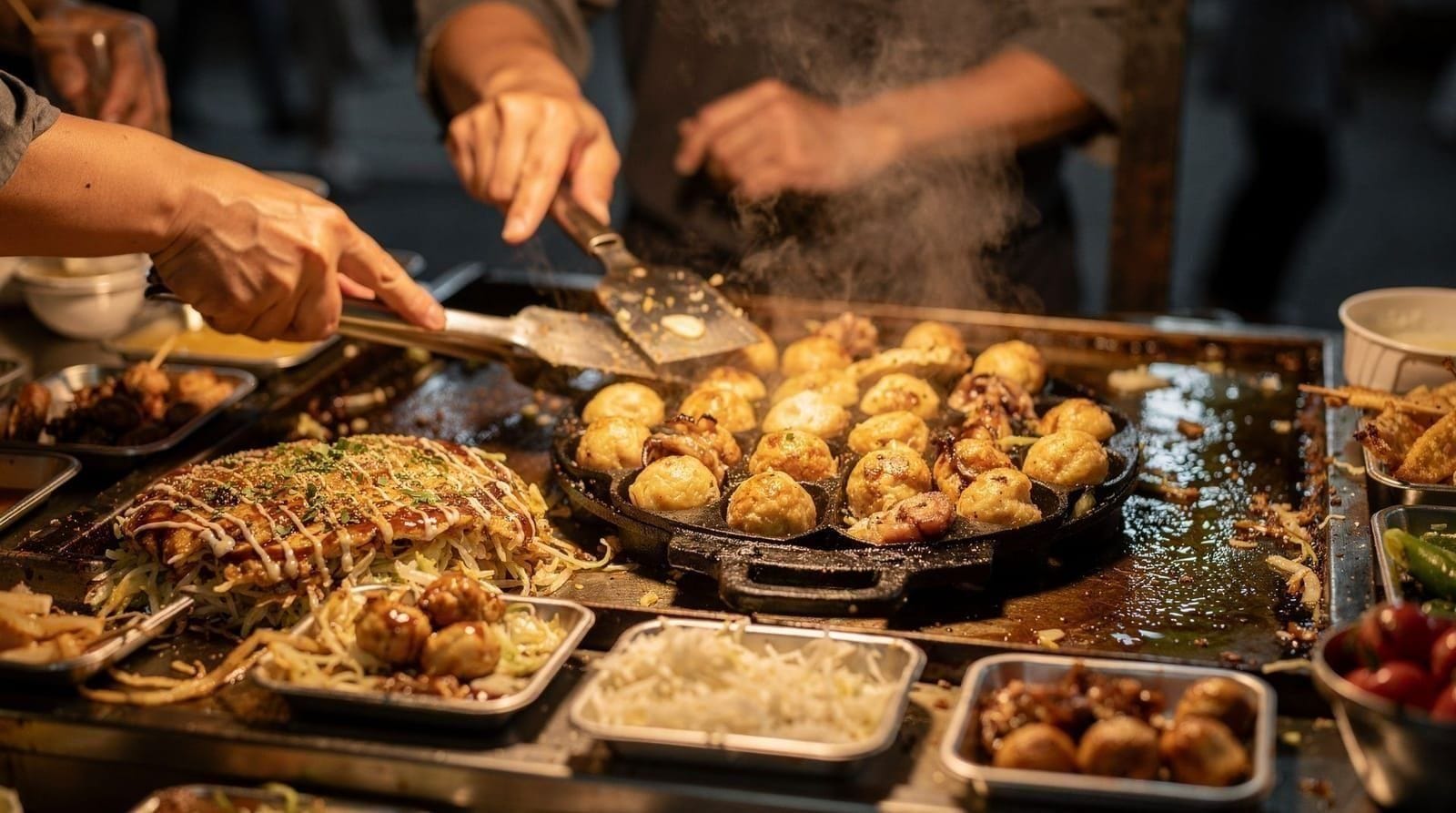
The trail has steps throughout and gets steep in sections — reasonable footwear matters more here than at most of Kyoto’s flatter temple grounds. Food stalls along the base of the trail sell grilled sparrow (suzume, a genuine local specialty, not a novelty item) and inari-zushi (fried tofu pouches stuffed with sushi rice, named for the shrine itself), both worth trying if you’re not squeamish about the former.
In the Momoyama sake district, most breweries and the Gekkeikan museum close by 5pm or 5:30pm, earlier than typical Kyoto sightseeing hours, so plan the sake district for midday or early afternoon rather than as an end-of-day stop.
Fushimi Inari by time of day
Because crowd timing matters more here than at almost any other Kansai sight, it’s worth laying out exactly how the experience changes hour by hour.
| Time | Crowd level | What it looks like |
|---|---|---|
| Before 8am | Near empty | Soft morning light through the gates, easy photos at the Senbon Torii |
| 8-10am | Building | Still manageable, first tour groups arriving |
| 10am-4pm | Peak | Shoulder-to-shoulder shuffle through the Senbon Torii stretch |
| After dark | Quiet, different mood | Gates lit only by scattered stone lanterns |
Weekends and cherry blossom season (late March-early April) push the peak window earlier and make it worse; the before-8am and after-dark windows stay comparatively reliable year-round.
How Fushimi compares to Arashiyama for an early start
Fushimi Inari and Arashiyama’s bamboo grove share the same crowd logic — free, outdoor, and photogenic enough that tour buses arrive by mid-morning — which makes them the two Kyoto sights where an early start matters most. Fushimi has the edge for visitors without a car or early train connection, since the Keihan line runs directly from Osaka with no transfer, whereas Arashiyama always requires at least one change. If you can only manage one early-morning Kyoto sight on a given trip, Fushimi’s simpler transit makes it the easier one to actually pull off.
Related planning
Fushimi Inari pairs naturally with an early start followed by central Kyoto or Gion and Higashiyama in the afternoon, since both are reachable from Kyoto Station without much backtracking. For the rest of Kyoto’s districts, see the main Kyoto destination page, Arashiyama, and northern Kyoto around Kinkaku-ji.
The Fushimi Inari guide goes deeper on trail sections and photography spots, and the Kyoto day trip itinerary from Osaka shows how to fit Fushimi Inari into a single-day visit. If sake tasting is the main draw, Kobe’s Nada sake district is a comparable alternative on a different day trip from Osaka.
Frequently asked questions about Fushimi
Is Fushimi Inari free to visit?
Yes, there is no admission fee for the shrine or the torii gate trail, and it’s open 24 hours a day with no gate hours.
How long does the Fushimi Inari hike take?
The full round trip to the summit of Mount Inari and back takes 2-3 hours. Most visitors turn back after 20-45 minutes, once past the densest gate section and the first viewpoint over Kyoto.
What’s the best time to visit Fushimi Inari to avoid crowds?
Before 8am is the clearest window. By 10am, the lower gates are consistently crowded through the afternoon, worsened on weekends and during cherry blossom season (late March-early April).
Are Fushimi Inari shrine and the Fushimi sake district the same place?
No. Fushimi Inari Taisha is near Inari Station; the Fushimi Momoyama sake district is a few train stops further south and not walkable between the two.
How do I get from Osaka to Fushimi Inari?
The Keihan Main Line runs directly from Yodoyabashi or Kyobashi in Osaka to Fushimi Inari Station in about 50 minutes, no transfer needed. Alternatively, JR to Kyoto Station (28-29 minutes) then the JR Nara Line one stop to Inari Station.
Is the night tour at Fushimi Inari worth it?
If the daytime crowds are a concern, yes — the shrine is lit only by scattered stone lanterns after dark and the atmosphere is noticeably different from the daytime shuffle through the gates. It won’t replicate the daytime views over Kyoto from the higher trail sections, though.
Top experiences
Bookable activities with verified prices and instant confirmation on GetYourGuide.