Kyoto gardens guide
Kyoto: Kyoto Nijo castle gardens 2-hour tour
Duration: 2 hours
What's the difference between Kyoto's garden styles?
Kyoto's temple gardens fall broadly into two categories — karesansui (dry landscape gardens using raked gravel and rock to suggest water and mountains, without live plants as the focus) and pond gardens built around a central body of water, often using shakkei, or "borrowed scenery," to incorporate distant hills into the composition. Ryoan-ji is the reference example of the first; Tenryu-ji and Kinkaku-ji represent the second.
Kyoto has more historically significant gardens per square kilometer than almost anywhere else in the world, and most visitors see one or two without registering that they belong to genuinely different design traditions built centuries apart, for different purposes, using different materials entirely. This guide sorts through the two main garden styles the city is known for — dry rock gardens and pond gardens using borrowed scenery — and points to specific temples that show each at its best, rather than treating “Kyoto gardens” as a single undifferentiated category.
| Where | Northern, western (Arashiyama), and eastern (Higashiyama) Kyoto |
| Cost | Around ¥500-600 per garden |
| Time needed | 30-45 minutes per garden; a full day to pair two styles |
| Getting there | JR Special Rapid from Osaka to Kyoto Station (28-29 min), then bus or local rail |
| Best time | Opening time, especially in cherry blossom or autumn foliage season |
Karesansui: the dry rock garden
Karesansui, literally “dry mountain water,” uses raked white gravel to suggest flowing water and carefully placed rocks to suggest mountains or islands, entirely without a pond, stream, or significant planting — a deliberately minimalist style developed largely within Zen Buddhist temples from the Muromachi period (1336-1573) onward, intended as an aid to meditation rather than a decorative landscape.
Ryoan-ji, in northwest Kyoto, holds the most famous example: a rectangular gravel courtyard containing exactly fifteen rocks arranged in five groups, positioned so that no single viewpoint from the adjacent veranda reveals all fifteen at once — a design detail debated by scholars for centuries without full agreement on its intended meaning. Entry runs around ¥600 (~$5.55), and the garden is best appreciated by sitting on the veranda for several minutes rather than passing through quickly, since its apparent simplicity rewards slow looking more than almost any other single sight in Kyoto.
Pond gardens and borrowed scenery (shakkei)
The second major tradition centers on a pond as the garden’s focal point, often designed using shakkei — incorporating distant hills or mountains into the garden’s visual composition without a wall or boundary breaking the sightline, so the “garden” effectively extends to the horizon. Tenryu-ji in Arashiyama, founded in 1339 and a UNESCO World Heritage Site, is the clearest surviving example of this technique from the Muromachi period, its pond and surrounding rock placement designed to draw the Arashiyama hills directly into the view. Entry to the garden runs around ¥500 (~$4.60), with an additional ¥300 for the temple’s main hall.
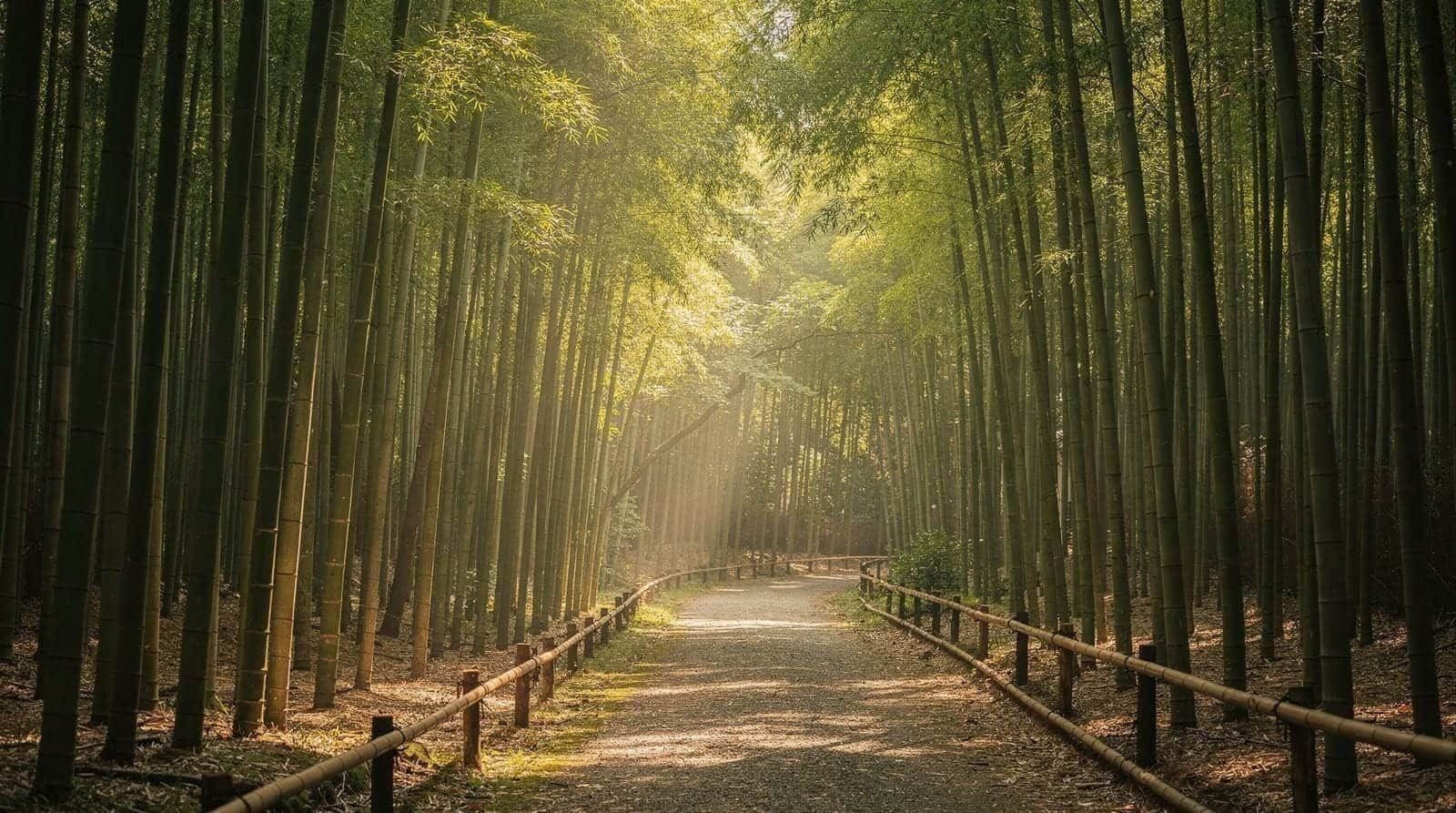
Arashiyama bamboo grove and temple tour covers Tenryu-ji’s garden alongside the adjacent bamboo grove, a practical pairing since the temple’s north gate opens directly onto the grove path.
Kinkaku-ji’s grounds represent a related but distinct pond-garden tradition — the Golden Pavilion itself reflects in the pond (Kyoko-chi, “mirror pond”) in front of it, with the surrounding garden designed around specific viewing angles that maximize that reflection, a different emphasis from Tenryu-ji’s borrowed-mountain approach. See the Kinkaku-ji guide for the pavilion and its garden in full detail.
Moss gardens
A third, quieter category uses moss rather than gravel or water as the primary ground surface, thriving in Kyoto’s humid climate and shaded temple grounds. Saiho-ji (commonly called Koke-dera, “moss temple”) is the most famous example, its grounds covered in more than 120 varieties of moss, though visiting requires advance reservation by mail and a mandatory sutra-copying session before entry — a genuinely different, slower kind of access than most Kyoto sights, reflecting the temple’s intent to keep visitor numbers deliberately low.
In Arashiyama, the smaller, far less visited temples of Jojakko-ji and Gio-ji offer moss gardens without Saiho-ji’s reservation requirements, a reasonable substitute for visitors who want the aesthetic without the logistics.
Nijo Castle’s gardens
Nijo Castle, built in 1603 as the Kyoto residence of the Tokugawa shoguns, holds a different kind of garden entirely — the Ninomaru Garden, a pond garden originally designed for the shogun’s private enjoyment rather than religious contemplation, later modified for imperial visits with additional design elements meant to impress rather than encourage meditation. The distinction matters: where Zen temple gardens like Ryoan-ji and Tenryu-ji were built as spiritual tools, Nijo Castle’s grounds were built as a display of political and aesthetic power, a genuinely different design brief that shows in the garden’s more elaborate, less austere composition.
Nijo Castle gardens 2-hour tour covers this secular, shogunate-era garden tradition specifically, a useful contrast if visiting alongside one of the Zen temple gardens on the same trip.
Ginkaku-ji and the Philosopher’s Path
Ginkaku-ji (the Silver Pavilion, despite never actually being covered in silver) combines a sand garden — Ginshadan, a flat expanse of raked sand said to represent a lake, alongside a cone-shaped sand mound called Kogetsudai thought to represent Mount Fuji — with a hillside moss garden behind the main buildings, making it one of the few sites in Kyoto to display both major dry-garden traditions within a single set of grounds. The Philosopher’s Path, a canal-side walking route connecting Ginkaku-ji toward Nanzen-ji, is lined with cherry trees and passes several smaller temples, offering a walking transition between two of Kyoto’s most significant garden sites rather than treating them as disconnected destinations.
Ginkaku-ji, Philosopher’s Path, and Nanzen-ji tour links all three in a single guided route, useful for understanding how the sand-garden and moss-garden traditions relate to each other without piecing the walk together independently.
Nanzen-ji
Nanzen-ji, at the Philosopher’s Path’s southern end, holds its own significant karesansui garden within its Hojo (abbot’s quarters), known as the “Leaping Tiger Garden” for the way its rock groupings are said to suggest tiger cubs crossing water. The temple grounds also include a Meiji-era brick aqueduct, an unusual and somewhat jarring architectural feature within an otherwise traditional temple complex, worth seeing precisely because it’s such an obvious departure from everything else on this list.
A practical two-garden-styles day
For visitors who want to understand the karesansui-versus-pond-garden distinction firsthand rather than just read about it, a single day pairing Ryoan-ji (dry rock garden) in the morning with Tenryu-ji or Kinkaku-ji (pond garden with borrowed scenery) in the afternoon covers both major traditions concretely, with enough contrast between the two visits to make the design differences genuinely visible rather than abstract. Both routes require separate transit legs from central Kyoto, so budgeting a full day rather than trying to also fit in Gion or Fushimi Inari the same day keeps the pace reasonable.
Crowds and timing
Ryoan-ji and Kinkaku-ji, Kyoto’s two most photographed gardens, get genuinely crowded by mid-morning, especially during cherry blossom season (late March-early April) and autumn foliage (mid-to-late November) — arriving at opening time is the most reliable way to see either with a manageable crowd. Tenryu-ji’s garden, while also popular given its proximity to the bamboo grove, tends to feel less crowded than its neighboring photo-op simply because visitors move through it faster on their way to the grove. Nanzen-ji and the Philosopher’s Path see comparatively fewer visitors than the temples at either end, a reasonable quieter stretch to build a pause into an otherwise busy garden day.
Getting there from Osaka
All of the gardens covered here sit within Kyoto, reached from Osaka via JR Special Rapid to Kyoto Station in 28-29 minutes, with onward bus or local rail connections to each specific temple varying by location — Ryoan-ji and Kinkaku-ji sit in northern Kyoto, reached by bus from Kyoto Station in 40-50 minutes; Tenryu-ji is in Arashiyama, requiring a further JR Sagano Line transfer; Nanzen-ji and Ginkaku-ji sit in the Higashiyama area, reachable by bus or subway plus a short walk. See the main Kyoto destination page for a fuller transit breakdown by district.
Seasonal notes
Karesansui gardens like Ryoan-ji change least by season, since their composition relies on static gravel and rock rather than living plants — a genuine advantage for visitors traveling outside peak cherry blossom or foliage windows who still want a headline Kyoto garden experience without the seasonal crowd surge. Pond gardens and moss gardens, by contrast, shift considerably: cherry blossoms frame Tenryu-ji and Ginkaku-ji’s ponds in spring, while maple foliage transforms both in November, and moss gardens are at their most vivid during Kyoto’s rainy season (June) when humidity keeps the moss saturated and bright green.
Comparing the main garden styles at a glance
| Style | Reference example | Focal material | Best mood |
|---|---|---|---|
| Karesansui (dry rock) | Ryoan-ji | Raked gravel, rock | Contemplative, still |
| Pond + borrowed scenery | Tenryu-ji, Kinkaku-ji | Water, distant hills | Reflective, expansive |
| Moss | Saiho-ji, Jojakko-ji, Gio-ji | Living moss | Quiet, humid, secluded |
| Secular pond (shogunate) | Nijo Castle | Water, formal planting | Grand, display-oriented |
Which garden to prioritize on a short trip
For visitors with only a single garden-focused stop, Ryoan-ji delivers the most concentrated, distinctive experience of the karesansui tradition in the least time — a 30-45 minute visit that doesn’t require pairing with anything else to feel complete. For a pond garden, Tenryu-ji edges out Kinkaku-ji for visitors who also want to walk the adjacent bamboo grove, since the two combine into a single Arashiyama outing; Kinkaku-ji is the better choice for visitors prioritizing the single most photographed image in Kyoto over garden depth. Saiho-ji’s moss garden is worth the reservation hassle only for visitors with a specific interest in moss or a slower, ritual-heavy temple visit — it’s not a first-timer priority.
Frequently asked questions about Kyoto’s gardens
Do I need a reservation to visit any of these gardens?
Only Saiho-ji (Koke-dera), the famous moss garden, requires advance reservation by mail along with a mandatory sutra-copying session before entry. Ryoan-ji, Tenryu-ji, Kinkaku-ji, Nijo Castle, Ginkaku-ji, and Nanzen-ji are all walk-in visits during normal opening hours.
What’s the best single garden for a first-time visitor?
Ryoan-ji for the dry rock garden tradition, or Tenryu-ji for a pond garden combined with the adjacent Arashiyama bamboo grove — both deliver a complete, distinctive experience without requiring a second stop to feel worthwhile.
Related planning
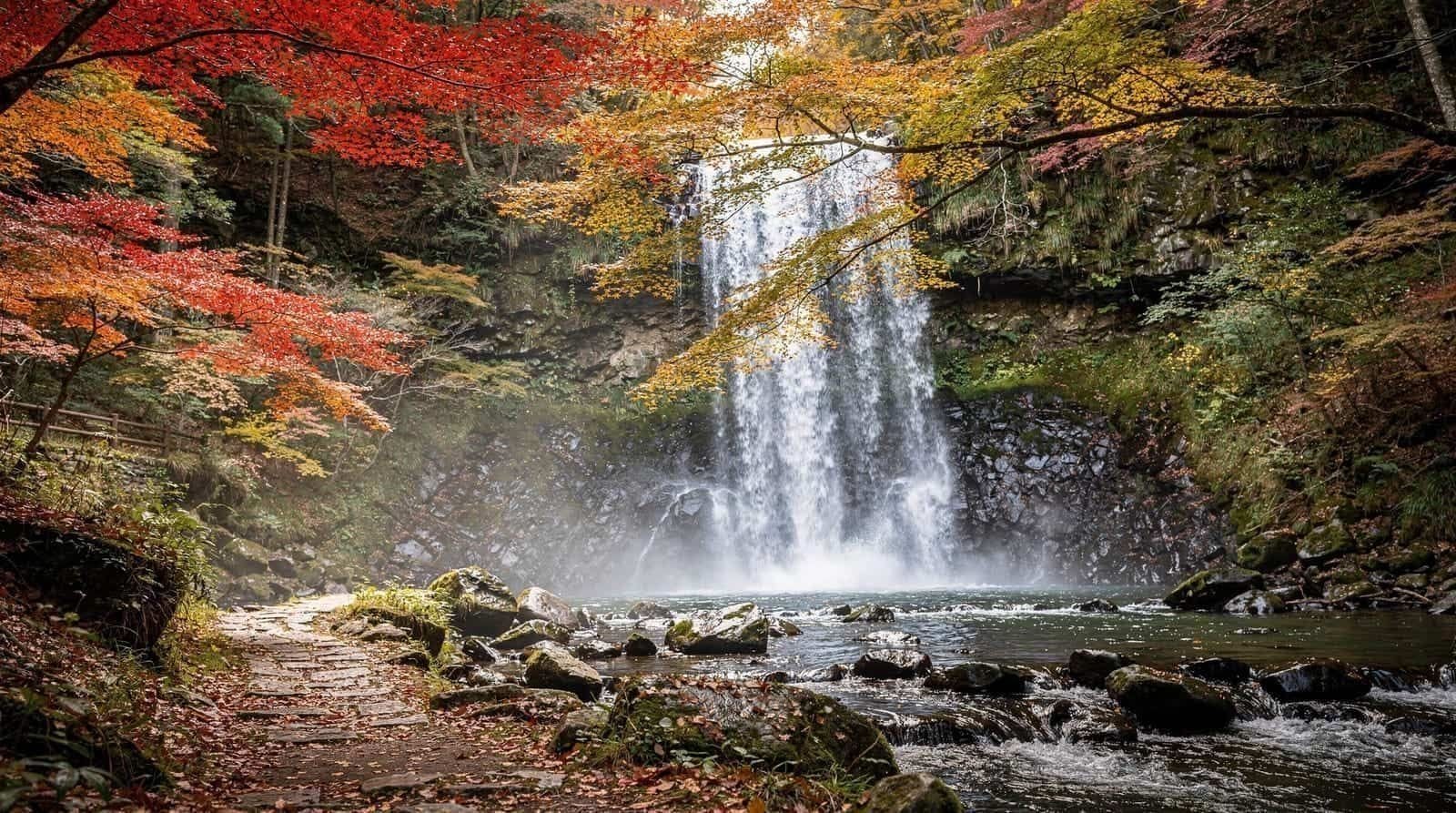
For temple-focused planning across the wider city, see the best temples in Kyoto guide, which covers Kinkaku-ji, Kiyomizu-dera, and Fushimi Inari alongside the gardens discussed here. The Arashiyama bamboo guide covers Tenryu-ji’s garden and the adjacent grove in more depth, and Kinkaku-ji’s dedicated guide goes deeper on the Golden Pavilion’s mirror-pond design specifically. For a nature-focused day that trades temple gardens for a purely natural setting, Minoo Park’s autumn foliage offers a genuinely different, unmanicured alternative closer to Osaka.
Top experiences
Bookable activities with verified prices and instant confirmation on GetYourGuide.