Cherry blossom season in Osaka, a 2026 guide
Kyoto: Kyoto cherry blossom sakura tour 3-hour
Duration: 3 hours
When is cherry blossom season in Osaka in 2026?
Peak bloom is projected around March 24-April 2, 2026, with full bloom typically falling around April 1. Osaka Castle Park and Kema Sakuranomiya Park are the two best viewing spots in the city, both free to enter and both extremely crowded during the peak week.
| When | Projected peak ~April 1, 2026 (window March 24-April 2) |
| Where | Osaka Castle Park or Kema Sakuranomiya Park |
| Cost | Free to view; Nishinomaru Garden ¥200 |
| Booking | Accommodation 4-6 months ahead |
| Crowds | Heaviest of the year, especially weekends |
Bloom stage timeline
| Stage | Timing relative to peak | What to expect |
|---|---|---|
| Kaika (first bloom) | About 1 week before | Partial bloom, thinner crowds |
| Approaching peak | 2-3 days before | Filling in fast, crowds building |
| Mankai (full bloom) | Peak day | Densest bloom and densest crowds |
| Hanafubuki (petal fall) | About 1 week after | ”Cherry blossom snow,” thinning crowds |
Cherry blossom season is the single most photographed, most crowded, and most expensive week of Osaka’s calendar, and it earns that status honestly — roughly ten days each spring when the city’s parks and riverbanks turn into tunnels of pale pink blossoms, drawing both domestic and international visitors in numbers that outstrip any other seasonal event here. This guide covers the real 2026 timing, the specific spots worth prioritizing, and what to actually expect once you’re there, rather than the idealized postcard version.
When cherry blossoms peak in Osaka in 2026
Forecasts project peak bloom (mankai) around April 1, 2026, with the broader viewing window running roughly March 24 to April 2. These are forecasts rather than fixed dates — Japan’s meteorological agencies and private forecasters update projections through late February and March as actual temperatures come in, and the bloom can shift a few days earlier or later depending on how cold or mild late winter runs. Trees typically show the first blossoms (kaika, opening) about a week before mankai, so a visit anywhere from late March through the first few days of April has a reasonable chance of catching meaningful bloom, even outside the exact projected peak.
Osaka Castle Park: the classic combination
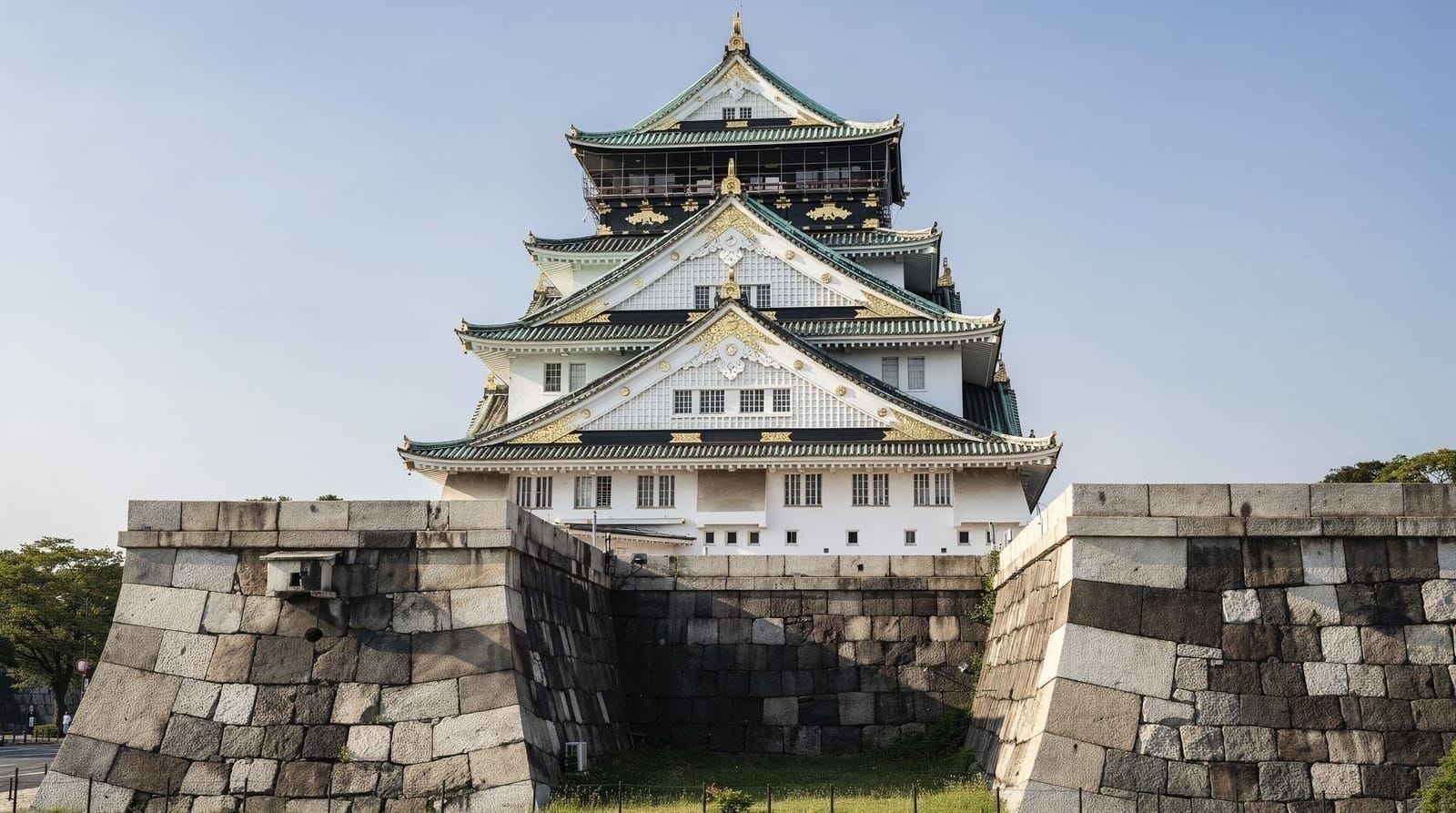
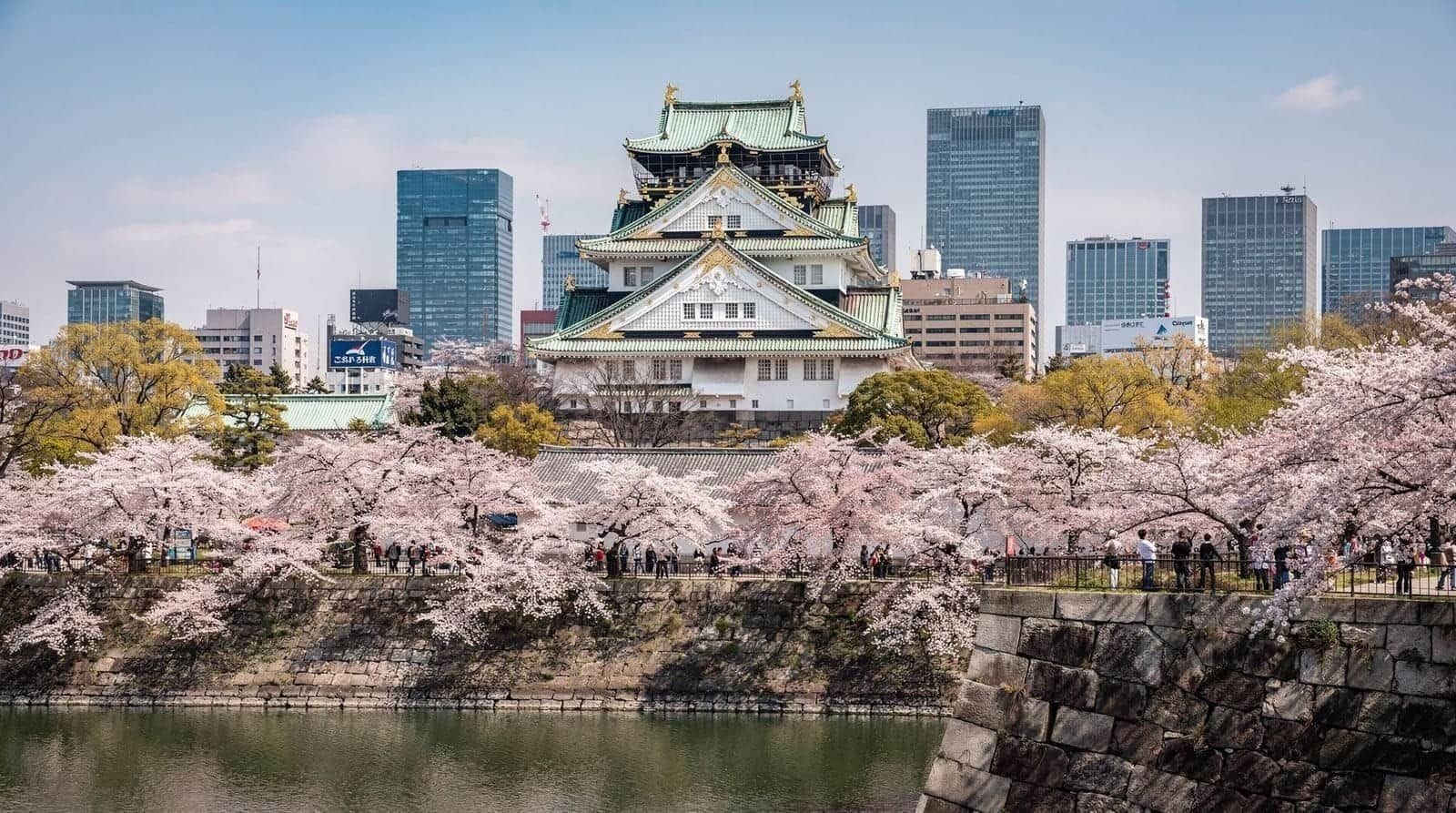
Osaka Castle Park holds roughly 3,000 cherry trees spread across the moats and grounds surrounding the castle’s main keep, and it’s the single best spot in the city for combining sakura with a recognizable landmark backdrop — the white-and-gold castle tower framed by blossoming branches is Osaka’s signature cherry blossom image.
The Nishinomaru Garden section, a paid area (¥200 entry) inside the castle grounds, offers a more curated, slightly less crowded lawn specifically for hanami, with roughly 600 trees and a particularly clean sightline to the castle. The park is detailed further in the Osaka Castle guide, including hours and the main keep’s museum, worth combining with a sakura visit since you’re already on-site.
Osaka Castle museum and tower ticket is worth pre-booking specifically during cherry blossom week, when ticket lines at the keep’s base run considerably longer than the rest of the year.
Kema Sakuranomiya Park: the riverside alternative
Kema Sakuranomiya Park runs 4.2 kilometers along the Okawa River, lined with over 4,000 cherry trees in a continuous corridor rather than a single concentrated grove — genuinely less crowded per square meter than Osaka Castle Park despite similar overall visitor numbers, simply because the space is longer and more spread out. The park is well known for evening illuminations during peak bloom, when trees are lit for a few hours after sunset, extending across a longer stretch than most illuminated sakura spots elsewhere in the region.
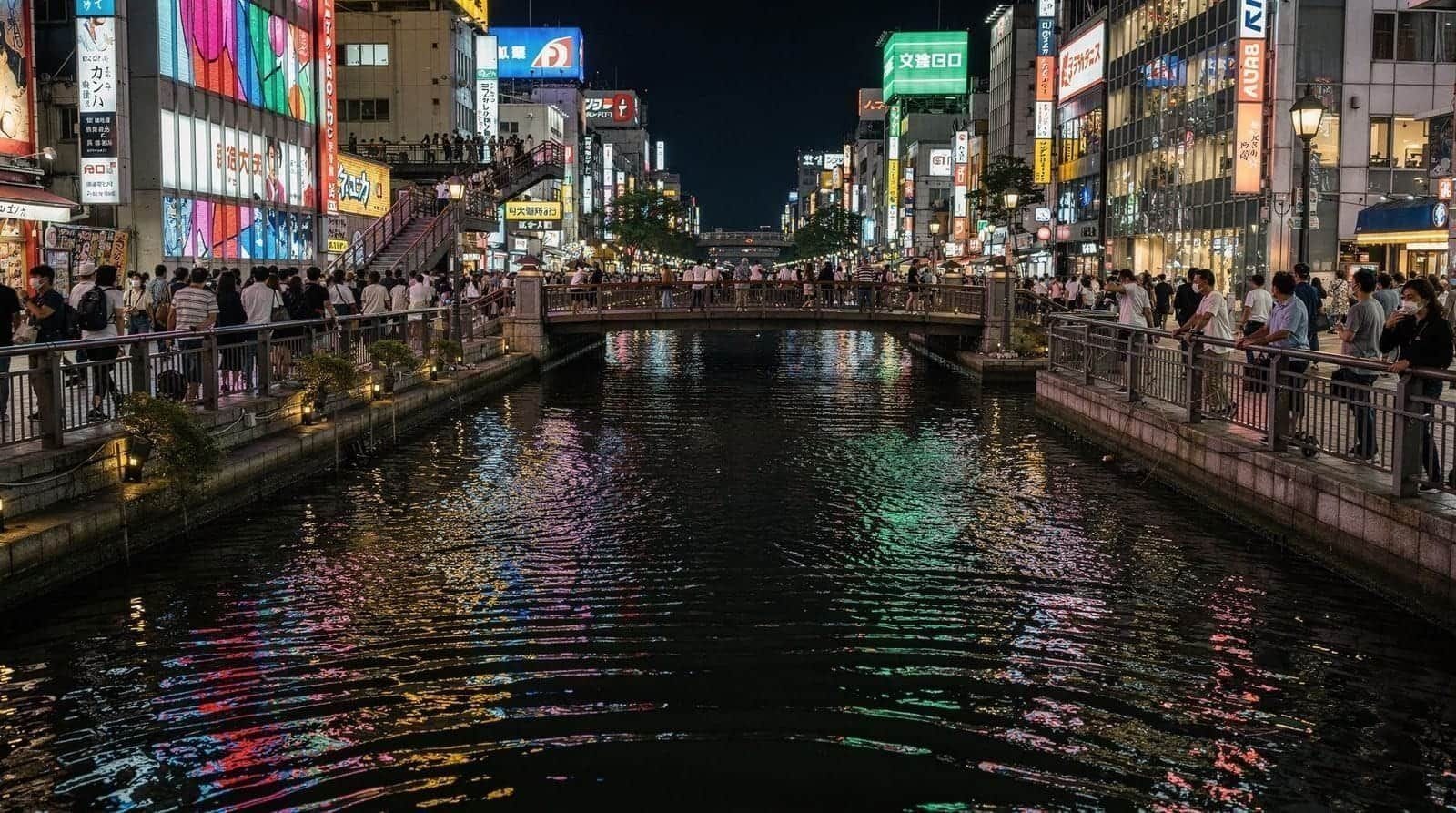
Dotonbori 20-minute river cruise runs on a different waterway than Kema Sakuranomiya’s Okawa River stretch, but for visitors wanting a boat-based view of blossoms specifically, some seasonal river cruise operators run routes past Kema Sakuranomiya during peak bloom — worth checking current-year availability directly, since river cruise routing shifts seasonally.
Crowd reality during peak week
Both Osaka Castle Park and Kema Sakuranomiya Park see their heaviest annual foot traffic during the roughly ten-day peak window, particularly on weekends, when hanami picnic groups claim ground space with blue tarps from early morning. Weekday mornings (before 9am) offer meaningfully thinner crowds at both spots than any weekend timing, and this is the single most effective lever for a better experience if the schedule allows flexibility. Evening visits at Kema Sakuranomiya during the illumination period draw their own crowd but spread out more naturally across the park’s length than Osaka Castle’s more concentrated grounds.
Booking accommodation and managing cost
Hotel prices across Osaka rise 20-40% above standard rates during the projected peak window, and popular mid-range hotels in Namba, Umeda, and Shinsaibashi routinely sell out 4-6 months ahead of the season — see the where to stay in Osaka guide for neighborhood options and the Osaka trip cost and budget guide for how this translates into actual trip cost. Restaurants near both major viewing spots also see longer waits and, at some tourist-facing spots, temporary price adjustments during the peak window, making a slightly-off-strip lunch choice a reasonable strategy even during sakura week.
Extending sakura viewing to Kyoto
Kyoto’s cherry blossom spots — the Philosopher’s Path, Maruyama Park, and the Kamo River banks — are a 30-minute train ride from Osaka and offer a genuinely different sakura experience, denser with historic temple backdrops than Osaka’s park-and-castle combination. The Osaka to Kyoto day trip guide covers logistics for combining both cities’ cherry blossom spots within a single multi-day trip.
Kyoto cherry blossom tour, 3 hours covers several of Kyoto’s best-known sakura spots in a single guided outing, a practical option for visitors with limited time who want to see Kyoto’s version of the season without independently researching and navigating multiple locations.
Beyond the two main parks
Smaller, less crowded sakura spots exist across the city for visitors who’ve already seen the two headline locations or want to avoid peak-week crowds entirely — the moat areas around Osaka Castle’s outer perimeter (distinct from the main park’s inner grounds) see noticeably fewer visitors, as do several riverside stretches further from Kema Sakuranomiya’s most-photographed section. Nara Park, an easy day trip from Osaka, also blooms during the same window and pairs cherry blossoms with the park’s free-roaming deer, detailed in the Nara deer park family guide.
What to do before and after peak bloom
A visit a week before peak (mid-to-late March) shows partial bloom with substantially thinner crowds — a reasonable trade-off for visitors prioritizing a calmer experience over maximum bloom density. A visit a week after peak (early-to-mid April) catches hanafubuki, the “cherry blossom snow” effect as petals fall from the trees, an experience many repeat visitors and photographers rate as more atmospheric than full bloom itself, with crowds noticeably thinning as the flowers drop. Both windows are worth considering seriously rather than treating the exact projected peak date as the only acceptable time to visit.
Photography tips specific to these spots
Early morning light (7-8am) at Osaka Castle Park catches the castle’s gold trim against blossoms with fewer people in frame than any later hour, while Kema Sakuranomiya’s illumination period (roughly 6-9pm during peak bloom) offers the park’s best photography window after dark, with reflections on the Okawa River adding a dimension the daytime view doesn’t have. Both spots get genuinely difficult to photograph without crowds in frame during weekend midday hours, worth avoiding if a clean shot matters to the visit.
Pairing sakura season with the rest of a trip
Cherry blossom season doesn’t require restructuring an entire itinerary around it — both major viewing spots fit naturally into the 3-day Osaka planning guide’s existing day 1 structure, since Osaka Castle Park is already a recommended stop regardless of season. The main adjustment worth making is arriving at whichever spot you prioritize at or near opening time, and building in slightly more buffer for crowds and transit delays than a non-peak-season visit would require, detailed further in the best time to visit Osaka guide for how this season compares to the rest of the year.
Hanami food and what to bring
A proper hanami picnic typically involves a blue plastic tarp (widely sold at convenience stores and 100-yen shops during the season), bento boxes, snacks, and drinks spread out beneath the trees for a few hours of unhurried gathering — convenience stores near both Osaka Castle Park and Kema Sakuranomiya Park stock hanami-specific seasonal bento and snacks during the peak window, a genuinely convenient option over packing food from further away.
Sakura-themed seasonal food also appears widely during the window — sakura mochi (a pink rice cake wrapped in a pickled cherry leaf) and sakura-flavored drinks and sweets show up at convenience stores, cafes, and department store food halls, worth trying as a seasonal specialty rather than a gimmick, since the pickled leaf’s flavor is a genuine and long-standing part of the tradition.
Accommodation strategy specific to sakura season
Beyond the general booking-lead-time advice above, a specific strategy worth considering is booking a room with any view toward Osaka Castle Park or the Okawa River, which command a premium but can turn even a quiet evening in the room into a partial blossom-viewing experience — worth pricing against a standard room plus a dedicated viewing outing, since the math sometimes favors the view room once transit time and crowd navigation to a viewing spot are factored in. Hotels immediately adjacent to Kema Sakuranomiya Park or the castle grounds sell out fastest of all Osaka accommodation during this specific window, ahead of even centrally-located Namba or Umeda properties.
How this compares to Tokyo’s cherry blossom season
Osaka’s cherry blossom timing typically runs a few days to roughly a week behind Tokyo’s, given the cities’ relative latitudes and local microclimates — worth knowing for visitors splitting a trip between both cities, since a single blossom-timed visit to Tokyo followed by travel to Osaka can sometimes catch a second wave of bloom rather than missing the window entirely in the second city.
Osaka’s two headline spots (Osaka Castle Park, Kema Sakuranomiya Park) also draw noticeably fewer international visitors relative to Tokyo’s most famous spots (Ueno Park, Shinjuku Gyoen), making Osaka’s version of peak sakura season somewhat less internationally crowded even at its own annual peak, though weekend domestic crowds remain substantial regardless.
Sakura at Osaka’s other parks and gardens
Beyond the two headline locations, Utsubo Park (in central Osaka, near Honmachi) and Nakanoshima Park (on the island district between the Dojima and Tosabori rivers) both offer smaller-scale but still attractive cherry blossom displays with meaningfully thinner crowds than the two major spots — reasonable alternatives for visitors who’ve already seen Osaka Castle Park or Kema Sakuranomiya on a previous trip, or who simply want a calmer stroll without the peak-week crowd density. Tennoji Park, near the Shinsekai/Tennoji area, also holds a smaller cherry blossom grove worth a stop if already in that part of the city.
Weather expectations during cherry blossom season
Late March into early April brings genuinely variable weather — daytime temperatures typically run 12-18°C, comfortable for walking, but evenings cool down noticeably, and occasional rain showers are common enough to warrant checking the forecast day-to-day rather than assuming consistent conditions across the full viewing window. A rain shower during peak bloom, while disappointing for photography, doesn’t damage the blossoms in any serious way over a short period — sustained heavy rain or strong wind is the more genuine threat to bloom longevity, since it can strip petals from the trees several days earlier than a calm-weather peak would otherwise last.
Night viewing beyond Kema Sakuranomiya
Osaka Castle Park also runs limited evening illumination in some years around its Nishinomaru Garden section, though the schedule and confirmation come later and less reliably than Kema Sakuranomiya’s well-established lighting program — check current-year event listings directly rather than assuming it repeats identically to a prior year.
Where illumination does run, arriving right after sunset rather than deep into the evening tends to catch both the last of the daylight blossom color and the early lighting effect, a brief but worthwhile overlap window before full darkness sets in. Bring a light jacket regardless of which spot you choose for an evening visit — temperatures drop noticeably after dark even on a mild late-March or early-April day.
Combining a sakura day with other spring highlights
Late March into early April overlaps with the tail end of Osaka’s cooler shoulder season, meaning a cherry blossom day can reasonably be combined with other outdoor sightseeing that doesn’t specifically depend on bloom timing — Osaka Castle’s museum and tower pair naturally with the park’s blossoms as a single half-day, and a Dotonbori food walk in the evening rounds out the day without competing for the same daylight hours as the parks. Visitors stacking a Kyoto day trip onto the same visit should expect Kyoto’s own peak to land a few days ahead of Osaka’s, so checking both cities’ individual forecasts rather than assuming identical timing avoids arriving in one city just past its own local peak.
Frequently asked questions about Cherry blossom season in Osaka, a 2026 guide
When exactly will cherry blossoms peak in Osaka in 2026?
Forecasts project peak bloom (mankai, full bloom) around April 1, 2026, with the broader viewing window running roughly March 24-April 2. These are forecasts, not guarantees — actual timing shifts by a few days depending on late-winter temperatures, and official updates come closer to the date.What is the best free spot to see cherry blossoms in Osaka?
Osaka Castle Park, with roughly 3,000 cherry trees around the moats and castle grounds, and Kema Sakuranomiya Park, a 4.2km riverside stretch of over 4,000 trees along the Okawa River, are the two standout free viewing spots in the city.Should I visit Osaka Castle or Kema Sakuranomiya Park for sakura?
Osaka Castle Park pairs blossoms with the castle itself as a backdrop and is easier to combine with other sightseeing; Kema Sakuranomiya Park offers a longer, less crowded riverside walk and a well-known evening illumination but no comparable landmark backdrop.Is cherry blossom season worth the higher prices and crowds?
For most visitors, yes — the visual experience is genuinely distinct and short-lived (peak bloom typically lasts under two weeks), but it requires booking accommodation 4-6 months ahead and accepting crowd levels well above any other time of year at the best spots.What happens if I visit before or after peak bloom?
A week before peak, trees show partial bloom with noticeably thinner crowds; a week after peak, petals begin falling (hanafubuki), creating a "cherry blossom snow" effect that many photographers actually prefer to full bloom, with crowds thinning as the flowers fall.Can I do hanami (blossom viewing picnics) in Osaka?
Yes — hanami picnics under the trees are a core part of the tradition, and Osaka Castle Park and Kema Sakuranomiya Park both see heavy hanami activity during peak week; arriving early to claim a spot with a blue tarp (the traditional hanami sheet) is standard practice, particularly on weekends.
Top experiences
Bookable activities with verified prices and instant confirmation on GetYourGuide.