Nara deer park with kids
Nara: Nara park private family bike lunch
Is Nara Park's deer park safe for young children?
Generally yes, and it's one of the more genuinely kid-friendly stops in Kansai — flat, open, free, and centered on an activity children engage with more readily than most temple visits. Supervision matters more than at a typical playground, though, since young children holding food are exactly the visitors deer approach most insistently; handing crackers over immediately rather than letting a child wave them around avoids most minor incidents.
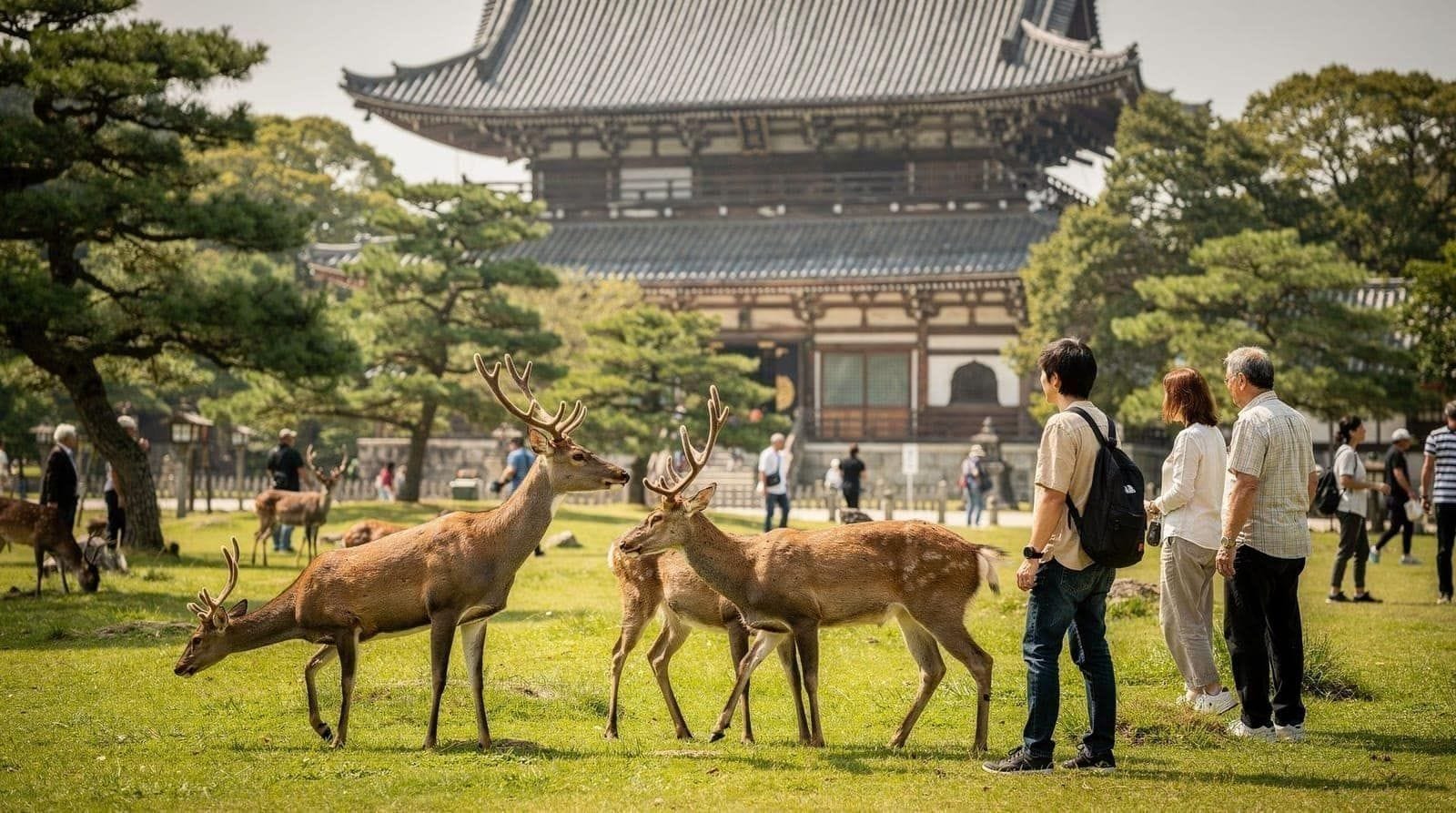
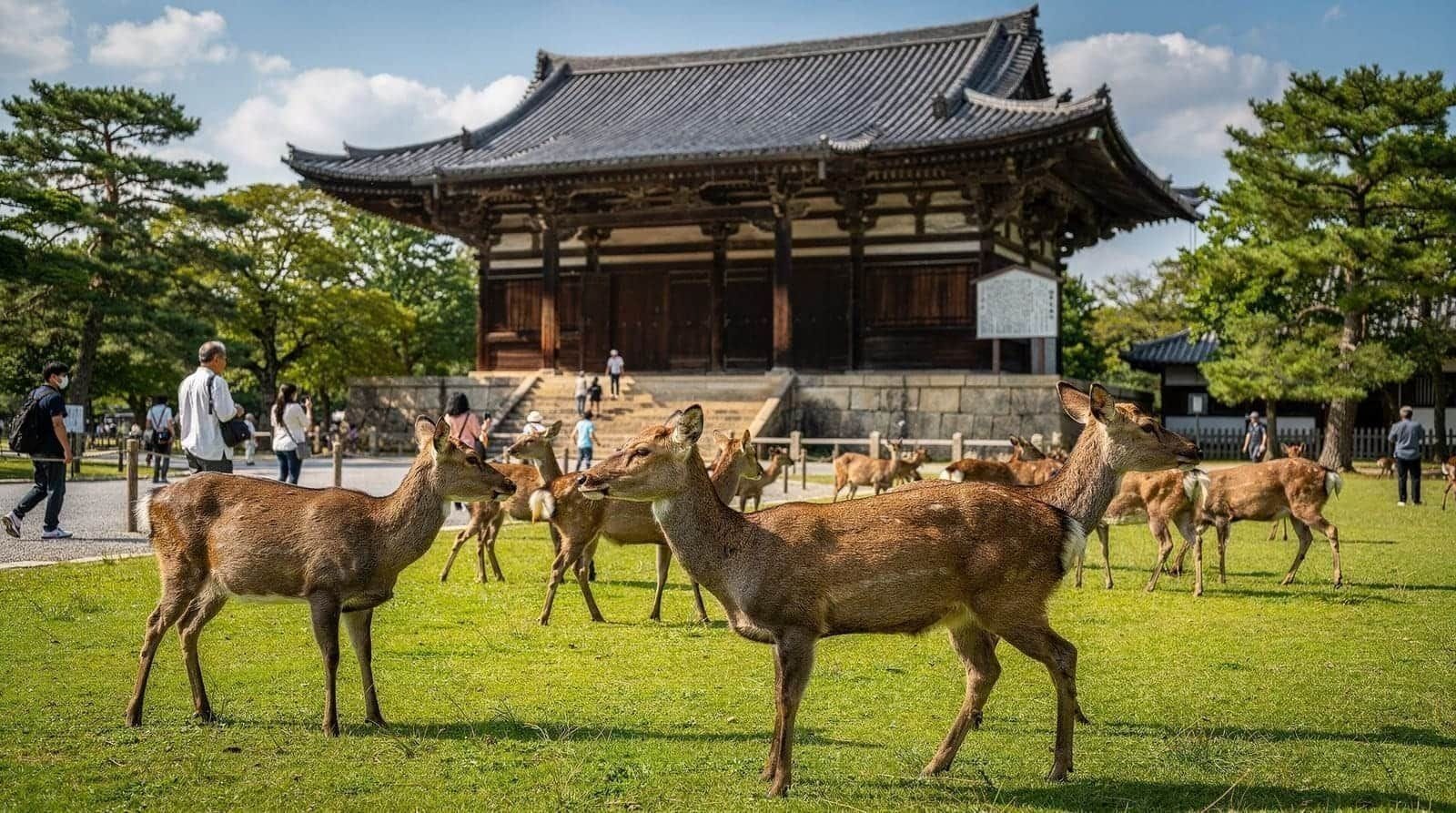
Nara Park solves a problem most Kansai sightseeing doesn’t: an outdoor, free, low-planning activity that genuinely engages children rather than asking them to quietly admire architecture. Roughly 1,200 wild sika deer roam its 660-hectare grounds, comfortable enough around visitors to approach directly for a cracker, and the whole experience — feed a deer, watch it bow, walk to a giant bronze Buddha next door — is built around exactly the kind of hands-on engagement that keeps young children interested for a full half-day rather than the twenty minutes many temple visits realistically hold their attention.
| Where | Nara Park, 35-45 min from Osaka |
| Cost | Free entry; crackers ~¥200/stack |
| Time needed | Half-day (deer + one temple) to full day |
| Getting there | Kintetsu Nara Line (35 min) beats JR (45 min + walk) with kids |
| Best time | Before 9am, cooler and calmer |
Why this works better with kids than most Kansai sightseeing
Most of Kansai’s headline sights (temple architecture, garden design, historic streetscapes) reward a kind of quiet, sustained attention that younger children don’t naturally have. Nara Park inverts that: the deer are the main event, not a backdrop, and feeding, photographing, and simply watching them is an activity in itself rather than something layered on top of sightseeing. The park is also flat, open, free to enter, and has no admission gate or opening hours to work around, which removes a layer of schedule pressure that more ticketed attractions carry.
Safety, honestly
These are genuinely wild animals, not tame park pets, and treating them with that in mind is the right frame for a family visit. Deer will nip at clothing, nudge firmly, or crowd a visitor holding food without releasing it — the most common cause of minor injuries is a deer headbutting someone who teased it with a cracker rather than handing it over immediately.
Most bucks are dehorned each October to reduce injury risk, but not all, and not year-round, so caution around any deer with visible antlers is sensible regardless of season. Extra care is worth taking around does with fawns in late spring (May-June), noticeably more defensive during that window, and during the autumn rutting season (September-November), when bucks generally run more assertive.
None of this makes the park dangerous in any serious sense — millions of visitors feed these deer every year without incident — but supervising young children closely, and handing crackers over rather than letting a child wave one around, avoids nearly all of the minor incidents that do happen.
Getting there with kids and a stroller
The Kintetsu Nara Line’s limited express from Namba to Kintetsu-Nara Station takes about 35 minutes and lands a five-minute walk from the park entrance — generally the more convenient route with children and luggage than the JR Yamatoji Line, which takes about 45 minutes from Osaka Station and requires a further 15-20 minute walk or bus ride from JR Nara Station to reach the park itself. Both stations have coin lockers, useful for stashing bags before a day of walking rather than carrying them through the park.
Feeding the deer: the practical version
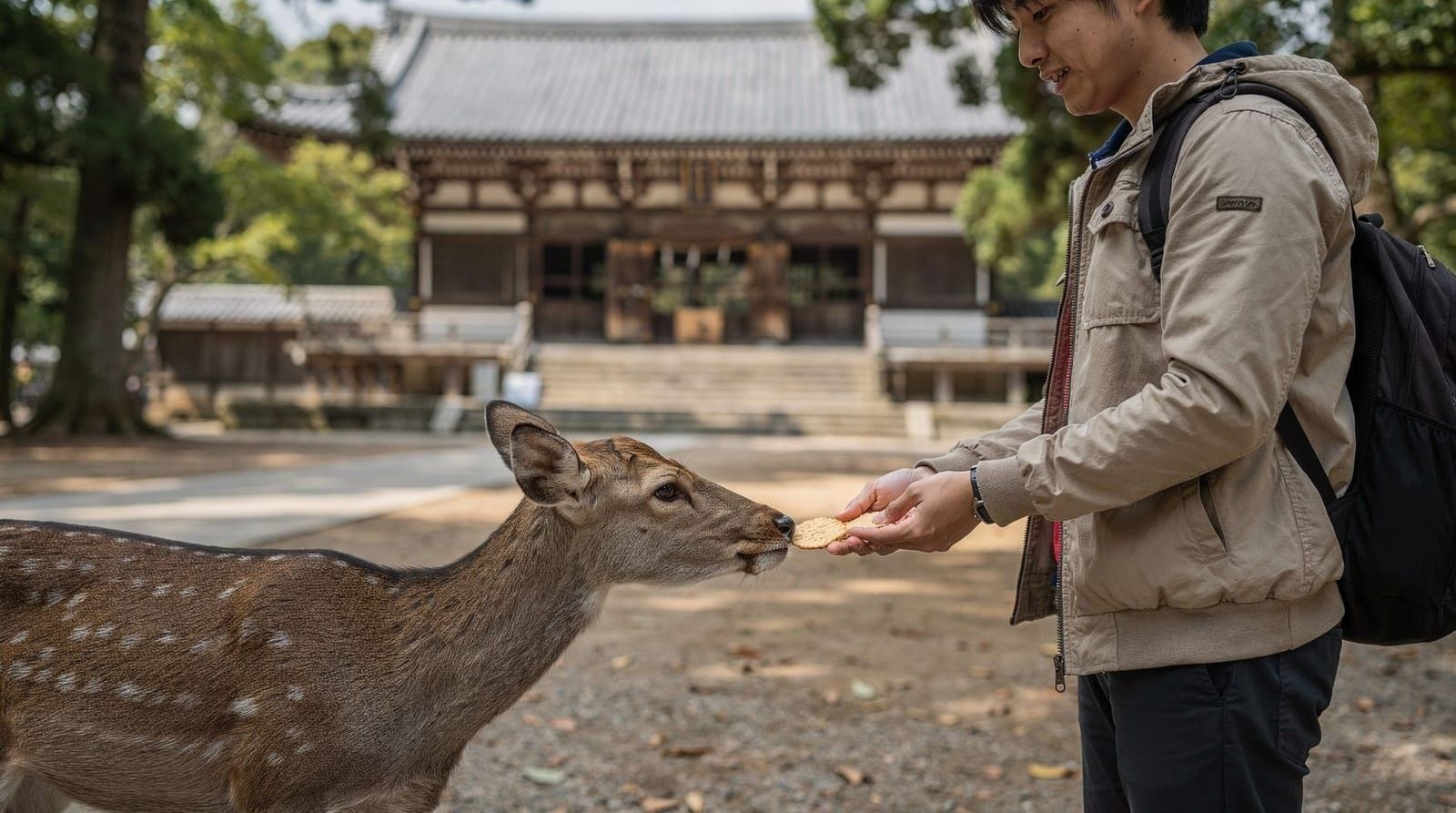
Deer crackers (shika senbei) sell for about ¥200 (~$1.85) a stack from vendors throughout the park and near both station approaches — buying from an official stand, rather than any unofficial seller, is the standard and safer approach. Some deer have learned to bow their heads before receiving a cracker, a genuinely charming learned behavior that’s become one of the park’s signature photo moments, and worth pointing out to kids as something to watch for specifically rather than just handing crackers over mechanically. Feeding is entirely optional — plenty of families visit purely to watch and photograph the deer from a comfortable distance, a reasonable choice for families with a child nervous around animals up close.
Nara Park private family bike tour with lunch is built specifically around a family pace, covering the park by bike with a lunch stop included — useful if walking the full area with young children in tow feels like more than the group wants to manage on foot.
Todai-ji’s Great Buddha Hall
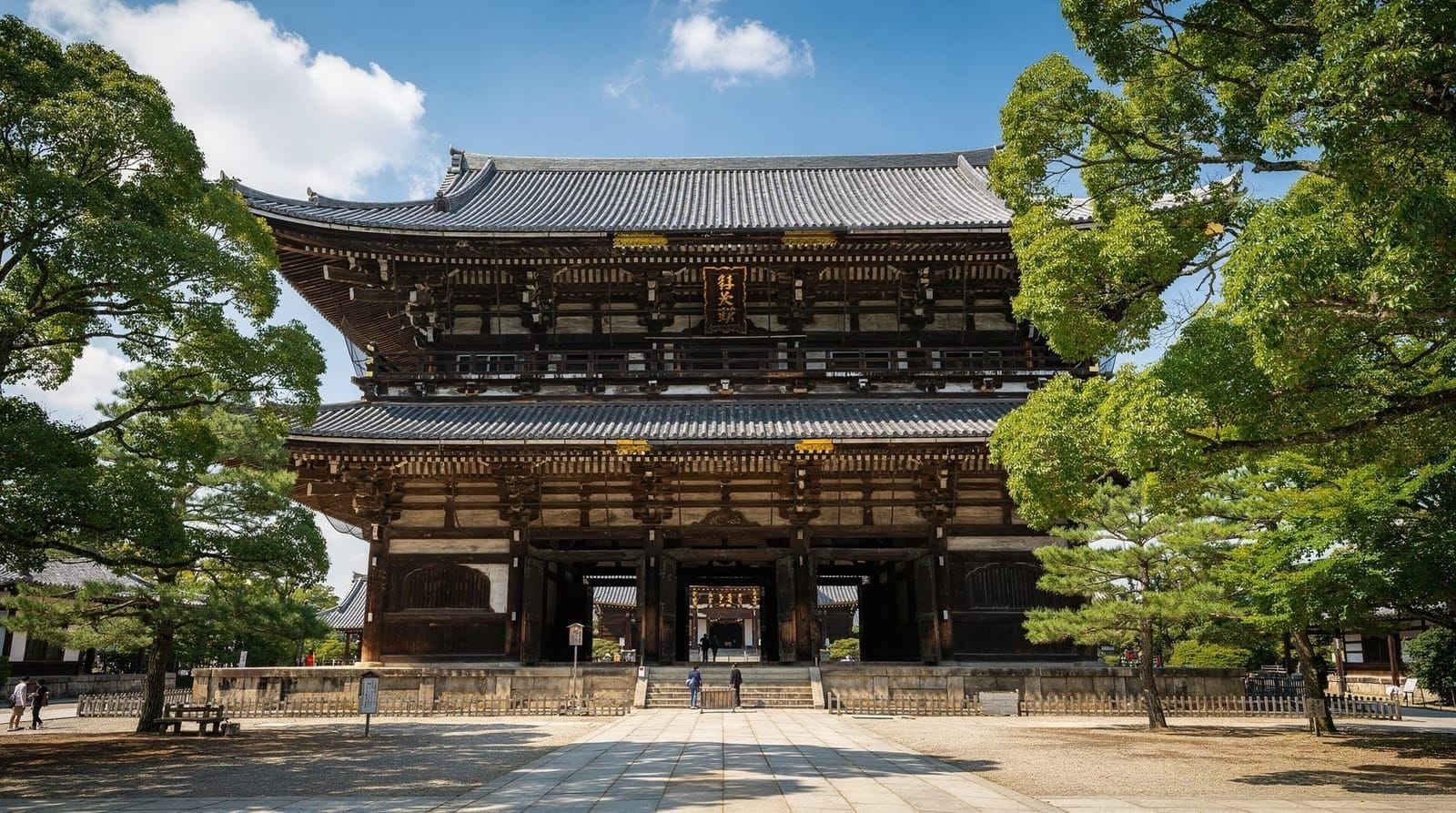
A short walk from the deer-heaviest sections of the park, Todai-ji’s Great Buddha Hall houses a bronze Buddha statue on a scale that tends to genuinely impress children in a way many temple interiors don’t manage — the hall itself is one of the world’s largest wooden buildings, and the statue inside stands roughly 15 meters tall. A support pillar inside the hall has a hole cut through its base said to match the size of one of the Buddha’s nostrils; a popular tradition holds that anyone who crawls through it gains enlightenment in their next life, and it’s become a genuinely fun, low-stakes activity for children (and plenty of adults) visiting the hall. Entry runs ¥800 (~$7.40).
Nara half-day private tour of four must-see spots covers the deer park alongside Todai-ji and other nearby sights in a single guided route, useful for families who’d rather have someone else manage the day’s pacing and sequencing.
Kasuga Taisha’s lantern-lined approach
Kasuga Taisha, reached by a scenic approach lined with thousands of stone lanterns, offers a different kind of engagement for kids — a long, atmospheric walk through the deer-populated forest between the shrine’s entrance and inner sanctuary, generally quieter than the main deer-feeding areas closer to the park entrance. The inner sanctuary charges a modest fee (¥500, ~$4.65); the approach itself and outer grounds are free.
Kasuga Taisha sacred deer shrine guided tour covers this shrine specifically, useful for families who want the deer-and-lanterns combination explained with historical context rather than walked through independently.
A realistic family day
Arriving before 9am, budget an hour or so for the deer park itself — feeding, photos, and just watching — before moving on to Todai-ji’s Great Buddha Hall (30-45 minutes including the queue for photos at the giant pillar) and, if energy allows, Kasuga Taisha’s approach. This comfortably fits into a half-day, with a full day allowing for both temples plus a relaxed lunch and unhurried deer-watching time rather than a rushed sequence.
Nara deer park and UNESCO sites day trip with hotel pickup is a convenient option for families who’d rather not manage the train connection from Osaka independently, particularly useful for an early-morning start with young children and any accompanying gear.
Practical notes for families
Benches and rest areas are scattered throughout the park, though shade is limited in the more open lawn sections, worth knowing in summer heat. Public restrooms are available at intervals through the park and at both train stations, though not always with dedicated baby-changing facilities — checking the nearest major facility (station restrooms tend to be the most reliably equipped) is worth doing in advance with very young children. The park’s flat, paved paths are genuinely stroller-friendly throughout, a meaningful advantage over some of Kansai’s more stair-heavy temple approaches.
When the park is busiest
Nara Park draws heavy crowds from mid-morning through mid-afternoon on weekends, during cherry blossom season (late March-early April), and around the Nara Deer Antler Cutting Ceremony (early October, when handlers ceremonially remove antlers from wild bucks in a centuries-old tradition that draws large crowds specifically to watch it). Arriving before 9am, as with most crowd-sensitive Kansai sights, gets meaningfully calmer deer encounters and quieter paths for photography.
Food and rest breaks near the park
Options directly inside the park are limited to vending machines and a handful of small snack stands, so families planning a longer visit generally eat either before arriving or in the streets leading up to the park entrance, where small noodle shops and cafes cater to the steady flow of visitors.
Sanjo-dori, the main shopping street connecting Kintetsu-Nara Station to the park, has the widest range of family-friendly casual restaurants, including several serving standard noodle and rice-bowl meals that work well for children hesitant about less familiar food. Packing a light snack for the walk between the deer park and Todai-ji is a reasonable backup if a sit-down meal doesn’t fit the day’s timing, particularly for families keeping a toddler on a tighter feeding schedule than the rest of the group.
If a child feels nervous around the deer
Some children are genuinely uneasy the first time a deer approaches directly rather than waiting to be offered a cracker, and that reaction is common enough that it’s worth planning for rather than treating as unusual. Starting from a bit of distance, letting the child watch other families feed the deer for a few minutes before trying it themselves, generally helps more than pushing a hesitant child straight into a close encounter. Watching rather than feeding is a completely reasonable way to enjoy the park, and plenty of families do exactly that with a nervous child while an older sibling or parent handles the feeding directly.
Related planning
For the full picture of Nara Park beyond the family angle — deer history, Todai-ji and Kasuga Taisha in fuller detail, and general visitor logistics — see the main Nara Park destination page and the wider Nara destination page.
Families building a broader Kansai itinerary should also see the Kansai family attractions guide for how a Nara deer day pairs with Osaka’s family attractions, and Osaka with kids for the central-Osaka side of a family trip. For a genuinely different pace of family day, Universal Studios Japan offers the high-energy theme-park counterpart to Nara Park’s slower, outdoor rhythm.
Frequently asked questions about Nara deer park with kids
How many deer are in Nara Park and are they safe around kids?
Roughly 1,200 wild sika deer roam the park, protected since 1957. They're genuinely wild rather than tame, but centuries of contact with visitors have made them comfortable approaching people, especially anyone holding deer crackers. Supervising young children closely and handing crackers over quickly rather than teasing the deer avoids nearly all minor incidents.What time should we arrive with children?
Before 9am, if possible. Crowds and heat both build through the morning, and the deer themselves are more active and visible in the cooler early hours than during a hot afternoon, when many retreat to shade. An early arrival also means calmer, less food-competitive deer behavior.Do we need to buy deer crackers, and where?
Deer crackers (shika senbei) cost about ¥200 (~$1.85) a stack, sold by vendors throughout the park and near both station approaches. Buying from an official stand rather than any unofficial seller is the safer, standard way to feed the deer, and it's entirely optional — plenty of families visit just to watch and photograph the deer without feeding them.Is Todai-ji's Great Buddha Hall interesting for kids?
Yes, generally — the sheer scale of the bronze Buddha statue and the wooden hall housing it tends to genuinely impress children in a way many temple interiors don't, and a support pillar with a hole said to match one of the Buddha's nostrils, which children attempt to crawl through, is a popular, low-stakes activity inside the hall.How much walking is involved, and is it stroller-friendly?
Nara Park itself is flat, open parkland with paved paths throughout, genuinely stroller-friendly. Getting to Todai-ji's Great Buddha Hall and Kasuga Taisha within the same grounds involves easy, flat walking rather than stairs or uneven terrain, making the whole area manageable for a family with a stroller.What should we watch out for with young kids around the deer?
Deer will nip at clothing or nudge firmly if a visitor holds out food without releasing it — the most common cause of minor injuries. Extra caution is worth taking around does with fawns in late spring (May-June) and during the autumn rutting season (September-November), when deer can be more defensive or assertive generally.How long should we budget for a family visit?
A half-day covers the deer park, a cracker-feeding session, and either Todai-ji or Kasuga Taisha comfortably. A full day allows time for both temples plus a relaxed lunch and more unhurried time watching and photographing the deer without rushing.How do we get to Nara Park from Osaka with kids?
The Kintetsu Nara Line's limited express from Namba to Kintetsu-Nara Station takes about 35 minutes and lands a five-minute walk from the park — generally the more convenient option with children and a stroller than the JR Yamatoji Line, which takes about 45 minutes and requires a 15-20 minute walk or bus ride from JR Nara Station.
Top experiences
Bookable activities with verified prices and instant confirmation on GetYourGuide.