Nara day trip from Osaka
Nara: Nara Todai-ji great buddha 2 hours
Nara is the easiest, lowest-effort day trip from Osaka — a 45-minute direct train, a walkable core, and no need to choose between competing districts the way Kyoto forces you to. This itinerary covers Nara Park’s free-roaming deer, Todai-ji’s Great Buddha Hall, and Kasuga Taisha’s lantern-lined forest path, all within comfortable walking distance of each other.
| Where | Nara Park, Todai-ji, Kasuga Taisha (Kansai region) |
| Cost | Around ¥3,000-5,000 ($26-44) per person, transport + lunch + one admission |
| Time needed | A full day, roughly 8:30am-6pm door to door from Osaka |
| Getting there | Direct train from Osaka-Namba or Osaka Station, about 45 minutes each way |
| Best time | Early morning before 9:30am, or late autumn/spring outside peak sakura and koyo weekends |
Why Nara works so well as a single day trip
Unlike Kyoto, which spreads its major sights across a genuinely large city requiring multiple bus or rail transfers, Nara’s core attractions sit inside or immediately adjacent to a single park, all reachable on foot from the train station in under 20 minutes.
That makes Nara considerably more forgiving for a first-time visitor nervous about Japan’s rail network, and it’s part of why this itinerary reads as more relaxed than most of the other single-day plans on this site — there’s simply less logistics to manage. It’s also one of the more reliably enjoyable day trips for mixed-interest groups, since the deer appeal regardless of age or background, while Todai-ji and Kasuga Taisha still satisfy anyone specifically interested in temple architecture and history.
Getting there from Osaka
Two direct options, both around 45 minutes: the Kintetsu Nara Line runs from Osaka-Namba Station straight to Kintetsu-Nara Station for about ¥680 ($6), with Kintetsu-Nara being a few minutes’ walk closer to the park than the JR station. The JR Yamatoji Line runs from Osaka Station to JR Nara Station, also about 45-50 minutes, useful if starting from Umeda rather than Namba. Either way, no transfers are required, which is part of why Nara works as an easy first day trip even for travelers nervous about Japan’s rail network. Both lines run frequently throughout the day, roughly every 15-20 minutes, so there’s no need to plan the outbound trip around a fixed departure time.
This day at a glance
| Time | Stop | Notes |
|---|---|---|
| 8:30-9:00am | Depart Osaka | Kintetsu Nara Line from Namba or JR Yamatoji Line from Osaka Station |
| 9:15-9:30am | Arrive, walk into Nara Park | Deer are most active before the midday heat and tour buses |
| 9:30-10:30am | Nara Park and the deer | Shika senbei, photos, easing into the pace of the day |
| 10:30am-12:00pm | Todai-ji | Great Buddha Hall, the nostril pillar, roughly 90 minutes unhurried |
| 12:00-1:00pm | Lunch | Around the park or in Naramachi, see below |
| 1:00-2:30pm | Kasuga Taisha | Lantern-lined forest path, main shrine grounds |
| 2:30-4:00pm | Naramachi (optional) | Former merchant quarter, skip if the day is running long |
| 4:00-6:00pm | Return train to Osaka | Both lines run frequently; no need to rush a specific departure |
This is a suggested pace, not a fixed schedule — the deer and Todai-ji alone can comfortably absorb an extra hour if that’s where the day’s energy goes.
Morning: Nara Park and the deer
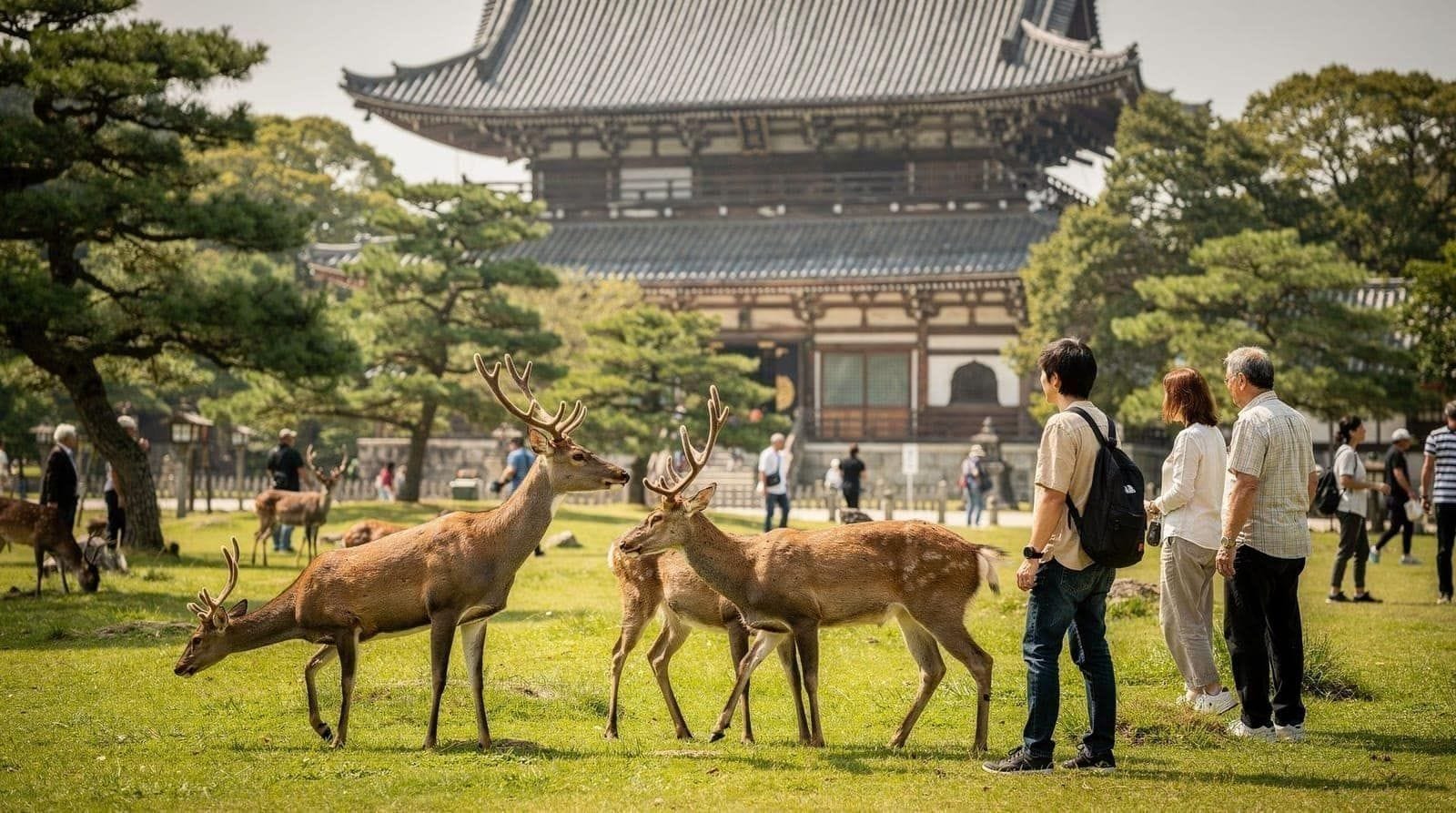
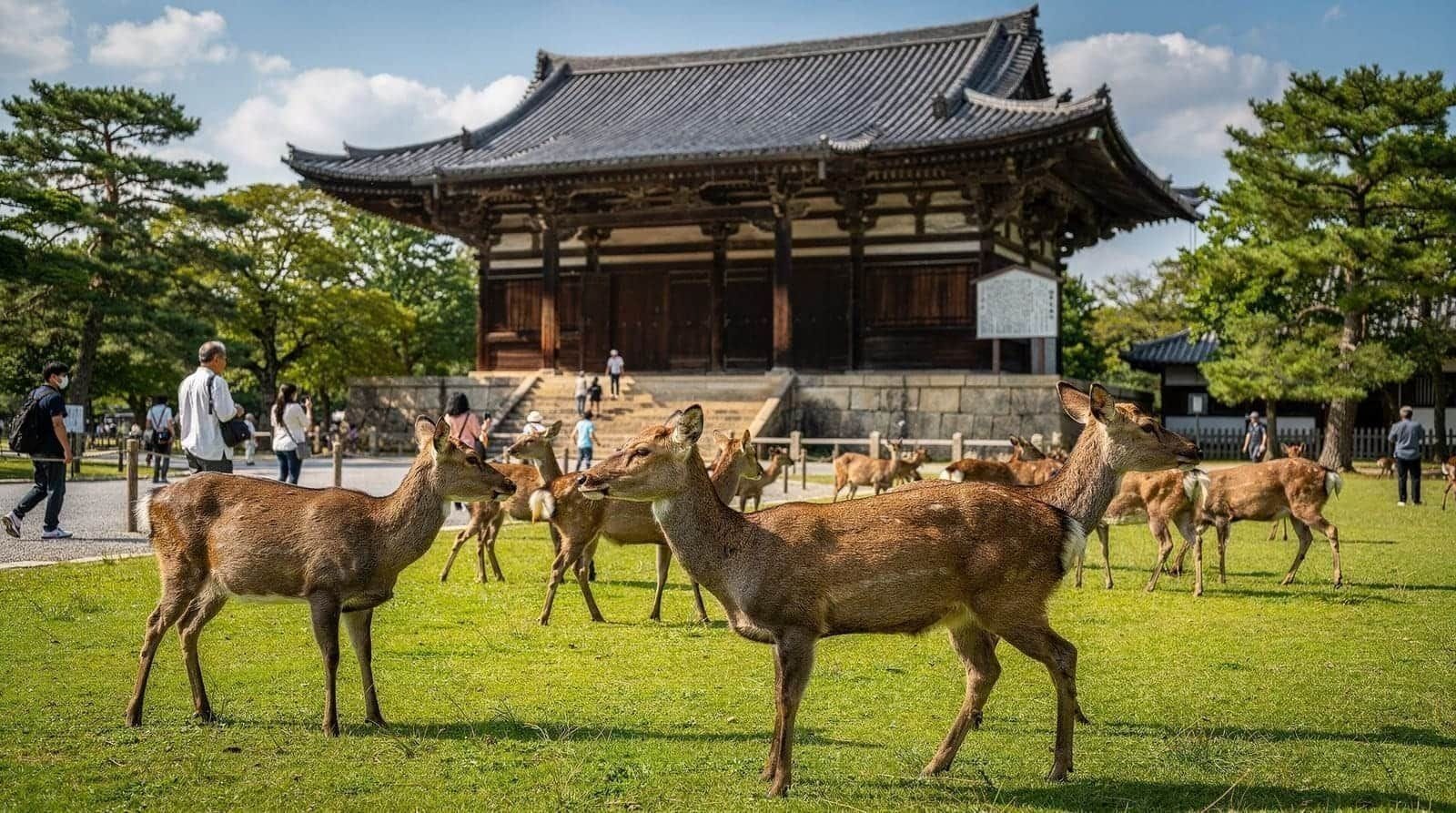
Nara Park spans roughly 660 hectares and is home to over a thousand sika deer that roam freely and have done so for centuries — in local Shinto belief, they’re considered messengers of the gods sent by Kasuga Taisha’s deity, which is why they’ve never been culled or fenced in and are legally protected as natural monuments. Vendors around the park sell shika senbei (deer crackers) for about ¥200 ($1.75) per pack; the deer have learned to bow for them, though a determined deer will also nose into an unattended snack or nip at clothing if it thinks food is being withheld, so hold packets above head height once approached and don’t tease with a visible cracker you don’t intend to give.
Our Nara deer park family guide covers this in more detail, useful if traveling with young kids who might find a persistent deer intimidating. A Nara deer park day trip with hotel pickup is worth considering if avoiding Osaka rail logistics entirely is a priority. See our Nara Park destination guide.
Midday: Todai-ji Temple
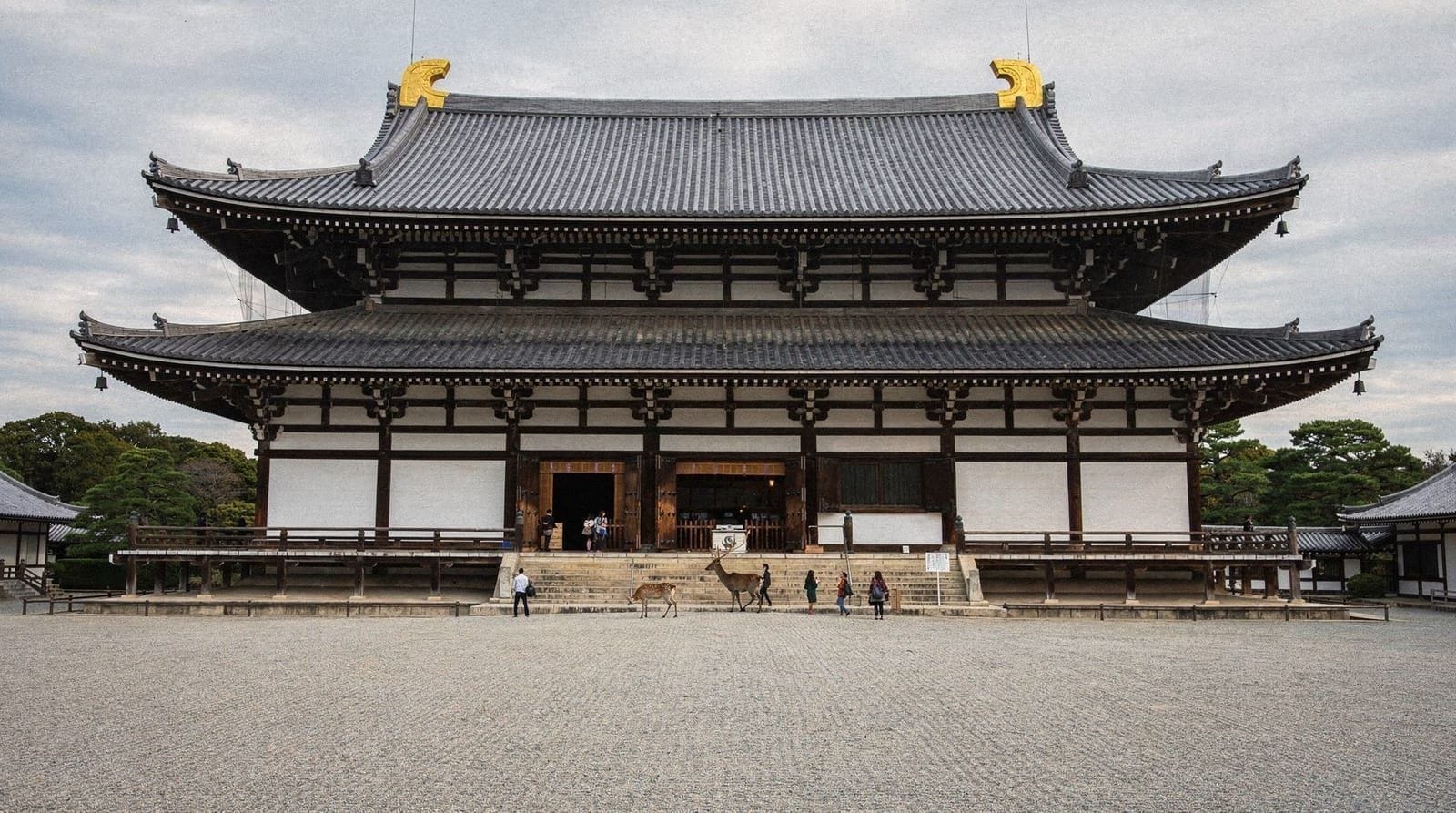
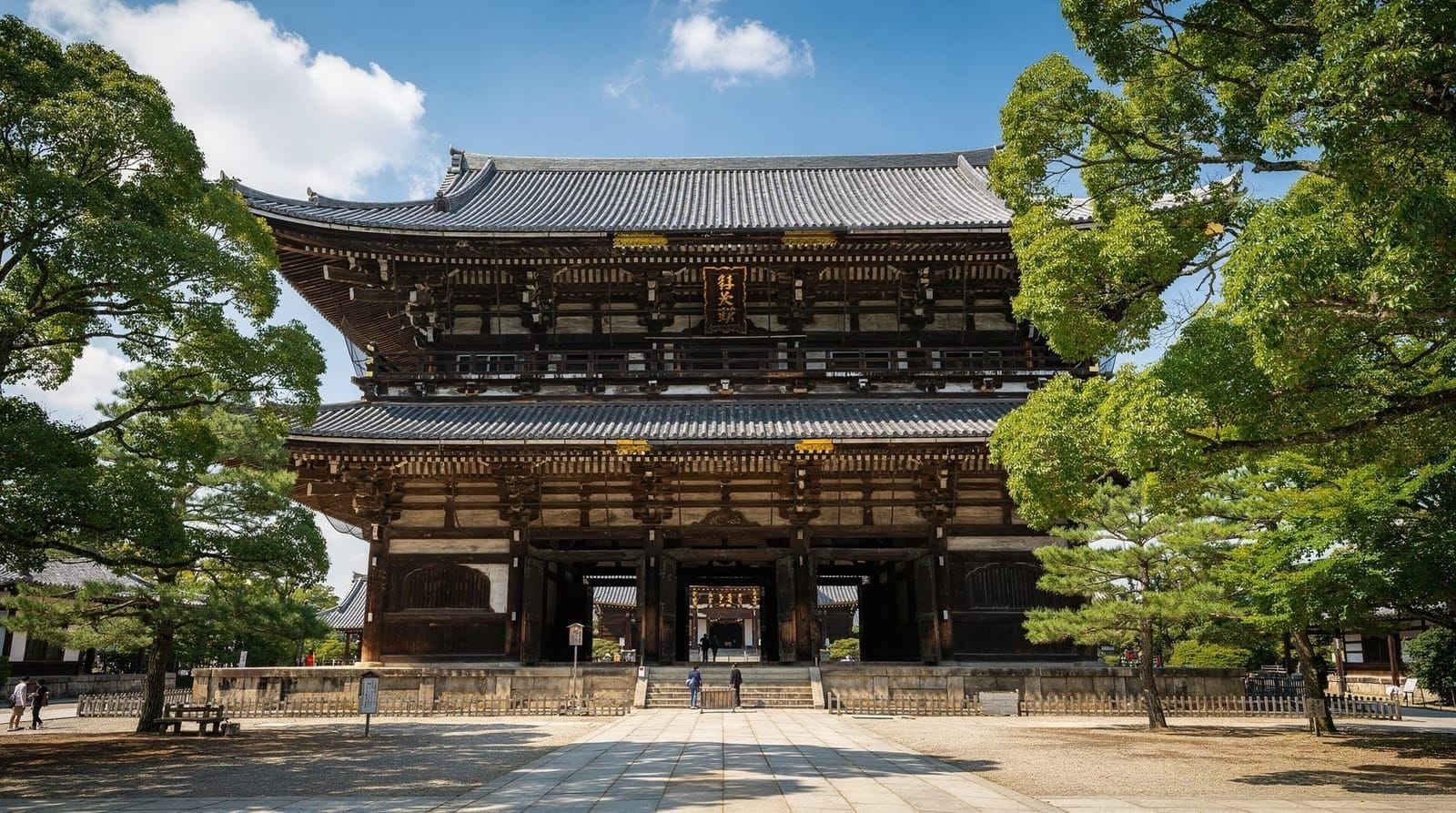
A 10-minute walk deeper into the park brings you to Todai-ji, whose Great Buddha Hall (Daibutsuden) is the world’s largest wooden building by volume, despite being a reconstruction roughly two-thirds the size of the 8th-century original (the original hall burned down twice in Japan’s medieval wars before its current 1692 rebuild). Inside sits a bronze Buddha statue nearly 15 meters tall, cast in 752 CE and still one of the largest bronze Buddha statues on Earth, commissioned by Emperor Shomu as a national project intended to unify the country spiritually during a period of famine and unrest.
A wooden pillar near the statue has a hole in its base said to be the same size as the Buddha’s nostril; squeezing through it is a popular (if slightly undignified) local tradition believed to bring enlightenment, and it’s a genuinely tight fit for most adults. A Todai-ji and Great Buddha guided tour covers the temple’s history and construction in around two hours, more context than most solo visitors pick up from signage alone. See our full Todai-ji guide.
Afternoon: Kasuga Taisha
From Todai-ji, a 15-20 minute walk through Nara Park’s forest leads to Kasuga Taisha, founded in 768 CE and famous for its roughly 3,000 stone and bronze lanterns lining the approach path, lit twice a year during the Setsubun Mantoro and Obon Mantoro lantern festivals (early February and mid-August). Even outside those dates, the moss-covered stone lanterns under the forest canopy are worth the walk on their own, and the shrine’s main buildings, painted a vivid vermillion against the surrounding cedar forest, are rebuilt on a 20-year cycle following Shinto tradition, similar to the more famous rebuilding cycle at Ise Grand Shrine.
A Kasuga Taisha and sacred deer shrine tour pairs the shrine visit with more context on the deer’s role in the shrine’s founding legend, in which the shrine’s deity is said to have arrived riding a white deer. See our Kasuga Taisha guide.
Late afternoon: Naramachi (optional, if time allows)
If the pace above has left an hour or two spare, Naramachi is Nara’s former merchant quarter, a 15-minute walk south of the park with preserved Edo-period wooden townhouses now housing cafés, small museums, and craft shops — a quieter, less deer-crowded contrast to the morning. Look for the small monkey-shaped charms (migawari-zaru) hanging outside many houses here, believed to ward off misfortune on behalf of the household, a distinctly Nara tradition not seen elsewhere in Kansai. It’s easy to skip without missing anything essential if the day is running long, which is the honest tradeoff worth naming here rather than pretending every day trip has room for one more stop.
A brief note on Nara’s place in Japanese history
Nara served as Japan’s first permanent capital from 710 to 784 CE, a period referred to as the Nara period, before the capital moved to Kyoto. Todai-ji, Kasuga Taisha, and several other sights in the park all date from this era, making Nara one of the best-preserved windows into early Japanese Buddhist and Shinto architecture anywhere in the country — considerably older, on average, than most of Kyoto’s famous temples, many of which were rebuilt or founded later. This context is easy to miss on a rushed visit focused only on the deer, and it’s part of why Todai-ji in particular rewards a guided visit over a quick walk-through.
Evening: the return train
Both Kintetsu-Nara and JR Nara stations run frequent direct services back to Osaka into the evening — there’s no need to rush the day to catch a specific last train, though the frequency does thin out after around 10:30-11pm. Horyuji Temple, home to some of the oldest wooden structures in the world and a separate UNESCO World Heritage Site in its own right, sits further out (a separate train and bus connection from central Nara) and doesn’t fit into this itinerary without cutting Kasuga Taisha — it’s covered as its own trip in our family guide and works better as an add-on for a second Nara visit rather than squeezed into a first, single-day trip.
Where to eat lunch in Nara
Lunch options cluster around the park’s edges and in Naramachi rather than inside the park itself, since Nara Park is largely free of restaurants beyond a few tea houses. Casual noodle and set-meal shops near Kintetsu-Nara Station run about ¥800-1,200 ($7-10), while Naramachi’s cafés lean toward a slower, sit-down pace if the afternoon has room for it.
Kakinoha-zushi (persimmon-leaf wrapped mackerel or salmon sushi) is Nara’s signature regional dish and worth seeking out at least once — it’s a lightly cured, room-temperature style rather than the fresh raw sushi more common elsewhere in Japan, developed centuries ago as a way to preserve fish for transport inland before refrigeration existed. Vegetarian options exist but are limited outside dedicated cafés; a quick search before arriving is worth it if dietary needs are specific, and our Kansai family attractions guide flags a few kid-friendly lunch spots near the park for travelers with younger children in tow.
Practical tips: IC cards, etiquette, and what to bring
An ICOCA or Suica IC card, loaded before leaving Osaka, covers both the Kintetsu and JR lines to Nara with a simple tap in and out, and avoids fumbling with paper tickets at the start of the day. Our JR Kansai area pass guide covers whether a multi-day rail pass is worth it if Nara is one stop on a longer Kansai loop rather than a single day trip — for a single Nara day trip alone, an IC card is simpler and just as cheap.
Basic etiquette matters more here than at most Japanese sights, mainly around the deer: bow before offering a cracker, don’t wave food to tease a deer that’s already approached, and keep small children within reach, since a hungry deer doesn’t distinguish between a toddler’s hand and a snack.
Our Nara deer etiquette post covers the specific dos and don’ts in more depth, and the wider Japanese etiquette in Kansai guide is useful background if this is an early stop on a longer Japan trip. Comfortable walking shoes matter more than anything else to pack — the loop between the three main sights covers several kilometers of mostly flat but occasionally gravel park paths.
Nara with kids
Nara is one of the most reliably enjoyable day trips in the region for families, largely because the deer need no explanation or buy-in from children the way a temple’s history might. That said, very young children can find an insistent deer more intimidating than charming up close, so keep crackers handed over quickly rather than held out for a photo, and consider carrying rather than letting toddlers walk freely through the more crowded feeding areas near the park entrance.
Older kids generally enjoy Todai-ji’s giant Buddha statue and the nostril-pillar squeeze more than the shrine architecture at Kasuga Taisha, so if energy is limited by early afternoon, it’s a reasonable place to trim the day. Our Kansai family attractions guide has more on pacing a Kansai trip around younger children, and the Kansai family 6-day itinerary is a fuller plan if Nara is one stop among several on a family-paced trip.
Extending beyond a single Nara day
This itinerary treats Nara as a self-contained day trip, but it’s easy to build into a longer Kansai loop. Travelers who want a second Kansai day trip in a similar low-effort register should look at our Kobe and Himeji day loop, which follows a comparable single-city, walkable-core structure.
For those combining Nara with Kyoto and other Kansai stops over a longer stay, our Nara destination guide covers the wider area beyond what fits into one day, including Horyuji and the deeper Naramachi backstreets skipped here for time. And if the wider question is Kansai versus a Tokyo-based trip, our Kansai versus Tokyo culture guide puts a Nara day trip in that broader context.
Budget for this day trip
Round-trip Kintetsu or JR fare runs about ¥1,360 ($12); Nara Park and the deer are free, Todai-ji’s Great Buddha Hall charges around ¥800 ($7) admission, and Kasuga Taisha’s main shrine grounds are free (an inner sanctuary charges a small separate fee, around ¥500/$4.40). A full day of transport, deer crackers, one temple admission, and lunch comes to roughly ¥3,000-5,000 ($26-44) per person without a guided tour, making this one of the most affordable day trips covered on this site.
Lunch options around the park range from casual noodle shops (¥800-1,200/$7-10 for a set meal) to more traditional Nara specialties like kakinoha-zushi (persimmon-leaf wrapped sushi), a regional dish worth seeking out at least once. Our JPY currency converter and Kansai day trip planner help convert costs and check timing on the fly.
Frequently asked questions about a Nara day trip
How long does it take to get from Osaka to Nara?
About 45 minutes direct, either via the Kintetsu Nara Line from Osaka-Namba (~¥680) or the JR Yamatoji Line from Osaka Station, with no transfers required either way.
Are the deer in Nara Park dangerous?
Not typically, but they’re wild animals, not pets — a deer denied a cracker it expects may nudge or nip at clothing. Holding food above head height and not teasing them with visible crackers avoids most issues; supervise young children closely, and be aware that male deer during autumn rutting season (roughly October-December) can be more assertive than usual, a period when park signage sometimes recommends extra caution.
Is one day enough for Nara?
Yes, for the core sights covered here — Nara Park, Todai-ji, and Kasuga Taisha are all within a comfortable walking loop, and a single day covers them without rushing. Visitors who want to add Horyuji Temple or a deeper look at Naramachi should plan for a second day or an overnight rather than trying to fit everything into one trip.
Do I need to buy tickets in advance for Todai-ji?
No — Todai-ji’s Great Buddha Hall sells admission on-site, and lines are rarely long enough to require advance booking outside of Golden Week or peak sakura/koyo weekends.
How does Nara compare to Kyoto for a first-time visitor with limited time?
Nara is more compact and lower-effort, with its major sights clustered inside a single park; Kyoto has considerably more depth and variety but demands more logistics and multiple visits to see properly. Many first-time visitors treat Nara as a satisfying single day and save Kyoto for a longer, multi-day stay.
Can Nara be combined with Kyoto in one day?
Not comfortably — both deserve their own day given train transfer times and the amount there is to see in each. Trying to combine them typically means seeing neither properly; see our Kansai 5-day itinerary for a plan that gives each its own day.
What’s the best time of day to avoid crowds in Nara Park?
Early morning, before 9:30am, when tour groups from Osaka and Kyoto haven’t yet arrived — the deer are also generally more active and approachable before the midday heat sets in.
Should I feed the deer, or is it better to just watch?
Feeding is a normal, expected part of visiting — vendors selling shika senbei exist specifically for this — but only feed with purchased crackers, never with regular food or snacks, which can harm the deer’s digestion. Bowing to a deer before offering a cracker often prompts it to bow back, a small, genuinely charming ritual most first-time visitors enjoy.
Is Nara worth visiting outside of a day trip, as an overnight stay?
For most visitors, a day trip is sufficient given how compact the core sights are, though staying overnight does allow an early morning in the park before day-trippers arrive from Osaka and Kyoto, along with a slower visit to Naramachi in the evening when its cafés and shops feel considerably quieter.
Do I need an IC card, or can I buy paper tickets for this day trip?
Either works, but an IC card like ICOCA or Suica is considerably faster — tap in and out on both the Kintetsu and JR lines without queuing at a ticket machine, and it can also be used for vending machines and convenience stores in Nara itself.
Is Nara a good day trip for families with young children?
Yes, generally one of the easiest in the region — the deer need no explanation to hold a child’s interest, and the walking loop between sights is flat and manageable. Keep small children close during feeding, since a hungry deer doesn’t distinguish between a toddler’s hand and a cracker.
Top experiences
Bookable activities with verified prices and instant confirmation on GetYourGuide.