Arashiyama bamboo grove guide
Kyoto: Kyoto Arashiyama bamboo grove morning walk
What time should I visit the Arashiyama bamboo grove?
Before 8am. The Sagano Bamboo Grove is free, gateless, and open at all hours, and by 10am on any decent-weather day it turns into a slow shuffle of tour groups. The walkable stretch itself takes only 10-15 minutes, considerably shorter than most photos suggest, so an early arrival buys a genuinely quiet path rather than just a marginally quieter one.
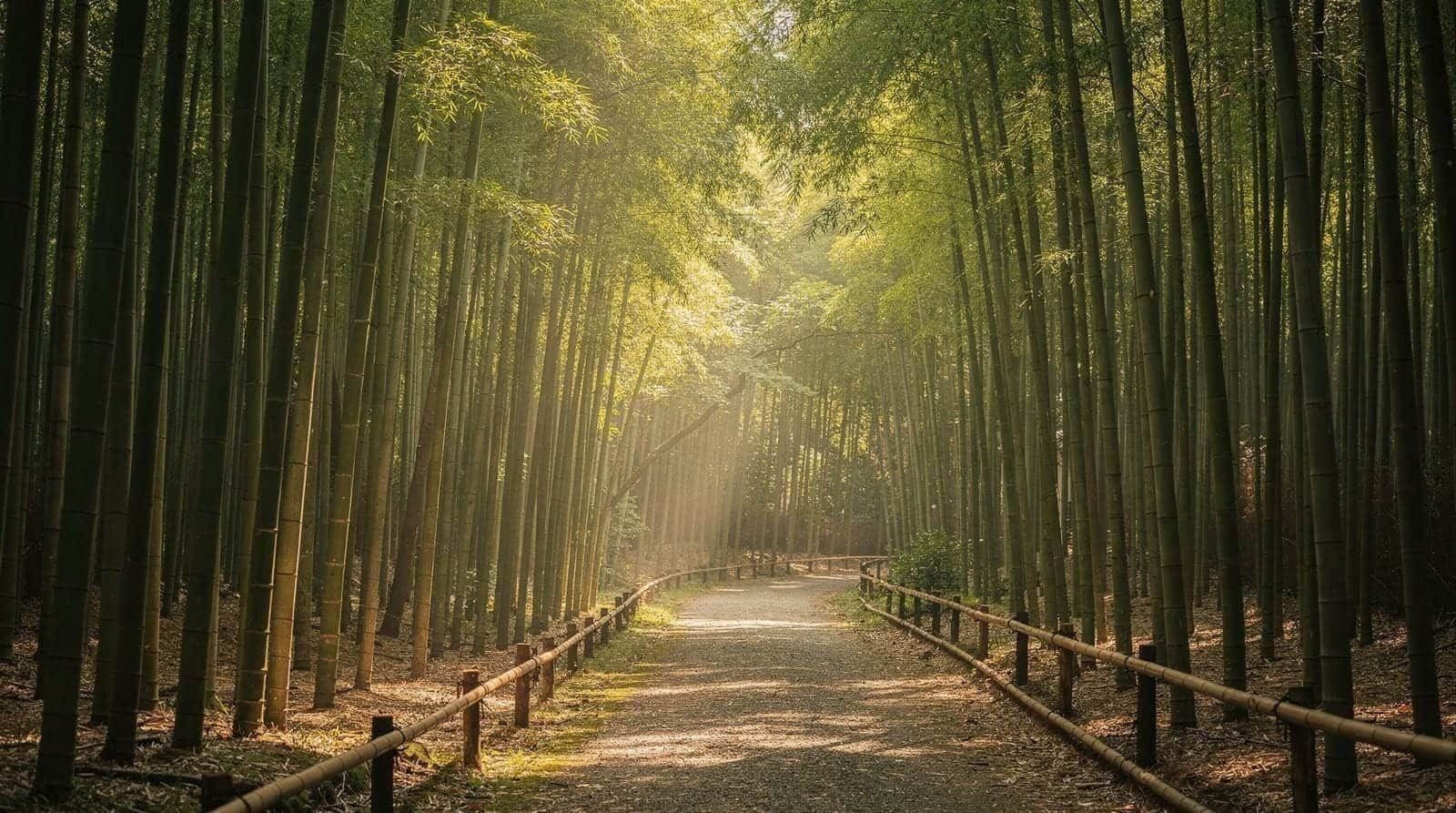
Every Kyoto photo list includes the same shot: a narrow dirt path disappearing between towering green stalks, sunlight cut into thin slivers overhead. That image is genuinely accurate to what the Sagano Bamboo Grove in Arashiyama looks like — it just leaves out the fifty other people usually standing in the same spot. Getting the empty-path version everyone posts online isn’t luck or an unusually quiet day; it’s almost entirely a function of arrival time, and this guide is built around that single variable, plus what to do with the rest of a morning once you’ve seen it.
Why the grove looks bigger in photos than it is
The Sagano Bamboo Grove’s main walkable stretch, running roughly from the approach near Nonomiya Shrine to Tenryu-ji’s north gate and continuing a short distance beyond it, takes about 10-15 minutes to walk end to end at an ordinary pace. That’s shorter than the volume of bamboo-grove photography online implies, and first-time visitors sometimes arrive expecting a longer forest walk and are surprised at how quickly they reach the far end.
The visual effect — tall bamboo stalks packed close enough together to block out most of the sky, with light falling through in narrow, moving slivers — is dense and genuinely striking, but the geography of the actual path is compact. Knowing this in advance helps with pacing: it’s easy to walk through too fast on a first pass and only notice the details (individual stalk markings, the creak of bamboo moving in wind, small side paths) on a second, slower loop.
The single most useful piece of advice: arrive before 8am
Entry to the bamboo grove is free and there’s no gate, which means crowd level here is purely a function of what time visitors show up rather than anything the site itself controls. By 10am on any day with decent weather, the path becomes a slow-moving line of tour groups, selfie sticks, and rickshaw pullers threading between pedestrians — genuinely difficult to enjoy as a quiet nature walk rather than a managed queue.
Before 8am, the same 400-or-so meters of path is close to empty, with morning light coming through the canopy at a low angle that photographs meaningfully better than the flatter midday light anyway. This isn’t a marginal improvement; it’s closer to visiting a completely different place. Saga-Arashiyama Station is roughly 50-60 minutes from Osaka including a transfer at Kyoto Station, which means an early start from an Osaka hotel — leaving by 6:30-6:45am for an arrival before 8am — is a genuinely early morning but not an unreasonable one for the payoff.
Arashiyama bamboo grove morning walk is built specifically around this early window, timed to arrive ahead of the tour bus schedule rather than fighting through the crowd that forms an hour or two later.
What the grove actually looks like up close
Beyond the wide establishing shot everyone takes, the grove rewards a slower look: individual stalks carry faint horizontal rings and occasional carved graffiti (old, weathered, not encouraged but part of the texture), and the bamboo variety planted here (mostly moso and madake) grows in dense, uniform clusters that create the blocked-out-sky effect from directly underneath in a way that’s hard to appreciate from wider shots.
Wind through the grove produces a distinctive creaking and rustling sound distinctive enough that Japan’s Ministry of the Environment included it on an official list of “100 soundscapes of Japan” worth preserving — worth pausing and listening for on a quiet morning rather than only looking. The path surface itself is packed dirt, flat and easy underfoot, with no significant elevation change.
Photography specifics
For the classic vertical shot of the path disappearing into bamboo, position matters more than gear — the widest, most photogenic stretch sits roughly in the middle third of the path, and shooting straight down the center line (rather than at an angle from the edge) produces the symmetrical tunnel effect most reference photos show. A wide-angle lens or phone’s ultra-wide mode helps exaggerate the height of the stalks.
Overcast mornings, somewhat counterintuitively, often photograph better than harsh sun, since direct light creates blown-out highlights where it breaks through gaps in the canopy; soft, diffused light evens out the contrast between lit and shadowed stalks. Because the path is narrow, an empty frame requires an empty path — which loops back to the same timing advice: before 8am, or accept other people in the shot.
Tenryu-ji: the temple that makes this more than a photo stop
Tenryu-ji, a working Zen temple founded in 1339 and a UNESCO World Heritage Site, sits directly adjacent to the bamboo grove, with its north gate opening straight onto the grove’s path — the reason most visitors treat the two as a single loop rather than separate stops. Its garden, built around a central pond using a technique called shakkei (“borrowed scenery”) that incorporates the surrounding mountains into the visual composition without a boundary wall breaking the view, is widely considered one of Kyoto’s best-preserved Muromachi-period gardens, predating the bamboo grove’s fame by centuries.
Garden entry runs around ¥500 (~$4.60), with an extra ¥300 to see the main hall’s ceiling painting of a dragon. Visiting Tenryu-ji first, then exiting through its north gate into the bamboo grove, is a more efficient sequence than the reverse, since the temple grounds open earlier than the grove gets crowded and the walk naturally continues in one direction.
Arashiyama bamboo grove and temple tour covers this exact pairing with a guide who can explain the garden’s design principles, details that are genuinely easy to miss walking through Tenryu-ji without context.
Beyond the grove: monkeys, matcha, and the river
Arashiyama’s bamboo grove sits within a wider district that includes Iwatayama Monkey Park (an actual uphill hike with wild macaques, entry ¥550 adults), the Togetsukyo Bridge over the Katsura River, and a main street lined with matcha shops and yudofu (simmered tofu) restaurants tied to the area’s Zen temple history. For visitors who want the bamboo grove folded into a broader half-day rather than treated as a standalone stop, a combined itinerary makes more sense than a single-purpose trip given the transit time from Osaka.
Arashiyama bamboo forests, matcha, and monkeys tour bundles the grove with the monkey park hike and a matcha stop in a single guided route, a reasonable option for a first Arashiyama visit that doesn’t want to plan the sequencing independently.
The Hozugawa river as an alternative angle
For a genuinely different way to experience the same hills, traditional wooden boats run the Hozugawa River from Kameoka downstream through a forested gorge, ending near Arashiyama — a roughly two-hour, rafting-style trip through scenery that includes bamboo-covered slopes visible from the water rather than underfoot. It’s a half-day commitment on its own, longer than the grove-and-temple loop, and better suited to visitors with a full day in the area rather than a tight morning schedule.
Hozugawa river boat and Arashiyama day tour combines the boat trip with time in the bamboo grove and around Togetsukyo Bridge, useful if arranging the river departure point independently feels like more logistics than it’s worth.
Getting there from Osaka
There’s no direct train from Osaka to Arashiyama. The standard route runs JR Special Rapid from Osaka Station to Kyoto Station (28-29 minutes), then a transfer to the JR Sagano/San-in Line to Saga-Arashiyama Station (another 15-20 minutes), for a total of roughly 50-60 minutes including the change. From the station, the bamboo grove entrance is a 5-10 minute walk along the main approach street. An alternative route via the Hankyu Kyoto Line and Hankyu Arashiyama Line exists but runs slower overall; within Kyoto itself, the Randen (Keifuku) tram also reaches Arashiyama, a scenic but slow option better suited to visitors already staying in central Kyoto than day-trippers from Osaka.
Seasonal notes
Because bamboo is evergreen, the grove itself looks close to identical across seasons, which sets it apart from almost every other nature destination in this region — timing here is about crowds and light rather than foliage color.
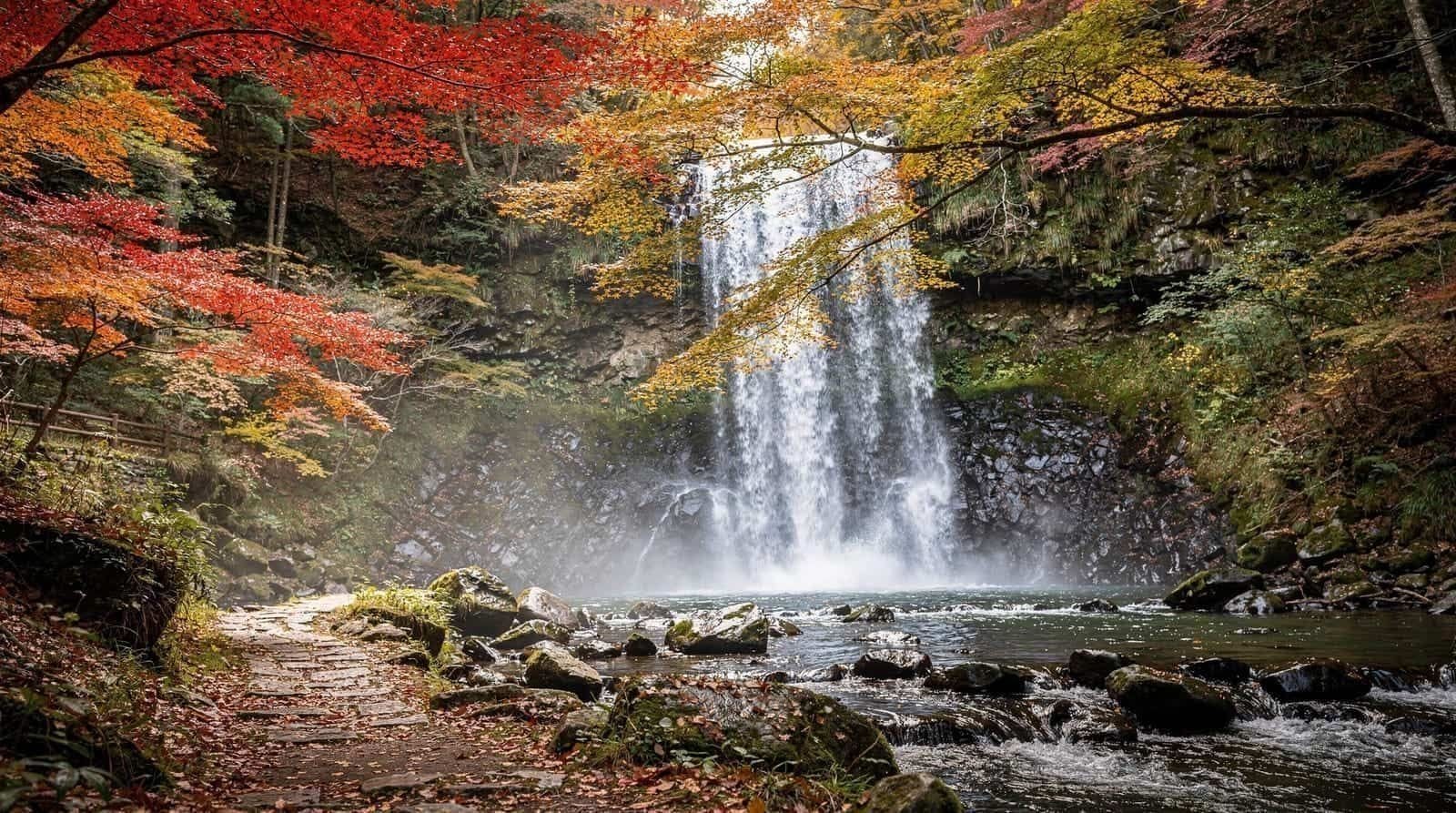
That said, the surrounding district changes considerably by season: cherry blossoms along the Katsura River in late March-early April and maple foliage on the hillsides in mid-to-late November both draw their own separate crowds into Arashiyama on top of the grove’s usual visitor numbers, making early arrival even more valuable during those two windows. Summer brings genuine heat and humidity with limited shade directly on the grove path; winter is the quietest season overall, with the bare hillsides around the grove creating a starker, more monochrome version of the same scene.
Practical notes and honest warnings
Coin lockers and restrooms cluster near Saga-Arashiyama Station and along the approach street, thinning out past Tenryu-ji’s north gate. There’s no admission control on the bamboo grove path, which also means no staff presence to manage crowd flow during peak hours — the congestion during busy windows is a real (if not dangerous) annoyance rather than a safety issue. Rickshaw operators along the approach street sometimes offer bamboo grove rides at premium prices; they’re a legitimate, if expensive, novelty rather than a scam, and entirely optional given how short and flat the walk is on foot.
Mobility note: the path is flat packed dirt with no steps, manageable for wheelchairs and strollers on a dry day, though it narrows enough during peak hours that passing becomes awkward — another reason the early window helps beyond crowds and light. Weekday visits shave a little off the 9am-4pm crowd density compared with weekends, but the gap is smaller than most visitors expect; time of day matters far more here than day of week.
When crowd level shifts through the day
| Time | Crowd level | Light quality |
|---|---|---|
| Before 8am | Near empty | Best — low-angle morning sun through the canopy |
| 8am-9am | Building | Still good, occasional gaps in the path |
| 9am-10am | Filling fast | Flattening, more people entering frame |
| 10am-4pm | Shoulder-to-shoulder | Flat midday light, worst for photos |
| 4pm-dusk | Thins out again | Softer, warmer light returns |
The pattern holds on almost any day the weather is decent, weekday or weekend, since the grove itself has no gate or ticket to regulate flow — it’s purely tour-bus and group-tour scheduling that drives the 9am-4pm crush. A late-afternoon visit, an hour or so before dusk, is the closest thing to a second good window if an 8am start isn’t realistic; it never reaches quite the same emptiness as dawn, but the light softens again and the day-tripper groups have mostly moved on to dinner reservations back in central Kyoto or Osaka.
Getting the most from a single morning in Arashiyama
Visitors with only one Kyoto morning to spend here — realistic for most Osaka-based itineraries, given the roughly hour-long transit each way — get the best return by sequencing tightly rather than wandering. Arrive at Saga-Arashiyama Station before 7:30am, walk the 5-10 minutes to Tenryu-ji’s gate for its opening (usually 8:30am, though this shifts seasonally, so check ahead), spend 20-30 minutes in the garden, then exit through the north gate directly into the bamboo grove while it’s still close to empty.
That leaves time afterward for either the Iwatayama Monkey Park hike or a slower second pass through the grove before the 9am crowds arrive in force. Trying to also fit in the Hozugawa river boat or a full Togetsukyo Bridge riverside walk in the same tight morning usually means rushing at least one of them — better to treat those as a separate half-day if time allows, rather than compress everything into a single rushed loop.
Planning around the rest of Kyoto
Arashiyama sits far enough from central Kyoto that combining it with Gion and Higashiyama or northern Kyoto around Kinkaku-ji in the same day requires real planning, since all routes backtrack through Kyoto Station. The most efficient sequence treats Arashiyama as an early-morning block, finishing by mid-morning, before the return trip and a second district in the afternoon.
For the wider Arashiyama destination page, Tenryu-ji, the monkey park, and food options get fuller coverage; for temple-focused planning across the city, see the best temples in Kyoto guide and the main Kyoto destination page. Visitors comparing Arashiyama’s calm, nature-focused morning against Kyoto’s other major sights — Fushimi Inari’s torii gate tunnel or Kinkaku-ji’s golden pavilion — will find both draw comparably early crowds, reinforcing the same general Kyoto rule: whichever sight matters most to you, see it first, before 8am if at all possible.
Frequently asked questions about Arashiyama bamboo grove guide
How long does it take to walk through the bamboo grove?
The main path through the Sagano Bamboo Grove runs about 10-15 minutes end to end at a normal walking pace. It's a compact stretch — the visual density of the bamboo makes it feel larger in photos than it is on foot.Is the bamboo grove free to enter?
Yes. There's no gate, ticket, or opening hours for the grove path itself. The only fees in the immediate area apply to Tenryu-ji's garden (around ¥500, ~$4.60) and its main hall (an additional ¥300), and to Iwatayama Monkey Park (¥550 adults) further along.What time does the grove get crowded?
Tour buses and group crowds build steadily from around 9am and the path is a slow, shoulder-to-shoulder shuffle by 10am on any clear-weather day, holding that way until roughly 4pm. Before 8am, the same 400-meter stretch is close to empty.Is early morning actually worth the effort?
Yes, for two separate reasons — crowd avoidance and light quality. Morning sun filtering through the bamboo canopy at a low angle produces genuinely better photographs than the flat, crowded midday version most visitors end up with, independent of whether you care about having the path to yourself.Can I combine the bamboo grove with Tenryu-ji in one visit?
Yes, and most visitors do — Tenryu-ji's north gate opens directly onto the bamboo grove path, so the natural sequence is Tenryu-ji's garden first (opens earlier than the crowds arrive), then the grove immediately after, continuing the same direction of travel.Are there quieter bamboo groves elsewhere in Kansai?
Nothing else in the region matches Sagano's density and fame, but small bamboo stands appear in the grounds of several quieter Arashiyama temples like Jojakko-ji, and Kyoto's Nanzen-ji and Ginkaku-ji areas have bamboo accents within larger gardens, without the crowds or the singular photo-op reputation.How do I get to the bamboo grove from Osaka?
There's no direct train. Take JR Special Rapid from Osaka Station to Kyoto Station (28-29 minutes), then transfer to the JR Sagano Line to Saga-Arashiyama Station (15-20 minutes more), for roughly 50-60 minutes total including the change. The grove entrance is a 5-10 minute walk from the station.What's the best season for bamboo grove photography?
The bamboo itself looks essentially the same year-round since it's evergreen, so season matters less here than almost anywhere else in Kansai — the deciding factor is crowd level and light, which favors an early-morning visit in any month, with November and late March-early April being the most crowded windows regardless of time of day.
Top experiences
Bookable activities with verified prices and instant confirmation on GetYourGuide.