Himeji Castle tickets guide
Himeji: Himeji castle express 90 minutes
Duration: 90 min
How much is a Himeji Castle ticket, and do I need to book ahead?
Standard entry to the castle keep costs ¥1,000 (~$9.25), with a combined ticket covering the adjacent Koko-en gardens (normally ¥310, ~$2.85 alone) available at a modest discount. Walk-up tickets are almost always available same-day, so advance booking isn't strictly necessary — the exception is peak cherry blossom season (late March into early April), when arriving early in the day matters more than pre-booking.
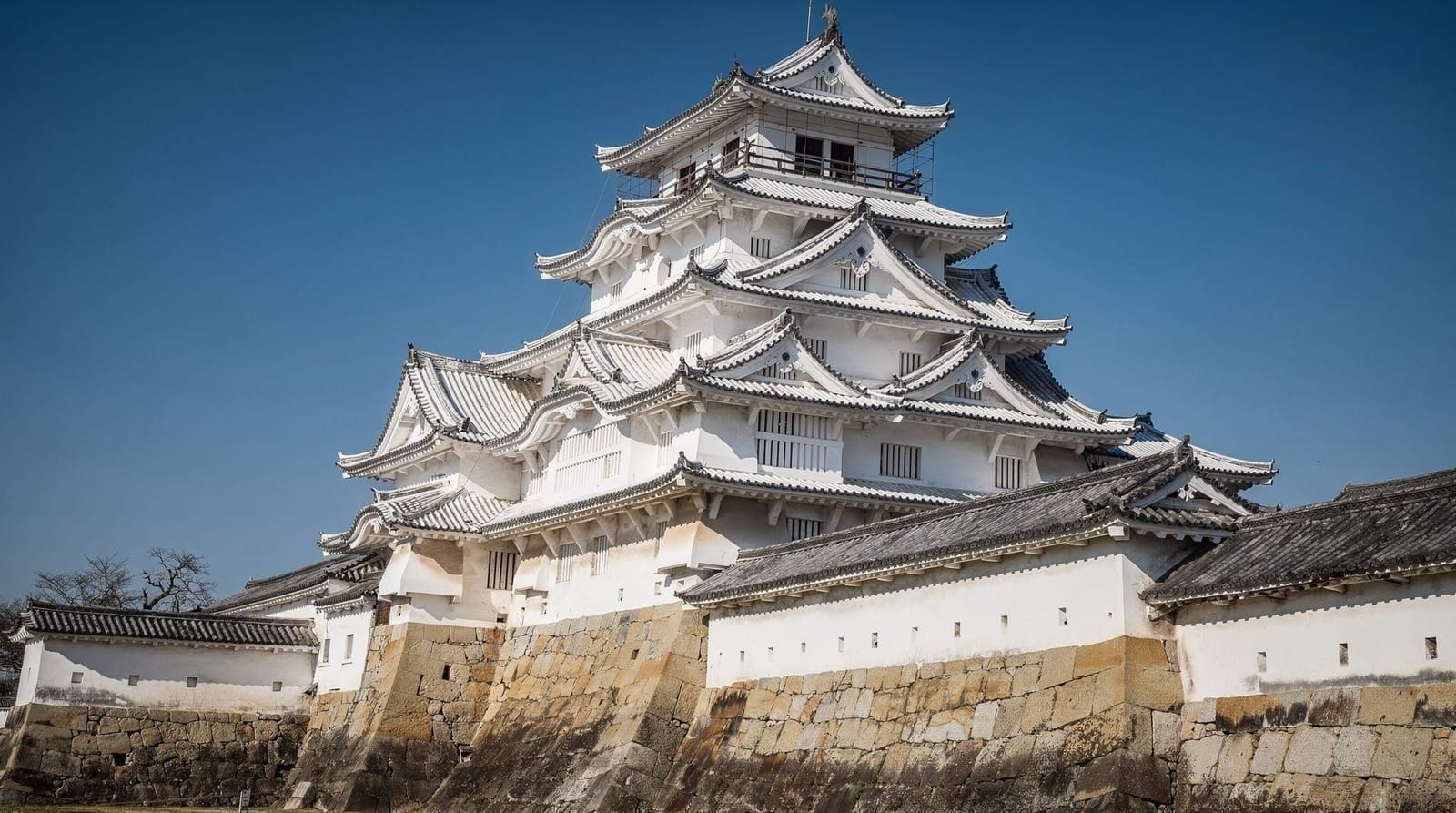
Himeji Castle is Japan’s best-preserved original castle keep, a UNESCO World Heritage Site since 1993, and one of the more straightforward tickets in the Kansai region to navigate — there’s no dynamic pricing, no timed-entry app system, and no meaningful risk of walk-up tickets selling out on a normal day. The decisions worth making are whether to add the adjacent garden, whether a guided option is worth the extra cost, and how to time the visit around the castle’s genuinely limited seasonal crowd windows.
| Cost | ¥1,000 castle only; ~¥1,200-1,300 combined with Koko-en |
| Time needed | 90 min-2 hours for the keep; half-day with Koko-en |
| Getting there | ~1 hour from Osaka or Kyoto by JR |
| Booking | Walk-up tickets almost always available; pre-book guided tours only |
| Best time | Weekday mornings within the first hour of opening |
Standard admission and what it covers
A standard ticket to Himeji Castle’s keep costs ¥1,000 (~$9.25) and covers the full climb through the original wooden interior — six visible stories connected by steep, narrow staircases that are a genuine physical climb rather than a flat walkthrough, worth knowing in advance for visitors with mobility concerns or very young children. Budget 90 minutes to two hours for the interior visit including likely queuing at narrow pinch points, longer during peak cherry blossom or autumn foliage season when both crowds and photo stops slow the pace considerably.
The Koko-en combo ticket
Koko-en, a set of nine connected Edo-period-style gardens built in 1992 on the site of former samurai residences adjacent to the castle, costs ¥310 (~$2.85) as a standalone ticket. A combined castle-and-Koko-en ticket is sold at the castle’s main ticket counter for a modest discount over buying both separately — worth taking if the gardens are on your itinerary at all, since the discount roughly covers the cost of walking between the two ticket counters. Koko-en is considerably flatter and easier than the castle’s interior stairs, making it a reasonable alternative or addition for a group that includes someone who’d rather skip the climb.
Buying at the counter versus in advance
Himeji Castle’s main ticket counter, a short walk from the station along Otemae-dori, sells standard admission and the Koko-en combo directly, with signage and payment terminals set up for international visitors including IC card and credit card acceptance alongside cash. There’s no meaningful advantage to pre-booking a standard ticket online before arrival — unlike USJ or some Kyoto temples with timed-entry systems, Himeji’s ticketing is walk-up by design, and pre-booking mainly matters for the guided tour options, where a specific guide’s schedule needs confirming in advance rather than the castle’s own capacity being a constraint.
Photography and what’s restricted inside
Photography is permitted throughout most of the castle’s interior and the surrounding grounds, including the keep’s upper floors, though flash photography and tripods are restricted in some sections to protect the original wood and to keep foot traffic moving on the narrow staircases. A handful of specific rooms, generally marked with signage, restrict photography entirely for preservation reasons — worth reading the posted notices rather than assuming blanket permission throughout, since enforcement by castle staff is active rather than symbolic.
Accessibility inside the keep
The castle’s interior is a genuine physical challenge for visitors with mobility limitations: the original Edo-period wooden staircases are steep, narrow, and uneven by modern standards, with no elevator or step-free alternative to reach the upper floors, since retrofitting one would compromise the structure’s historic integrity.
Koko-en’s gardens, by contrast, are largely flat and paved, making them a reasonable substitute for visitors who want to experience the site without the keep’s stairs. Wheelchair users and visitors with significant mobility restrictions should plan around Koko-en and the castle’s exterior grounds rather than expecting interior access, and staff at the ticket counter can advise on the current state of accessible routes if this affects your visit.
Best time of day for shorter lines
Weekday mornings shortly after the castle’s typical 9am opening see the shortest lines at both the ticket counter and the entrance to the keep itself — arriving within the first hour of opening avoids both the mid-morning tour bus arrivals and the early-afternoon peak that builds through lunchtime. Weekends see meaningfully longer waits at the narrow staircase pinch points inside the keep itself, less because of ticket-counter queuing and more because foot traffic backs up on the stairs when visitor density is high enough that ascending and descending groups have to take turns.
Guided tickets: when they’re worth the premium
Himeji Castle’s 90-minute express guided tour covers the keep at the same pace as a fast self-guided visit but adds a guide explaining the castle’s defensive design — maze-like approach paths built to confuse attacking forces, arrow slits disguised as decorative openings, and the reasoning behind the keep’s asymmetric floor plan — details easy to walk straight past without context. It’s a solid option for visitors on a tight day-trip schedule who still want more than a silent walkthrough.
For a fuller history and more relaxed pace, the Himeji Castle UNESCO heritage guided tour and the 3-hour licensed guide tour extend the visit with more grounds context and, in the 3-hour version, time for the wider castle park rather than just the keep. Licensed guides in Himeji are trained and certified specifically for the castle’s history, which is a genuine step up from generic city guiding — worth it for visitors who find the self-guided signage (present but relatively sparse in English) insufficient.
Getting there without your own itinerary
Visitors basing themselves in Osaka or Kobe without wanting to plan train connections themselves have a guided day-trip option: the Osaka-Kobe-Himeji castle day trip combines transport and entry into a single booking, useful on a trip where minimizing logistics matters more than saving money versus doing it independently. For visitors happy to handle the train themselves, our Osaka to Himeji day trip guide covers the JR Special Rapid and Shinkansen options in full, including exact fares and timing.
Does the castle ever sell out?
Rarely, on a normal day. Himeji Castle doesn’t operate the kind of timed-entry ticketing system that some of Japan’s more visited attractions use, and walk-up same-day tickets are almost always available. The exception is the narrow window around peak cherry blossom bloom (typically late March into early April), when both the castle grounds and the surrounding Himeji Castle Otemae-dori boulevard fill with domestic and international visitors simultaneously — arriving at opening time (the castle typically opens around 9am) matters far more on those dates than pre-booking a ticket, since the bottleneck is queue length at the entrance rather than ticket availability.
Comparing Himeji’s ticket to Osaka Castle’s
Visitors doing both castles on the same trip sometimes assume similar pricing and experience, but the two are genuinely different products. Osaka Castle’s current keep is a 1931 concrete reconstruction functioning mainly as a museum, with an elevator to upper floors and a more modern, air-conditioned interior experience; its ticket runs a comparable ¥600-1,000 range but delivers a museum visit rather than a walk through original historic construction.
Himeji’s ¥1,000 ticket buys entry to the actual original wooden structure from 1609, stairs and all, with no elevator and a considerably more physically demanding but historically authentic visit. Neither ticket is objectively better value, but they’re not interchangeable experiences, and visitors expecting Osaka Castle’s easier, museum-like pace should recalibrate expectations before Himeji’s stairs.
What a ticket doesn’t include
Standard Himeji Castle admission doesn’t include entry to Himeji City Zoo (adjacent to the castle grounds, a separate modest admission fee) or transport to Engyo-ji, which requires its own separate ropeway ticket and a short additional train or bus connection from Himeji Station. Audio guide rental, where available, is also typically a separate small fee on top of standard admission unless bundled into one of the guided tour products above. None of these are large costs individually, but budgeting a slightly higher total than the bare ¥1,000 entry fee avoids underestimating a full Himeji day’s actual spend.
Combining Himeji with Engyo-ji or Kobe
Himeji sits west of Kobe on the same JR line, making a combined Kobe-Himeji day workable without backtracking through Osaka — Kobe to Himeji runs about 40 minutes by JR Special Rapid. Engyo-ji, a mountainside Tendai Buddhist temple complex reached by ropeway from Himeji Station, is a genuine addition for visitors with more time, and rarely visited by first-time Himeji day-trippers who assume the castle is the whole day. Full detail on both the castle and Engyo-ji at our Himeji destination guide.
Is Himeji worth it as a day trip from Kyoto instead of Osaka?
Yes, though the numbers shift slightly — Himeji sits roughly an hour or more from either Osaka or Kyoto, and most visitors basing in either city treat it as its own dedicated day rather than folding it into a second city’s itinerary on the same day. If you’re weighing Himeji against other Kansai passes and tickets for a multi-city trip, our Kansai attraction passes guide and JR Kansai Area Pass guide cover whether a rail pass makes the Himeji leg cheaper alongside other day trips.
Group and family ticket considerations
Group discounts on standard Himeji Castle admission exist for larger parties (typically 30 or more visitors), which rarely applies to independent family or friend groups traveling together — most visitors should expect to pay standard per-person admission regardless of group size unless traveling with an organized tour operator that has separately negotiated bulk group rates. Children generally receive a reduced admission rate, worth confirming at the ticket counter with proof of age for school-age kids, while very young children typically enter free.
What to skip
Skip any third-party ticket reseller charging a significant premium over the ¥1,000 standard entry with no added guide, transport, or combo garden ticket bundled in — Himeji Castle’s ticketing is simple enough that there’s no legitimate reason to pay a markup for a bare admission ticket. Skip the audio guide rental if you’ve already booked one of the guided tour options above, since the two overlap almost entirely on content.
Himeji Castle at night: illumination events
Several times a year, typically during spring and autumn, Himeji Castle hosts evening illumination events where the keep is lit dramatically against the night sky, drawing a different, often more local crowd than the daytime tourist visit. These are usually free to view from the surrounding park (rather than requiring a special ticket), though the castle interior itself is not open during these evening events — it’s an exterior photography and atmosphere experience rather than an extension of the standard daytime ticket. Checking the current year’s illumination schedule before a trip is worth it specifically for photographers, since dates shift annually and aren’t fixed to a predictable calendar window.
Multi-castle tickets and regional bundles
Unlike some European castle circuits, there’s no official multi-castle discount ticket bundling Himeji with Osaka Castle or other Kansai fortifications — each is ticketed and administered entirely separately by its own municipal authority. Visitors doing both castles on the same trip should budget each admission independently rather than searching for a bundled discount that doesn’t currently exist as an official product.
Planning Himeji into a wider Kansai trip
Himeji fits naturally alongside a broader look at Kansai’s transport and ticketing options — if you’re arriving from Kansai Airport and adding Himeji to a longer itinerary, our Kansai airport to Osaka guide and getting around Osaka guide cover the surrounding logistics, and our Kobe destination guide covers the neighboring city most visitors pair with a Himeji day.
A realistic Himeji ticket budget
For a solo self-guided visit: ¥1,000 for the castle plus ¥310 for Koko-en, or a combined ticket at a small discount over both — call it ¥1,200-1,300 ($11-12) total. Add a licensed guide and the day’s cost rises to roughly ¥3,000-8,000 ($28-74) per person depending on group size and tour length, a reasonable premium for visitors who want the castle’s design and history explained rather than self-navigated. Either way, Himeji remains one of the least expensive marquee sights in the entire Kansai region relative to what you actually get to see.
Value comparison: self-guided versus guided
| Option | Cost per person | What you get |
|---|---|---|
| Self-guided, castle only | Keep interior, posted English signage | |
| Self-guided + Koko-en | Keep plus nine connected Edo-style gardens | |
| 90-min express guided | Around ¥3,000-5,000 (~$28-46) | Faster pace, defensive-design context |
| 3-hour licensed guide | Around ¥6,000-8,000 (~$56-74) | Full keep plus wider castle park |
| Osaka/Kobe day-trip bundle | Around ¥8,000-15,000 (~$74-140) | Transport, entry, and guiding combined |
The self-guided route is genuinely sufficient for most visitors given the castle’s decent English signage; the guided options earn their premium mainly on the defensive-design details (disguised arrow slits, maze-like approach paths) that are easy to walk straight past without context.
Baggage and what to do with luggage before the climb
Coin lockers are available near Himeji Station and at points along Otemae-dori before reaching the castle grounds, worth using given the keep’s steep, narrow original staircases — climbing them with a full backpack or suitcase is both uncomfortable and, on busy days, genuinely disruptive to other visitors navigating the same narrow pinch points. Large luggage in particular should be left at the station rather than carried onto the grounds, since there’s no dedicated storage at the castle entrance itself.
Combining Himeji with a Kyoto day instead
Visitors who’d rather pair Himeji with Kyoto than Osaka or Kobe can do so on the same JR line with a transfer, though the total journey time runs longer than from Osaka — worth checking current JR timetables rather than assuming a direct route, since most Kyoto-Himeji journeys involve at least one change at Osaka or Shin-Osaka Station. For most itineraries, treating Himeji as a dedicated Osaka- or Kobe-based day trip rather than stacking it onto a Kyoto sightseeing day keeps the logistics simpler.
Frequently asked questions about Himeji Castle tickets
Can I buy Himeji Castle tickets online in advance?
It’s possible but not necessary for standard admission — walk-up tickets are almost always available same-day, even during moderately busy periods. Advance booking matters mainly for the guided tour options, where confirming a specific guide’s schedule ahead of time avoids disappointment.
Is the Himeji Castle ticket worth it compared to just viewing it from outside?
Yes, for most visitors — the exterior view from Otemae-dori is striking, but the ¥1,000 ticket buys access to an original 1609 wooden interior found almost nowhere else in Japan at this scale of preservation. Skipping the interior means missing the actual historically significant part of the experience.
Top experiences
Bookable activities with verified prices and instant confirmation on GetYourGuide.