Osaka to Uji day trip guide
Uji: Uji Byodo-in temple tea sweets 90 min
Duration: 90 min
How long does it take to get from Osaka to Uji?
About 55-60 minutes via the JR Nara Line's rapid service from Osaka Station through Kyoto Station to Uji Station, for roughly ¥660 (~$6.10). Uji is more commonly visited as a half-day add-on from Kyoto itself, where the same JR Nara Line takes only about 20 minutes.
Uji sits on the river between Osaka and Kyoto, and it’s Japan’s most prestigious matcha-growing region, a status dating to at least the 13th century when the local terrain and misty river climate proved ideal for shading tea bushes before harvest. As a standalone day trip from Osaka it’s a genuinely quiet, lower-pressure alternative to Kyoto’s temple crowds — smaller in scope, entirely walkable, and built around tea rather than a checklist of major sights.
| Where | Uji, between Osaka and Kyoto, ~55-60 min direct from Osaka |
| Cost | Byodo-in ¥700 + ¥300 hall ticket; tastings from ¥400 |
| Time needed | Half a day standalone; extend to a full day with Koshoji |
| Getting there | JR Nara Line, direct from Osaka Station via Kyoto Station |
| Best paired with | A Kyoto day, given the overlapping JR Nara Line route |
Getting there directly from Osaka
The JR Nara Line runs a rapid service from Osaka Station via Kyoto Station to Uji Station in about 55-60 minutes total, with fares around ¥660 (~$6.10) — a single continuous train, no transfer needed despite passing through Kyoto Station along the way. This makes Uji a genuine standalone day trip option from Osaka, distinct from treating it purely as a Kyoto add-on, though most visitors do combine the two given how the routes overlap.
Why most visitors treat this as a Kyoto add-on instead
From Kyoto Station specifically, the same JR Nara Line reaches Uji in about 20 minutes for roughly ¥240 (~$2.20) — considerably shorter than the direct-from-Osaka trip, which is why Uji functions more commonly as a half-day extension for visitors already spending a day or more in Kyoto than as its own dedicated day trip from Osaka. If Kyoto is already on the itinerary, folding in a Uji afternoon after a Kyoto morning (or vice versa) is more efficient than two separate round trips from Osaka on different days.
Byodo-in and the Phoenix Hall
Byodo-in, built in 1052 as an aristocrat’s retirement villa and converted to a temple the following year, is Uji’s headline sight — its Phoenix Hall (Hoo-do), a pavilion built to resemble a mythical phoenix landing on water, is one of the few surviving examples of Heian-period (794-1185) architecture in Japan and appears on the reverse of the ¥10 coin. General grounds and garden entry is ¥700 (~$6.50); a separate, timed-entry ticket (¥300, ~$2.80, small groups on the hour) is required for the hall’s interior, including a nationally treasured wooden Amida Buddha statue — worth booking or arriving early for, since slots can fill on weekends.
Byodo-in temple and tea sweets 90-minute tour pairs the temple visit with a tea-and-sweets stop, a practical way to combine Uji’s two headline draws — architecture and matcha — in a single guided block.
Matcha and tea culture, the actual draw
Uji’s main shopping street between the station and Byodo-in is dense with tea shops, several run by houses operating for centuries, offering everything from matcha soft-serve (a lighter, tourist-friendly ¥400-600, ~$3.70-$5.55) to formal tastings comparing grades and growing methods. The distinction between gyokuro (a shaded green tea, brewed as leaves) and matcha (ground to powder, whisked with hot water) matters more here than almost anywhere else in Japan, and Uji producers are unusually particular about explaining it to curious visitors.
Private matcha tasting at Tokaan in Uji offers a more intimate, small-group tasting than the walk-in shop experience, held at a dedicated tea house rather than a retail counter. For a broader introduction with historical context, Uji matcha and UNESCO history tour with an expert guide covers the shading technique and the region’s centuries-long relationship with the imperial court and tea ceremony tradition.
Ujigami Shrine and Koshoji: the quieter half
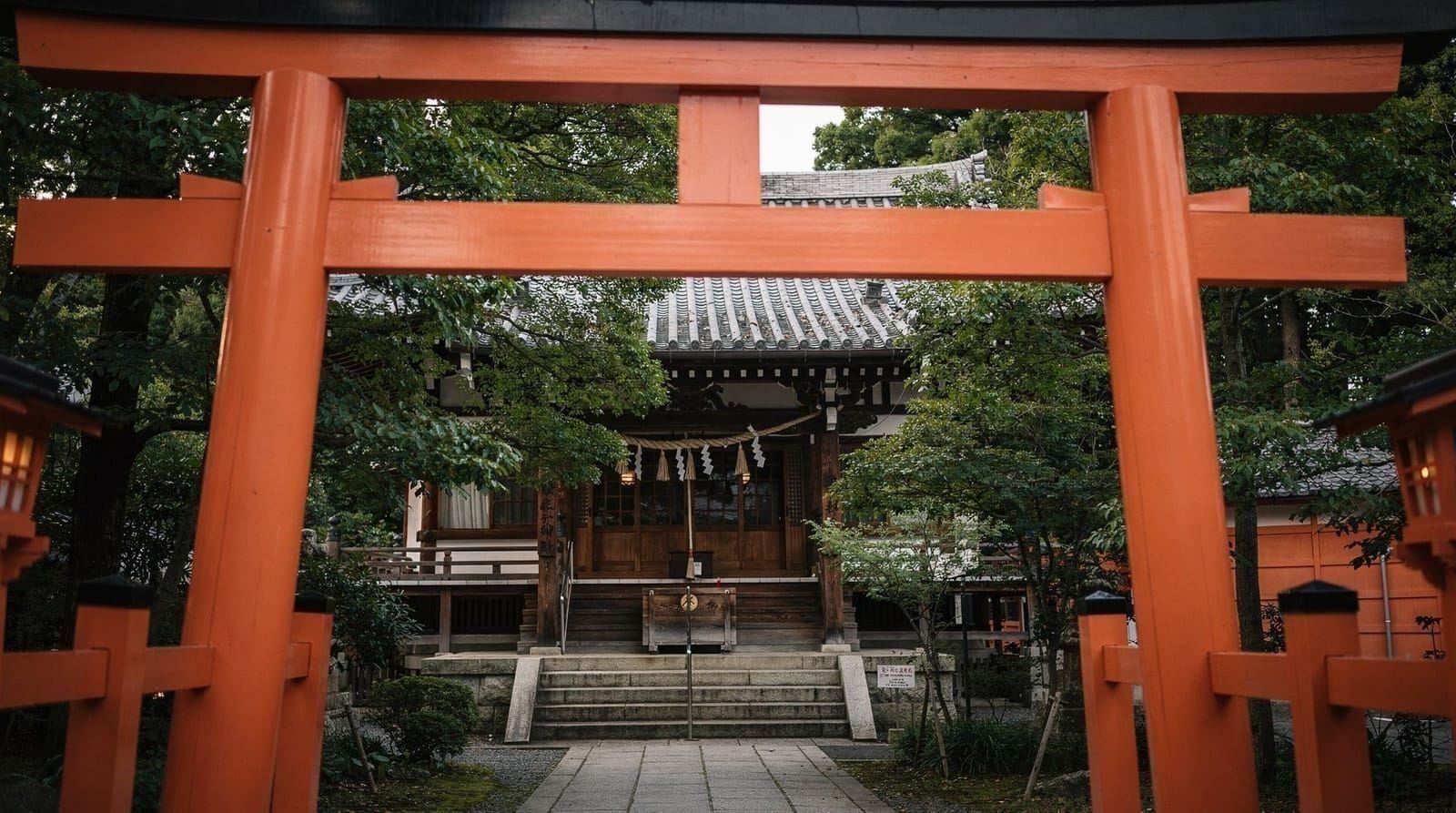
A short walk from Byodo-in, on the opposite riverbank, Ujigami Shrine is believed to house the oldest existing shrine building in Japan, with a main hall dating to around 1060 — older than most surviving structures in Kyoto proper. It’s free, quiet, and skipped by most rushed day-trippers, which is exactly why it’s worth the extra 10-15 minutes if Byodo-in’s grounds feel crowded. Further along the riverbank, Koshoji is a working Zen temple approached through a long, straight avenue of maple trees that turns vivid red in November, one of the less-photographed autumn foliage spots in the wider Kyoto-Uji area precisely because reaching it means walking past Byodo-in rather than stopping there.
Uji green tea tour with Byodo-in and Koshoji temple visits covers both temples alongside a tea-focused stop, a sensible way to see Uji’s quieter side in a single guided visit rather than rushing past Koshoji on a self-guided day.
A realistic half-day or full-day schedule
Byodo-in, a tea tasting, and Ujigami Shrine fit comfortably into a half-day — roughly three to four hours including the walk between sights and a tea stop. Adding Koshoji Temple or a longer, more formal tea ceremony session extends this closer to a full day. For a standalone day trip directly from Osaka (rather than a Kyoto add-on), the half-day version makes more sense given the roughly two hours of round-trip transit involved, leaving the rest of the day free for either an earlier Osaka morning or an onward Kyoto stop on the same day.
Combining Uji with Kyoto on the same day
Given the overlapping JR Nara Line route, a single day covering both Kyoto and Uji is realistic — Kyoto in the morning, then continuing on to Uji in the afternoon (or the reverse), without backtracking to Osaka in between. This is a more efficient use of a single day than treating Uji as an isolated round trip from Osaka, and it’s the pattern most visitors actually follow in practice.
Food beyond tea
Beyond matcha sweets and soft-serve, Uji has a handful of unagi (grilled eel) restaurants along the riverfront, tied to the river’s historic fishing industry — a set meal runs ¥2,000-4,000 (~$18.50-$37) and pairs naturally with a riverside walk after Byodo-in, a good lunch option before a tea-focused afternoon.
Seasonal timing
April-May brings the new tea harvest, the best window for freshness-focused tastings alongside comfortable walking weather along the river. Autumn (October-November) brings foliage to Koshoji’s maple avenue and the hills around Byodo-in. Summer runs hot and humid in line with the rest of Kansai, though the riverside setting offers somewhat more shade and breeze than an inland temple visit.
Standalone day trip versus Kyoto add-on
| Direct from Osaka | Add-on from Kyoto | |
|---|---|---|
| Travel time | ~55-60 min | ~20 min from Kyoto Station |
| Best for | A dedicated, low-key matcha day | Visitors already spending a day in Kyoto |
| Round-trip cost | ~¥1,320 | ~¥480 from Kyoto |
Frequently asked questions about Osaka
Is Uji worth visiting as its own day trip, or only as an add-on?
Both work. As a standalone trip from Osaka it’s a genuinely quiet, lower-pressure alternative to Kyoto’s crowds, built around tea rather than a sightseeing checklist. Most visitors do fold it into a Kyoto day given the overlapping train route, but it holds up fine on its own for a relaxed half-day.
How much time should I budget for Byodo-in specifically?
About 45 minutes to an hour including the grounds, garden, and the timed-entry Phoenix Hall interior. Arrive early or book ahead for the hall ticket, since the small-group hourly slots can fill on weekends.
Related planning
For the fuller Uji destination picture — including practical notes on the two train stations sitting on opposite riverbanks — see the main Uji destination page. For combining this with a Kyoto-focused day, see the Osaka to Kyoto day trip guide, and for the wider Kyoto temple circuit, the best temples in Kyoto guide. Visitors interested in Japanese tea ceremony beyond Uji’s casual tastings should also see the tea ceremony Kyoto guide for the more formal version of the practice available in central Kyoto.
Top experiences
Bookable activities with verified prices and instant confirmation on GetYourGuide.