Mount Rokko and Arima Onsen
Mt Rokko and Arima Onsen guide — cable cars, Kobe's best night view, and one of Japan's oldest hot spring towns, with real prices and routes.
Kobe: Kobe day tour Arima onsen Mt. Rokko night view
Quick facts
- Distance from Kobe (Sannomiya)
- 40-60 min (bus/cable car)
- Onsen bath (single)
- ¥550-1,200 (~$5.10-$11.10)
- Days needed
- 0.5-1
- Best months
- October-November (clear night views)
Mt Rokko rises directly behind Kobe, and its summit night view over the city and Osaka Bay is regularly ranked among Japan’s best, alongside Hakodate and Nagasaki. On the mountain’s far side, Arima Onsen is one of Japan’s oldest hot spring towns, with a documented history stretching back over a thousand years and a legend of discovery tied to two wounded crows seen bathing their injuries in the spring water. The two sit close enough together, connected by a ropeway across the mountain, to combine into a single day trip from Kobe or Osaka — hot spring bathing followed by a mountaintop sunset and city lights.
| From Sannomiya | 40-60 min (bus/cable car) to summit; 30-40 min direct to Arima |
| Onsen bath | ¥550-1,200 (~$5.10-$11.10) single soak |
| Time needed | Half a day to a full day |
| Best for | Hot spring bathing, night views, couples, a slower pace |
| Best months | October-November for clear night views |
Getting there
From Sannomiya in central Kobe, the standard route to Mt Rokko runs via a bus or the Rokko Cable Car (a funicular, not the aerial ropeway further up) from Rokko Cable Shita Station, itself reached by bus from Hankyu Rokko or JR Sumiyoshi stations — total travel time from Sannomiya to the mountain summit runs about 40-50 minutes. From the summit, the Rokko-Arima Ropeway (a separate aerial cable car) crosses over to Arima Onsen in about 12 minutes, making the mountain-to-onsen combination straightforward once you’re up top. Direct buses also run from Sannomiya to Arima Onsen without going via the summit, taking about 30-40 minutes, a faster option if the mountain view isn’t a priority for your visit.
Arima Onsen
Arima’s hot springs are split into two distinct mineral types, a genuine point of local pride: kinsen (“gold spring”), an iron- and salt-rich water that oxidizes to a reddish-brown color on contact with air, and ginsen (“silver spring”), a clear, carbonated water with a different mineral composition. Several public bathhouses in the compact town center offer single soaks for ¥550-1,200 ($5.10-$11.10), and many of the town’s ryokan (traditional inns) sell day-use bathing packages to non-overnight guests, typically ¥1,500-2,500 ($13.90-$23.15), a practical way to experience a proper ryokan bath without booking a room.
The town itself is small and walkable, with narrow streets lined by traditional wooden buildings, souvenir shops selling Arima’s signature carbonated rice crackers (tansan senbei), and a scattering of small shrines tied to the springs’ legendary discovery. Kinsen and ginsen springs come from separate sources and are rarely mixed at the same facility, so choosing a bathhouse means picking one mineral type or the other for that visit — Kin-no-yu, one of the town’s two main public bathhouses, specializes in kinsen, while Gin-no-yu, a short walk away, offers ginsen, and visiting both across a longer stay is a reasonable way to compare the two.
Arima Onsen historical and cultural walking tour covers the town’s thousand-year bathing history and architecture in about 90 minutes, a good orientation before or after a soak.
Arima’s history and Hideyoshi’s connection
Arima’s reputation as a premier hot spring town owes much to Toyotomi Hideyoshi, the 16th-century warlord who unified Japan and was a frequent visitor, reportedly rebuilding several of the town’s bathhouses and shrines after fire and flood damage. A small museum, the Nenokoro-yu Bath History Museum (attached to one of the town’s public bathhouses), covers this history alongside the older legend of the springs’ discovery — two wounded crows seen soaking their injuries in the water, observed by a wandering monk who recognized the site’s healing properties. Toko-ji, a temple in the town center, houses a memorial to Hideyoshi’s wife, Nene, who is said to have particularly loved the town.
Where to stay in Arima
For visitors treating Arima as more than a day trip, staying overnight at one of the town’s traditional ryokan is a genuinely different experience from a day-use bath — most ryokan draw directly from the kinsen or ginsen springs into private or semi-private baths, and dinner typically features kaiseki-style multi-course seasonal cuisine included in the room rate. A night in Arima runs considerably higher than a standard Kobe hotel (often ¥20,000-50,000, ~$185-$463, per person including two meals), reflecting the traditional ryokan format rather than a simple room booking, but it’s the more immersive way to experience the town if budget allows and a full onsen experience — rather than a single soak between other activities — is the goal.
Onsen etiquette, briefly
Japanese public baths follow a consistent set of customs regardless of which onsen town you’re in: wash and rinse thoroughly at the shower stations before entering the communal bath, no swimsuits, and small modesty towels are kept out of the water itself (usually folded on top of the head or set aside at the pool’s edge). Baths are typically gender-separated, and long hair should be tied up and kept out of the water as a matter of basic hygiene toward other bathers.
Most Arima bathhouses and ryokan follow these standards without significant deviation from onsen etiquette elsewhere in the Kansai region — see the onsen etiquette guide for the fuller rundown if this is your first Japanese hot spring visit, including the still-common policy at many facilities of restricting entry for visible tattoos.
Mt Rokko’s summit
The summit area has a garden (Rokko Kogen Garden), a small ski resort operating in winter, and several viewing platforms, but the main draw is the “10 million dollar night view” (a nickname referencing the value of the electricity once estimated to be visible from the summit), best experienced after sunset when Kobe’s grid and the curve of Osaka Bay light up below. The Rokko Cable Car runs until around 9-10pm depending on the season, making an evening ascent a realistic plan rather than requiring an overnight stay near the summit. A cup noodle museum-style workshop at the base area, where visitors design and cook their own instant noodle cup, is a lighter, family-friendly activity some tours pair with the mountain visit.
Osaka-Kobe cup noodle DIY, Arima Onsen, and Mt Rokko tour combines all three in a single day, a reasonable option for families wanting a mix of activity and relaxation rather than a bathing-focused visit alone.
Hiking Mt Rokko
Beyond the cable car and summit views, Mt Rokko is a genuine hiking destination for visitors with a free morning and proper footwear — a well-marked network of trails, including the popular Rokko Zenju-en Traverse, connects several peaks along the ridge, with routes ranging from easy one-hour loops near the cable car station to a full-day traverse covering the entire mountain range favored by serious local hikers.
Trailhead access points are reachable by bus from Rokko Cable Shita Station or directly from several points along the Hankyu and JR lines at the mountain’s base, and trail maps in English are available at the tourist information counter near Sannomiya Station. This is a genuinely different way to experience the mountain than the cable-car-and-night-view visit most tourists do, and it pairs naturally with an evening onsen soak in Arima afterward as a reward for the effort.
Combining both in a single day
The most efficient single-day plan links Arima Onsen’s bathhouses with Mt Rokko’s evening view via the connecting ropeway — bathe in the afternoon, then ride up to the summit for sunset and the night skyline, descending afterward by cable car back into Kobe.
Arima Onsen and Mt Rokko night view day tour is built specifically around this sequence, handling the ropeway and cable car connections that otherwise require checking two separate operators’ schedules. For visitors combining this area with a wider single-day Kansai loop, Osaka, Himeji, Arima Onsen, and Mt Rokko day tour covers a longer combined route, though it makes for a genuinely full day given the distances involved.
How much time this needs
A single bathhouse soak in Arima takes an hour or two; the mountain-and-onsen combination, done properly with an evening summit view, fills most of a day starting from early-to-mid afternoon in Kobe. Rushing both into a half-day is possible but tight, and skips the point of an onsen visit, which is generally to slow down rather than check a box. Visitors adding a genuine hiking session on Mt Rokko beforehand should plan for a full day starting in the morning, since the trail itself, the descent back to the ropeway, and an evening onsen soak together take considerably longer than the cable-car-only version of the same day.
Seasonal timing
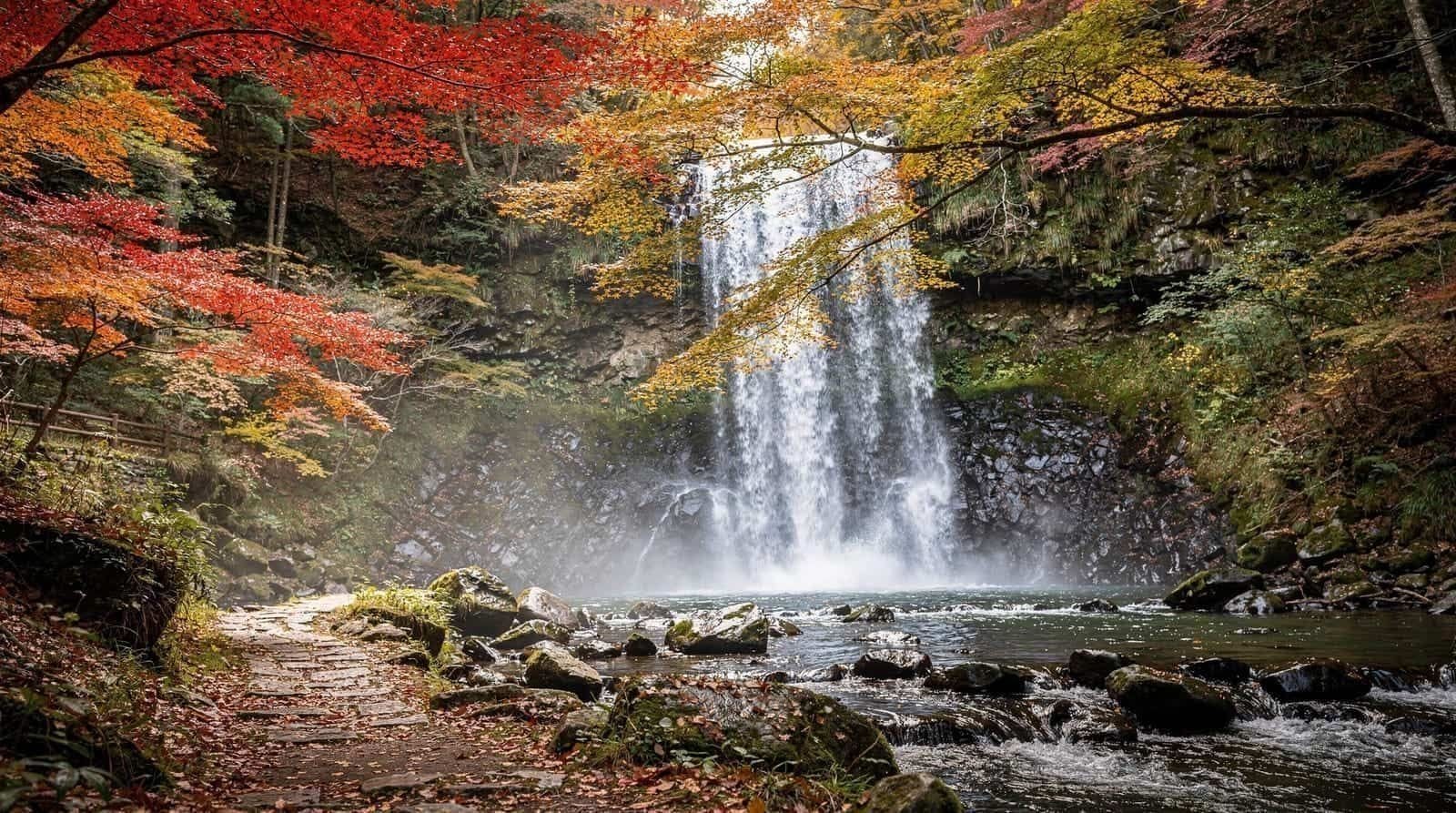
Autumn (October-November) offers the clearest air for Mt Rokko’s night view, and Arima’s hillside setting picks up decent foliage color in the same window. Winter brings the coldest, sharpest night skylines and a small ski operation at the summit, alongside the particular pleasure of a hot bath against cold mountain air. Summer daytime heat makes Arima’s exposed streets less comfortable at midday, though the mountain itself, being higher up, runs noticeably cooler than Kobe or Osaka below — a genuine relief for hikers tackling the Rokko trails in the warmer months when the city streets below sit well above 30°C.
| Season | Conditions | Notes |
|---|---|---|
| Spring (Mar-May) | Mild, occasional haze | Comfortable hiking; night views can be hazier than autumn |
| Summer (Jun-Aug) | Hot, humid below; cooler on the ridge | Best season for the Rokko hiking trails despite city heat |
| Autumn (Oct-Nov) | Clear, mild | Sharpest night views; foliage color on Arima’s hillsides |
| Winter (Dec-Feb) | Cold, dry | Small ski operation at summit; coldest, sharpest skyline contrast |
Pairing with Kobe beef
A soak in Arima pairs naturally with one of Kobe’s signature meals, though as noted above, a heavy teppanyaki dinner sits awkwardly right before or after a sake-and-onsen afternoon — better scheduled as its own event. The Kobe beef guide and where to eat it guide cover grading, price tiers, and which restaurants take walk-ins versus requiring reservations well ahead.
Premium Kobe beef and sake tasting experience combines both in a single guided sitting for visitors who’d rather not manage two separate bookings.
Onsen towns compared: Arima versus elsewhere in Kansai
Arima is Kansai’s best-known onsen town by reputation, but it isn’t the region’s only one, and visitors building a longer trip sometimes want a sense of how it stacks up. Compared with the smaller, quieter hot spring stops scattered around Wakayama and the Kii Peninsula, Arima has considerably better transit access from Osaka and Kobe, a livelier town center with more shops and dining options, and correspondingly larger crowds, especially on weekends.
It’s the practical choice for a half-day or single-night visit without a rental car; more remote onsen towns further south reward visitors with more time and their own transport rather than a return-trip mindset. For a broader look at how Japanese bathing culture compares with hot spring traditions elsewhere, the Kansai versus Tokyo culture guide touches on regional differences in etiquette and atmosphere.
Combining with Himeji for a longer loop
Visitors with a full day and an early start sometimes fold Mt Rokko and Arima into a wider loop that also takes in Himeji Castle further west along the same rail corridor — the Kobe-Himeji day loop itinerary lays out a realistic order and timing for covering both without an unreasonably rushed schedule, while the Osaka to Kobe day trip guide covers the more standard single-city version of the same route for visitors sticking to Kobe and Mt Rokko/Arima alone.
Frequently asked questions about Mt Rokko and Arima Onsen
How do I get to Mt Rokko and Arima Onsen from Kobe?
From Sannomiya, a bus and the Rokko Cable Car reach the mountain summit in about 40-50 minutes; the Rokko-Arima Ropeway then connects the summit to Arima Onsen in about 12 minutes. Direct buses from Sannomiya to Arima Onsen, skipping the summit, take about 30-40 minutes.
What are the two types of hot spring water in Arima?
Kinsen (“gold spring”), an iron-rich water that turns reddish-brown on contact with air, and ginsen (“silver spring”), a clear, carbonated water — both available at different bathhouses and ryokan around the compact town center.
How much does a bath cost in Arima Onsen?
Public bathhouse single soaks run ¥550-1,200 ($5.10-$11.10). Day-use bathing packages at ryokan for non-overnight guests typically cost ¥1,500-2,500 ($13.90-$23.15).
Is Mt Rokko’s night view really worth a special trip?
It’s genuinely one of Japan’s most highly regarded night views, commonly ranked alongside Hakodate and Nagasaki, and worth the trip if clear-weather evening visibility looks likely — check forecasts, since cloud cover or haze meaningfully reduces the view’s impact.
Can I visit both Mt Rokko and Arima Onsen in one day?
Yes, and it’s the natural way to see both — bathe in Arima in the afternoon, then take the connecting ropeway up to the Mt Rokko summit for sunset and the night skyline before descending back into Kobe.
Do I need to worry about tattoos at Arima’s bathhouses?
Many facilities still restrict entry for visible tattoos, consistent with onsen policy across much of Japan, though this varies by establishment — checking ahead or choosing a tattoo-friendly facility is worth doing if this applies to you.
What’s the best season to visit?
Autumn (October-November) for the clearest night views and decent foliage color, or winter for the sharpest skyline contrast and a proper cold-weather onsen experience.
Top experiences
Bookable activities with verified prices and instant confirmation on GetYourGuide.