Tenjin Matsuri, Osaka's biggest festival
Osaka: Osaka Dotonbori 20-minute cruise
Duration: 20 minutes
What is Tenjin Matsuri and when is it?
Tenjin Matsuri is Osaka's largest festival, held annually on July 24-25 at Osaka Temmangu Shrine, centered on a land procession followed by a river boat procession (funatogyo) of roughly 100 boats down the Okawa River, capped by a fireworks display over the water on the evening of July 25.
Tenjin Matsuri, held every July 24-25 at Osaka Temmangu Shrine, is counted among Japan’s three great festivals alongside Kyoto’s Gion Matsuri and Tokyo’s Kanda Matsuri, and it’s the one built most distinctly around water — a river boat procession of roughly 100 vessels moving down the Okawa River at dusk, followed by one of the region’s largest fireworks displays fired directly over the water. Unlike Gion Matsuri’s month-long build toward its climax, Tenjin Matsuri concentrates almost entirely into two days, making it a genuinely different kind of festival to plan around.
| Where | Osaka Temmangu Shrine (Kita ward) + Okawa River between Temmabashi and Sakuranomiya |
| When | July 24 (Yoiyama, eve) and July 25 (Hongusai, main day) every year |
| Cost | Free to watch from riverbanks; paid reserved seating available through official channels |
| Time needed | A full evening on July 25 (arrive mid-afternoon, fireworks around 7:30-8pm) |
| Getting there | Temmabashi or Minami-Morimachi stations (Osaka Metro/Keihan) |
| Best time | Arrive 2-3 hours before fireworks for decent free viewing space |
What Tenjin Matsuri actually is
The festival honors Sugawara no Michizane, a 9th-century scholar and politician later deified as Tenjin, the god of learning, enshrined at Osaka Temmangu. The two-day structure runs: July 24 (Yoiyama, the eve) sees preliminary ceremonies and a smaller-scale evening atmosphere around the shrine itself, while July 25 (Hongusai, the main day) carries the festival’s core events — a daytime land procession (Rikuto Gyoretsu) of roughly 3,000 participants in traditional dress moving through central Osaka’s streets, followed in the evening by the river boat procession (Funatogyo) and the fireworks finale.
The boat procession: the festival’s signature event
The Funatogyo sees roughly 100 boats — carrying mikoshi (portable shrines), musicians, dancers, and lantern displays — moving down the Okawa River starting around sunset on July 25, a spectacle that’s genuinely unusual even by the standards of Japan’s major matsuri, most of which are land-based processions. The boats’ lanterns reflecting on the river, combined with onboard taiko drumming and traditional dance performances visible from the banks, create a moving, extended display rather than a single fixed point of interest — worth understanding in advance, since the best viewing strategy depends on whether you want to follow the procession’s movement or stake out one riverside spot for the full evening.
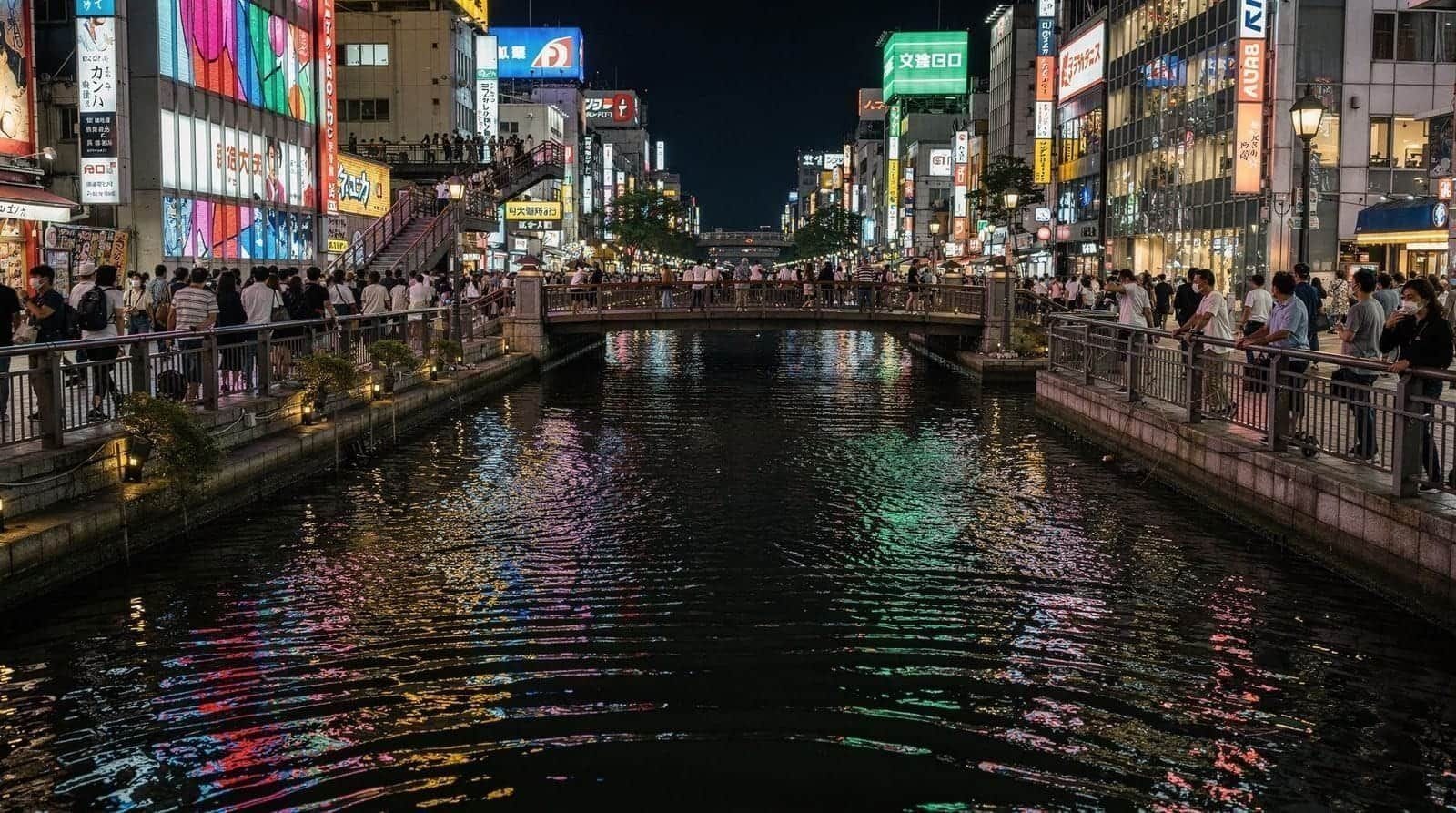
Dotonbori 20-minute river cruise runs on a different waterway than the Okawa River’s Tenjin Matsuri route, but gives a useful sense of Osaka’s canal and river geography before navigating the festival’s riverside crowds independently — worth doing on an earlier day of the same trip rather than during the festival itself, when boat traffic and crowd density on the Okawa specifically are at their annual peak.
Fireworks: roughly 5,000 shells over the river
The fireworks display, launched from barges on the Okawa River, runs to roughly 5,000 shells over about an hour, timed to overlap with the tail end of the boat procession so the two spectacles are visible together for a stretch of the evening — a deliberate pairing that makes the finale considerably more dramatic than either element alone. The display is visible from a wide stretch of riverbank on both sides of the Okawa, not just directly adjacent to the launch barges, giving some flexibility in choosing a viewing spot.
Where to watch
The area around Osaka Temmangu Shrine itself, in the Kita ward near Temmabashi and Minami-Morimachi stations, anchors the daytime land procession and the festival’s ceremonial core. For the evening boat procession and fireworks, riverside spots along the Okawa between Temmabashi and Sakuranomiya offer the most direct views, with Kema Sakuranomiya Park’s riverside stretch (also the city’s best cherry blossom viewing spot, detailed in the cherry blossom Osaka guide) doubling as a reasonable Tenjin Matsuri viewing area given its long, relatively open riverfront.
Paid viewing areas with reserved seating are available through official channels and sell out well ahead of the festival dates — worth securing early if guaranteed sightlines matter more than flexibility.
Umeda night walk: food and pubs covers the Kita ward area where Osaka Temmangu sits, useful orientation for visitors basing an evening around the festival’s Umeda-adjacent riverside stretch, and a reasonable way to fill time before the evening’s main events begin.
Crowds and practical logistics
Tenjin Matsuri draws over a million attendees across the two days, making it Osaka’s single largest annual crowd event — expect packed trains toward Temmabashi and Minami-Morimachi stations from mid-afternoon on July 25 onward, and significant pedestrian congestion along the riverside viewing areas by early evening.
Arriving at a chosen viewing spot at least 2-3 hours before the fireworks (which typically begin around 7:30-8pm) is the realistic minimum for securing decent ground-level space at any of the popular free viewing areas, longer if a specific unobstructed sightline matters. Public transit runs on extended or adjusted schedules during the festival given the crowd volume, but taxis become difficult to find or extremely slow near the festival area from late afternoon onward — worth planning to walk or use trains for the return trip rather than counting on a taxi.
What to wear and bring
Summer yukata (a lighter cotton kimono) is common festival attire, worn by both locals and visitors, and rental shops in central Osaka offer short-term rentals specifically timed around major festival dates if the experience appeals — though it’s entirely optional and most attendees, including most Japanese attendees, wear regular summer clothing. Given late-July heat and humidity (typically 28-33°C with high humidity, detailed in the best time to visit Osaka guide), a hand fan (uchiwa), a small towel, and a refillable water bottle are more practically useful than festival costume, and lightweight, breathable clothing matters more than any aesthetic consideration.
Food at the festival
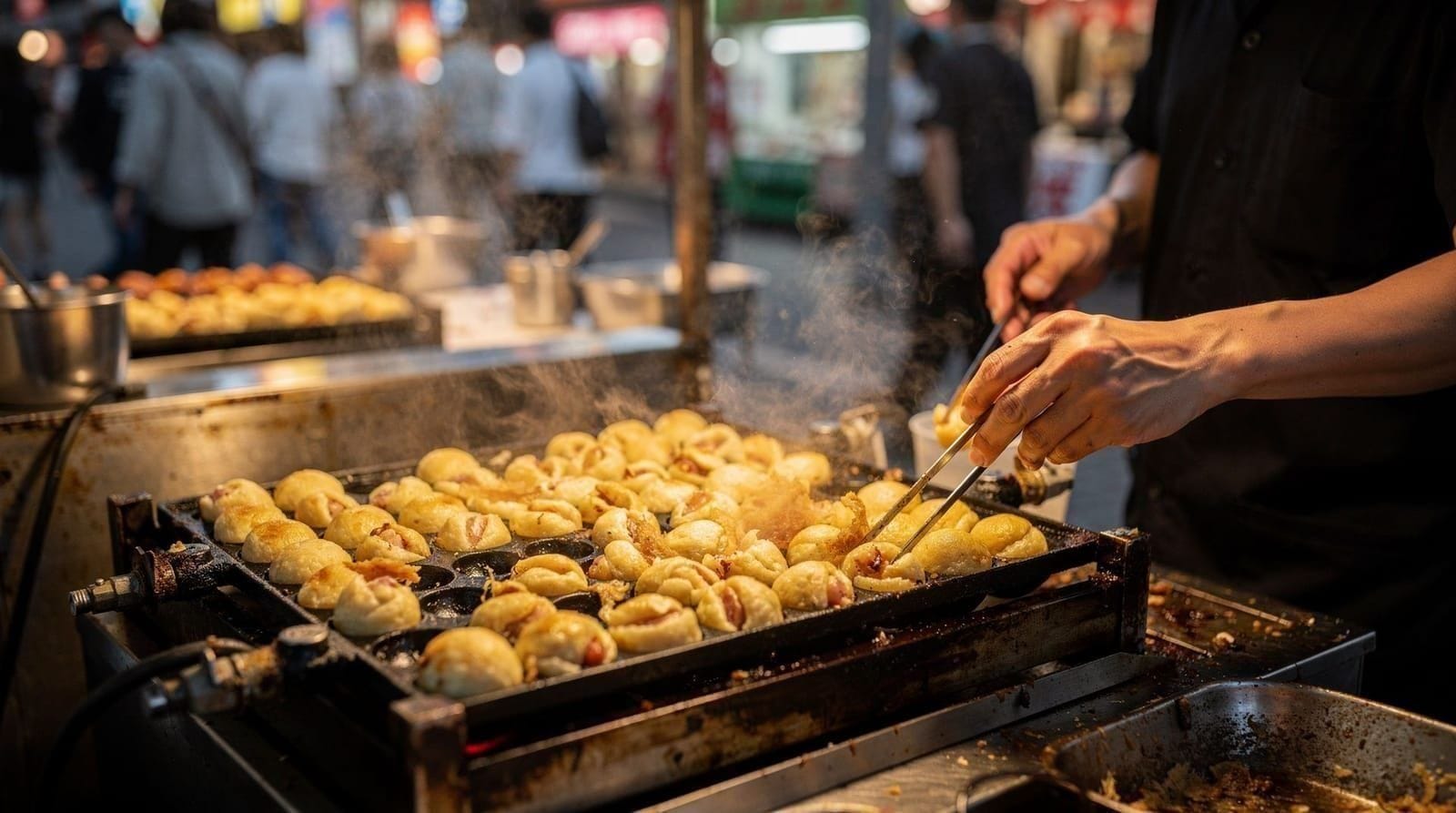
Yatai (festival food stalls) line the approach to Osaka Temmangu and several riverside stretches during both festival days, serving standard matsuri fare — yakisoba, takoyaki, karaage, shaved ice (kakigori), and grilled corn — at prices modestly higher than everyday street food but broadly in line with festival norms elsewhere in Japan. The takoyaki guide and okonomiyaki guide cover Osaka’s signature street foods in more depth for visitors wanting a baseline understanding before encountering the festival-stall versions specifically.
Combining Tenjin Matsuri with the rest of a summer trip
Tenjin Matsuri sits in the same broad summer window as Kyoto’s Gion Matsuri (running all of July, with its own climax in the festival’s final third), making a combined visit to both festivals within a single Kansai trip genuinely feasible — the Gion Matsuri guide covers Kyoto’s version in full, and the two festivals’ peak dates (Gion Matsuri’s main processions fall in mid-to-late July, Tenjin Matsuri on July 24-25) overlap closely enough to catch both within roughly a week. Summer travel generally, including the heat, humidity, and typhoon considerations that come with it, is covered in the best time to visit Osaka guide.
A realistic one-day plan for July 25
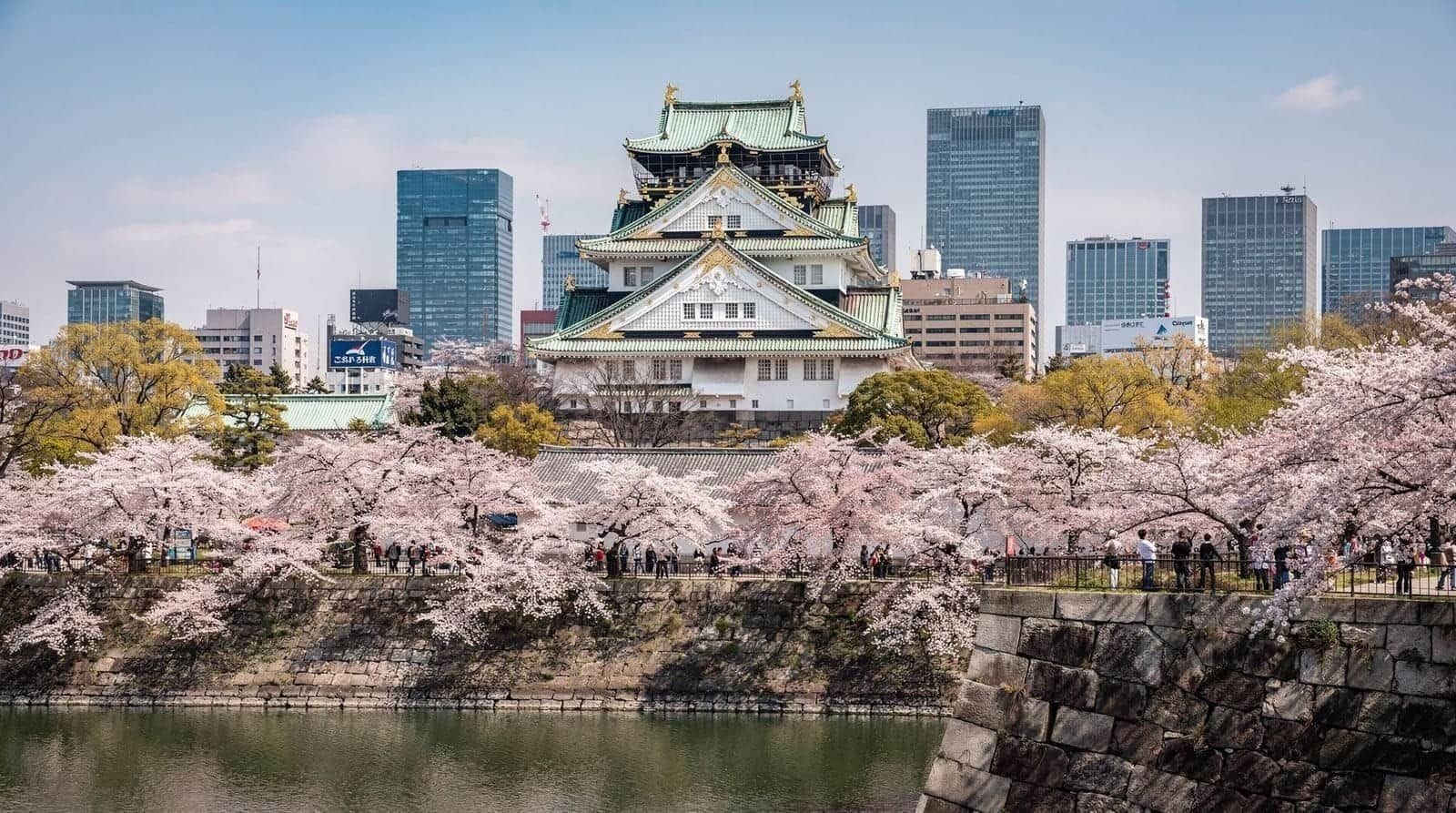
Spend the day exploring central Osaka at a relaxed pace — the Osaka Castle guide or a Dotonbori food crawl from the Dotonbori food guide both work well as a daytime complement to an evening built around the festival. Head toward the Temmabashi or Minami-Morimachi area by mid-afternoon to catch some of the land procession and claim a riverside viewing spot well ahead of the evening boat procession and fireworks, and plan the return trip on foot or by train rather than relying on a taxi given the crowd volume.
Comparing the main viewing spots
The right spot depends on how much you value a guaranteed sightline versus flexibility and cost. Here’s how the realistic options stack up:
| Spot | Cost | Crowd level | Best for |
|---|---|---|---|
| Kema Sakuranomiya Park riverbank | Free | Very high, but long open frontage | Groups wanting space to spread out with a picnic |
| Temmabashi bridge & banks | Free | Extremely high, arrive early | Closest views of both boats and fireworks together |
| Official paid seating areas | Paid, sells out early | Low (reserved) | Guaranteed sightline without the standing wait |
| Riverside restaurants/bars with a river view | Paid (meal/drink minimum) | Low-moderate | Comfort, food, and a seat while still seeing the show |
Getting there and station strategy
Both Temmabashi Station (Osaka Metro Tanimachi Line and Keihan Main Line) and Minami-Morimachi Station (Osaka Metro Tanimachi and Sakaisuji Lines) sit within easy walking distance of Osaka Temmangu and the Okawa riverbanks, and both get genuinely packed from mid-afternoon on July 25 as attendees arrive early to stake out space.
Exiting one stop earlier or later than the obvious choice and walking the last stretch along the river often beats fighting the crush directly at the two main stations — worth factoring into a plan, especially for anyone arriving after 4pm when platforms and exits can back up significantly. For getting to central Osaka in the first place, the getting around Osaka guide and ICOCA card guide cover the practicalities of Osaka’s rail network.
Photographing the boat procession and fireworks
A telephoto or zoom lens helps far more than a wide angle for the boat procession itself, since the vessels move at a distance from most free riverbank spots rather than passing directly underfoot. A tripod is workable at less crowded spots but becomes a liability in the densest sections of Kema Sakuranomiya Park or near Temmabashi, where space is at a premium and a planted tripod blocks the people behind you — a monopod or simply bracing against a railing is the more considerate choice. For the fireworks, arriving with a spot already chosen well before the boats pass gives time to set focus and framing rather than scrambling once the display starts.
Booking accommodation around the festival
Hotels in Kita ward specifically, and central Osaka more broadly, see a real but shorter-lived price and availability squeeze around July 24-25 compared to cherry blossom or Golden Week — 2-3 months of advance booking is generally sufficient, though rooms with any river-facing aspect near the festival route sell out considerably faster. See the where to stay in Osaka guide for neighborhood options, with Umeda’s proximity to Osaka Temmangu making it a particularly convenient base for this specific festival compared to Namba or Tennoji.
The festival’s history and religious significance
Tenjin Matsuri traces back over 1,000 years, making it one of Japan’s oldest continuously held festivals, originating from a purification ritual in which a sacred object was floated down the Okawa River to cleanse the area of misfortune — the modern boat procession is a direct descendant of that original ritual, scaled up over centuries into its current form.
Sugawara no Michizane, the historical figure deified as Tenjin at the festival’s center, was a real 9th-century court scholar and politician exiled to Kyushu after political rivals maneuvered against him; he died in exile, and a series of misfortunes back in the capital afterward were attributed to his vengeful spirit, leading to his deification as a god of learning to appease him — a backstory that gives the festival’s ceremonial elements more historical weight than a purely celebratory event.
The land procession in more detail
The daytime Rikuto Gyoretsu on July 25 assembles at Osaka Temmangu Shrine around midday and moves through several kilometers of central Osaka streets before reaching the riverside boarding point for the evening’s boat procession. Participants include shrine priests in formal dress, musicians, dancers performing traditional bugaku and other court dance forms, and portable shrines (mikoshi) carried by teams of bearers — the full procession takes several hours to pass a given point, making it easier to catch at least part of it even without planning around the exact starting time.
Unlike the evening’s boat procession, the land procession is easier to view from a fixed street-side spot without extensive advance positioning, since the route runs along wider central streets rather than a narrower riverside space.
Practical differences from Gion Matsuri
Visitors familiar with or planning to also attend Kyoto’s Gion Matsuri (detailed in the Gion Matsuri guide) should expect a genuinely different festival experience at Tenjin Matsuri — where Gion Matsuri’s centerpiece is stationary, towering wooden floats displayed and then paraded through streets, Tenjin Matsuri’s core spectacle is in constant motion on the water, better viewed from a fixed riverside position than by following along a route on foot. Tenjin Matsuri’s fireworks finale also has no real equivalent at Gion Matsuri, making the two festivals complementary rather than redundant if visiting both within the same trip.
Booking a guided introduction to the festival area
For visitors unfamiliar with central Osaka’s geography, understanding the layout around Osaka Temmangu, Temmabashi, and the Okawa River before the festival’s crowds arrive makes the evening considerably easier to navigate.
Osaka welcome tour with a local host is a reasonable way to get oriented to the city generally on an earlier day of the trip, building useful geographic familiarity before navigating Tenjin Matsuri’s crowds and road closures independently on the festival evening itself.
Weather contingency
Late July in Osaka occasionally brings sudden, heavy downpours even outside the formal rainy season, and the festival proceeds in light rain, though the boat procession and fireworks can be delayed or, in rare cases of severe weather, postponed to a backup date — checking official festival announcements on the day itself is worth doing if the forecast looks uncertain, since backup arrangements aren’t guaranteed and vary year to year. A light rain jacket is a more practical choice than an umbrella given the density of the evening crowds, where an open umbrella becomes a genuine obstacle to those around you.
Combining Tenjin Matsuri with a broader Osaka visit
Because the festival concentrates almost entirely into a single evening (with the eve of July 24 offering a smaller, calmer preview), it fits naturally onto the end of a standard Osaka visit without requiring a dedicated multi-day trip built specifically around it — the 3-day Osaka planning guide’s day 1 structure, centered on Osaka Castle and Dotonbori, works well as the daytime complement to an evening at Tenjin Matsuri if the trip’s dates happen to align with July 24-25. Visitors specifically planning a trip around the festival should still budget the surrounding days for Osaka’s standard sights, since the festival itself, however spectacular, occupies only a single evening of a longer stay.
Frequently asked questions about Osaka
Is Tenjin Matsuri free to attend? Watching from the public riverbanks and streets is free. Paid, reserved seating areas with guaranteed sightlines are available through official channels for those who want certainty over flexibility, and they sell out well ahead of the festival.
What if it rains during the festival? The festival generally proceeds in light rain, though the boat procession and fireworks can be delayed or, rarely, postponed to a backup date in severe weather. Checking official announcements on the day is worth doing if the forecast looks uncertain, and a rain jacket is more practical than an umbrella given the crowd density.
Top experiences
Bookable activities with verified prices and instant confirmation on GetYourGuide.