Gion Matsuri, Kyoto's month-long festival
Kyoto: Kyoto Gion geisha district walking tour
Duration: 2 hours
What is Gion Matsuri and when is it?
Gion Matsuri is Kyoto's largest festival, running throughout July with its main events concentrated in the final third of the month — the Yoiyama pre-festival evenings (July 14-16 and July 21-23) and the two Yamaboko Junko float processions (July 17 and July 24), when elaborately decorated wooden floats move through central Kyoto's streets.
Gion Matsuri runs the entire month of July, but the phrase “month-long festival” undersells how concentrated the actual spectacle is — most of what visitors picture (towering wooden floats draped in tapestries, evening streets closed to traffic and lined with food stalls, lantern-lit processions) happens within roughly ten days clustered around two separate climaxes in the festival’s final third. This guide covers what’s actually worth planning a trip around, when, and how it compares to Osaka’s own Tenjin Matsuri happening in the same broad window.
| When | All of July; peak dates July 14-17 and July 21-24 |
| Where | Central Kyoto, Shijo-dori / Kawaramachi-dori / Oike-dori and Shijo-Karasuma |
| Cost | Free to watch from the street; paid grandstand seating available |
| Getting there | ~30 min from Osaka by JR or private rail |
| Booking | Not needed for the festival itself; book Kyoto hotels 2-3 months ahead if staying overnight |
The festival’s structure, month to specific days
Gion Matsuri technically spans all of July with various ceremonies tied to Yasaka Shrine (the festival’s origin point, in the Gion district), but the events worth traveling for cluster into two blocks. The Saki Matsuri (first festival) builds through Yoiyama evenings on July 14-16, climaxing in the Yamaboko Junko float procession on July 17.
After a quieter mid-month stretch, the Ato Matsuri (second festival) rebuilds through a second round of Yoiyama evenings on July 21-23, climaxing in a second, smaller Yamaboko Junko procession on July 24 — notably, the same date as Osaka’s Tenjin Matsuri, making a combined visit to both festivals within a short window a realistic option covered further below.
The floats: yamaboko explained
The festival’s centerpiece is a fleet of roughly 30 yamaboko — massive wooden floats, some standing over 20 meters tall and weighing several tons, elaborately decorated with tapestries (some genuinely antique, imported textiles from centuries past), carved woodwork, and lanterns.
They’re pulled through central Kyoto’s streets by teams of dozens of people during the two Yamaboko Junko processions, accompanied by musicians playing traditional gion-bayashi music from atop the floats — a distinctive, repetitive melody that becomes closely associated with the festival’s atmosphere for anyone who spends real time near the procession route during Yoiyama evenings. During the Yoiyama evening period before each procession, the floats are displayed stationary along central streets (many open for a small fee to climb aboard), lit by paper lanterns, with the surrounding streets closed to vehicle traffic and filled with yatai food stalls.
Gion geisha district walking tour covers the neighborhood that gives the festival its name, useful context for understanding Gion’s broader identity beyond the festival itself, and a reasonable daytime complement to an evening spent at Yoiyama.
Yoiyama: the festival’s most atmospheric evenings
The three evenings before each Yamaboko Junko procession (July 14-16 and July 21-23) are, for many visitors, more rewarding than the daytime processions themselves — pedestrian-only streets around Shijo-Karasuma and Muromachi fill with the illuminated floats, food stalls, and a genuinely festive crowd atmosphere that runs into the evening. July 16 and July 23 (the final Yoiyama evening before each procession) draw the largest crowds of their respective blocks, while the earlier evenings (July 14, July 21) offer a comparable atmosphere with somewhat more breathing room.
Gion night walk: geisha district runs through the same general area as the festival’s Yoiyama evenings, worth timing specifically during the festival dates for a doubled atmosphere — the district’s usual evening character layered with the festival’s lanterns and crowds.
The Yamaboko Junko processions
The two daytime processions (July 17 and July 24) move the yamaboko floats along a fixed route through central Kyoto, starting around 9am and running through late morning — the July 17 procession, part of the larger Saki Matsuri, involves more floats and draws bigger crowds than the July 24 Ato Matsuri procession, which is smaller in scale but less congested as a result. Both processions are free to watch from the street, though paid grandstand seating along parts of the route is available through official channels for visitors who want a guaranteed unobstructed view rather than jostling for street-side space.
Historic Higashiyama walking tour covers Kyoto’s broader historic district beyond Gion specifically, a reasonable way to fill a festival-trip day that isn’t centered directly on the procession route or Yoiyama evenings.
Where to watch, and how crowded it actually gets
The procession routes run along Shijo-dori, Kawaramachi-dori, and Oike-dori, all central Kyoto streets that close to traffic for the event — arriving at least an hour before the 9am start gives a reasonable shot at decent street-side viewing space without paid seating, longer if a specific spot along Shijo-dori (the most popular viewing stretch) matters. Yoiyama evenings see their heaviest crowds between 6-9pm, with the Shijo-Karasuma intersection area functioning as the practical center of the pedestrian zone — genuinely dense foot traffic on the peak evenings (July 16, July 23), thinning out somewhat on the earlier evenings in each block.
Getting to Kyoto for the festival from Osaka
Kyoto is roughly 30 minutes from Osaka by JR or private rail, making Gion Matsuri entirely feasible as a day trip rather than requiring a Kyoto-based stay, though an overnight stay removes the pressure of catching a late train back after an evening Yoiyama visit that runs later than planned. The Osaka to Kyoto day trip guide covers standard-day logistics; during the festival’s peak dates, expect noticeably fuller trains on the Kyoto-bound legs in the late afternoon and the Osaka-bound legs after 9pm, worth padding transit time estimates accordingly.
Combining Gion Matsuri with Tenjin Matsuri
Because Gion Matsuri’s Ato Matsuri procession (July 24) falls on the same date as the start of Osaka’s own Tenjin Matsuri (July 24-25), a single Kansai trip timed around July 23-25 can realistically catch Kyoto’s second Yoiyama evening and procession alongside Osaka’s boat procession and fireworks — a genuinely dense but achievable combined-festival window for visitors specifically interested in Japan’s summer matsuri culture. The Tenjin Matsuri guide covers Osaka’s festival in full, including its very different character — water-and-fireworks-centered rather than Gion Matsuri’s wooden-float-and-textile focus.
Food during the festival
Yatai food stalls line the Yoiyama evening streets, serving the standard range of Japanese festival food — yakisoba, takoyaki, karaage, kakigori shaved ice — alongside a scattering of Kyoto-specific specialties from stalls run by local shops rather than the generic festival-circuit vendors found at most matsuri nationwide. Restaurants in the immediate Gion and Shijo-Karasuma area also see extended waits during the festival’s peak evenings, worth booking ahead or planning a meal slightly outside the immediate festival zone if a sit-down dinner matters more than convenience.
What to wear and heat considerations
Late July in Kyoto runs hot and humid (typically 30-34°C with high humidity, if anything slightly warmer than Osaka given Kyoto’s inland, basin-like geography trapping heat more than Osaka’s coastal position) — lightweight, breathable clothing and a hand fan or portable fan matter considerably during the daytime processions, which run through late morning in direct sun along largely unshaded streets. Yukata is common festival wear among both locals and visitors, available through short-term rental shops in central Kyoto, though entirely optional.
Booking accommodation for the festival
Kyoto hotels see a meaningful price and availability squeeze during the festival’s peak dates, particularly around July 16-17 and July 23-24, worth booking 2-3 months ahead at minimum given how much of Kyoto’s already-limited central hotel stock this specific festival draws. Basing in Osaka instead and day-tripping in avoids this squeeze entirely, at the cost of needing to manage a later return trip on festival evenings — see the where to stay in Osaka guide for Osaka-side options, and the best time to visit Osaka guide for how July’s festival season compares to the rest of the year for broader trip planning.
The festival’s origins and religious purpose
Gion Matsuri traces back to 869 CE, when a purification ritual (goryo-e) was performed at Yasaka Shrine to appease vengeful spirits blamed for a plague sweeping the capital — 66 ceremonial halberds, representing Japan’s historical provinces at the time, were paraded through the city as part of the original ritual. The modern festival’s yamaboko floats evolved from this practice over more than a millennium, and Yasaka Shrine remains the festival’s ceremonial anchor throughout July, even though the floats and processions have become the event’s most visible modern expression.
UNESCO recognized the float processions as Intangible Cultural Heritage, reflecting both the festival’s historical continuity and the genuinely rare craftsmanship (some float tapestries date back centuries and were originally imported from Persia, China, and Europe via historical trade routes) preserved in the yamaboko themselves.
Neighborhood associations and the floats’ upkeep
Each yamaboko is maintained year-round by a specific neighborhood association (hokocho) within central Kyoto, responsible for the float’s storage, annual assembly (using a traditional rope-lashing technique rather than nails, a specific craft skill preserved specifically for this purpose), and the recruiting of the dozens of participants needed to pull each float during the processions.
This neighborhood structure is part of why the festival feels genuinely embedded in Kyoto’s civic identity rather than staged purely for visitors — the people assembling and pulling the floats are neighborhood residents and volunteers rather than paid festival staff, a distinction visible in the pride and specific local knowledge on display during Yoiyama evenings when float committee members are often on hand to answer questions.
Byobu Matsuri: the folding screen festival
Running alongside Yoiyama in both festival blocks, Byobu Matsuri (folding screen festival) sees historic merchant houses (machiya) along the procession route open their front rooms to display family heirloom byobu screens, antiques, and artwork not normally visible to the public — a quieter, less crowded complement to the main float-viewing activity, worth building into an evening itinerary for visitors interested in traditional Kyoto craftsmanship beyond the floats themselves. These displays are free to view from the street or a shop’s open entryway, concentrated in the same central streets as the main Yoiyama activity.
A realistic multi-day plan for the festival
For visitors with several days available during the festival window, a reasonable structure is: one evening at Yoiyama during the Saki Matsuri block (July 14-16), the July 17 morning procession, a quieter mid-month stretch for Kyoto’s other sights (temples, gardens, or a Nara or Kobe day trip), then a return for the Ato Matsuri’s Yoiyama evenings (July 21-23) and the July 24 procession. This spread-out approach avoids concentrating an entire Kyoto stay into the festival’s most crowded days alone and allows comparing the larger Saki Matsuri block against the smaller, calmer Ato Matsuri block firsthand.
Transit and road closures during the festival
Central Kyoto’s main streets close to vehicle traffic during both Yoiyama evening periods and the morning of each procession, meaningfully altering normal bus routes and requiring some rerouting on foot around the closed zone — station-based transit (Kyoto’s subway and JR lines) remains unaffected and is the more reliable way to reach the general festival area, with the final approach on foot through the pedestrian-only streets. Taxis become difficult to find or very slow near the festival zone during peak Yoiyama hours, similar to the pattern noted for Osaka’s Tenjin Matsuri, detailed in the Tenjin Matsuri guide.
Combining the festival with Kyoto’s regular sightseeing
Gion Matsuri’s main events are concentrated enough in time and geography that a festival visit doesn’t need to displace standard Kyoto sightseeing entirely — the Kyoto best temples guide, Fushimi Inari guide, and Arashiyama bamboo guide all cover sights well outside the immediate festival zone and remain fully accessible even during the busiest Yoiyama evenings, since the road closures and crowd density are confined to the specific central streets hosting the procession route.
A day trip structured around morning temple visits followed by an evening at Yoiyama works well precisely because the two activities don’t compete for the same hours or the same part of the city.
Kimono and yukata during the festival
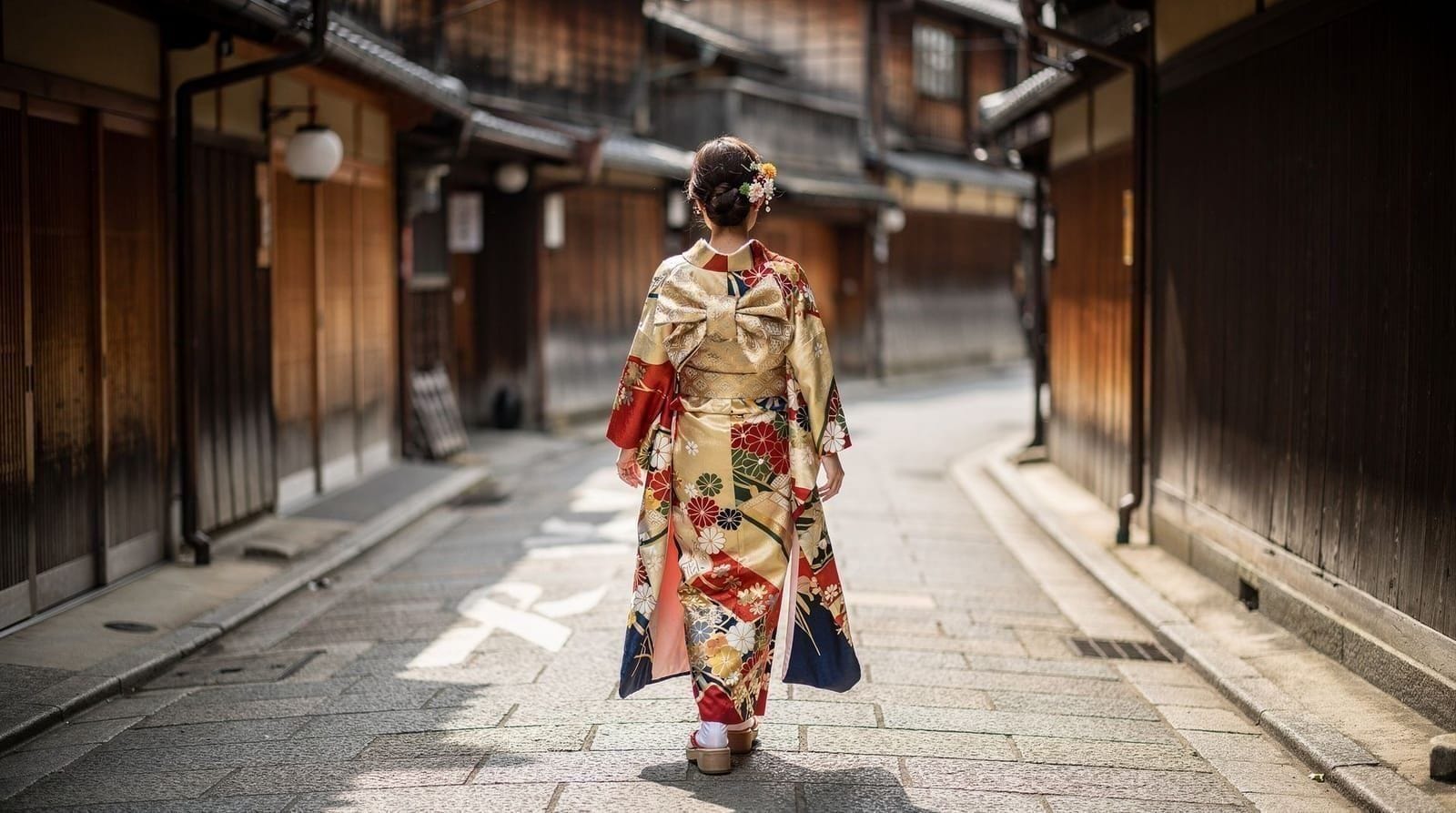
Wearing a yukata (the lighter, more casual summer cousin of a kimono) to Yoiyama is a popular, low-stakes way to join the festival atmosphere, and short-term rental shops around central Kyoto and Gion do brisk festival-season business, typically including basic styling in the rental price. Our Gion district guide covers kimono rental logistics (shop locations, typical pricing, and how it differs from photographing working geiko or maiko) in more depth for visitors who want to combine a Yoiyama evening with the district’s everyday atmosphere on a separate, calmer visit.
Photographing Yoiyama respectfully
The illuminated floats, lantern-lit streets, and yukata-clad crowds make Yoiyama one of Kyoto’s most photogenic annual events, but the same etiquette that applies to Gion on a normal evening applies here too, only more so given the density of the crowds: keep tripods and large camera setups out of the narrowest pedestrian flows, don’t block the street for a shot, and be especially careful not to photograph strangers’ faces without asking, since Yoiyama draws a far higher concentration of both locals and visitors than an ordinary evening. Early arrival (before the 6pm crowd surge) gives noticeably better odds of an unobstructed shot of any single float before the street fills in.
The Higashiyama route as a festival day-trip anchor
For visitors building a full day around the festival rather than a single evening, the Higashiyama walking route — Kyoto’s preserved temple district immediately adjacent to Gion — makes a natural daytime anchor: temples and traditional streets in the afternoon, then a short walk into Yoiyama’s pedestrian zone as evening falls. This avoids the common mistake of arriving in central Kyoto with several empty daytime hours before the festival atmosphere really picks up in the evening.
Frequently asked questions about Gion Matsuri
Is Gion Matsuri the same thing as visiting the Gion district?
No — Gion Matsuri is a citywide July festival with its main events centered on Shijo-Karasuma and the procession route, some distance from the Gion district itself (which takes its name from the same Yasaka Shrine origin point). Visiting Gion on a normal evening, covered in our Gion district guide, is a separate, calmer experience from the festival crowds.
Do I need to buy a ticket to watch the float processions?
No — both Yamaboko Junko processions are free to watch from the street. Paid grandstand seating is available through official channels for visitors who want a guaranteed unobstructed view without arriving early to claim street-side space.
Top experiences
Bookable activities with verified prices and instant confirmation on GetYourGuide.