Osaka Bay and Universal Studios Japan
Universal Studios Japan, Super Nintendo World, and Kaiyukan Aquarium anchor Osaka Bay — here's how to plan queue times, tickets, and a one-day schedule.
Osaka: Osaka USJ 1-day studio pass
Quick facts
- Best time to visit
- Weekdays outside Japanese school holidays and Golden Week for shorter USJ queues
- Days needed
- A full day for USJ alone; add a half day for Kaiyukan
- Getting there
- Universal City Station (JR Yumesaki Line) for USJ; Osakako Station (Chuo subway) for the aquarium
- Nearest station
- Universal City / Osakako
- Good for
- Theme park, aquarium, families, one dedicated full day
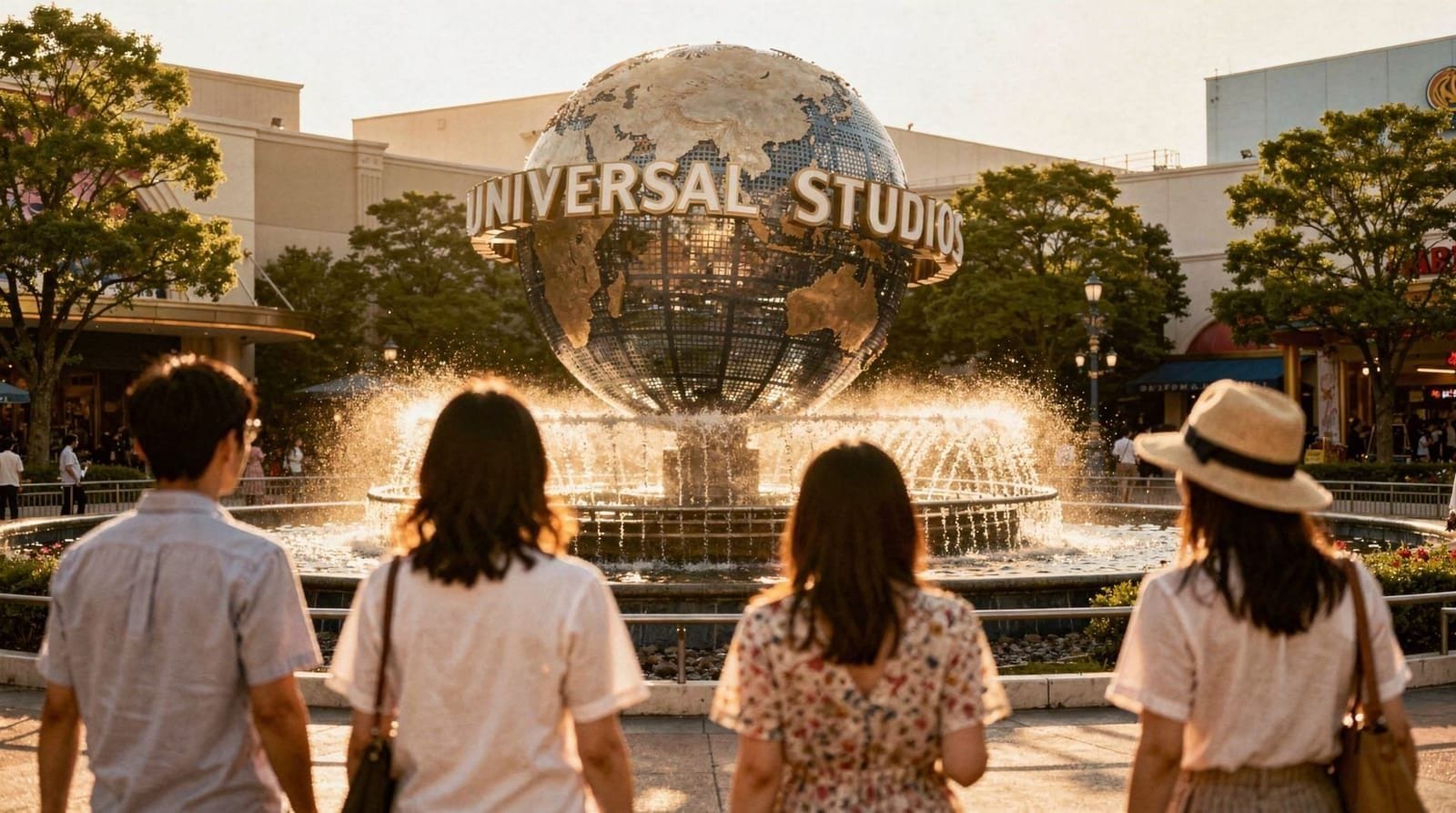
Osaka Bay is where the city’s family-oriented attractions concentrate: Universal Studios Japan, its Super Nintendo World expansion, and Kaiyukan, one of the larger aquariums in the world by tank volume. It’s a different rhythm from central Osaka’s food-and-neon districts — plan for one dedicated day here rather than trying to squeeze it between other sights.
| Getting there | Universal City Station (JR Yumesaki Line); Osakako Station (Chuo subway) |
| Time needed | Full day for USJ; half a day for Kaiyukan and the bay |
| Best for | USJ + Super Nintendo World, Kaiyukan’s whale sharks, families |
| Tickets | Standard 1-day pass, or express pass on weekends/holidays |
| Best time | Weekdays outside Japanese school holidays and Golden Week |
Universal Studios Japan: what’s actually in the park
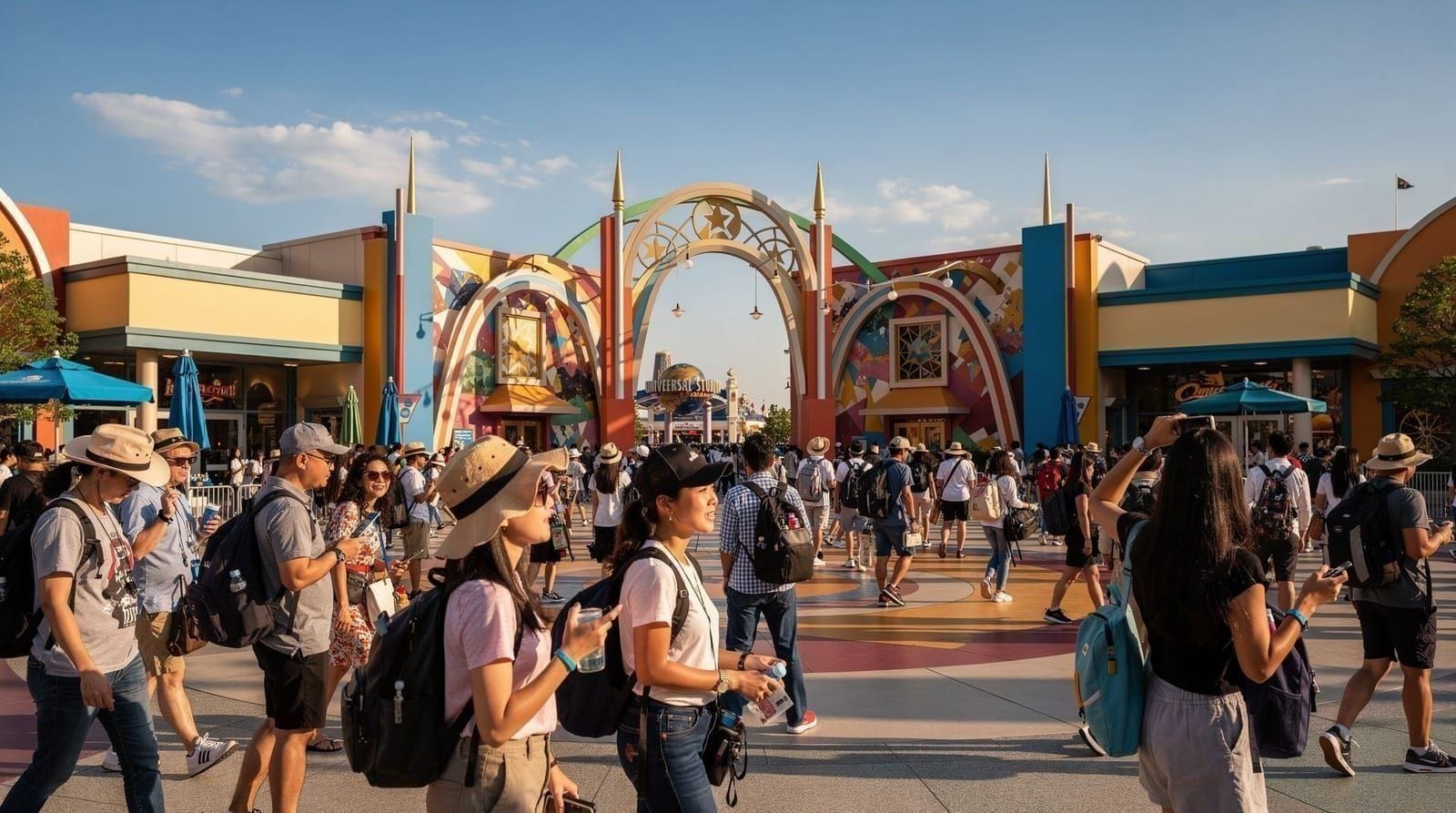
USJ opened in 2001 and has grown into Japan’s second-most-visited theme park after Tokyo Disneyland, built around Hollywood-franchise areas (Jurassic Park, Minion Park, The Wizarding World of Harry Potter) plus the 2021 addition of Super Nintendo World, home to the Mario Kart-themed Mario Kart: Koopa’s Challenge ride and the walk-through Bowser’s Castle. Super Nintendo World in particular draws crowds disproportionate to its physical size, and during peak periods the park issues timed-entry passes for it separately from general admission — worth checking the official USJ app on the day, since these can run out by mid-morning.
Tickets: standard pass vs. express pass
The 1-day studio pass is the standard general-admission ticket and the only one most visitors need on a weekday outside peak season. On weekends, Japanese public holidays, and school breaks, queues for the most popular rides (Mario Kart, Flight of the Hippogriff, Minion rides) can run 60-120 minutes, and an express pass, which grants one priority entry to a set number of rides, becomes genuinely worth the extra cost rather than a luxury.
USJ uses dynamic pricing, so both ticket types cost more on weekends and during school holidays than on an off-peak weekday — checking date-specific pricing before committing to a day is worth the five minutes. Full ticket comparison at our USJ tickets and express pass guide and Universal Studios Japan guide.
A realistic one-day schedule
Gates typically open 30-60 minutes before the official opening time lets people through security, and arriving for that early entry matters more here than at most attractions — the gap between an 8:30am arrival and a 10am arrival can mean the difference between walking onto Mario Kart and waiting 90 minutes. A workable rough order: head straight for Super Nintendo World or Harry Potter first (the two draws with the longest lines), break for lunch mid-afternoon when queues briefly dip, then use remaining express-pass entries or standby time on secondary attractions in the late afternoon. Families with young children should budget more transition time between areas than the park map suggests — distances within USJ are longer than they look.
Kaiyukan Aquarium: the whale sharks
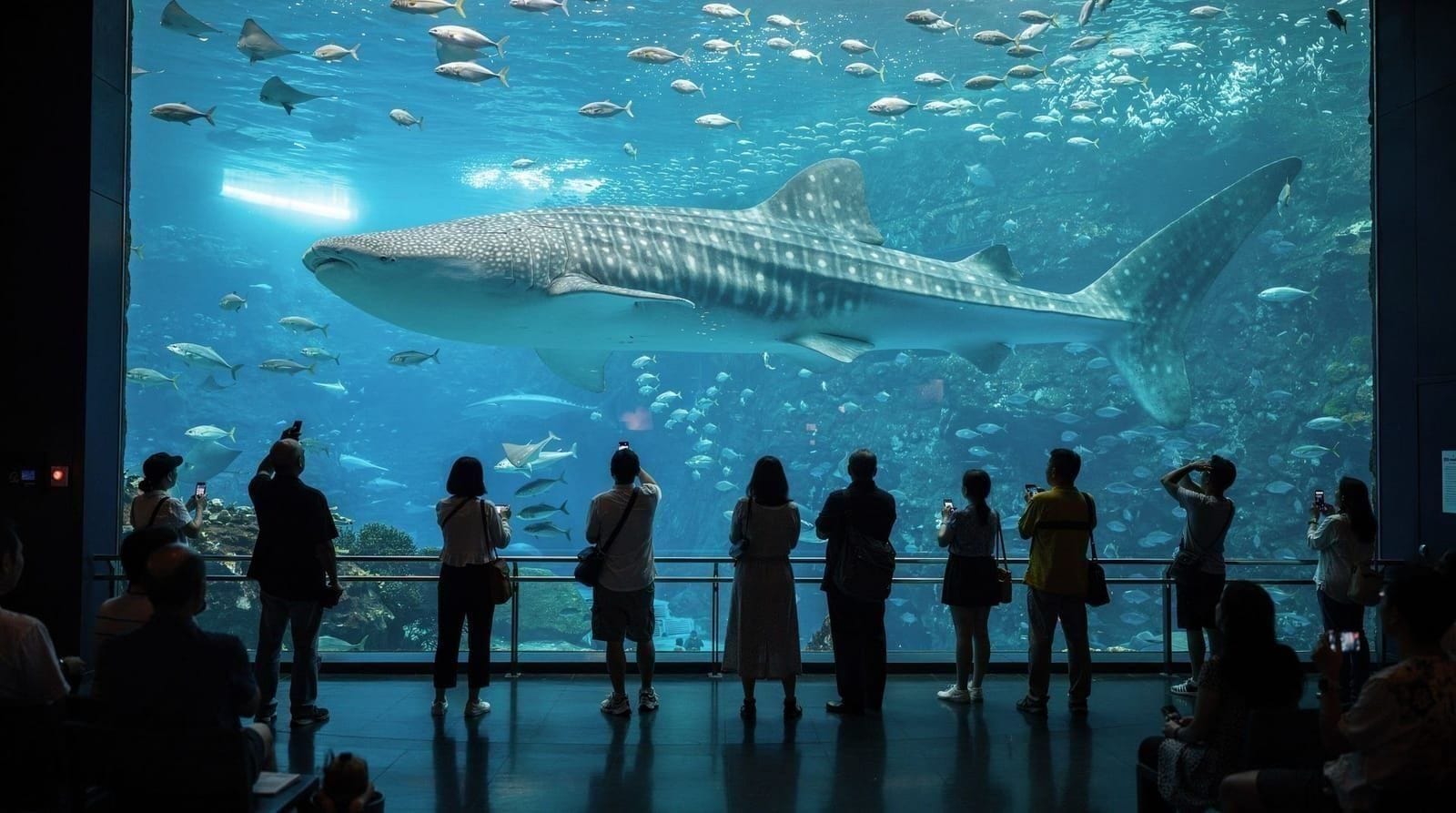
A short walk or one subway stop from USJ (or reachable directly via Osakako Station on the Chuo Line), Kaiyukan is built around a central tank that’s home to whale sharks, viewed via a spiraling walkway that descends past re-created Pacific Rim ecosystems — Japanese forest streams near the top, the deep tank at the bottom. It’s one of the larger single-tank aquariums in the world and takes 90 minutes to 2 hours to see properly. A Kaiyukan entry ticket bought ahead skips the ticket-counter line, which matters most on weekends and during summer school holidays. Full details in our Kaiyukan Aquarium guide.
Eating inside USJ vs. outside the gates
Food inside USJ carries standard theme-park pricing, roughly ¥1,200-2,000 ($10-17) for a quick-service meal and more for themed sit-down restaurants inside areas like The Wizarding World of Harry Potter, where butterbeer and themed snacks are priced as much for the experience as the food. Universal CityWalk, the shopping and dining strip just outside the main gates, has chain restaurants and convenience stores at closer-to-normal Osaka prices, making it a sensible spot for breakfast before opening or a cheaper dinner after a long day inside. Bringing a refillable water bottle is worth doing given Kansai’s summer heat — free water refill stations are available inside the park.
Seasonal events: Halloween and winter illuminations
USJ runs a genuinely large-scale Halloween event from September through October, with the park’s “Halloween Horror Nights” transforming several areas into haunted attractions after dark and drawing crowds specifically for the evening program on top of daytime visitors — worth knowing if visiting during this window, since evening queues can run longer than a typical day. Winter brings holiday illuminations and seasonal decor across the park, generally a calmer period than Halloween in terms of crowd size, aside from the New Year holiday itself.
Tempozan: the wheel, the marketplace, and the harbor
Tempozan Harbor Village, adjacent to Kaiyukan, centers on a large ferris wheel (one of the biggest in Japan when built) and the Tempozan Marketplace, a shopping and dining complex with a mix of chain restaurants and a retro Naniwa-themed food court. A short Osaka Bay cruise aboard the Santa Maria, a replica of Christopher Columbus’s ship, gives a relaxed hour on the water with views back toward the city skyline — a reasonable way to fill an afternoon gap between USJ and the aquarium, or a lower-key alternative to both for visitors traveling with very young children or limited mobility.
Combining USJ and Kaiyukan in one trip
Doing both on the same day is possible but tight — USJ alone comfortably fills 8-10 hours for a family wanting to see the major attractions, leaving little energy for a proper aquarium visit afterward. Most visitors either dedicate a full day to USJ and a separate half-day to Kaiyukan and Tempozan, or do USJ on one day of a longer Osaka stay and treat the bay’s other attractions as a lower-key half-day elsewhere in the trip.
Accessibility and traveling with strollers
Both USJ and Kaiyukan are generally well set up for strollers and wheelchairs, with ramps and elevators at major transition points, though USJ’s layout involves more walking between areas than its map suggests, and some queue lines (particularly for Harry Potter attractions, which wind through detailed indoor sets) can be tight for larger strollers. Rental strollers and wheelchairs are available at the park for a daily fee. Kaiyukan’s spiraling ramp route is stroller-friendly throughout, though it can get congested on weekends when the aquarium is at capacity.
Getting here and connecting onward
Universal City Station, on the JR Yumesaki Line, is a direct branch off the Osaka Loop Line and typically requires one change from Namba or Umeda, taking 15-20 minutes total. Osakako Station, on the Chuo subway line, serves Kaiyukan and Tempozan directly and connects back into central Osaka in about 20-25 minutes. Neither station is walking distance from the other — budget 15-20 minutes to move between USJ and the aquarium/bay area if doing both. Full city context at our Osaka destination guide, and see our Kansai family itinerary for how this fits into a longer trip with kids.
Tourist traps and honest warnings
USJ itself is fairly priced for what it delivers, though on-site food and merchandise carry standard theme-park markups — bringing a refillable water bottle and eating one meal outside the park (Universal CityWalk, just outside the gates, has cheaper options) is a reasonable way to manage costs. The bigger practical risk is queue time on peak days: Golden Week, Obon (mid-August), and the New Year holiday period can mean 90+ minute waits even for secondary rides, and visitors who don’t check the calendar before booking sometimes end up with a frustrating, expensive day. Checking Japanese school holiday dates before booking, and buying an express pass for peak dates, avoids most of this.
Checking the crowd calendar before booking
USJ’s queue times swing dramatically by date, and checking a crowd calendar before locking in travel dates is worth the five minutes it takes, especially if your trip has any flexibility. Our USJ crowd calendar tracks which weeks run heaviest (Golden Week, Obon, New Year, and any week with a major limited-time event) against the quieter windows in late January-February and June, the same pattern noted above for ticket pricing.
Other Osaka Bay attractions beyond USJ and Kaiyukan
Tempozan’s ferris wheel is one option for a lower-key stop in the area, but nearby Hep Five’s rooftop ferris wheel in Umeda is a more central alternative if the bay itself feels like a detour, giving a similar elevated city view without the trip out to the bay.
Hep Five ferris wheel ticket and teamLab Botanical Garden ticket are reasonable alternatives for families who’ve already done USJ on a previous trip or want a lighter, shorter activity than a full theme-park day.
Building this into a family-wide Kansai trip
For families balancing USJ against temples, deer parks, and food tours elsewhere in the region, the Kansai family attractions guide and Osaka with kids guide both cover how a full USJ day and a half-day at Kaiyukan fit against the rest of a multi-day itinerary, and the Kansai family 6-day itinerary shows a full worked example balancing a USJ day against Nara’s deer park and Kyoto’s temples without over-scheduling young children.
Frequently asked questions about Osaka Bay and USJ
Do I need an express pass for Universal Studios Japan?
On a weekday outside Japanese school holidays, standard admission is usually enough to ride most attractions with manageable waits. On weekends, Japanese public holidays, and school breaks, an express pass meaningfully reduces time spent queuing for the most popular rides, particularly Mario Kart and the Harry Potter attractions.
How long does it take to see Kaiyukan Aquarium?
Ninety minutes to two hours for a full walk-through of the spiraling main tank route, including time to properly see the whale sharks in the central tank.
Can I visit USJ and Kaiyukan on the same day?
It’s possible but tight — USJ alone typically takes a full 8-10 hour day for families wanting to cover the main attractions, leaving limited time and energy for the aquarium afterward. Most visitors split them across a full day and a half-day respectively.
What is Super Nintendo World and do I need a timed pass?
Super Nintendo World is USJ’s Mario-themed area, added in 2021, with the Mario Kart: Koopa’s Challenge ride as its centerpiece. During busy periods, the park issues separate timed-entry passes for the area on top of general admission, distributed via the official USJ app — checking availability early in the day is worth doing since passes can run out by mid-morning.
How do I get to Universal Studios Japan from central Osaka?
Take the JR Loop Line to Nishikujo Station and change to the JR Yumesaki Line for one stop to Universal City Station, or check for a direct JR service depending on time of day. Total travel time from Namba or Umeda is usually 15-20 minutes.
Is USJ worth it for adults without kids?
Yes — while it markets heavily to families, the ride lineup (including several thrill rides and immersive franchise areas) and the Harry Potter and Nintendo areas draw a large adult audience independent of children, and it’s a mainstream part of an Osaka visit for solo travelers and couples as well as families.
What’s the best time of year to visit USJ for shorter lines?
Late January through February and June, outside any Japanese public holidays, tend to have the shortest queues, mirroring Osaka’s cheaper travel months generally. Avoid Golden Week (late April-early May), Obon (mid-August), and the New Year holiday period if queue time matters to you.
Top experiences
Bookable activities with verified prices and instant confirmation on GetYourGuide.