Kansai autumn foliage itinerary, 6 days
Kyoto: Kyoto Ginkaku-ji philosophers path nanzenji tour
Koyo, Japan’s autumn foliage season, peaks in Kansai later than most visitors expect — typically late November into early December, well after the maple colors have already turned in northern Japan. This itinerary spreads six days across Osaka, Kyoto, and Nara, timed for that window, with an extra day built in for Minoo Park, a foliage spot outside the usual Kyoto-centric lists.
| Where | Osaka, Kyoto, Nara, plus Minoo Park |
| Getting there | Kansai International Airport, Nankai Rapi:t or JR Haruka |
| Time needed | 6 days, including one flexible buffer day |
| Cost | Roughly ¥15,000-25,000 ($130-220)/day, plus modest day-trip rail |
| Best time | Late November-early December, weekdays if possible |
Why koyo deserves its own itinerary, not just a seasonal add-on
Koyo gets far less international attention than sakura season despite offering comparably dramatic scenery — deep reds and oranges against temple architecture and still water, often with fewer overseas visitors competing for the same viewpoints (domestic Japanese travel volume, however, is substantial). This itinerary treats koyo as the organizing theme rather than a bonus on top of a standard sightseeing trip, which means prioritizing gardens and mountain paths that hold color well over sights that happen to have a few maple trees nearby.
Koyo timing: later than people plan for
Autumn colors in Kansai typically peak in the last week of November through the first week of December — noticeably later than northern Japan or even Tokyo, thanks to the region’s milder climate. Unlike sakura’s narrow week-long bloom, koyo unfolds more gradually, with different maple varieties and elevations turning at slightly different times across a 3-4 week window, which makes the timing somewhat more forgiving to plan around than cherry blossoms.
Day 1: Arrival and Osaka Castle Park
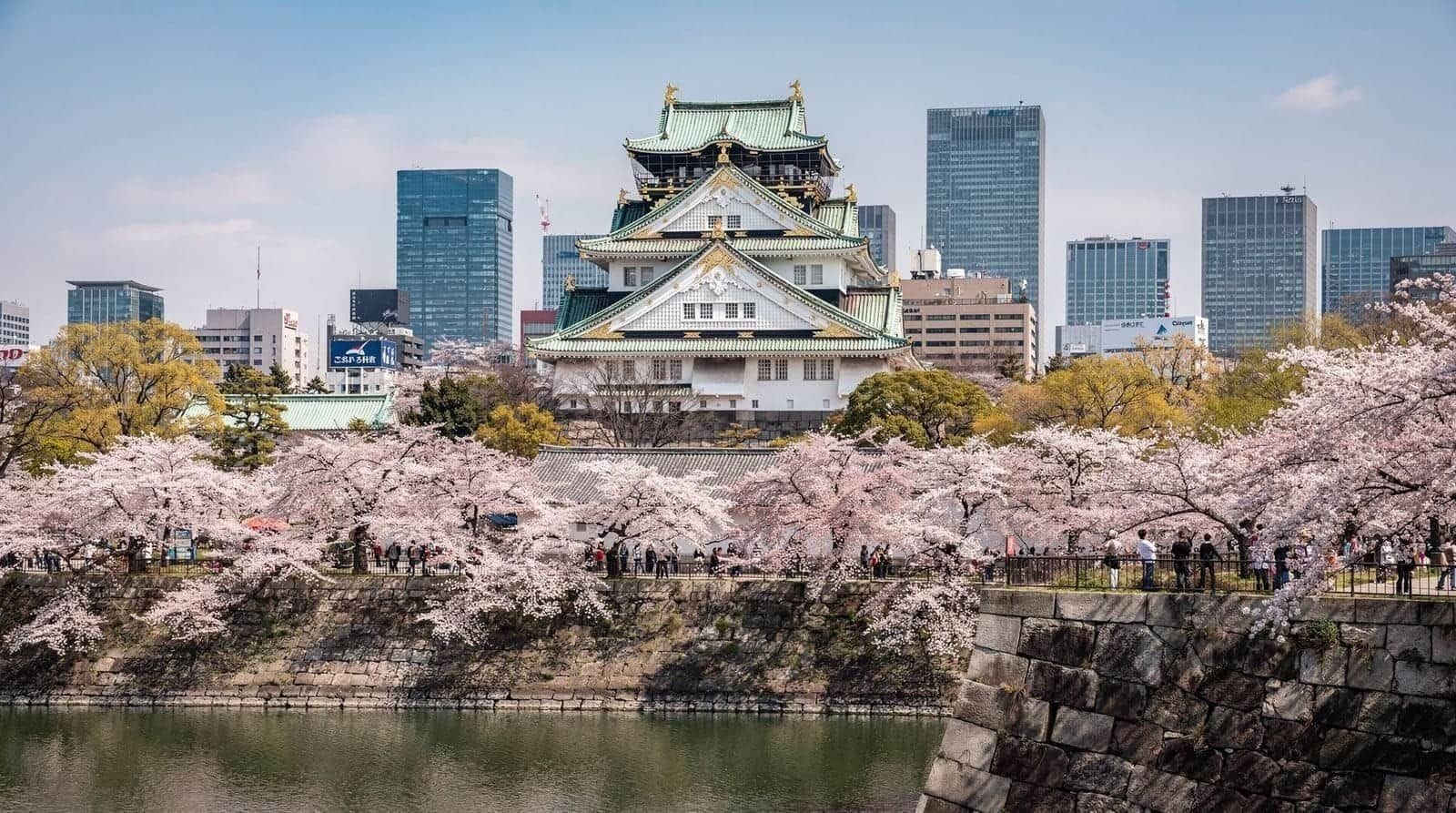
Land at Kansai International Airport, transfer into central Osaka (Nankai Rapi:t to Namba in 38-45 minutes, or JR Haruka to Osaka Station in about 50 minutes), and check into a Namba or Dotonbori hotel for the full week. If arrival timing allows, Osaka Castle Park’s moat-side ginkgo and maple trees turn a deep gold and red by late November — a manageable first-day walk that doesn’t require a full itinerary yet, and a good introduction to what koyo actually looks like before the trip’s more concentrated foliage days in Kyoto.
See our Osaka Castle guide. If jet lag makes even a short walk feel like too much, an evening in Dotonbori for takoyaki and okonomiyaki works just as well as a first-day reset.
Day 2: Minoo Park
Getting there — Hankyu train from Osaka to Minoo Station, about 30 minutes, then a roughly 40-minute walk (or shorter bus ride partway) up a forested valley to Minoo Falls.
Minoo Park, just north of central Osaka, is a genuinely underrated koyo spot — a valley trail following a river up to a 33-meter waterfall, lined with maple trees that turn vivid red and orange by late November, with a fraction of Kyoto’s crowds. The walk up is gentle enough for most fitness levels, paved for much of its length, and takes roughly 40 minutes each way at an unhurried pace, making this an easy full day once travel to and from the trailhead is factored in.
A local specialty, momiji tempura (battered and deep-fried maple leaves), is sold at shops along the trail and is worth trying at least once, more a curiosity than a genuine snack — vendors have been selling it for over a century, using a specific non-poisonous ornamental maple variety rather than the maples turning color in the surrounding forest. See our Minoo Park foliage guide and Minoo Park destination guide.
Day 3: Kyoto — Tofuku-ji and Higashiyama
JR Special Rapid to Kyoto, 28-29 minutes, about ¥580 ($5), then JR Nara Line two stops to Tofukuji Station. Tofuku-ji Temple’s Tsutenkyo Bridge overlooks a valley of roughly 2,000 maple trees and is considered one of Kyoto’s best single foliage views, precisely because the bridge itself frames the canopy from above rather than requiring a walk through it.
Arrive early — by 8am if possible — since this specific spot is well known enough to draw serious crowds by mid-morning during peak koyo weeks; a mid-morning arrival here during peak color can mean queuing just to cross the bridge itself. Continue into Higashiyama in the afternoon for Kiyomizu-dera, whose grounds also carry substantial maple color around its famous wooden stage, plus the preserved Sannenzaka and Ninenzaka lanes below it; see our Kiyomizu-dera guide and Higashiyama walking route.
Day 4: Kyoto — Philosopher’s Path and Arashiyama
Morning — The Philosopher’s Path between Ginkaku-ji and Nanzen-ji turns color alongside its spring cherry trees, with Eikan-do Temple (just off the path) regarded as one of Kyoto’s single best maple-viewing temples, including an evening illumination during peak season. A Philosopher’s Path and Nanzen-ji tour covers this stretch with a guide who can point out which temples have extended illumination hours that week.
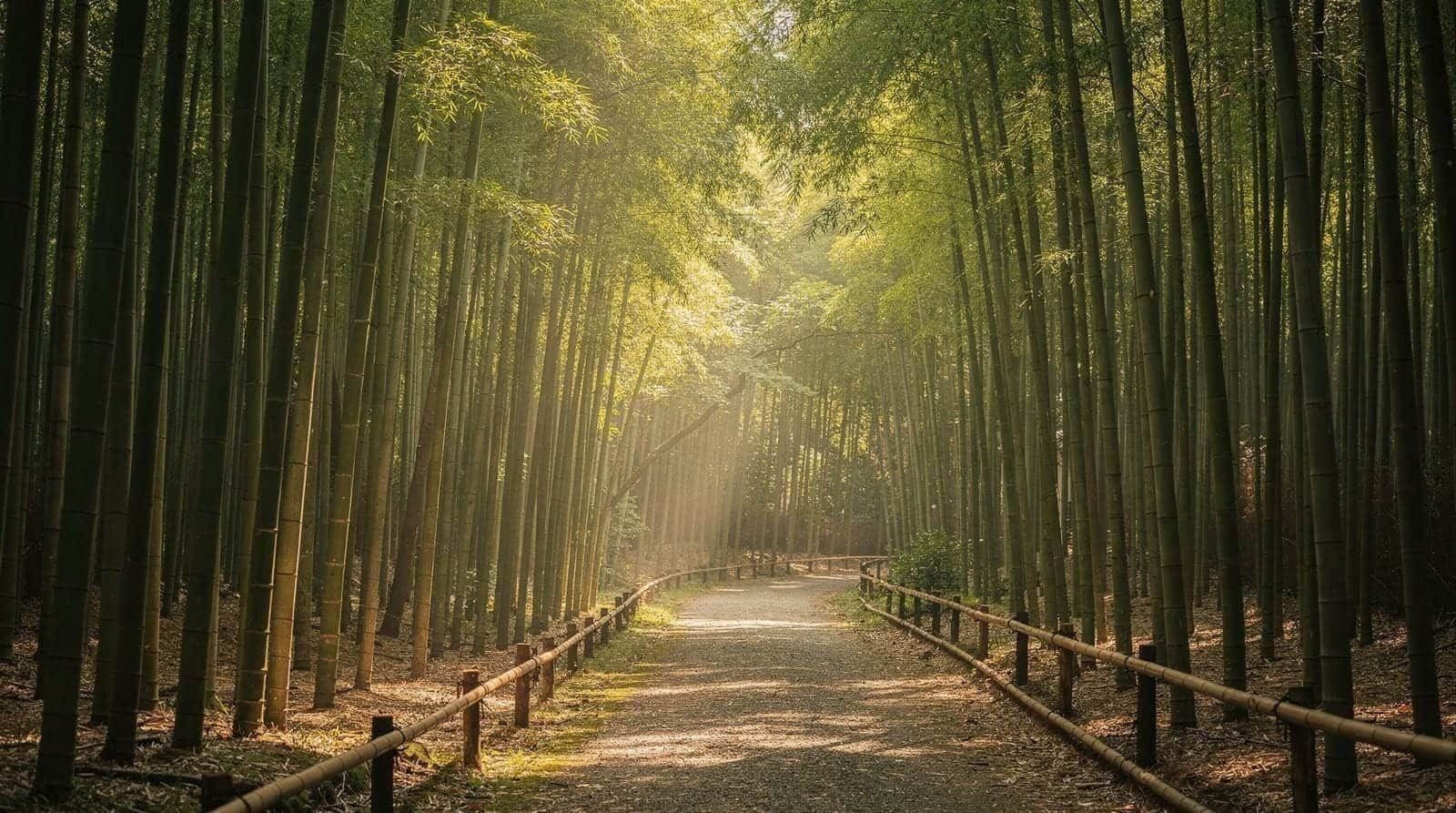
Afternoon — Arashiyama, on the western side of the city, pairs its famous bamboo grove with maple color along the Katsura River and at Tenryu-ji Temple’s garden, a UNESCO World Heritage Site whose pond-centered design is built to reflect the surrounding hillside’s seasonal color. A Arashiyama hidden gems tour is worth considering here specifically, since Arashiyama’s main bamboo path gets crowded regardless of season and a guide who knows the quieter side paths adds real value during koyo’s already-busy weeks.
See our Arashiyama bamboo guide and Arashiyama destination guide. Getting between Tofuku-ji (Day 3) and Arashiyama on the same trip requires crossing the city, which is why they’re split across two separate days here rather than combined.
Day 5: Nara day trip
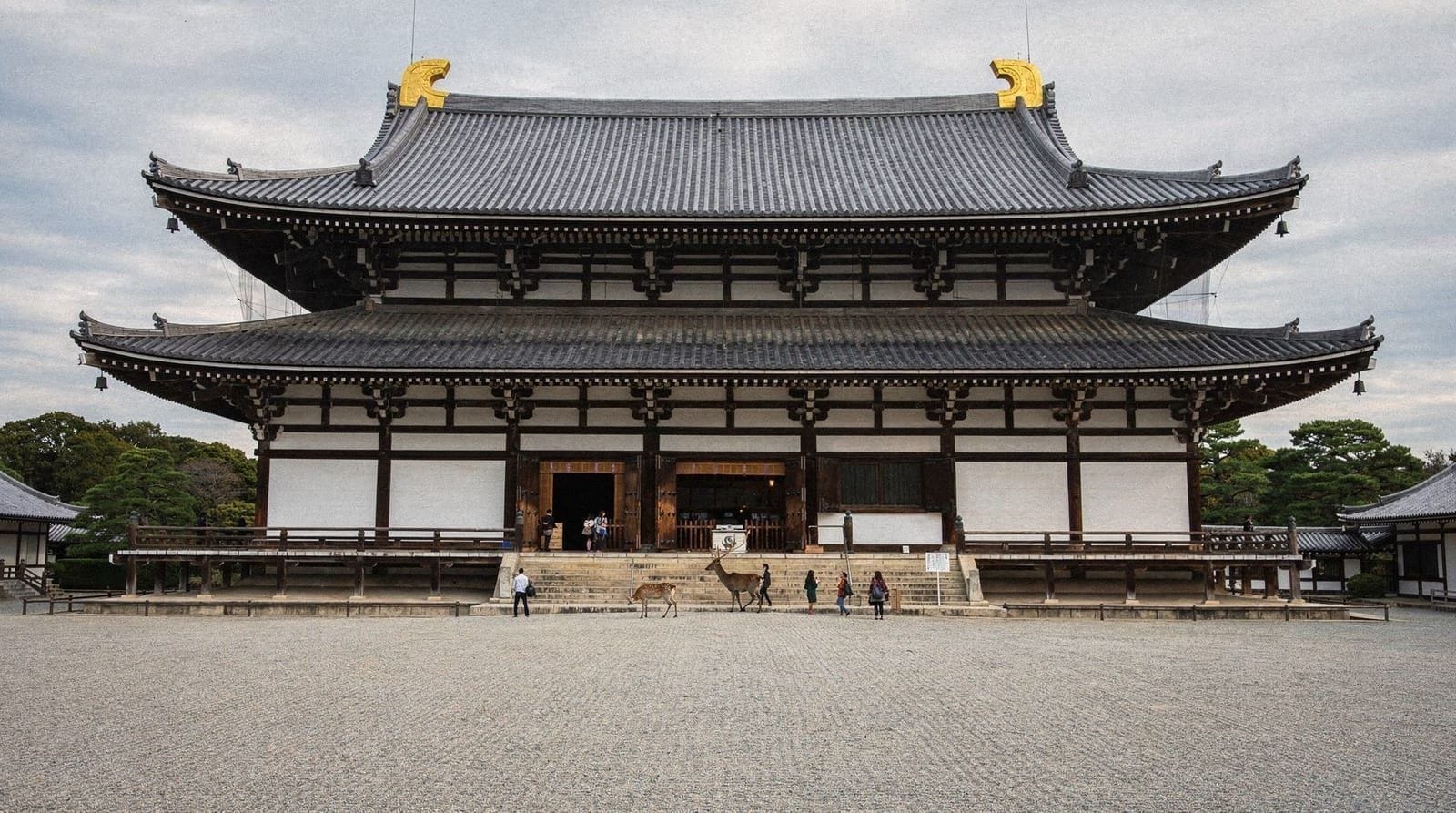
Kintetsu Nara Line from Osaka-Namba, about 45 minutes, direct with no transfers. Nara Park’s foliage is more scattered than Kyoto’s concentrated temple gardens, but the combination of free-roaming deer against a backdrop of turning maples around Todai-ji and Kasuga Taisha is a genuinely different visual than anything in Kyoto, and the park’s open, low-lying grounds mean color reads more as a general autumn atmosphere than a single dramatic viewpoint.
A Todai-ji and Great Buddha tour covers the temple itself — the Great Buddha Hall is the world’s largest wooden building, housing a bronze Buddha statue nearly 15 meters tall. See our Todai-ji guide and Kasuga Taisha guide, whose roughly 3,000 stone lanterns look particularly striking under a canopy of turning maples along the approach path.
Day 6: Flexible day, then departure
Built as a buffer against koyo timing uncertainty — if color hasn’t yet peaked at a spot visited earlier in the week, use this day to revisit it. Otherwise, a slower morning in Osaka Castle Park or a half-day trip to Kobe’s Mount Rokko, whose autumn cable car views are a genuinely different perspective from any of the temple gardens above, rounds out the trip. See our Mount Rokko guide and Mount Rokko & Arima destination guide. Kobe is about 30 minutes from Osaka by JR or Hankyu train, making it a manageable half-day even on a final trip day before an evening departure.
What to pack for a koyo trip
Kansai in late November runs cool but rarely cold — daytime highs typically sit around 12-16°C, dropping into single digits at night, so layers matter more than heavy winter gear. Comfortable walking shoes are worth prioritizing over anything else on this itinerary specifically, since nearly every day above involves an uphill or uneven-surface walk (Minoo Park’s valley trail, Fushimi Inari’s slopes, Arashiyama’s forest paths). A compact umbrella is a reasonable addition, since November sees more rain than the summer months, if less than the tsuyu rainy season in June.
Photographing koyo without fighting crowds
Overcast or lightly rainy days often produce more saturated, evenly lit color photos than harsh midday sun, which tends to blow out highlights on bright red maples — a genuine silver lining if the weather doesn’t cooperate on a given day. Early morning and late afternoon light, roughly an hour after sunrise or before sunset, gives the warmest tone and the fewest people in frame at spots like Tofuku-ji’s bridge.
Several temples along this itinerary, including Eikan-do near the Philosopher’s Path and parts of Arashiyama, run evening illumination during peak koyo weeks, lighting maples from below against a dark sky — worth checking specific dates before the trip, since illumination periods are typically limited to two to three weeks and vary year to year.
Crowd patterns during koyo
Tofuku-ji’s bridge and Kyoto’s Philosopher’s Path both draw serious crowds during the peak two weeks of koyo, roughly matching sakura-season foot traffic despite koyo receiving less international attention overall — arriving before 8-9am at any single-viewpoint spot (as opposed to a walking path, which spreads crowds out) makes the single biggest difference in the visit. Weekday visits are also meaningfully quieter than weekends throughout this itinerary, since domestic day-trippers from Osaka and further afield concentrate their own koyo viewing around weekend availability, much as they do for sakura in spring.
Budget for this itinerary
Koyo season carries a smaller price premium than sakura season, since it draws less international travel volume, but late November weekends still see elevated Kyoto hotel rates. Daily costs otherwise track a standard mid-range Kansai budget of ¥15,000-25,000 ($130-220), with day-trip rail fares to Kyoto and Nara adding roughly ¥1,500-2,500 ($13-22) combined across the week. Minoo Park’s admission is free, though the Hankyu train fare and any momiji tempura or trailside snacks add a small amount on Day 2. Our Kansai budget calculator and JPY currency converter help plan the week.
Koyo timing by week
| Window | Kyoto valley temples | Higher-elevation spots (Koyasan, mountain trails) |
|---|---|---|
| Mid-November | Still mostly green | Early-to-peak color |
| Late November | Approaching to peak color | Peak to past-peak |
| Early December | Peak to past-peak | Mostly bare |
Where this itinerary differs from a sakura trip
Koyo rewards a more flexible schedule than sakura season, since color unfolds over a 3-4 week window rather than a narrow week-long bloom — this is part of why Day 6 is left as a genuine buffer rather than a fixed sight. If comparing seasons for a first Kansai trip, our cherry blossom 7-day itinerary covers the equivalent spring version, including which specific spots peak on a tighter, less forgiving calendar.
Extending toward Koyasan for higher-elevation color
Koyasan’s elevation (roughly 800 meters) means its own maple color often peaks slightly earlier than Kyoto’s valley temples, typically mid-to-late November — worth factoring in if the trip has room for the overnight this adds. See our Koyasan overnight itinerary and Koyasan temple stay guide for how a shukubo stay changes the pacing if extending this six-day plan by a night.
Frequently asked questions about a Kansai autumn foliage trip
When does koyo peak in Kansai?
Typically late November into early December — later than northern Japan or Tokyo, and roughly a month or more after peak color further north in Japan.
Is koyo as crowded as sakura season?
At specific famous single-viewpoint spots like Tofuku-ji’s bridge, yes, comparably crowded during the peak two weeks; walking paths like the Philosopher’s Path spread crowds out more and feel less intense.
What is momiji tempura?
Battered, deep-fried maple leaves, a specialty sold along the Minoo Park trail — a curiosity worth trying once rather than a substantial food stop.
Is Nara or Kyoto better for autumn foliage?
Kyoto has more concentrated, famous temple-garden foliage spots; Nara’s foliage is more scattered through the park but pairs uniquely with the free-roaming deer, which is worth the tradeoff for many visitors.
Do I need to buy tickets in advance for any of these foliage spots?
No — Tofuku-ji, the Philosopher’s Path, Arashiyama’s bamboo grove, and Minoo Park are all free to walk, with only specific temple interiors (like Tenryu-ji’s garden in Arashiyama) charging a small admission on-site. Advance booking isn’t required for any of them, though arriving early matters more than booking ahead during peak weeks.
Do I need to book hotels far in advance for koyo season?
Less urgently than for sakura, but weekends during the peak two-to-three-week window in late November still see meaningfully higher demand in Kyoto specifically — booking 2-3 months ahead is a reasonable buffer.
What should I do if the foliage hasn’t turned yet when I arrive?
Use the Day 6 buffer to revisit whichever spot was still green, and lean toward temple gardens with evening illumination (like Eikan-do on the Philosopher’s Path), which tend to hold visitors’ attention even at partial color. Foliage timing varies by tree species and elevation, so a trip that’s early for Kyoto’s valley temples might still catch full color at Minoo Park’s higher-elevation trail.
Is koyo a good season to combine with a Koyasan visit?
Yes, in principle — Koyasan’s higher elevation (around 800 meters) means its own maple color often peaks slightly earlier than Kyoto’s, in mid-to-late November. It isn’t included in this six-day plan since it adds a full overnight round trip; see our separate Koyasan overnight itinerary if extending the trip.
Is this itinerary as budget-heavy as the sakura version?
Slightly less — koyo draws less international travel volume than sakura, so Kyoto hotel rate premiums are generally smaller, though late November weekends still see elevated demand. Weekday travel meaningfully reduces both crowds and cost on this itinerary.
Can I shorten this to 5 days instead of 6?
Yes — Day 6’s buffer is the easiest to drop if the foliage has already peaked cleanly across the earlier days and no revisit is needed, effectively converting this into the standard Kansai 5-day itinerary with a koyo-specific Day 2 swapped in for Minoo Park.
Does rain ruin a koyo trip?
Not necessarily — overcast or lightly rainy conditions often produce more evenly saturated color in photos than harsh midday sun, and none of this itinerary’s stops close for rain. Bring a compact umbrella rather than treating a rainy forecast as a reason to skip a planned viewpoint.
Top experiences
Bookable activities with verified prices and instant confirmation on GetYourGuide.