Minoo Park
Minoo Park's 33-meter waterfall and maple-lined hiking trail, 30 minutes from central Osaka, peaks with autumn foliage in late November.
Osaka: Osaka Kansai pass 1-week free pass
Quick facts
- Best time to visit
- Late November for peak autumn foliage; spring for fresh greenery and fewer crowds
- Days needed
- Half a day
- Getting there
- Hankyu Minoo Line to Minoo Station, about 30 minutes from Umeda
- Nearest station
- Minoo (Hankyu Minoo Line)
- Good for
- Hiking, waterfall, autumn colors, a break from urban Osaka
Minoo Park sits in the hills at the northern edge of the Osaka metropolitan area, about 30 minutes from Umeda by train, and it’s the closest genuine nature escape to the city center — a forested valley trail leading to a 33-meter waterfall, best known for its autumn foliage but worth a visit in other seasons for anyone who wants a half-day break from Osaka’s urban density.
| Where | Minoo, northern edge of Osaka metro area |
| Getting there | Hankyu Minoo Line to Minoo Station, ~30 min from Umeda |
| Time needed | Half a day |
| Trail | 2.7km paved path, 40-50 min one-way, ordinary shoes fine |
| Cost | Free (momiji tenpura snacks ¥300-500) |
| Best time | Late November for peak foliage; spring for quiet greenery |
The walk to the waterfall
From Minoo Station, a paved path follows the Minoo River upstream through a designated quasi-national park, climbing gently through forest for about 2.7 kilometers to Minoo Falls. It’s a walk rather than a hike in any technical sense — flat, paved, and manageable in ordinary shoes — and takes 40-50 minutes at an unhurried pace one-way, longer if you stop at the small shops and shrines along the route. The falls themselves drop 33 meters into a rocky pool and are at their most dramatic after rain, when the flow visibly increases; in dry spells the volume can be modest by waterfall standards.
Small temples and shrines along the way
Partway along the trail to the falls, a handful of small temples and shrines sit just off the main path, reflecting the valley’s long history as a site of mountain Buddhist ascetic practice (shugendo) — this stretch of forest has held religious significance for over a thousand years, not just since it became a scenic waterfall walk. None of these individual stops rival the falls themselves as a destination, but they’re worth pausing at rather than walking straight past, and they explain why the path feels more like a pilgrimage route than a simple park trail in places.
Momiji tenpura: the trail’s specific snack
Along the path to the falls, several shops sell momiji no tenpura — maple leaves battered and deep-fried, a local specialty specific to this valley rather than a generic Japanese snack. The leaves (specifically from a variety selected for their texture rather than the more common Japanese maple used for ornamental purposes) are typically salt-cured for up to a year before frying to remove bitterness, and the result is a crisp, faintly sweet snack that’s more curiosity than substantial food — worth trying once rather than building a meal around.
Small packets run roughly ¥300-500 ($3-4), sold both near the station and at stalls closer to the falls, with some shops selling directly from roadside stands that have operated for generations. It’s worth trying one packet before committing to a larger bag, since the flavor is unusual enough that reactions vary widely between visitors.
The insect museum near the falls
Close to Minoo Falls, a small insect museum (Minoo Park Insectarium) houses live butterfly and insect exhibits in a modest greenhouse setting, a reasonable stop with younger children who might otherwise find the walk itself the main attraction. It’s a minor add-on rather than a destination in its own right, and easy to skip if time is tight, but it fits naturally into the same visit given its location right at the trail’s endpoint.
Autumn foliage: when to actually go
Minoo’s maple canopy typically peaks in the last week of November into the first few days of December, later than higher-altitude foliage spots elsewhere in Kansai, which makes it a useful option if you’ve missed the earlier peak at Kyoto’s hillside temples. During peak weekends the trail gets genuinely busy with both local and international visitors, and the narrow path can bottleneck near the falls — a weekday visit, or arriving before mid-morning on a weekend, avoids most of the congestion. Outside the autumn peak, the park is quiet, and spring brings fresh green foliage with a fraction of the crowd.
From Meiji-era retreat to protected park
Minoo’s status as a nature retreat within easy reach of Osaka isn’t a recent tourism development — the area was already a popular escape for city residents by the late 19th century, and it was designated part of the Meiji no Mori Minoo Quasi-National Park in the 20th century, a protection status that has kept large-scale development out of the immediate valley even as Osaka’s suburbs expanded around it. That history is part of why the walk still feels genuinely forested rather than manicured, unlike some more heavily landscaped park settings closer to central Osaka.
Getting here from Osaka
Minoo Station is reached via the Hankyu Minoo Line, which branches off the main Hankyu Takarazuka Line — from Umeda, this means one change (typically at Ishibashi or Minoo-guchi depending on the specific train) for a total journey of about 30 minutes. It’s an easy half-day trip that doesn’t require an overnight stay or major schedule reshuffling, and it pairs reasonably with a morning or afternoon in central Osaka on the same day.
If you’re using a multi-day regional pass for other day trips around Kansai, check whether it covers the Hankyu network — the Kansai 1-week free pass covers a range of private railways that the JR-focused passes don’t. If you’d rather spend your morning exploring central Osaka with a guide before heading out here in the afternoon, a welcome tour with a local host is a reasonable way to front-load that orientation.
Spring and summer: a different, quieter visit
Outside the autumn peak, Minoo Park sees a fraction of the visitor numbers, and spring brings fresh green foliage along the same trail with none of the crowding — a reasonable alternative for visitors whose trip dates don’t align with the late-November foliage window. Summer brings genuine heat and humidity to the walk (shaded by tree canopy for most of its length, which helps), along with fireflies in June along parts of the river in the early evening, a seasonal detail known mostly to locals rather than promoted to visitors.
What else is nearby
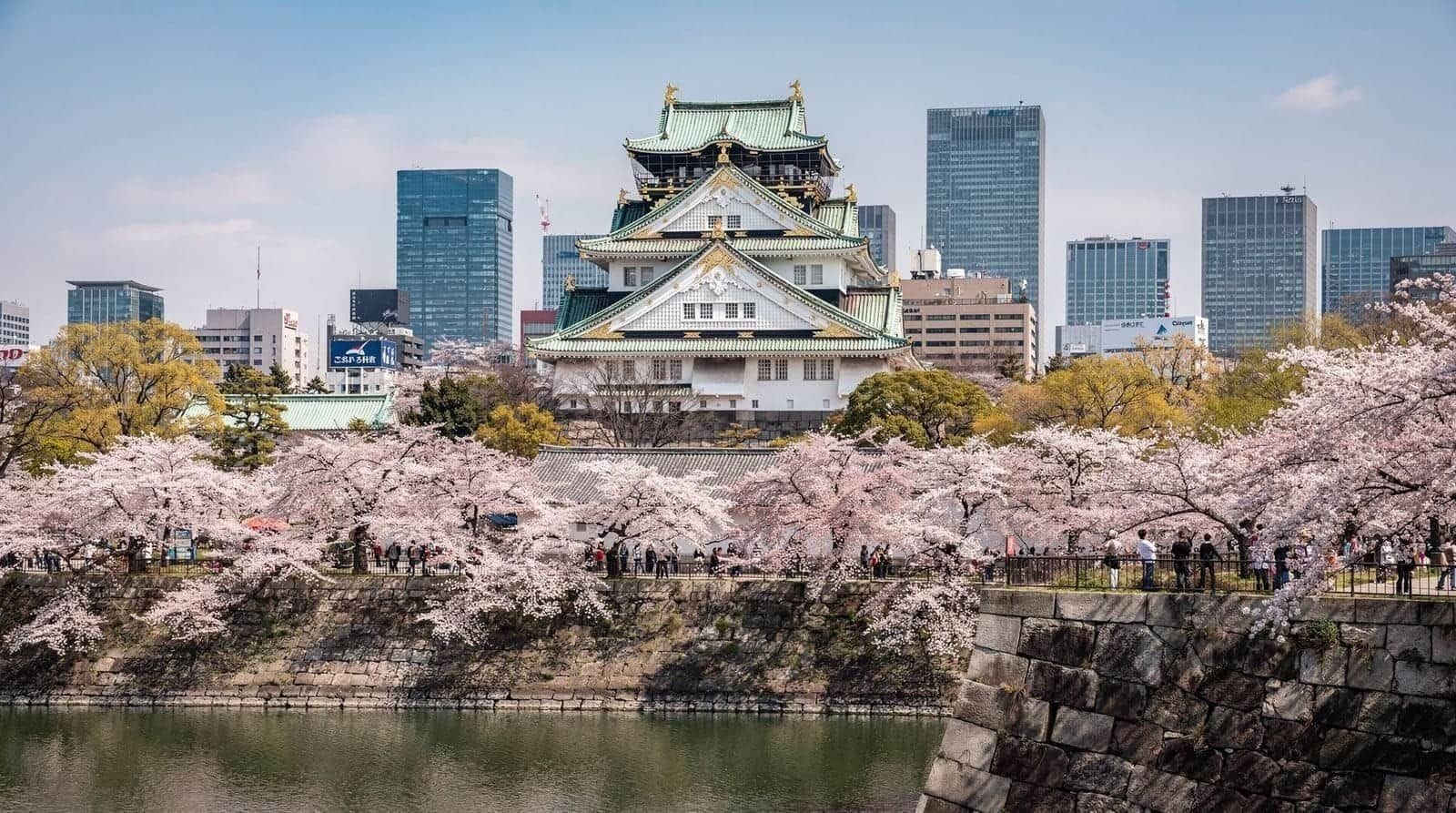
Katsuo-ji, a temple further up into the same mountain range famous for its thousands of daruma dolls, sits beyond Minoo Park proper and requires a separate bus or taxi connection rather than being reachable on foot from the falls — see our Katsuo-ji guide for access details if you want to combine both in one day (it’s a full day if you do, not a half-day). Our broader Minoo Park foliage guide and Kansai autumn foliage guide cover timing this against other foliage spots in the region, including Kyoto and Osaka Castle Park.
Practical tips for the walk
The path from Minoo Station to the falls is well signposted in both Japanese and English, and it’s genuinely hard to get lost — the river is on one side of the path for essentially the entire route, and the falls sit at a clear dead end where the trail terminates. Public restrooms and vending machines appear at intervals along the way, and a handful of small restaurants and shops cluster near both the station end and the falls end, thinning out in the middle stretch of forest.
Comfortable walking shoes are enough; no hiking boots or technical gear are needed for the main route. Visitors wanting a longer outing can continue past the falls on a network of additional trails deeper into the quasi-national park, some connecting eventually toward Katsuo-ji, though these onward trails are less maintained and better suited to visitors comfortable with more informal hiking.
Tourist traps and honest warnings
Minoo Park isn’t set up to overcharge visitors the way parts of central Osaka are — prices for the tenpura snacks and small restaurants along the trail are reasonable and consistent. The realistic risks here are practical rather than financial: the paved path can be slick after rain, and the falls can look underwhelming in dry weeks, so checking recent rainfall (or just tempering expectations) helps. Autumn weekends bring real crowding on a narrow trail, which is worth planning around rather than an actual safety concern.
Winter and a genuinely quiet visit
Winter at Minoo strips away almost all the crowding that defines the autumn peak — the trail, shops, and falls see a fraction of the November traffic, and the forest canopy, bare of leaves, opens up longer sightlines along the river than the shaded summer walk allows. It’s colder underfoot on the paved path, though rarely icy at this elevation, and the momiji tenpura shops stay open year-round regardless of season. The Osaka winter guide covers how a quiet half-day here fits into a broader cold-season Kansai itinerary, alongside indoor options for the days when the weather doesn’t cooperate.
Cycling as an alternative to the walk
For visitors who’d rather cover the valley on two wheels than on foot, a handful of operators near Minoo Station rent bicycles suited to the paved riverside path, though the trail’s later stretch narrows and gets busy enough near the falls that walking the final section is generally more practical than riding it. The Kansai cycling routes guide rounds up Minoo alongside a handful of other rideable routes in the region for visitors building a cycling-focused day rather than a single stop.
Pairing Minoo with a family day out
Minoo’s flat trail, small insectarium, and low-key pace make it a reasonable fit for a family itinerary that also wants a break from temple-hopping — the Osaka with kids guide and the Kansai family attractions guide both cover how a Minoo half-day slots in alongside more active-focused family stops elsewhere in the region, without needing to book anything in advance.
Frequently asked questions about Minoo Park
How do you get to Minoo Park from Osaka?
Take the Hankyu Minoo Line to Minoo Station, typically changing from the Hankyu Takarazuka Line at Minoo-guchi or Ishibashi Station from Umeda — total journey time is about 30 minutes.
Is Minoo Park a hard hike?
No — the main trail to the waterfall is a paved, gently sloping path suitable for ordinary shoes, about 2.7 km one-way from Minoo Station, taking 40-50 minutes at a relaxed pace.
When is the best time to see the autumn foliage at Minoo Park?
The last week of November into the first few days of December is typically peak, slightly later than many higher-elevation Kansai foliage spots. Weekday visits or early mornings avoid the heaviest crowds during this window.
Is Minoo Park worth visiting outside autumn?
Yes, if you want a quiet half-day away from Osaka’s crowds — spring brings fresh greenery with far fewer visitors, and the waterfall and forested walk are pleasant year-round, just less visually dramatic than during peak foliage.
Can I combine Minoo Park with Katsuo-ji Temple in one day?
Yes, but plan for a full day rather than a half-day — Katsuo-ji sits further into the mountains and requires a separate bus or taxi connection from Minoo, not a walkable extension of the same trail.
Do I need hiking boots for Minoo Park?
No — the main trail from Minoo Station to the falls is a paved path suitable for ordinary walking shoes. Hiking boots become useful only if continuing past the falls onto the less-maintained onward trails deeper into the park.
Is Minoo Park suitable for a half-day trip with children?
Yes — the flat, paved walk to the falls is manageable for most children, restrooms and shops appear at intervals, and the small insect museum near the falls gives younger visitors an additional point of interest beyond the waterfall itself.
Top experiences
Bookable activities with verified prices and instant confirmation on GetYourGuide.