Affordable Michelin dining in Osaka
Osaka: Osaka foodie tour Dotonbori Shinsekai
Can you eat Michelin-recognized food in Osaka on a budget?
Yes. Osaka has one of the highest densities of Michelin stars per capita of any city in the world, and the Bib Gourmand category specifically recognizes good food at moderate prices — meals for ¥3,000-6,000 ($28-56) or less at restaurants the guide considers genuinely excellent, not a consolation prize for missing a star. Lunch at a starred restaurant is the other reliable strategy, often 40-60% cheaper than the same kitchen's dinner course.
Osaka has one of the highest concentrations of Michelin-recognized restaurants per capita anywhere in the world, a fact that surprises visitors who associate the city more with cheap street food than fine dining. The two aren’t actually in conflict — Osaka’s food culture has always prized value and directness over ceremony, and the Michelin guide’s Bib Gourmand category, which recognizes good cooking at moderate prices rather than only the most expensive tasting menus, fits the city’s identity better than it fits Kyoto’s more formal kaiseki tradition. This guide is about the practical strategies for eating well by Michelin’s own standards without a four-figure bill.
| Where | Namba, Umeda, Shinsekai, and scattered smaller neighborhoods |
| Cost | Bib Gourmand around ¥3,000-6,000; starred lunch often 40-60% below dinner |
| Booking | 3-7 days ahead typically; 2-3 weeks for top sushi/kappo counters |
| Best strategy | Lunch at a starred kitchen, or a Bib Gourmand dinner |
| Dress | Smart-casual covers most; check the most formal kappo/kaiseki spots |
What Bib Gourmand actually means
Michelin’s Bib Gourmand designation, introduced separately from its star system, recognizes restaurants serving genuinely good food at a set price ceiling — in Japan, this typically translates to a full meal for around ¥5,000 ($46) or less per person, though the exact threshold shifts slightly by region and year.
It’s not a lesser category or a consolation for restaurants that missed a star; some Bib Gourmand kitchens have been recognized for years running specifically because they’re excellent at what they do within their price range, whether that’s ramen, tonkatsu, soba, or a casual set-meal restaurant. Osaka has one of the larger concentrations of Bib Gourmand listings of any Japanese city, reflecting the sheer density of well-run, moderately priced restaurants across Namba, Umeda, and Shinsekai.
Lunch at a starred restaurant: the other reliable strategy
Beyond Bib Gourmand, the most consistent way to eat at a genuinely starred restaurant without the full dinner price is booking lunch instead. Nearly all of Osaka’s Michelin-starred restaurants — including the smaller sushi counters and kaiseki-adjacent kitchens that hold one or two stars — run a considerably cheaper lunch course than their dinner menu, often 40-60% less for a scaled-down but still representative version of the kitchen’s cooking.
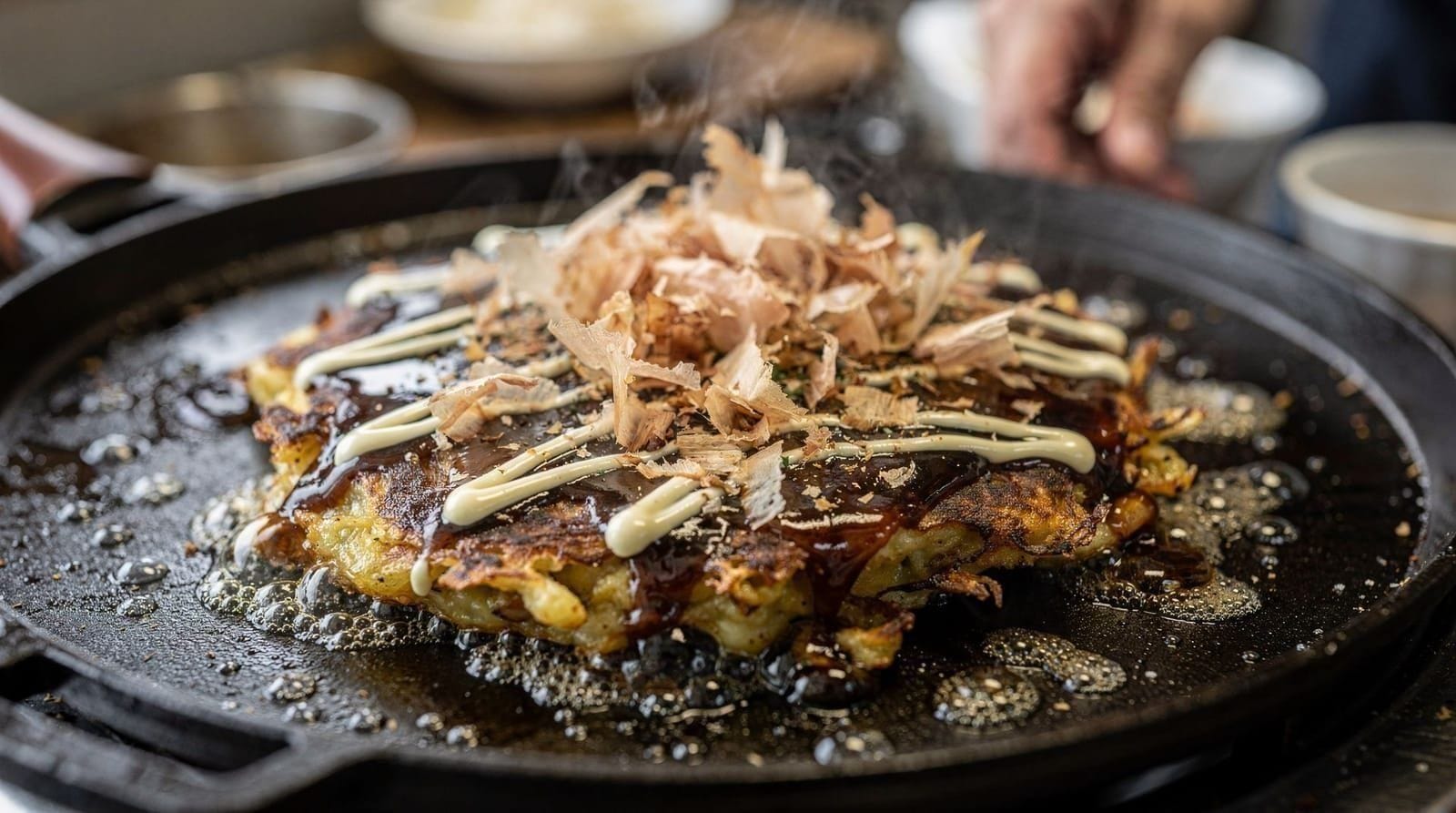
Mizuno, the Dotonbori okonomiyaki institution that’s held a Bib Gourmand recommendation in several recent guide editions, is a good example of this principle applying even outside formal fine dining: a lunch visit costs the same as dinner here (okonomiyaki doesn’t really have a lunch discount format), but the broader lunch-price strategy holds across most of the city’s higher tiers of dining.
Reservations for lunch at genuinely well-known starred restaurants still fill up, particularly on weekends, so booking a few days ahead rather than walking in is the safer approach.
Sushi counters: where the value gap is widest
Sushi is one of the categories where Osaka’s Michelin-recognized restaurants offer the clearest value gap between lunch and dinner. A starred sushi counter’s dinner omakase (chef’s choice) course can run ¥15,000-40,000 ($139-370) or more per person, while the same counter’s lunch omakase — often a shorter course with fewer or slightly smaller pieces — can run ¥3,000-8,000 ($28-74), a genuinely large gap reflecting both the shorter course length and the lower overhead of daytime seating. Booking ahead matters more here than almost anywhere else in this guide, since the best-known sushi counters seat only a handful of guests per seating and fill quickly, especially for lunch slots that offer the better value.
Ramen and noodle shops with Bib Gourmand recognition
A meaningful share of Osaka’s Bib Gourmand list is ramen and noodle shops, reflecting how seriously the city takes what might look like a purely casual dish — a well-regarded Bib Gourmand ramen shop charges roughly the same ¥800-1,200 as any other bowl in the city, the distinction being consistency and technique rather than price. These shops don’t take reservations in most cases, and the well-known ones develop queues, particularly around lunch and dinner peak hours — arriving just before or after the standard meal windows (11:30am or 1:30pm for lunch, for example) reduces wait times meaningfully.
Kappo and small counter restaurants
Kappo — a casual-but-serious counter-dining format where a chef prepares and serves dishes directly across the counter, less formal than full kaiseki but built around similarly high-quality, seasonally driven ingredients — is another category where Osaka’s Bib Gourmand and lower-tier starred restaurants offer strong value relative to Kyoto’s more ceremonial kaiseki tradition covered in our Kyoto kaiseki guide. A kappo dinner course in Osaka commonly runs ¥6,000-15,000, noticeably less than a comparable formal kaiseki dinner in Kyoto, while still built around similarly careful, seasonal cooking.
How to actually find and book these restaurants
Michelin’s own guide website and app list current Bib Gourmand and starred restaurants by city and are the most reliable, up-to-date source, since recognitions change annually and restaurants occasionally close or lose recognition. Reservation platforms aimed at the Japanese market (rather than general international booking sites) often have better availability for smaller, local-facing restaurants, though many now support English booking directly.
For restaurants that don’t take online reservations at all — still common at smaller kappo counters and long-running family restaurants — calling directly or asking a hotel concierge to book on your behalf remains the most reliable approach, particularly for restaurants without an English-language phone line.
A practical day mixing street food and a Michelin-recognized meal
A workable pattern for a food-focused day in Osaka: graze street food at Kuromon Ichiba Market or Dotonbori for a casual lunch, then book a Bib Gourmand or lunch-discounted starred restaurant for an early dinner, arriving around the 5:30-6pm opening rather than the busier 7-8pm window. This lets you sample both ends of Osaka’s food identity — cheap, high-volume street eating and genuinely excellent, moderately priced formal cooking — in a single day without either feeling rushed.
Dotonbori and Shinsekai foodie tour is a reasonable way to cover the casual side of that day with a guide who can point toward specific stalls, freeing up the evening for a dedicated Bib Gourmand or lunch-strategy restaurant booking made independently.
Solo dining at Osaka’s recognized restaurants
Many of Osaka’s Bib Gourmand and starred restaurants, particularly counter-format sushi and kappo establishments, are genuinely comfortable for solo diners — the counter seating that defines these formats means a single guest sits alongside others rather than being isolated at an empty table, and Japan’s broader dining culture is generally accustomed to solo diners in a way that some other countries’ fine dining scenes aren’t. This makes Osaka’s Michelin-recognized dining scene a reasonable choice for solo travelers specifically, in contrast to some formal Western fine dining traditions where solo dining at a top restaurant can feel conspicuous.
Reservation platforms and language barriers
Beyond calling directly or asking a concierge, a growing number of Japanese reservation platforms now offer English-language interfaces specifically aimed at foreign visitors booking mid-to-upper-tier restaurants, a meaningful improvement over just a few years ago when English-language booking access to Osaka’s better restaurants was considerably more limited.
That said, the very smallest, most traditional kappo counters and family-run Bib Gourmand spots sometimes still resist all but direct phone bookings, reflecting a broader preference among some restaurant owners for a personal, voice-to-voice reservation process over an anonymous online form — worth expecting this at the more old-school end of the spectrum even as booking technology improves elsewhere.
What “affordable Michelin” doesn’t mean
It’s worth being honest about the limits here: a Bib Gourmand meal or a lunch-discounted starred restaurant genuinely costs less than the top-tier ¥30,000-plus dinner courses at Osaka’s most exclusive restaurants, but it’s not the same experience — fewer courses, shorter service, and generally less elaborate presentation. Some restaurants marketing themselves loosely as “affordable Michelin-style” in English-language tourist material have no actual Michelin recognition at all, borrowing the association without the substance; checking the current guide directly, rather than relying on a restaurant’s own marketing claim, is the reliable way to confirm a listing is genuine.
Regional Bib Gourmand density: how Osaka compares
Osaka’s Bib Gourmand list is notably dense relative to the city’s size compared to many other major dining cities globally, a reflection of the sheer number of small, specialized restaurants — a single-dish ramen counter, a family-run tonkatsu spot, a decades-old udon shop — operating at a consistently high level across ordinary neighborhoods rather than concentrated only in a handful of prestige districts. This density is part of why exploring Bib Gourmand listings by neighborhood, rather than only checking the most famous names, tends to turn up excellent, less internationally known restaurants within walking distance of wherever you’re staying in the city.
Vegetarian options within Michelin-recognized dining
Vegetarian dining is a genuine limitation across most of Osaka’s Michelin-recognized restaurants, since dashi (fish stock) underpins much of Japanese cooking at every price tier, including many Bib Gourmand-listed noodle and set-meal restaurants. A small number of shojin ryori (Buddhist vegetarian cuisine) restaurants near Osaka’s temples hold Bib Gourmand recognition and are worth seeking out specifically if a plant-based meal at this level of quality matters to your trip — worth checking the current guide listing directly, since availability shifts year to year.
Cooking classes as a lower-cost alternative
If a restaurant reservation doesn’t fit the budget or schedule, a hands-on cooking class is a genuinely different but complementary way to engage with Osaka’s food culture at a moderate price.
Osaka cooking class with sake tasting and market visit combines a market walkthrough with hands-on cooking and a sake tasting for a fraction of a formal restaurant’s price, a reasonable option for visitors who want to understand technique rather than just eat the result. For a more casual, street-food-paced introduction beforehand, the daytime Dotonbori food tour works well earlier the same day.
Comparing Osaka’s value proposition to Kyoto’s
Osaka’s Bib Gourmand-heavy, value-focused fine dining scene contrasts with Kyoto’s more expensive, ceremony-driven kaiseki tradition — neither city’s approach is objectively better, but they reflect genuinely different food cultures within the same region. See our Kansai versus Tokyo culture guide for more on how Osaka’s food identity differs from its neighbors, and the Kyoto kaiseki guide for the formal, higher-cost side of the region’s dining.
Dress and behavior expectations at these price points
Even at the most affordable end of Michelin-recognized dining, a somewhat higher standard of dress and behavior is generally expected than at a casual chain restaurant — smart-casual attire covers nearly every Bib Gourmand and lower-tier starred restaurant, with the exception of a handful of the most formal kappo and kaiseki-adjacent establishments where slightly more polished dress is appropriate. Arriving on time for a reservation matters more here than at casual dining, since many of these restaurants run tightly timed seatings, particularly at counter-format establishments where a late arrival can throw off an entire evening’s carefully sequenced service for other guests.
Booking timing and reservations
For genuinely popular Bib Gourmand restaurants and lunch slots at starred restaurants, booking three to seven days ahead is a reasonable baseline, extending to two or three weeks for the most in-demand sushi counters and kappo restaurants. Same-week availability is more common for ramen and noodle-focused Bib Gourmand listings, most of which don’t take reservations at all and instead rely on queue management — arriving slightly outside peak meal hours remains the most practical way to reduce wait time at these.
Where this fits in a wider Osaka food itinerary
If you’re planning food as the centerpiece of an Osaka trip, our Osaka street food guide covers the cheap, casual end, this guide covers the moderate-to-upper tier without the top-end price tag, and our Kobe beef guide covers the region’s headline splurge meal if a single special-occasion dinner fits the budget elsewhere in the trip.
How the Michelin Guide actually evaluates Osaka
Michelin’s inspectors evaluate restaurants anonymously, paying their own bills, and the criteria published by the guide emphasize the quality of ingredients, mastery of technique and flavor, personality expressed through the cuisine, value for money, and consistency across visits — the same five criteria applied worldwide, regardless of cuisine type or price point.
This consistency of criteria is part of why a ¥900 ramen bowl and a ¥30,000 kaiseki course can both hold recognition in the same guide: the standard being applied is whether the kitchen executes its own specific style at the highest level it’s capable of, not whether it matches some universal fine-dining template. Osaka’s strong showing across both Bib Gourmand and starred categories reflects the sheer density and consistency of well-run kitchens across price points in the city, from casual counters to formal dining rooms.
The role of Osaka’s produce markets in its Michelin scene
Osaka’s historic identity as “the nation’s kitchen” (tenka no daidokoro), tied to its Edo-period role as the hub through which rice and produce from across Japan passed en route to other cities, still shapes its restaurant scene today — Kuromon Ichiba Market, covered in our Osaka street food guide, supplies fresh seafood and produce to a number of the city’s higher-end kitchens, including several with Michelin recognition, giving Osaka’s fine dining scene a genuinely direct connection to its produce markets in a way that’s less pronounced in some other major dining cities.
Several Bib Gourmand and starred restaurants source specific seasonal ingredients directly from Kuromon or similar wholesale markets each morning, a practice worth asking about if a restaurant’s menu changes noticeably with the seasons.
Timing your visit around Osaka’s fine dining calendar
Osaka’s restaurant scene, like much of Japan’s, has a seasonal rhythm worth planning around if a specific ingredient or style matters to your visit — matsutake mushroom dishes appear on kappo and kaiseki-adjacent menus each autumn at a significant premium given the mushroom’s scarcity and cost, while fugu (pufferfish), a specialty requiring specially licensed chefs to prepare safely, is most associated with the colder winter months. Summer brings a shift toward lighter, more chilled presentations across nearly every price tier, including at Bib Gourmand noodle shops, which often introduce a cold ramen or soba variant specifically for the hot, humid Kansai summer (June-August, 28-35°C).
Price tiers at a glance
Comparing formats side by side makes the strategy clearer than any single number:
| Format | Typical per-person cost | Reservation difficulty |
|---|---|---|
| Bib Gourmand ramen/noodle shop | ¥800-1,200 | None taken — queue instead |
| Bib Gourmand kappo/set meal | ¥5,000-15,000 | Moderate, book a few days ahead |
| Starred restaurant, lunch | ¥3,000-8,000 | Fills fast, book 3-7 days ahead |
| Starred restaurant, dinner | ¥15,000-40,000+ | Book 1-3 weeks ahead |
Pairing drinks with a Michelin-recognized meal
Sake pairs naturally with Bib Gourmand and starred kitchens alike, and a growing number of counter-format restaurants stock a genuinely thoughtful sake list rather than a single house pour — worth asking the chef or server for a recommendation matched to the course rather than defaulting to the cheapest option on the menu.
For a deeper dive into the region’s sake culture before or after a meal, our Nada sake tasting guide covers Kobe’s brewing district, a reasonable half-day pairing with a Bib Gourmand dinner the same evening. Wine lists are less common outside the most Western-leaning kappo and modern-Japanese starred restaurants, so diners specifically wanting wine should check a restaurant’s offerings before booking rather than assuming it.
What to do if your reservation falls through
Same-day cancellations happen, and a booked table at a well-known Bib Gourmand or starred restaurant sometimes opens up hours before service — checking a restaurant’s own site or calling directly in the late morning for a same-evening cancellation is a reasonable long-shot strategy if an earlier booking attempt failed.
Failing that, ramen and noodle-focused Bib Gourmand shops remain a reliable backup precisely because they don’t take reservations at all, so a queue rather than a locked-out booking is the worst-case outcome. Building one flexible, no-reservation meal into any food-focused day — alongside the street food covered elsewhere on this site — is a sensible hedge against a specific restaurant not working out.
Frequently asked questions about affordable Michelin dining in Osaka
What is Bib Gourmand and is it worse than a Michelin star?
Bib Gourmand recognizes good cooking at moderate prices (roughly ¥5,000 or less per person in Japan) — it’s a separate category, not a lesser tier, and some restaurants have held the recognition for years specifically because they’re excellent within their price range.
How much does a Bib Gourmand meal cost in Osaka?
Typically ¥800-5,000 depending on the restaurant type — ramen and noodle shops sit at the lower end, kappo and set-meal restaurants toward the upper end of that range.
Can I eat at a starred restaurant in Osaka without spending a lot?
Yes, generally through lunch — most starred restaurants, particularly sushi counters, run a considerably cheaper lunch course than dinner, sometimes 40-60% less for a shorter version of the same cooking.
Do Bib Gourmand restaurants take reservations?
It varies — ramen and noodle shops generally don’t and rely on queuing, while kappo restaurants and sushi counters usually do and fill up, especially for lunch slots, so booking a few days ahead is worth it.
Is Osaka’s fine dining scene different from Kyoto’s?
Yes — Osaka leans toward value-focused, less ceremonial cooking (reflected in its strong Bib Gourmand presence), while Kyoto’s kaiseki tradition is more formal and expensive. Neither is more authentic; they reflect different regional food identities.
Can I get a same-day reservation at a Bib Gourmand restaurant?
Sometimes, especially for ramen and noodle shops that don’t take reservations at all — arrive slightly outside peak meal windows and expect a short queue. Kappo and sushi counters are less flexible; a same-day cancellation is possible but not something to plan around.
Do I need to tip at Michelin-recognized restaurants in Osaka?
No. Tipping isn’t practiced in Japan at any price tier, including Michelin-starred restaurants — the quality of service is built into the price, and leaving cash on the table or counter can cause confusion rather than gratitude.
Top experiences
Bookable activities with verified prices and instant confirmation on GetYourGuide.